¿Cuánto cuesta una línea de producción de botellas de agua en 2026?
Una línea completa de producción de botellas de agua puede variar desde un pequeño sistema de arranque hasta una fábrica de alta producción totalmente automática. Esta guía explica las máquinas, los factores de costo, las opciones de capacidad y cómo planificar la línea correcta antes de solicitar una cotización.

En 2026, una línea de producción de botellas de agua puede costar desde unos $20,000 para una configuración básica de pequeña capacidad hasta más de $250,000 para una línea industrial totalmente automática. El precio final depende de la capacidad de producción, el tamaño de la botella, el nivel de automatización, los requisitos de tratamiento de agua, el estilo de envasado y si necesita instalación, capacitación y diseño de diseño personalizado.
Importante: Estos son rangos de planificación, no una cotización final. Rolangear personaliza cada línea en función del tamaño de la botella, la capacidad, la calidad del agua local, el espacio de la fábrica y los requisitos de envasado.
¿Qué máquinas se incluyen en una línea completa de producción de botellas de agua?
Una línea de agua embotellada no es solo una máquina de llenado. Una línea profesional conecta múltiples sistemas para que las botellas se muevan suavemente desde el tratamiento del agua cruda hasta el producto final empacado.
| Máquina / Sistema | Propósito | Impacto en el costo |
|---|---|---|
| Sistema de tratamiento de agua | Filtra, purifica y prepara el agua cruda antes del llenado. | Depende en gran medida de la calidad del agua y los estándares requeridos. |
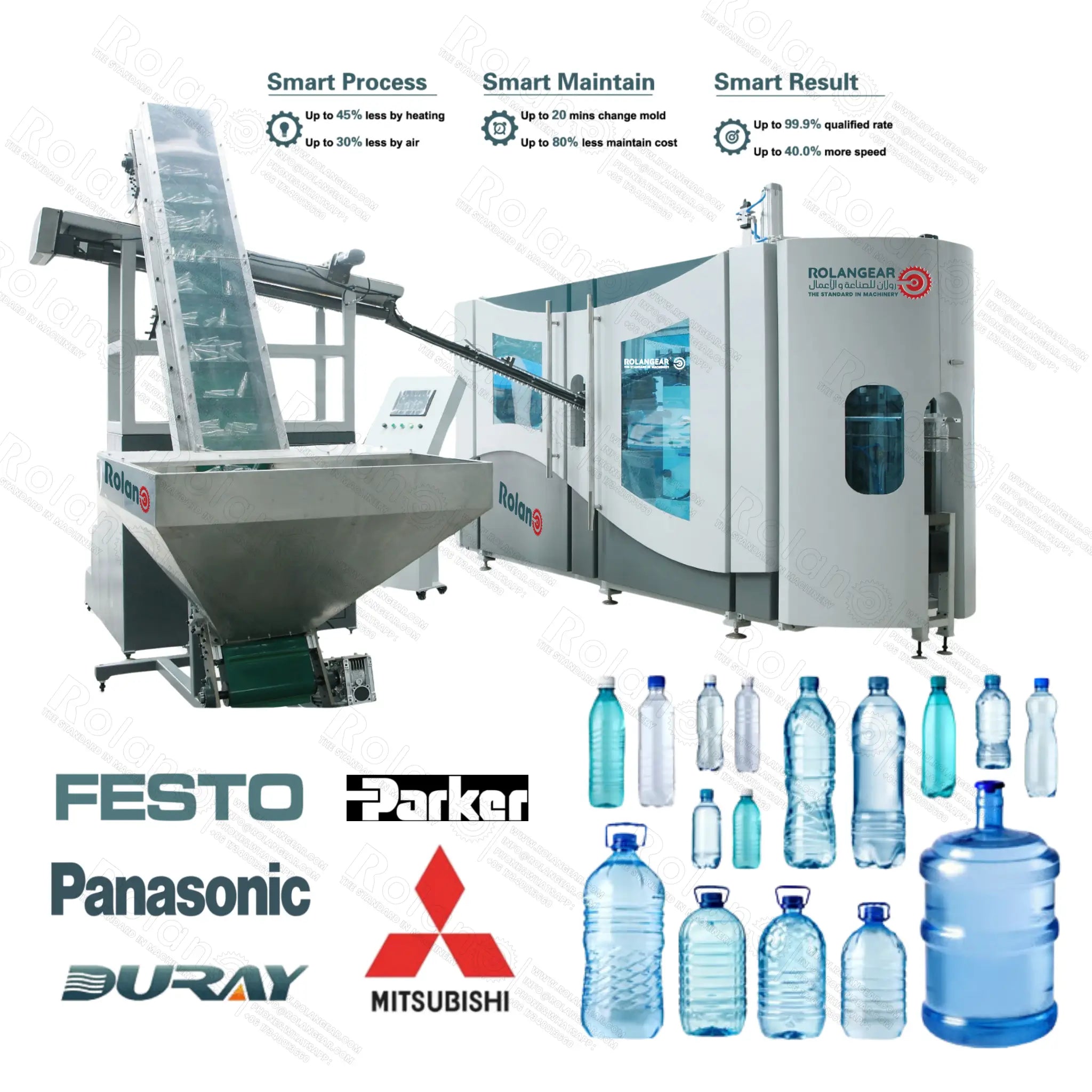
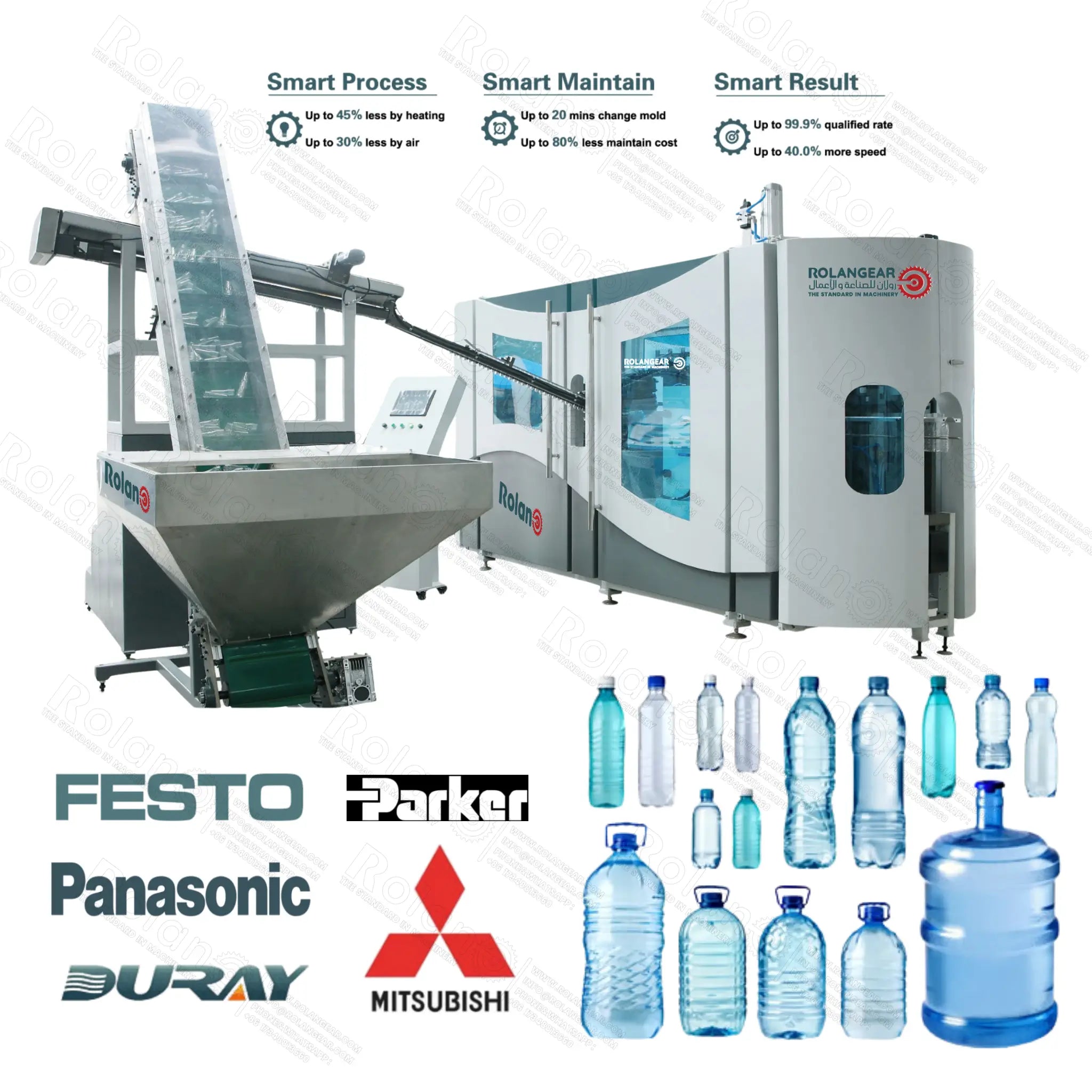
| Máquina sopladora de botellas de PET | Produce botellas a partir de preformas antes del llenado. | Mayor velocidad y más cavidades aumentan el costo pero reducen el costo de la botella. |
| Máquina de enjuague / llenado / tapado | Enjuaga botellas, llena agua y tapa botellas en un proceso automatizado. | Uno de los impulsores de costos más importantes de la línea. |
| Máquina etiquetadora | Aplica etiquetas envolventes u otras a las botellas. | Depende del tipo de etiqueta, la forma de la botella y la velocidad. |
| Sistema de codificación de fecha | Imprime fecha de producción, fecha de caducidad y código de lote. | Costo pequeño, pero importante para el cumplimiento y la trazabilidad. |
| Empacado retráctil / empacado en cartón | Empaca botellas en paquetes o cajas para su transporte. | Las opciones manuales, semiautomáticas o totalmente automáticas cambian el precio. |
| Transportadores y sistema de control | Conecta máquinas y controla el flujo de la línea. | El diseño personalizado, el tamaño de la fábrica y la automatización afectan el costo. |
Costo de la línea de producción de botellas de agua por capacidad
El factor de costo más grande es la capacidad. Un mayor número de botellas por hora generalmente significa marcos más fuertes, válvulas de llenado más rápidas, más cavidades de soplado de botellas, más transportadores, mejor sincronización y controles más avanzados.
| Tipo de línea | Capacidad típica | Presupuesto estimado | Mejor para |
|---|---|---|---|
| Línea de inicio pequeña | 500-2,000 botellas/hora | $20,000-$60,000 | Marcas de agua locales, pequeñas tiendas, pruebas de mercado de bajo riesgo. |
| Línea automática mediana | 2,000-6,000 botellas/hora | $60,000-$150,000 | Negocios en crecimiento que necesitan producción diaria y calidad estable. |
| Línea industrial de alta velocidad | 6,000-12,000+ botellas/hora | $150,000-$250,000+ | Grandes fábricas, distribución regional y mayor automatización. |
7 factores que cambian el precio final
Dos fábricas de botellas de agua pueden tener la misma capacidad objetivo pero diferentes presupuestos porque su fuente de agua, diseño de botellas, requisitos de envasado y nivel de automatización son diferentes.
Configuración recomendada para un nuevo negocio de agua embotellada
Si está iniciando una nueva fábrica de agua embotellada, no compre solo en función del precio más barato de la máquina. Elija una línea que coincida con su objetivo de ventas diarias, el costo de mano de obra local, el tamaño de la botella y el espacio de la fábrica.

Pensamiento simple sobre el ROI: ¿máquina barata o línea rentable?
Una línea de bajo costo puede ser la opción correcta para algunas nuevas empresas, pero la configuración más barata no siempre es la más rentable. La mano de obra, el tiempo de inactividad, el consumo de energía, el desperdicio de botellas y el mantenimiento pueden costar más que la diferencia inicial de la máquina.
- Elija semiautomático cuando tenga un presupuesto pequeño, un objetivo de producción bajo y mano de obra asequible.
- Elija automático cuando necesite calidad estable, menor costo de mano de obra, mayor velocidad y mejor eficiencia a largo plazo.
- Elija una línea personalizada cuando el espacio de su fábrica, el diseño de la botella o el estilo de empaque no sean estándar.
Errores comunes al comprar una línea de producción de botellas de agua
- Comprar máquinas por separado sin que coincidan con la línea. Si la sopladora, la llenadora, la etiquetadora y la empacadora no coinciden en velocidad, toda la línea se ralentiza.
- Ignorar el tratamiento del agua. La mala calidad del agua puede dañar la confianza en la marca y crear problemas de seguridad.
- Elegir una capacidad demasiado baja. Una línea demasiado pequeña puede convertirse en un cuello de botella una vez que las ventas crezcan.
- Olvidar las piezas de repuesto y el soporte postventa. Un buen servicio reduce el tiempo de inactividad y protege su inversión.
- No planificar el diseño de la fábrica. Un mal diseño causa atascos, desperdicio de espacio y mantenimiento difícil.
¿Necesita el costo exacto para su línea de botellas de agua?
Diga a Rolangear el tamaño de su botella, el objetivo de botellas por hora, el estado del agua cruda, el estilo de empaque y el espacio de la fábrica. Nuestro equipo puede recomendarle la lista de equipos y el diseño de la línea correctos para su proyecto.
Preguntas frecuentes: Costo de la línea de producción de botellas de agua
¿Cuál es la forma más barata de iniciar una fábrica de agua embotellada?
La forma más barata suele ser una línea pequeña o semiautomática con tratamiento de agua básico, un sistema de llenado compacto, empaquetado manual o semiautomático y una solución de soplado de botellas adaptada a su capacidad. Esto reduce el presupuesto inicial, pero puede requerir más mano de obra.
¿Es necesario el soplado de botellas para una línea de producción de agua?
No siempre. Algunas fábricas compran botellas terminadas a los proveedores. Sin embargo, producir botellas internamente con una máquina sopladora de botellas de PET puede reducir el costo de la botella, mejorar el control del suministro y permitir una mayor flexibilidad en el diseño de la botella.
¿Qué capacidad debe elegir una nueva fábrica de agua?
Muchas fábricas nuevas comienzan con 500-2,000 botellas por hora. Si ya tiene contratos de distribución o una fuerte demanda, una línea de 2,000-6,000 botellas/hora puede ser más eficiente.
¿Qué información se necesita para una cotización?
Prepare el tamaño de su botella, la forma de la botella, el tipo de tapa, el tipo de etiqueta, el objetivo de botellas por hora, la calidad del agua cruda, el método de empaque, el voltaje, el espacio de la fábrica y el país de destino.
¿Puede Rolangear personalizar la línea de producción?
Sí. Rolangear ofrece máquinas y líneas de producción personalizadas según la capacidad, el tipo de producto, el diseño, el nivel de automatización y las necesidades de embalaje.