
1. ما هي المواد التي يمكن استرجاعها من نفايات الإطارات؟
يصبح مشروع إعادة تدوير الإطارات أكثر قيمة عندما يقوم بفصل الإطار إلى تيارات إخراج قابلة للاستخدام. يحتوي إطار السيارة النموذجي الذي انتهى عمره الافتراضي على المطاط والفولاذ المقوى وألياف النسيج. ولكل مادة دور مختلف في هيكل الإطار، ويجب التعامل مع كل مادة بشكل صحيح أثناء إعادة التدوير.

حبيبات المطاط المعاد تدويرها
عادة ما يكون المطاط هو الناتج الرئيسي لعملية إعادة تدوير الإطارات الميكانيكية. بعد القطع، والتقطيع، والفصل، والطحن، والغربلة، يمكن تحضير جزيئات المطاط بأحجام مختلفة وفقًا لمتطلبات المصب. يمكن استخدام حبيبات المطاط المعاد تدويرها للأرضيات المطاطية وأسطح الملاعب والأسطح الرياضية والحصائر المطاطية والمنتجات المضادة للانزلاق والمناظر الطبيعية والأجزاء المطاطية المقولبة والتطبيقات الصناعية الأخرى.
الصلب المسترد
يمنح السلك الفولاذي قوة الإطار أثناء الاستخدام، ولكن يجب إزالته أثناء إعادة التدوير. يقوم الفصل المغناطيسي ومراحل الفصل الميكانيكي ذات الصلة باستعادة الفولاذ باعتباره تيارًا مستقلاً قابلاً لإعادة التدوير مع تقليل التلوث المعدني في مخرجات المطاط.
الألياف المنفصلة
تعتبر ألياف النسيج مكونًا آخر يؤثر على نظافة واتساق المطاط المعاد تدويره. تعمل إزالة الألياف على تحسين جودة حبيبات المطاط وتساعد العملاء على استهداف التطبيقات التي تتطلب مواد أنظف.
مسحوق المطاط الناعم
تتطلب بعض الأسواق جزيئات مطاطية أصغر أو مسحوق مطاط ناعم. يتطلب هذا عادةً طحنًا وتصنيفًا إضافيًا مقارنة بحبيبات المطاط القياسية. ولذلك ينبغي أن يعتمد الترتيب النهائي للمعدات على حجم الشبكة المستهدفة وسوق المنتج، وليس فقط على السعة بالساعة.

2. كيف تتم عملية إعادة تدوير الإطارات الأوتوماتيكية بوزن 300 كجم
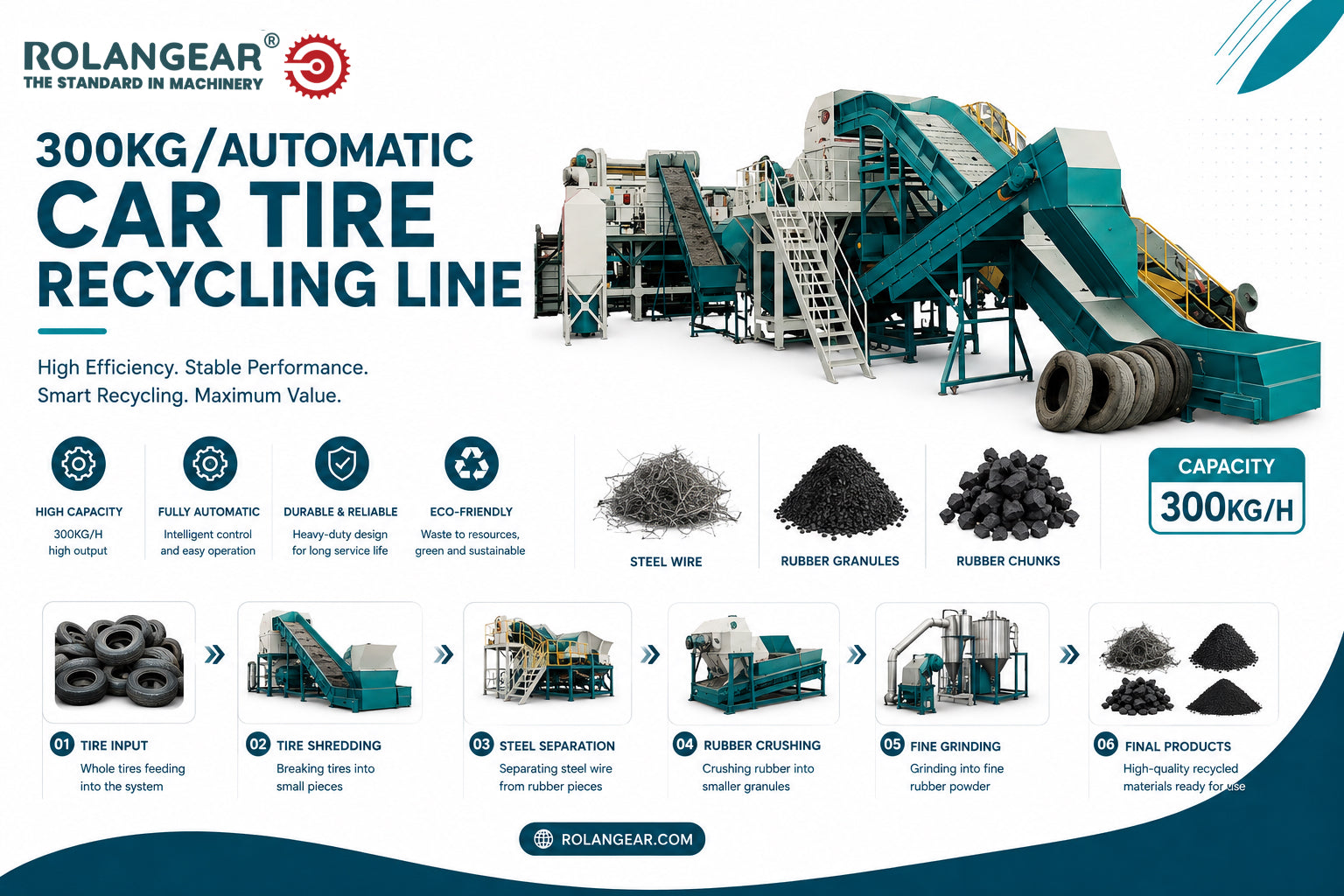
300 كجمخط إعادة تدوير الإطارات الميكانيكية الأوتوماتيكيةيستخدم تدفق إنتاج متصل. تقوم كل مرحلة بإعداد المواد للمرحلة التالية، مما يساعد الخط على الانتقال من الإطارات الكاملة إلى المواد المعاد تدويرها المنفصلة بطريقة يمكن التحكم فيها.

تدفق العملية
1. تغذية الإطارات
يتم وضع الإطارات المجمعة في منطقة تخزين المواد الخام ونقلها إلى قسم التغذية. تساعد التغذية المتسقة في الحفاظ على التشغيل المستقر وتقليل الانقطاعات الناتجة عن التدفق غير المتساوي للمواد.
2. قطع الإطارات
يتم أولاً تقليل الإطارات الكاملة إلى أقسام أصغر. يؤدي القطع إلى تسهيل التعامل مع الإطار وإعداد المادة للتمزيق أو السحق الخاضع للتحكم.
3. التكسير الأولي
تدخل قطع الإطارات المقطوعة إلى مرحلة التكسير الأولية. والغرض من ذلك هو تقليل المادة بشكل أكبر مع تعريض مكونات الفولاذ والألياف الداخلية لفصلها لاحقًا.
4. فصل الصلب
تحتوي مادة الإطار المسحوق على حديد التسليح. تعمل معدات الفصل المغناطيسي أو الميكانيكي على إزالة الفولاذ من التيار المحتوي على المطاط وتوجيه المعدن إلى نقطة تجميع مستقلة.
5. الطحن الثانوي
بعد فصل الفولاذ، يتم طحن المادة المحتوية على المطاط بشكل إضافي للوصول إلى حجم الحبيبات أو المسحوق المطلوب. هذه المرحلة لها تأثير قوي على خصائص المنتج النهائي.
6. فصل الألياف
تتم إزالة ألياف النسيج بعد مزيد من تقليل الحجم. يساعد هذا في إنتاج مادة مطاطية أنظف ويخلق مخرجًا منفصلاً للألياف.
7. الفرز والتصنيف
يمر المطاط الأرضي عبر معدات الفحص لتصنيف حجم الجسيمات. يتم جمع المواد المطابقة للمواصفات، في حين قد يتم إرجاع المواد كبيرة الحجم لطحن إضافي.
8. المجموعة النهائية
يتم نقل المطاط والصلب والألياف إلى مناطق التجميع الخاصة بها للتخزين أو التعبئة أو التعامل مع المواد السائبة. يجب أن يتضمن تخطيط المصنع مساحة كافية للمواد النهائية.

3. المزايا التقنية الرئيسية للخط الميكانيكي الأوتوماتيكي
التعامل الآلي مع المواد
تعمل الناقلات وأنظمة التغذية المتكاملة على تقليل النقل اليدوي غير الضروري بين الآلات الفردية. يؤدي هذا إلى إنشاء تدفق إنتاج أكثر اتساقًا ويسمح للمشغلين بالتركيز على المراقبة وفحص الجودة والصيانة.
فصل متعدد المراحل
يحتوي الإطار على مكونات مطاطية وفولاذية ونسيجية لا يمكن فصلها بشكل فعال في خطوة واحدة. يقوم الخط بالكشف التدريجي عن الفولاذ والألياف وإزالتها أثناء تحسين التدفق المطاطي.
حجم الجسيمات التي تسيطر عليها
يسمح الطحن والغربلة بتصنيف المطاط النهائي حسب الحجم. وهذا أمر مهم لأن الأرضيات وأسطح الملاعب والمنتجات المطاطية المقولبة وتطبيقات مسحوق المطاط الناعم قد تتطلب مواصفات جسيمات مختلفة.
إخراج المطاط الأنظف
تؤدي إزالة الفولاذ والألياف إلى تحسين إمكانية استخدام المطاط المعاد تدويره. تمنح المواد النظيفة أعمال إعادة التدوير مزيدًا من المرونة عند البيع للمشترين النهائيين.
المعالجة المستمرة
يعد خط الإنتاج المتصل أكثر ملاءمة للعمليات التجارية من الآلات المستقلة التي تتطلب نقلًا يدويًا متكررًا. تعمل المعالجة المستمرة على تحسين التنظيم وجعل إدارة الإنتاج أكثر وضوحًا.
تصميم نظام مرن
يمكن تكييف الترتيب النهائي مع نوع الإطار، وحجم الإطار، والقدرة المستهدفة، وحجم المطاط النهائي، وأبعاد المصنع، ومستوى الأتمتة، وظروف التشغيل المحلية.

4. المعدات الرئيسية في خط إعادة تدوير الإطارات 300 كجم
يعتمد التكوين النهائي على المشروع، لكن خط إعادة تدوير الإطارات الميكانيكية الأوتوماتيكي 300 كجم يمكن أن يشمل سحب الأسلاك، والتغذية، والتقطيع، والفصل المغناطيسي، والسحق، وتغذية الهواء، وطحن المطاط، والغربلة، والتحكم الكهربائي. يمثل الجدول أدناه مرجعًا يواجه العملاء بناءً على المسودة المقدمة. يجب التأكد من المواصفات النهائية حسب النظام المختار.

5. تخطيط القدرات لمشروع إعادة تدوير الإطارات
ينبغي اختيار السعة وفقًا لإمدادات الإطارات الفعلية وسوق المنتجات النهائية. قد لا يتم استخدام الخط الأكبر بكثير من المعروض من الإطارات المتاحة، في حين أن النظام الصغير جدًا قد يقيد النمو بمجرد زيادة طلب العملاء.
نوع الاطارات
تتميز إطارات سيارات الركاب والإطارات التجارية وأنواع الإطارات الأخرى بأبعاد وهياكل وتركيبات مواد مختلفة. يجب أن تتطابق المعدات المختارة مع الإطارات التي سيتم معالجتها بالفعل.
تحضير الأعلاف
الإعداد المتسق للإطارات والتغذية يدعم التشغيل المستقر. يمكن أن يؤدي سوء التغذية إلى تقليل الإنتاج حتى عندما تكون الماكينة قادرة على إنتاجية أعلى.
حجم الجسيمات النهائي
يتطلب المطاط الناعم مزيدًا من الطحن والتصنيف مقارنة بحبيبات المطاط الأكبر حجمًا. يجب على المشترين تأكيد مواصفات المنتج قبل الانتهاء من الخط.
ساعات العمل
يعتمد الإنتاج اليومي على عدد ساعات العمل وجدول العمل وخطة الصيانة وإمدادات المواد.
النمو المستقبلي
إذا كان من المتوقع زيادة إمدادات الإطارات، فيجب أن يترك تخطيط المصنع مساحة لمعدات طحن أو غربلة أو نقل أو تخزين إضافية أو ذات سعة أعلى.

6. تخطيط المصنع وتدفق المواد
يجب أن يجعل تخطيط مصنع إعادة تدوير الإطارات حركة المواد قابلة للتنبؤ بها. يجب أن يكون التدفق الأساسي هو تخزين الإطارات الخام، ومعالجتها، وفصلها، وغربلتها، وتخزين المنتج النهائي. يقلل التخطيط الواضح من عمليات النقل غير الضرورية ويحسن إمكانية الوصول إلى الصيانة.
تخزين الإطارات الخام
تحتاج الإطارات الواردة إلى منطقة تخزين مخصصة قبل معالجتها. يعتمد الحجم المطلوب على وتيرة العرض وهدف الإنتاج اليومي.
منطقة المعالجة
يجب ترتيب المعدات الرئيسية وفقًا لتسلسل العملية: القطع، والسحق، والفصل، والطحن، والغربلة، والتجميع. يجب الحفاظ على مسافة كافية حول الآلات للفحص والتنظيف والصيانة.
تخزين المنتج النهائي
يجب أن يكون للمطاط والصلب والألياف المستردة مناطق تخزين منفصلة. غالبًا ما يتطلب المطاط مساحة تخزين أكبر لأنه يمثل الناتج الرئيسي من حيث الحجم.
المعلومات اللازمة للتخطيط التخطيطي
تتضمن المعلومات المفيدة طول المبنى وعرضه وارتفاع السقف ومواضع الأعمدة ومواقع الأبواب والوصول إلى الكهرباء واحتياجات تخزين المواد الخام واحتياجات تخزين المنتج النهائي وطريقة التعامل مع المواد والقدرة المتوقعة.
7. سعر آلة إعادة تدوير الإطارات وعوامل الاستثمار
يبحث العديد من المشترين عن سعر آلة إعادة تدوير الإطارات، أو سعر آلة إعادة تدوير نفايات الإطارات، أو تكلفة آلة تمزيق الإطارات، أو تكلفة مصنع إعادة تدوير نفايات الإطارات. لا يوجد سعر واحد لكل مشروع لأن عرض الأسعار النهائي يعتمد على التكوين والقدرة ومستوى الأتمتة ومتطلبات الطحن والغربلة والنقل وظروف التثبيت والمنتج المستهدف.
المعدات الأساسية
تعتبر مجموعة الآلات هي الاستثمار الرئيسي، ولكن يجب تقييمها كجزء من المصنع الكامل وليس كآلات منفصلة.
مستوى الأتمتة
قد تتطلب الأنظمة التلقائية استثمارًا أوليًا أعلى، لكنها يمكن أن تقلل من المعالجة المتكررة وتحسن تدفق المواد. يعتمد مستوى الأتمتة الصحيح على تكلفة العمالة وحجم الإنتاج واستراتيجية التشغيل.
متطلبات المنتج النهائي
تتطلب حبيبات المطاط القياسية ومسحوق المطاط الناعم معدات مختلفة في المراحل النهائية. يجب أن يحدد السوق المستهدف التكوين.
البنية التحتية للمصنع
قد تشمل التكاليف الإضافية التركيبات الكهربائية، والأرضيات، والتهوية، والإضاءة، ومناولة المواد، والتخزين، والبنية التحتية للسلامة، وترتيبات التحكم في الغبار، والتركيب، والتشغيل.
توريد المواد الخام
من الضروري وجود مصدر ثابت للإطارات المنتهية الصلاحية. قد يشمل الموردون متاجر الإطارات، ومراكز خدمة المركبات، ومشغلي الأساطيل، وشركات التجميع، والمفككين، وقنوات إدارة النفايات.
سوق المنتجات
يعتمد النجاح التجاري للمشروع على المشترين الموثوقين للمطاط المعاد تدويره، والصلب، والألياف، والمواد المختلفة ذات الحجم الجزيئي.
تكاليف التشغيل
تشمل التكاليف طويلة الأجل الكهرباء والعمالة وقطع الغيار والصيانة والتشحيم والنقل والتعبئة ووقت التوقف عن العمل. لا يعني السعر الأولي المنخفض دائمًا انخفاض التكلفة الإجمالية للملكية.

8. لماذا تستثمر في خط إعادة تدوير الإطارات الأوتوماتيكي بسعة 300 كجم؟
استعادة المواد القيمة
تقوم هذه العملية باستعادة المطاط والصلب والألياف بدلاً من إرسال المواد القابلة للاستخدام مباشرة إلى قنوات التخلص.
إنشاء مصادر إيرادات متعددة
عادة ما يكون المطاط هو المنتج الرئيسي، في حين يمكن أن يوفر الفولاذ والألياف مصادر استرداد إضافية اعتمادًا على الأسواق المحلية.
تقليل المعالجة اليدوية
يمكن لحركة المواد التلقائية أن تقلل من المعالجة المتكررة وتجعل إدارة الإنتاج أكثر وضوحًا.
إنتاج حبيبات مطاطية قابلة للتسويق
يمكن توفير جزيئات المطاط المصنفة لعملاء مختلفين في المراحل النهائية وفقًا لمتطلبات الحجم والنظافة.
بناء أعمال إعادة التدوير قابلة للتطوير
يوفر الخط من فئة 300 كجم نقطة انطلاق محددة لعملية إعادة تدوير الإطارات المخصصة، مع خيارات التوسع المخطط لها من البداية.
دعم استعادة الموارد المحلية
في المناطق التي يصعب فيها التخلص من الإطارات أو تكون وسائل النقل باهظة الثمن، يمكن أن توفر القدرة المحلية على إعادة التدوير حلاً عمليًا.
9. لماذا تختار رولانجير؟
يعد اختيار مورد معدات إعادة تدوير الإطارات قرارًا طويل المدى. يجب أن يتطابق خط الإنتاج مع المواد الخام والقدرة ومواصفات المنتج وظروف المصنع وبيئة التشغيل. تتعامل Rolangear مع مشاريع إعادة تدوير الإطارات من منظور النظام الكامل.
التخطيط الكامل لخط الإنتاج
تقوم Rolangear بتقييم التغذية والقطع والسحق والفصل والطحن والغربلة والتجميع والتخطيط والتوسع المستقبلي كعملية واحدة متصلة.
التكوين الخاص بالمشروع
يمكن تعديل ترتيب المعدات وفقًا لنوع الإطار، وأبعاد الإطار، والقدرة المستهدفة، وحجم المطاط النهائي، وبصمة المصنع، ومستوى الأتمتة، واحتياجات مناولة المواد، وظروف التثبيت، والنمو المستقبلي.
دعم تخطيط المصنع
يساعد التصميم المناسب العملاء على فهم كيفية تناسب الخط مع المنشأة المتاحة قبل التثبيت ويساعد على تقليل حركة المواد غير الضرورية.
الدعم الفني
قد يتضمن المشروع الكامل التقييم واختيار المعدات والتخطيط والتصنيع والتركيب والتشغيل ودعم الإنتاج. تساعد Rolangear العملاء على الانتقال من مرحلة الاستفسار إلى مرحلة التشغيل بخطة أكثر وضوحًا.
التركيز على التشغيل على المدى الطويل
يجب أن يكون مصنع إعادة التدوير مصممًا لسنوات من الاستخدام. ينبغي النظر منذ البداية في الوصول إلى الصيانة، وتآكل الأجزاء، والتنظيف، والتشحيم، واتساق المنتج، والتوسع المستقبلي.
الأسئلة الشائعة
ما هي قدرة خط إعادة تدوير الإطارات الأوتوماتيكي 300 كجم؟
تم تصميم الخط وفقًا لمتطلبات المعالجة من فئة 300 كجم. تعتمد الإنتاجية الفعلية على نوع الإطار وظروف التغذية وحجم المنتج النهائي وساعات التشغيل والتكوين المحدد.
ما الإطارات التي يمكن معالجتها؟
تم تصميم النظام في المقام الأول لإطارات السيارات المهملة. إذا كنت تخطط لمعالجة إطارات الشاحنات أو إطارات OTR أو أنواع الإطارات المتخصصة الأخرى، فيجب تحديد ذلك أثناء تقييم المشروع.
ما هي المواد التي يمكن للخط استعادتها؟
وتتمثل مصادر الإنتاج الرئيسية في المطاط المعاد تدويره والفولاذ المستعاد وألياف النسيج المنفصلة. يمكن أخذ الطحن الإضافي بعين الاعتبار عند الحاجة إلى مسحوق مطاط ناعم.
هل يمكنني التحكم في حجم جزيئات المطاط؟
نعم. يمكن اختيار معدات الطحن والغربلة وفقًا لحجم الجسيمات المرغوب فيه. يجب تأكيد المواصفات المستهدفة قبل التكوين النهائي.
هل يمكن للنظام إنتاج مسحوق المطاط؟
نعم. يمكن النظر في ترتيبات الطحن والتصنيف الدقيقة للعملاء الذين يستهدفون مسحوق المطاط. تعتمد المعدات المطلوبة على الدقة والقدرة الإنتاجية المطلوبة.
هل الخط تلقائي؟
تم تصميم النظام للمعالجة الميكانيكية التلقائية ونقل المواد. يعتمد مستوى الأتمتة الدقيق على الترتيب المحدد ومتطلبات المشروع.
ما هي مساحة المصنع المطلوبة؟
تعتمد البصمة على تكوين الخط الكامل، ومتطلبات التخزين، وتدفق المواد، وتصريح الصيانة، وظروف البناء.
ما هي تكلفة خط إعادة تدوير الإطارات 300 كجم؟
لا يوجد سعر واحد لكل مشروع. يعتمد عرض الأسعار على السعة والأتمتة ومتطلبات الطحن والغربلة والنقل ومواصفات المنتج وظروف المصنع.
ما هي المعلومات التي يجب أن أقدمها للحصول على الاقتباس؟
أرسل السعة المستهدفة، ونوع الإطار، وحجم الإطار، وكمية الإطارات المتاحة، وحجم جزيئات المطاط المطلوبة، وأبعاد المصنع، والموقع، وساعات التشغيل، ومتطلبات المنتج النهائي.
الخلاصة: بناء مشروع إعادة تدوير الإطارات حسب الطلب الحقيقي في السوق
يبدأ مشروع إعادة تدوير الإطارات الناجح بالمزيج الصحيح من المواد الخام والمعدات ومواصفات المنتج وتصميم المصنع وطلب السوق. يوفر خط إعادة تدوير الإطارات الميكانيكية الأوتوماتيكي 300 كجم حلاً منظمًا لمعالجة نفايات إطارات السيارات وتحويلها إلى مطاط معاد تدويره وفولاذ مستعاد وألياف.
سواء كنت تبدأ مشروعًا جديدًا لإعادة التدوير أو تقوم بتوسيع عملية حالية، يمكن أن تساعد Rolangear في تقييم تكوين المعدات وفقًا لمتطلبات الإنتاج الفعلية الخاصة بك. للحصول على توصية عملية، أرسل نوع الإطار الخاص بك، والكمية المتاحة، والقدرة المستهدفة، وحجم الجسيمات المطاطية المرغوبة، وأبعاد المصنع، وموقع المشروع.
خطط لمشروع إعادة تدوير الإطارات الخاص بك مع Rolangear
أرسل نوع الإطار الخاص بك، والسعة المستهدفة، وحجم جزيئات المطاط المطلوبة، وأبعاد المصنع، وموقع المشروع. يمكن أن تساعد Rolangear في التوصية بتكوين عملي لخط الإنتاج.
اتصل بـ Rolangear للحصول على عرض أسعار