التخطي إلى المحتوى

سلة المشتريات

سلة مشترياتك فارغة

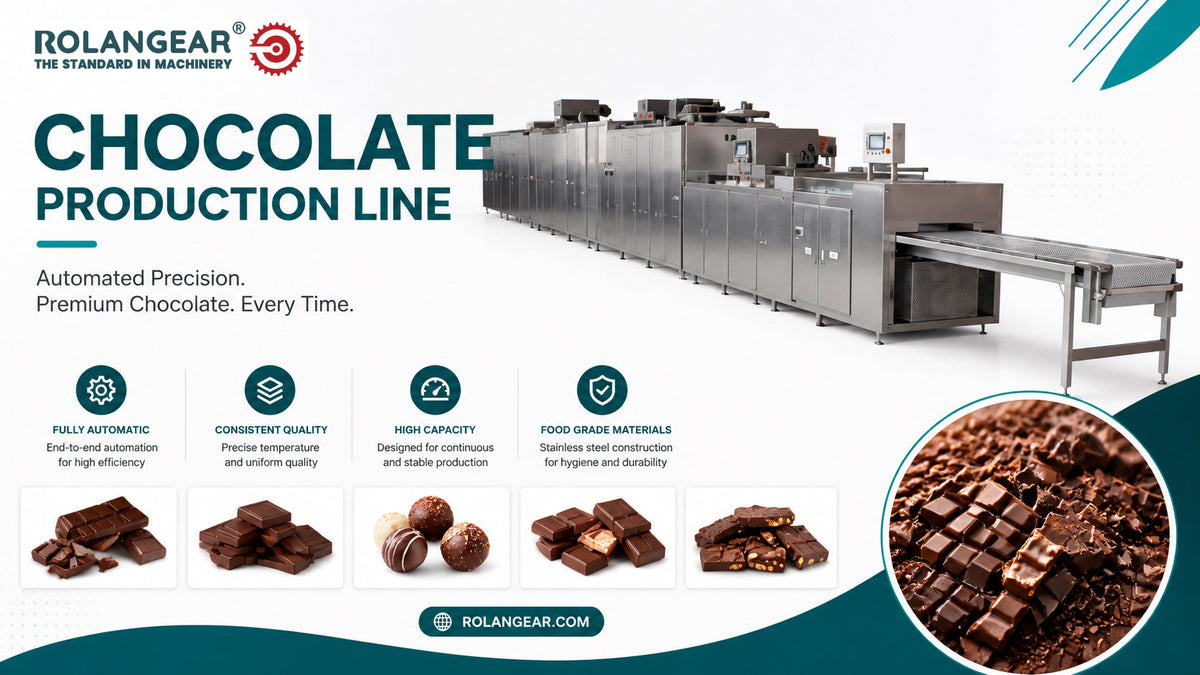
Chocolate Production Line

Chocolate Production Line: Complete Guide to Starting a Chocolate Manufacturing Business

اكتشف أحدث الأخبار ورؤى المنتجات وتحديثات الصناعة من rolangear - مصدرك لخطوط الإنتاج المتقدمة وحلول الآلات.


المقال: Chocolate Production Line: Complete Guide to Starting a Chocolate Manufacturing Business

Chocolate Production Line: Complete Guide to Starting a Chocolate Manufacturing Business

Rolangear Chocolate Equipment Guide

Chocolate Production Line: Complete Guide to Starting a Chocolate Manufacturing Business

Chocolate is one of the most valuable and widely consumed confectionery products in the world. From chocolate bars and tablets to filled chocolates, coated snacks, gift products, and customized premium items, chocolate continues to create strong opportunities for food manufacturers, brand owners, and investors.

Starting a chocolate manufacturing business requires more than purchasing a single machine. A successful chocolate factory needs the correct production technology, professional equipment selection, factory planning, quality control, packaging design, and reliable technical support. Each stage of the process affects the final flavor, appearance, texture, shelf life, and production cost.

This complete guide explains how to start a chocolate manufacturing business, how a chocolate production line works, what equipment is required, how to choose the right capacity, how to plan factory space, and how Rolangear helps customers build efficient chocolate factories. Whether you are planning a new chocolate brand, expanding an existing food business, or looking for a turnkey confectionery production solution, understanding the complete chocolate manufacturing process is the first step toward a successful project.

Rolangear provides complete chocolate production solutions including chocolate mixing, refining, conching, tempering, molding, cooling, filling, coating, packaging, factory layout planning, installation support, and customized line configuration.

1. What Is a Chocolate Production Line?

A chocolate production line is a connected system of machines used to transform raw chocolate ingredients into finished chocolate products. Depending on the product design, the line may include ingredient preparation, mixing, refining, conching, tempering, molding, filling, cooling, demolding, coating, conveying, and automatic packaging.

The goal of a professional chocolate production line is to improve production efficiency, product consistency, hygiene, and scalability. Instead of relying on manual processing at each stage, the machines are arranged as a continuous manufacturing system. This helps reduce product variation, improve output, and make factory management easier.

Chocolate manufacturing is sensitive to temperature, viscosity, particle size, and cooling conditions. For this reason, the line must be selected according to the final product type, raw material formula, required capacity, available factory space, labor plan, and packaging method. A production line for simple chocolate bars may be different from a line for filled chocolates, coated biscuits, or customized premium shapes.

2. How to Start a Chocolate Manufacturing Business

Starting a chocolate factory begins with understanding the market and creating a realistic production plan. Before investing in equipment, manufacturers should study customer demand, competition, product trends, retail channels, packaging expectations, and target price levels. Different markets require different chocolate products and different production strategies.

Step 1: Research the Target Market

Some markets prefer affordable chocolate bars for daily consumption, while others focus on premium gift chocolate, filled products, seasonal items, or customized shapes. Chocolate products can be sold through supermarkets, online stores, bakeries, hotels, gift shops, distributors, and food-service channels. The target channel will influence product size, packaging, production capacity, and quality-control requirements.

Step 2: Choose the Product Range

Chocolate bars are one of the most common products because they have strong retail demand and relatively simple packaging. Filled chocolates provide more product variety and can include cream, caramel, nuts, fruit flavors, wafer pieces, or biscuit pieces. Chocolate coating products are also popular because they allow manufacturers to combine chocolate with existing snacks such as biscuits, wafers, nuts, cakes, and cereal products.

  • Chocolate bars and tablets
  • Filled chocolates
  • Molded premium chocolates
  • Chocolate-coated biscuits or wafers
  • Nut or snack coating products
  • Seasonal and gift chocolates
  • Private-label chocolate products
  • Customized shapes for retail or promotional use

Step 3: Confirm Capacity and Factory Plan

Production capacity is another important decision. A small factory may focus on local distribution and require a compact production system. A medium factory may need flexible equipment for multiple product types. A large export-oriented factory usually needs continuous automatic equipment with higher output, stable packaging, and more complete factory planning.

Planning Point Questions to Confirm Why It Matters
Product type What chocolate products will you produce first? Product type determines mixing, tempering, molding, filling, cooling, and packaging configuration
Required capacity How many kilograms or pieces per hour are required? Capacity affects equipment size, cooling tunnel length, labor, energy, and investment
Factory space What area is available for production, storage, cooling, and packaging? The line must fit the building and allow safe movement, cleaning, and maintenance
Labor availability How many operators can manage the line? Automation level should match labor cost and management ability
Future expansion Will you add new products later? A flexible line supports long-term business growth

Rolangear works with customers to design chocolate production solutions according to business goals, product requirements, factory conditions, and investment plans.

3. Why Invest in a Chocolate Production Factory?

The chocolate industry continues to attract investors because chocolate has strong consumer demand and excellent product flexibility. Manufacturers can produce economical products for mass consumption or premium products with unique ingredients, attractive shapes, and high-quality packaging. This flexibility makes chocolate suitable for both local businesses and international food brands.

Automation creates additional advantages. Compared with manual chocolate production, automatic production lines provide stable product quality, higher production efficiency, lower labor dependency, improved hygiene control, easier production management, and better repeatability. These factors are important for building a brand, reducing waste, and meeting distributor or retailer expectations.

Modern chocolate factories are not only producing traditional chocolate bars. They are developing innovative products such as filled chocolates, coated snacks, seasonal gift items, customized shapes, and private-label products for international markets. With the right equipment and production strategy, a chocolate factory can become a scalable food manufacturing business.

4. Complete Chocolate Manufacturing Process Flow

Industrial chocolate production includes several important stages. Each stage affects the final taste, appearance, texture, and shelf life of the product. A typical process flow is:

Raw material preparation → Chocolate mixing → Refining → Conching → Tempering → Molding or depositing → Filling or coating if required → Cooling → Demolding → Inspection → Packaging

Raw Material Preparation

Cocoa ingredients, sugar, milk powder, cocoa butter, flavoring materials, and other ingredients must be accurately measured. Correct ingredient balance ensures consistent flavor, viscosity, sweetness, and texture. Small changes in raw material ratio can affect the final product, so weighing and batching should be controlled carefully.

Chocolate Mixing

During mixing, all ingredients are combined into a uniform chocolate mass. A professional mixer ensures that ingredients are distributed evenly and that the material is prepared for refining. Good mixing supports stable viscosity and reduces later processing problems.

Refining

Refining reduces particle size and creates the smooth texture expected from quality chocolate. If refining is insufficient, the product may have a rough mouthfeel. The refiner must be selected according to capacity, formula, and final texture requirements.

Conching

Conching improves chocolate flavor and texture by reducing moisture, improving aroma development, and creating smoother product characteristics. Conching time and conditions depend on formula and product quality target.

Tempering

Tempering controls cocoa butter crystals and creates the glossy appearance, firm structure, clean snap, and stable texture associated with high-quality chocolate. Incorrect tempering can lead to dull surface, weak structure, fat bloom, or poor shelf stability.

Molding, Cooling, and Packaging

After tempering, chocolate is deposited into molds or processed through filling or coating systems. Cooling then solidifies the product under controlled conditions. Finished chocolates are demolded, inspected, transferred, and packed for distribution.

5. Main Equipment in a Chocolate Production Line

A complete chocolate production line consists of several machines working together. The final equipment list depends on product type, automation level, and production capacity.

Equipment Function Key Selection Points
Ingredient preparation system Stores, weighs, and prepares raw materials before production Weighing accuracy, storage method, hygiene design, feeding method
Chocolate mixer Combines ingredients into a consistent chocolate mass Batch size, mixing speed, material contact parts, discharge method
Chocolate refiner Reduces particle size for smoother texture Required fineness, capacity, maintenance access, energy use
Conching machine Improves flavor, texture, and moisture control Conching time, temperature control, batch capacity, formula suitability
Tempering machine Controls heating and cooling stages to stabilize cocoa butter crystals Temperature precision, flow rate, product type, integration with molding line
Molding machine Creates chocolate bars, tablets, shells, or custom shapes Mold type, product size, changeover speed, depositing accuracy
Filling system Deposits cream, caramel, nuts, fruit, or other fillings Filling accuracy, product type, hygiene, cleaning convenience
Cooling tunnel Controls cooling after molding or coating Tunnel length, temperature control, humidity control, conveyor design
Coating/enrobing system Covers biscuits, wafers, nuts, or snacks with chocolate Coating thickness, product width, cooling requirements, line speed
Automatic packaging machine Counts, wraps, seals, and prepares finished products for market Packaging style, film type, speed, product arrangement, sealing quality

6. How Automatic Chocolate Production Lines Work

An automatic chocolate production line connects every stage into one continuous manufacturing process. Production begins with ingredient preparation. Materials are weighed and transferred into the mixing system. After mixing, chocolate passes through refining and conching systems. It is then tempered before entering the molding, filling, coating, or depositing stage.

In the molding section, the machine deposits chocolate into molds. Vibration may be used to remove air bubbles and improve surface appearance. After molding, products move through cooling tunnels where they solidify under controlled temperature conditions. Finished products are removed from molds and transferred to inspection and packaging.

Automation reduces manual operation, increases production speed, improves consistency, lowers waste, and supports better factory management. For companies planning medium or large-scale production, an automatic chocolate production line usually provides better long-term efficiency compared with manual production.

7. Chocolate Processing Technology Explained

Chocolate manufacturing depends on accurate control of temperature, time, particle size, viscosity, and material flow. Unlike many food products, chocolate quality can change quickly if the temperature is not controlled correctly. This is why tempering, cooling, and production synchronization are critical.

Tempering technology is especially important because cocoa butter has different crystal structures. Correct tempering creates the stable crystal form required for glossy appearance, firm snap, good demolding, and improved shelf stability. A properly tempered chocolate product normally has a smooth glossy appearance, good snap texture, better resistance to temperature changes, and improved shelf performance.

Molding technology determines the final product design. Manufacturers can use different molds to create chocolate bars, tablets, shells, custom shapes, seasonal products, and premium gift items. Cooling technology also plays an important role. If cooling is too fast or too slow, chocolate may develop surface defects, deformation, or demolding problems. Professional chocolate factories combine suitable machinery with experienced production management to achieve stable results.

8. Chocolate Product Types and Line Configuration

Product Type Typical Line Configuration Notes
Chocolate bars and tablets Mixing, refining, conching, tempering, molding, cooling, demolding, packaging Suitable for retail brands and mass-market chocolate products
Filled chocolates Tempering, shell molding, filling, closing, cooling, demolding, packaging Requires accurate filling and mold control
Coated biscuits or wafers Tempering, enrobing/coating, cooling, transfer, packaging Requires product feeding and coating thickness control
Premium molded chocolates Tempering, precision depositing, customized molds, cooling, packaging Focuses on appearance, shape, and packaging presentation
Private-label products Flexible molding, packaging, and product changeover systems Useful for factories serving multiple customers or brands

The best line configuration should match the first products the factory plans to produce while also considering future expansion. Many companies begin with one product category and later add filled chocolate, coating products, or new packaging styles.

9. How to Choose the Right Chocolate Production Line

Selecting the right chocolate production line requires careful evaluation of product requirements, capacity, automation level, factory space, utility conditions, packaging style, and future development. A chocolate bar factory may focus on molding and packaging, while filled chocolate production requires filling systems. Coated snack production may require enrobing, cooling, and special feeding systems.

Capacity should match market demand. If the line is too small, it may limit business growth. If the line is too large, the initial investment and operating cost may be too high. The right choice depends on realistic sales planning, production schedule, labor cost, and expected future expansion.

  • Confirm the target chocolate product type before selecting machines.
  • Prepare required capacity in kg/h or pieces/h where possible.
  • Check available factory space and utility conditions.
  • Decide the required automation level according to labor cost and management ability.
  • Confirm packaging style before choosing the final packing system.
  • Consider future expansion so the line can support new products later.

10. Factory Layout and Investment Planning

Factory planning is an important part of chocolate production success. A complete chocolate factory usually requires raw material storage, production area, cooling area, packaging area, finished product warehouse, quality-control area, cleaning space, and maintenance access. The production flow should reduce unnecessary movement and avoid crossing between raw materials and finished products.

Investment cost depends on production capacity, machine configuration, automation level, product type, packaging requirements, and factory conditions. Higher capacity usually requires larger equipment, longer cooling systems, faster packaging, and more complete factory utilities. Choosing a professional supplier helps optimize the factory layout and avoid unnecessary investment.

Factory Area Purpose Planning Notes
Raw material storage Stores cocoa ingredients, sugar, milk powder, fats, and packaging materials Control cleanliness, temperature, and material flow
Processing area Mixing, refining, conching, tempering, molding, or coating Needs stable utilities, operator access, and hygiene design
Cooling area Solidifies molded or coated chocolate Temperature and humidity control are important
Packaging area Wraps and packs finished products Should connect smoothly with cooling and finished product transfer
Finished product warehouse Stores packed products before shipment Needs protection from heat, moisture, and damage
Quality-control area Checks appearance, weight, packaging, and product consistency Supports stable production and customer acceptance

11. Quality Control, Cleaning, and Maintenance

Quality control should be built into the production line, not only checked at the end. Important inspection points may include raw material quality, weighing accuracy, particle size after refining, conching condition, tempering stability, molding accuracy, cooling condition, product appearance, weight consistency, packaging seal quality, and finished product storage conditions.

Cleaning and maintenance also affect long-term factory performance. Chocolate equipment should be designed for safe operation, easy access, and suitable cleaning procedures. Operators should follow daily inspection routines, check wearing parts, monitor temperature control, and keep the packaging section clean. A spare parts plan helps reduce downtime and supports stable production.

For a new chocolate factory, operator training is important. Staff should understand machine operation, temperature control, product changeover, cleaning requirements, safety procedures, and basic troubleshooting. Professional installation and training can help the line reach stable production faster.

12. How to Select a Reliable Chocolate Machine Manufacturer

Choosing a chocolate machine manufacturer is a long-term decision. A reliable supplier should understand chocolate processing technology, complete-line engineering, factory layout, installation support, after-sales service, and spare parts supply. The supplier should be able to provide a complete production solution instead of only selling individual machines.

  • Technical experience: The manufacturer should understand chocolate processing technology and production challenges.
  • Complete solutions: A professional supplier should provide complete production lines and not only individual machines.
  • Customization ability: The line should match product type, capacity, factory space, and packaging requirements.
  • Installation support: Professional installation and commissioning help the equipment operate correctly.
  • After-sales service: Long-term technical support and spare parts supply are essential for stable factory operation.
  • Future support: A good supplier should help customers expand or adjust the line as the business grows.

13. Why Choose Rolangear Chocolate Production Solutions?

Rolangear provides complete chocolate production solutions for international food manufacturers, brand owners, and investors who want to build efficient, reliable, and scalable chocolate factories. Our services can include chocolate production line design, equipment manufacturing, factory layout planning, installation support, technical assistance, and customized production solutions.

From raw material preparation to finished packaged products, Rolangear provides the technology and support needed for successful chocolate manufacturing. The production solution can be adjusted according to product type, target capacity, available factory space, packaging method, and future expansion plan.

14. Frequently Asked Questions About Chocolate Production Lines

How much does a chocolate production line cost?

The investment depends on capacity, automation level, equipment configuration, product type, packaging requirements, and factory conditions. A customized quotation is recommended because every chocolate factory has different goals.

What products can a chocolate production line produce?

Chocolate production lines can produce bars, tablets, filled chocolates, coated products, customized shapes, gift chocolates, and private-label products, depending on the machine configuration.

Why is tempering important in chocolate production?

Tempering creates stable cocoa butter crystals that improve gloss, snap, demolding, texture, and shelf stability. Poor tempering can cause dull surface, weak structure, or fat bloom.

Can one production line make different chocolate products?

Yes, a line can be customized with different molds, filling systems, coating systems, and packaging equipment. The exact flexibility should be confirmed before ordering.

What information is needed for a chocolate production line quotation?

Prepare your product type, target capacity, factory layout or available space, packaging style, automation requirement, and any special product requirements.

How do I start a chocolate factory?

Start with market research, product selection, capacity planning, factory design, utility planning, packaging selection, and choosing a reliable chocolate machine manufacturer.

What is the most important equipment in chocolate production?

Tempering, refining, conching, molding, cooling, and packaging are all important. The most critical machine depends on the product type and quality target.

Can Rolangear help with factory layout planning?

Yes. Rolangear can help customers plan equipment arrangement and production flow according to factory space, product requirements, capacity, and packaging method.

15. Conclusion: Build a Successful Chocolate Factory With the Right Production Line

Building a successful chocolate manufacturing business requires the right combination of market understanding, production technology, reliable equipment, factory planning, quality control, and professional support. The production line should match the target product, required capacity, available space, labor plan, packaging style, and future growth strategy.

Rolangear helps customers create modern chocolate factories with complete production solutions designed for efficiency, quality, and long-term growth. If you are planning a chocolate production project, prepare your product list, target capacity, factory space, and packaging requirements so Rolangear can recommend a suitable chocolate production line configuration.

Plan Your Chocolate Production Line

If you are preparing a chocolate factory project, confirm your product type, target capacity, formula, molding or coating requirements, packaging method, factory space, and utility conditions before final equipment design.

جاك دو

مرحبًا، أنا جاك، متخصص في الهندسة الميكانيكية، تصميم ميكانيكي حاصل على براءة اختراع.

اقرأ المزيد
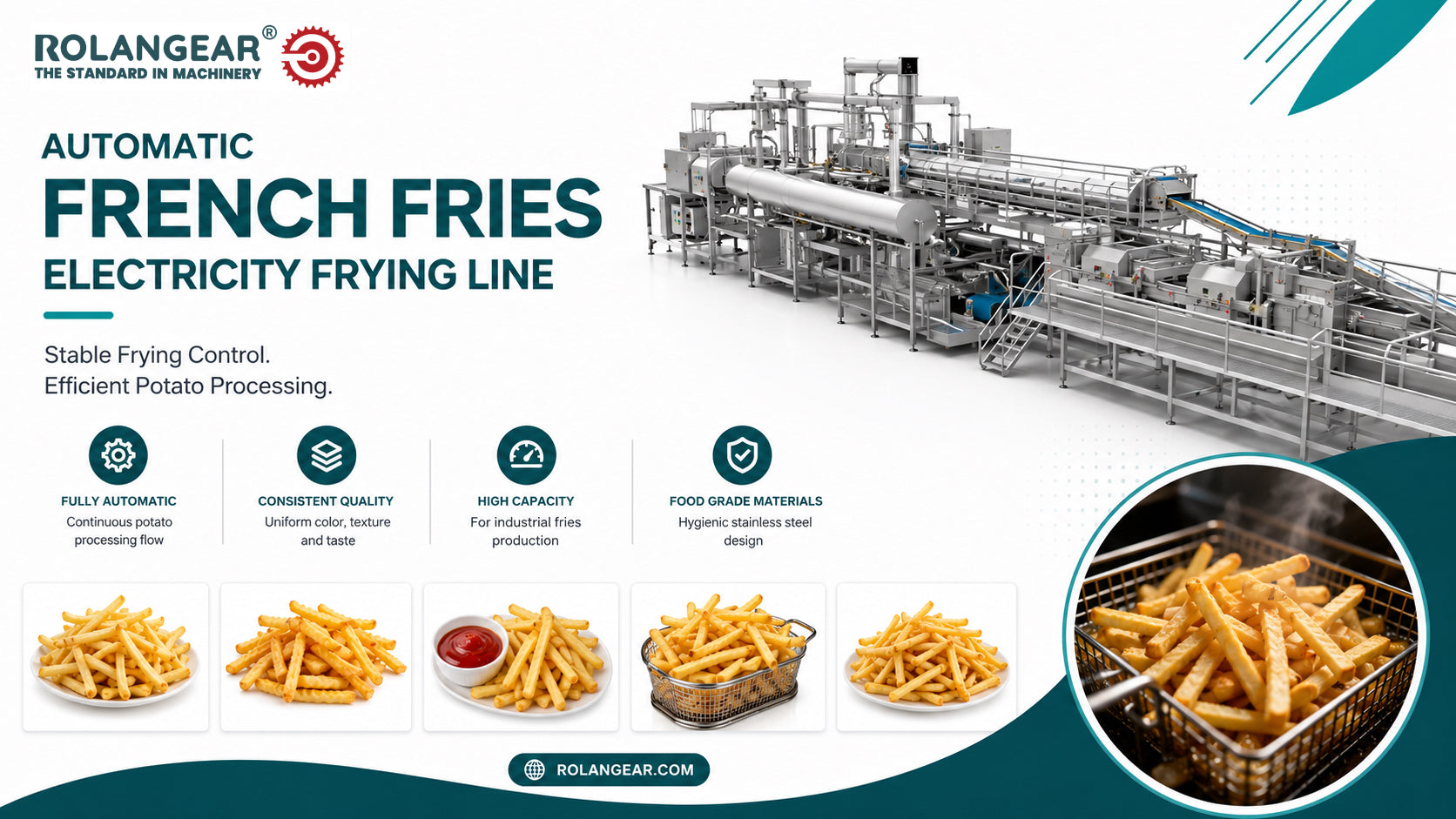
Automatic French Fries Electricity Frying Line

Automatic French Fries Electricity Frying Line: Complete Equipment Guide, Working Process, Cost & Factory Solution

Explore an Automatic French Fries Electricity Frying Line, from potato washing and cutting to electric frying, cooling, freezing, packing and factory setup.

قراءة المزيد
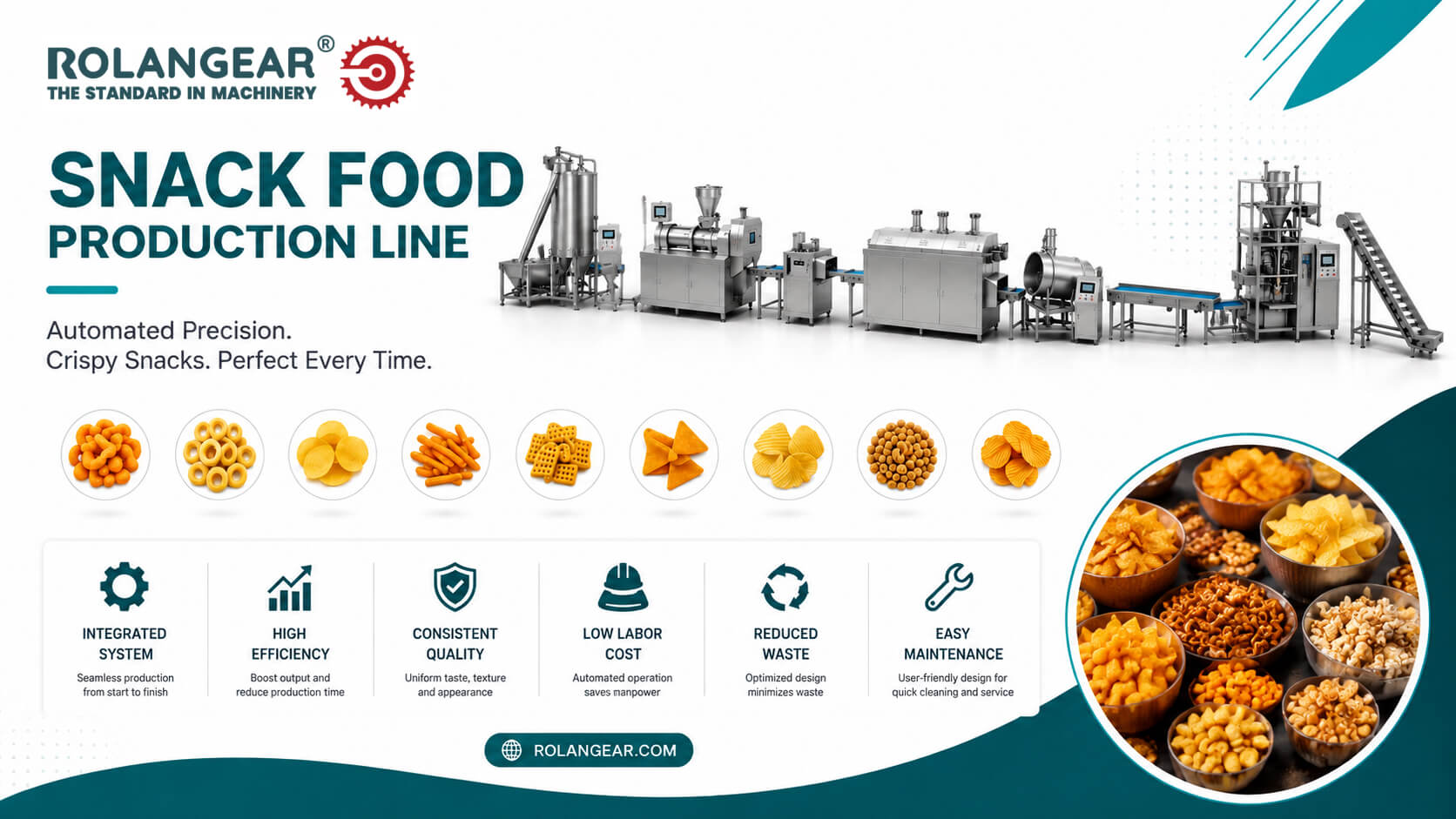
Complete Snack Food Production Line Guide
Automation Snack Food Factory

How to Start a Snack Food Manufacturing Business in 2026: Complete Snack Food Production Line Guide

Learn how a complete snack food production line works, from frying and seasoning to cooling, packing, layout planning, and equipment selection.

قراءة المزيد