إن بناء مصنع موثوق للأكياس البلاستيكية يتطلب أكثر من مجرد شراء آلة واحدة لصنع الأكياس. تحتاج عملية الإنتاج الاحترافية إلى فهم كامل للمواد الخام، وقذف الأفلام، والطباعة، وتحويل الأكياس، والقدرة الإنتاجية، ومراقبة الجودة، وسير عمل المصنع، ومتطلبات الامتثال، وإدارة التكاليف. يشرح هذا الدليل عملية تصنيع الأكياس البلاستيكية الكاملة ويساعد المشترين على اختيار خط إنتاج مناسب للتشغيل على المدى الطويل.

ما هو خط إنتاج الأكياس البلاستيكية؟
خط إنتاج الأكياس البلاستيكية هو نظام تصنيع كامل يقوم بتحويل المواد الخام البلاستيكية إلى أكياس بلاستيكية جاهزة من خلال مراحل معالجة متعددة. يركز العديد من المستثمرين الجدد فقط على آلة صنع الأكياس، ولكن حل الإنتاج الكامل يتضمن عادةً إعداد المواد، وإنتاج الأفلام، والطباعة الاختيارية، وتحويل الأكياس، وفحص الجودة، وإعادة التدوير أو معالجة النفايات، والتعبئة والتغليف.
تؤثر كل مرحلة بشكل مباشر على أداء المنتج النهائي. يمكن أن يؤدي التحكم السيئ في البثق إلى تقليل قوة الفيلم واتساق سمكه. يمكن أن تؤدي الطباعة غير المستقرة إلى الإضرار بمظهر العلامة التجارية. يمكن أن تؤدي درجة حرارة الغلق غير الصحيحة إلى إضعاف متانة الكيس. يمكن أن يؤدي القطع غير الدقيق إلى أحجام غير متناسقة وزيادة النفايات. ولهذا السبب، يجب تصميم خط الإنتاج كنظام منسق وليس كمجموعة من الآلات المنفصلة.

لماذا الاستثمار في صناعة الأكياس البلاستيكية؟
الطلب المستقر عبر الصناعات المتعددة
تستخدم الأكياس البلاستيكية في العديد من القطاعات التجارية. تتطلب متاجر البيع بالتجزئة ومحلات السوبر ماركت أكياس التسوق وحقائب الحمل، وغالبًا ما تكون بطباعة مخصصة. يستخدم مصنعو المواد الغذائية العبوات البلاستيكية لحماية الأطعمة الطازجة والمنتجات المجمدة والوجبات الخفيفة ومنتجات المخابز والمنتجات الزراعية. تستخدم الشركات الصناعية الأكياس الثقيلة للمواد الكيميائية ومواد البناء والمكونات والمدخلات الزراعية والسلع السائبة.
يسمح نطاق التطبيقات الواسع هذا للمصنعين بتطوير خطوط إنتاج مختلفة وخدمة مجموعات عملاء متعددة. يمكن أن يبدأ المصنع بمنتجات شائعة مثل أكياس التسوق أو أكياس القمامة، ثم يتوسع إلى الأكياس المطبوعة أو تغليف المواد الغذائية أو التغليف الصناعي مع نمو طلب العملاء.
التخصيص يخلق قيمة أعمال أعلى
يفضل العديد من العملاء التغليف المخصص بدلاً من الأكياس العادية القياسية. يمكن لمصنعي الأكياس البلاستيكية توفير أكياس التسوق المطبوعة، وأكياس إعلانات العلامات التجارية، وتغليف المواد الغذائية المخصصة، والأكياس الترويجية، والتعبئة ذات الحجم الخاص وفقًا لمتطلبات الطلب.
ومن خلال القدرة على الطباعة، يمكن للمصنعين تجاوز إنتاج السلع الأساسية ويصبحوا موردين للتغليف على المدى الطويل. على سبيل المثال، قد تحتاج سلسلة سوبر ماركت إلى ملايين الحقائب التي تحمل شعارها وألوانها وتصميمها الخاص. يمكن للمصنع الذي يتمتع بإنتاج أفلام مستقر وطباعة دقيقة ومعدات موثوقة لصنع الأكياس أن يخدم هذه الطلبات ذات القيمة الأعلى بشكل أكثر تنافسية.
تعمل الأتمتة على تحسين الكفاءة والربحية
تستخدم خطوط إنتاج الأكياس البلاستيكية الأوتوماتيكية الحديثة أنظمة التغذية الأوتوماتيكية، التحكم الرقمي في درجة الحرارة، التحكم PLC، المكونات المؤازرة، العد التلقائي، والمراقبة الذكية. تساعد هذه التقنيات الشركات المصنعة على زيادة الإنتاج وتقليل متطلبات العمالة وتحسين استقرار الجودة وتقليل هدر المواد.
بالنسبة للشركات التي تخطط للإنتاج على نطاق واسع، تعد الأتمتة أحد أهم العوامل التي تؤثر على الكفاءة والربحية على المدى الطويل. كما أنه يساعد على تقليل الاعتماد على المعالجة اليدوية ويحسن اتساق الإنتاج عبر الورديات المختلفة.
أنواع الأكياس البلاستيكية التي تنتجها الخطوط الصناعية
يمكن لخط إنتاج الأكياس البلاستيكية الاحترافي تصنيع أنواع مختلفة من الأكياس وفقًا لاختيار المواد، وتكوين الماكينة، وطريقة الختم، وتصميم المقبض، ومتطلبات العملاء.
تستخدم من قبل محلات السوبر ماركت ومتاجر البيع بالتجزئة والمتاجر الصغيرة والعروض الترويجية للعلامات التجارية. تشمل المتطلبات الرئيسية تصميم المقبض، والطباعة المخصصة، والهيكل خفيف الوزن، وحجم الإنتاج العالي.
تستخدم لأكياس البقالة وأكياس السوبر ماركت وحقائب حمل التجزئة. إنها تتطلب مقابض متكاملة، وتثقيبًا فعالاً، وأداءً قويًا لتحمل الأحمال.
تستخدم للنفايات المنزلية والتنظيف التجاري وجمع النفايات الصناعية. إنها تتطلب المرونة، ومقاومة التمزق، وختم سفلي قوي، وخيارات سمك مختلفة.
يستخدم للخبز والأطعمة المجمدة والوجبات الخفيفة والمنتجات الزراعية. إنها تتطلب مواد مناسبة ملامسة للأغذية، وظروف إنتاج نظيفة، وختمًا موثوقًا، وجودة طباعة جيدة.
يستخدم للمواد الكيميائية ومواد البناء والمستلزمات الزراعية والأجزاء الصناعية. إنها تتطلب قوة فيلم أعلى، ومقاومة للثقب، وسعة تحميل، وأبعاد متسقة.

عملية تصنيع الأكياس البلاستيكية الكاملة
الخطوة 1: تحضير المواد الخام
المرحلة الأولى هي اختيار وتحضير المواد البلاستيكية المناسبة. تشمل المواد الشائعة HDPE، وLDPE، وLLDPE، والمواد البلاستيكية المعاد تدويرها، والألوان الرئيسية، والمواد المضافة الوظيفية. تمنح كل مادة الكيس النهائي قوة ومرونة وشفافية وأداء مانع للتسرب وخصائص تكلفة مختلفة.
يستخدم HDPE بشكل شائع لأكياس القمصان وأكياس التسوق وأكياس البقالة. إنه يوفر قوة جيدة، صلابة، وكفاءة في التكلفة، مما يجعله مناسبًا لإنتاج الأفلام الرقيقة مع قدرة تحمل جيدة. يوفر LDPE نعومة ومرونة وشفافية وأداء أفضل في الغلق، لذلك غالبًا ما يتم استخدامه لتغليف التجزئة والأكياس ذات الأغراض العامة وتطبيقات تغليف المواد الغذائية المحددة عندما تكون المادة مناسبة. يتم اختيار LLDPE عند الحاجة إلى أداء ميكانيكي أقوى، ومقاومة للثقب، ومتانة، خاصة بالنسبة للأكياس شديدة التحمل والتغليف الصناعي.
كما أصبحت المواد المعاد تدويرها أكثر أهمية حيث يركز المصنعون على التحكم في التكاليف والإنتاج الأكثر مسؤولية. ومع ذلك، يجب إدارة المحتوى المعاد تدويره بعناية لأن المواد المعاد تدويرها المفرطة أو غير المتسقة يمكن أن تؤثر على قوة الفيلم، والشفافية، والمظهر، والتحكم في الرائحة، واستقرار الختم. بالنسبة للتطبيقات الملامسة للأغذية، يجب التأكد من ملاءمة المواد وفقًا للوائح المحلية ومتطلبات العملاء.
الخطوة 2: خلط المواد والتغذية
قبل البثق، يتم خلط الكريات البلاستيكية والأصباغ الرئيسية والمواد المضافة والمواد المعاد تدويرها المعتمدة وفقًا لصيغة المنتج. والغرض من ذلك هو تحقيق لون موحد وأداء فيلم مستقر وجودة منتج ثابتة.
يمكن أن يؤدي الخلط غير الصحيح إلى عدم تساوي اللون، أو ضعف بنية الفيلم، أو اختلاف السُمك، أو المظهر السيئ، أو البثق غير المستقر. بالنسبة للمصانع ذات السعة العالية، تساعد أنظمة التغذية والخلط الأوتوماتيكية على تحسين الدقة وتقليل التشغيل اليدوي ودعم الإنتاج المستمر.
الخطوة 3: نفخ الفيلم
نفخ الأفلام هو العملية الأساسية لتصنيع الأكياس البلاستيكية. خلال هذه المرحلة، يتم صهر المواد البلاستيكية، وبثقها، وتوسيعها، وتبريدها، وتلفها إلى لفات فيلم مستمرة. تحدد جودة الفيلم بشكل مباشر قوة الكيس النهائية واتساق السُمك والشفافية وجودة السطح وكفاءة الإنتاج.
تبدأ العملية عندما تدخل الكريات البلاستيكية إلى الطارد. يقوم نظام التسخين بإذابة المادة بينما يقوم المسمار بنقلها وخلطها وضغطها. ثم يمر البلاستيك المنصهر عبر رأس قالب دائري ليشكل أنبوبًا بلاستيكيًا مستمرًا. يتم إدخال الهواء إلى الأنبوب لتكوين فقاعة فيلم، ويساعد حجم الفقاعة في تحديد عرض الفيلم وسمكه وخواصه الميكانيكية.
التبريد مهم أيضا. يعمل تبريد الهواء المناسب على تثبيت الفيلم وتحسين الشفافية ودعم توحيد السُمك. بعد التبريد، يمر الفيلم عبر بكرات ويتم تجميعه على شكل لفات للطباعة أو صنع الأكياس.
تتضمن معلمات نفخ الفيلم الرئيسية درجة حرارة البثق، وسرعة اللولب، وتدفق المواد، وثبات الفقاعة، وسمك الفيلم، وعرض الفيلم، وشد اللف. إذا كانت هذه المعلمات غير مستقرة، فقد تكون للأكياس النهائية قوة ضعيفة، أو سماكة غير متساوية، أو إغلاق سيئ، أو مظهر غير متناسق.
الخطوة 4: الطباعة
بالنسبة للأكياس البلاستيكية المخصصة، تعد الطباعة عملية ذات قيمة مضافة مهمة. تُستخدم آلات الطباعة الفلكسوغرافية بشكل شائع لطباعة شعارات العلامات التجارية ومعلومات المنتج وتصميمات الإعلانات والأنماط الزخرفية على لفات الأفلام قبل تحويل الأكياس.
تتضمن عملية الطباعة عادةً تغذية لفة الفيلم وتطبيق الحبر ونقل النمط والتجفيف وإعادة اللف. تتضمن عوامل الاختيار المهمة عدد الألوان وسرعة الطباعة ودقة التسجيل وجودة الحبر وأداء التجفيف والتحكم في شد الفيلم.
يمكن أن توفر الأكياس المطبوعة قيمة تجارية أعلى من الأكياس العادية، خاصة بالنسبة لمحلات السوبر ماركت والعلامات التجارية للبيع بالتجزئة وشركات تغليف المواد الغذائية وعملاء التغليف الترويجي. تساعد جودة الطباعة الجيدة على تحسين رضا العملاء وتقليل المنتجات المرفوضة.
الخطوة 5: صنع الأكياس وختمها وقطعها
بعد إنتاج الفيلم والطباعة الاختيارية، يدخل الفيلم إلى آلة صنع الأكياس. تقوم هذه الآلة بتحويل لفات الفيلم المستمرة إلى أكياس تامة الصنع من خلال التغذية، والطي، والختم، والقطع، وتثقيب المقبض، والعد، والتكديس.
يتحكم نظام التغذية في شد الفيلم، وسرعته، ودقة موضعه. تعد التغذية المستقرة أمرًا ضروريًا لأنها تؤثر على طول الكيس، وموضع الطباعة، ودقة القطع، ومحاذاة الختم. اعتمادًا على نوع الكيس، يمكن طي الغشاء لإنشاء مجمعات جانبية، أو طيات سفلية، أو هياكل للمقبض.
الختم الحراري يخلق هيكل الحقيبة. يجب التحكم في درجة الحرارة والضغط ووقت السكن بعناية: إذا كانت درجة الحرارة منخفضة جدًا، فقد يكون الختم ضعيفًا؛ إذا كان مرتفعًا جدًا، فقد يتشوه الفيلم أو يتلف. بعد الختم، تقوم الآلة بتقطيع الفيلم إلى أكياس فردية. بالنسبة لأكياس التسوق وأكياس القمصان، يمكن أيضًا إكمال تثقيب المقبض تلقائيًا.
الخطوة 6: التفتيش والتعبئة والتغليف
يجب فحص الأكياس النهائية للتأكد من دقة الحجم، وقوة الختم، والمظهر، وجودة الطباعة، وموضع المقبض، ودقة القطع، واتساق السُمك، وجودة التراص. بالنسبة للأكياس المستخدمة في تغليف المواد الغذائية أو التطبيقات الصناعية، يعد الفحص مهمًا بشكل خاص لأن فشل المنتج قد يؤدي إلى شكاوى العملاء أو فقدان المنتج أو مخاوف تتعلق بالسلامة.
بعد الفحص، يتم عد الأكياس الجاهزة وتعبئتها. تشمل الطرق الشائعة تعبئة الحزم وتغليف الكرتون والتعبئة المخصصة وفقًا لمتطلبات العملاء. تعمل أنظمة العد الأوتوماتيكية على تحسين دقة الكمية وتقليل العمل اليدوي وتسريع عملية التعبئة.

الآلات الرئيسية في خط إنتاج الأكياس البلاستيكية
| المعدات | الوظيفة ونقاط الاختيار الرئيسية |
|---|---|
| نظام خلط وتغذية المواد | يقوم بإعداد الراتنج والماستر والمواد المضافة والمواد المعاد تدويرها. تشمل النقاط الرئيسية دقة الصيغة واستقرار التغذية ومستوى الأتمتة وتوافق المواد. |
| آلة نفخ الأفلام | يحول الراتنج البلاستيكي إلى لفات فيلم مستمرة. تشمل النقاط الرئيسية نوع المادة، عرض الفيلم، نطاق السُمك، سعة الإخراج، دقة رأس القالب، ونظام اللف. |
| ماكينة طباعة فلكسوغرافية | طباعة الشعارات والتصاميم ومعلومات المنتج على الفيلم. تشمل النقاط الرئيسية عدد الألوان ودقة التسجيل والسرعة ونظام التجفيف وملاءمة الحبر. |
| ماكينة تصنيع الأكياس البلاستيكية | يحول لفات الفيلم إلى أكياس جاهزة. تشمل النقاط الرئيسية نوع الكيس، طريقة الختم، دقة القطع، ثقب المقبض، التحكم المؤازر، والسرعة. |
| معدات إعادة التدوير | يعالج مخلفات تشذيب الحواف والمنتجات المعيبة لإعادة استخدامها. تشمل النقاط الرئيسية نوع النفايات والقدرة وجودة الكريات ونظافة المواد والتكامل مع الإنتاج. |
| نظام التغليف | التهم، حزم، أكياس، أو كرتون المنتجات النهائية. تشمل النقاط الرئيسية دقة العد، وتنسيق التعبئة، وتقليل العمالة، ومتطلبات المستودعات. |

دليل اختيار القدرات
يعد اختيار الطاقة الإنتاجية الصحيحة أحد أهم القرارات الاستثمارية. يجب أن يتوافق خط الإنتاج مع الطلب الحالي وخطط النمو المستقبلية وميزانية الاستثمار ومساحة المصنع. قد يؤدي شراء خط بسعة غير كافية إلى الحد من نمو الأعمال، في حين قد تؤدي المعدات كبيرة الحجم إلى زيادة التكلفة غير الضرورية.
مناسبة للمستثمرين الجدد والموردين المحليين. يتضمن التكوين النموذجي آلة نفخ الأفلام الأساسية، خيار الطباعة البسيط، وآلة أو اثنتين من آلات صنع الأكياس.
مناسبة لشركات التعبئة والتغليف الإقليمية. يتضمن التكوين النموذجي إنتاج الأفلام بسرعة أعلى، والطباعة الفلكسوغرافية، وآلات صنع الأكياس المتعددة.
مناسبة لمصنعي التصدير والموزعين الكبار. يتضمن التكوين النموذجي خطوط إنتاج متعددة، وتحكمًا آليًا، وفحصًا أقوى للجودة، وقدرة أكبر للمستودع.
مناسبة للعلامات التجارية الكبيرة وموردي التغليف بكميات كبيرة. يتضمن التكوين النموذجي الأتمتة المتقدمة وإعادة التدوير المتكاملة والتعبئة التلقائية وإدارة بيانات الإنتاج.
يعتمد الإنتاج الفعلي على نوع الكيس، وحجم الكيس، وسمك الفيلم، وصيغة المادة، وسرعة الماكينة، وطريقة الختم، ومستوى الأتمتة. على سبيل المثال، يمكن عادة إنتاج أكياس التسوق الرقيقة بشكل أسرع من الأكياس الصناعية السميكة لأن متطلبات معالجتها مختلفة.

عوامل تكلفة خط إنتاج الأكياس البلاستيكية
تعتمد التكلفة الاستثمارية لخط إنتاج الأكياس البلاستيكية على التكوين الكامل للمشروع. يجب أن يأخذ عرض الأسعار الاحترافي في الاعتبار أكثر من سعر جهاز واحد.
استثمار المعدات
تتأثر تكلفة المعدات بقدرة الإنتاج، ومستوى الأتمتة، وعرض الفيلم، وحجم الطارد، وألوان الطباعة، ونوع صنع الأكياس، وتكنولوجيا الختم، ونظام إعادة التدوير، ومعدات التعبئة والتغليف. تتطلب الآلات ذات الإنتاج العالي عادةً محركات أكبر وهياكل أقوى وأنظمة تحكم أكثر دقة ومكونات أكثر تقدمًا.
متطلبات المنتج
تتطلب المنتجات المختلفة تكوينات مختلفة للآلة. يختلف خط أكياس القمامة البسيط عن خط أكياس التسوق المطبوعة، أو خط أكياس تغليف المواد الغذائية، أو خط الأكياس الصناعية الثقيلة. نطاق حجم المنتج، نوع المقبض، طريقة الختم، جودة الطباعة، وصيغة المواد كلها تؤثر على الحل النهائي.
الاستثمار في إعداد المصنع
إلى جانب الآلات، يجب على المستثمرين التخطيط لتخزين المواد الخام، ومنطقة خلط المواد، ومنطقة نفخ الأفلام، ومنطقة الطباعة، ومنطقة صنع الأكياس، ومنطقة الفحص، ومنطقة التعبئة والتغليف، ومستودع المنتجات النهائية، وورشة الصيانة، والمكاتب، ومرافق الموظفين. قد تشمل المرافق الكهرباء والتهوية والهواء المضغوط والإضاءة ودعم التبريد وأنظمة إدارة النفايات.
تكلفة التشغيل
تعتمد الربحية على المدى الطويل على التحكم في تكلفة المواد الخام، وتكلفة الكهرباء، وتكلفة العمالة، وتكلفة الصيانة، وقطع الغيار، ومواد التعبئة والتغليف، ومخلفات الإنتاج. عادة ما يكون الراتنج البلاستيكي هو أكبر تكلفة، لذا فإن تحسين المواد وإعادة التدوير يمكن أن يحسن التحكم في التكلفة بشكل كبير.
تخطيط المصنع ومتطلبات المرافق
يعمل تخطيط المصنع المصمم جيدًا على تحسين سير العمل وتقليل حركة المواد غير الضرورية. يجب أن يسمح التدفق الموصى به للمواد بالتحرك في اتجاه واحد من تخزين المواد الخام إلى تخزين البضائع تامة الصنع.
تتضمن مبادئ التخطيط المهمة تدفق الإنتاج في اتجاه واحد، ومساحة كافية للصيانة، والتخطيط الكهربائي الآمن، والتهوية الجيدة، وتخزين المواد المنظم، ومساحة للتوسع المستقبلي. يجب تخزين لفات الأفلام البلاستيكية والأكياس الجاهزة بشكل صحيح لتجنب التلوث أو الرطوبة أو التشوه أو ارتباك الإنتاج.
يجب على المصنع المحترف أيضًا توفير مساحة لآلات إضافية، وزيادة سعة المستودعات، وتطوير منتجات جديدة، ومعدات إعادة التدوير. التخطيط الجيد يقلل من تكلفة التوسعة المستقبلية ويساعد المصنع على العمل بكفاءة أكبر منذ البداية.

مراقبة الجودة في صناعة الأكياس البلاستيكية
يجب أن يتحقق فحص المواد الخام من جودة الراتينج، ونسبة المواد المعاد تدويرها، والأصبغة الرئيسية، والمواد المضافة. وهذا يحمي قوة الفيلم ومظهره واستقرار الإنتاج. يجب أن يتحقق فحص الفيلم من اتساق السُمك والعرض والشفافية والقوة وجودة السطح لأن أداء الفيلم يحدد جودة الكيس النهائية وكفاءة المواد.
يجب أن يتحقق فحص الطباعة من دقة الألوان والتسجيل والتجفيف وموضع الشعار وجودة الحبر. يجب أن يتحقق فحص صناعة الأكياس من حجم الكيس ودقة القطع وموضع المقبض وقوة الختم. يجب أن يتحقق فحص التغليف من الكمية والتجميع وقوة الكرتون ودقة الملصق.
يعمل نظام مراقبة الجودة القوي على تقليل الشكاوى وتحسين سمعة العلامة التجارية وتقليل الهدر ومساعدة الشركات المصنعة على خدمة العملاء الأكبر حجمًا بمتطلبات أكثر استقرارًا.

فوائد الأتمتة واعتبارات عائد الاستثمار
يعد الاستثمار في خط إنتاج الأكياس البلاستيكية الأوتوماتيكي قرارًا تجاريًا طويل المدى. تعمل الأتمتة على تحسين الربحية من خلال زيادة الإنتاج، وتقليل الاعتماد على العمالة، وتحسين استقرار الجودة، وخفض الهدر. يسمح الإنتاج المستمر للمصنعين بقبول الطلبات الأكبر، بينما تساعد الأنظمة الأوتوماتيكية في الحفاظ على الحجم الثابت، والختم المستقر، والمظهر الموحد، والعد الدقيق.
يقلل الإنتاج الدقيق أيضًا من نفايات الأفلام، وقطع النفايات، والمنتجات المعيبة، وأخطاء المعالجة اليدوية. بالنسبة للمصانع التي تتنافس في أسواق التعبئة والتغليف ذات الحجم الكبير، يمكن للأتمتة أن تعمل على تحسين القدرة التنافسية ودعم النمو على المدى الطويل.
كيفية اختيار خط إنتاج الأكياس البلاستيكية المناسب
قد تختار المصانع الناشئة تكوينًا أبسط يركز على العملاء المحليين ومخاطر استثمار أقل. قد يقوم المصنعون المتناميون بالترقية إلى آلات أسرع، وقدرة طباعة إضافية، والمزيد من آلات صنع الأكياس، والتعبئة التلقائية. تحتاج مصانع التصدير الكبيرة عادة إلى خطوط إنتاج متعددة، وأتمتة متقدمة، ومراقبة جودة أقوى، وقدرة تخزين أكبر.
يجب أن يوازن خط الإنتاج الصحيح بين الطلب الحالي والنمو المستقبلي. لا ينبغي أن تنتج فقط نوع الكيس المطلوب، ولكن أيضًا تدعم الجودة المستقرة والتشغيل الفعال والصيانة الأسهل والمتطلبات التنظيمية وتكلفة التشغيل المعقولة.
لماذا تختار رولانجير؟
توفر Rolangear حلولاً كاملة لآلات التعبئة والتغليف البلاستيكية للعملاء الذين يخططون لبدء أو توسيع تصنيع الأكياس البلاستيكية. بدلاً من توريد الآلات الفردية فقط، تساعد Rolangear العملاء في التفكير في عملية الإنتاج الكاملة، وتكوين المعدات، وتخطيط المصنع، ومستوى الأتمتة، والتحكم في التكاليف، والتوسع المستقبلي.
يمكن لـ Rolangear دعم العملاء من خلال تخطيط عملية الإنتاج، واختيار المعدات، وتصميم الخط المخصص، وتوجيه تخطيط المصنع، ودعم التثبيت، وتدريب المشغلين، والخدمات الفنية، ودعم قطع الغيار. كل مشروع له متطلبات مختلفة، لذلك يجب تصميم خط الإنتاج وفقًا لنوع الكيس، والقدرة المستهدفة، ومتطلبات المواد، وظروف المصنع، وميزانية الاستثمار، وخطة التوسع المستقبلية.
الأسئلة المتداولة
ما هي الآلات اللازمة لخط إنتاج الأكياس البلاستيكية الكامل؟
يتضمن الخط الكامل عادة آلة نفخ الأفلام، آلة الطباعة الفلكسوغرافية، آلة صنع الأكياس البلاستيكية، معدات إعادة التدوير، معدات الفحص، ونظام التعبئة والتغليف. يعتمد التكوين الدقيق على نوع المنتج ومتطلبات السعة.
هل يمكن لخط إنتاج واحد أن يصنع أكياس بلاستيكية مختلفة؟
يمكن لبعض الآلات إنتاج أكياس بأحجام مختلفة أو أنواع أكياس مماثلة عن طريق تغيير الإعدادات أو القوالب أو الملحقات. ومع ذلك، قد تتطلب المنتجات المتخصصة مثل أكياس القمصان، أو الأكياس ذات الغلق الجانبي، أو الأكياس ذات السحاب، أو أكياس تغليف المواد الغذائية، أو الأكياس شديدة التحمل معدات مخصصة.
ما هي المواد الخام المستخدمة في صناعة الأكياس البلاستيكية؟
تشمل المواد الشائعة HDPE، وLDPE، وLLDPE، والمواد البلاستيكية المعاد تدويرها المعتمدة، والألوان الرئيسية، والمواد المضافة الوظيفية. يعتمد اختيار المواد على القوة والمرونة والشفافية وأداء الختم والتطبيق واللوائح المحلية ومتطلبات العملاء.
كيف أختار القدرة الإنتاجية المناسبة؟
يجب اختيار السعة وفقًا للعملاء المستهدفين، والطلبات المتوقعة، ونوع الكيس، وسمك الفيلم، ونوبات العمل، ومساحة المصنع، وميزانية الاستثمار، وخطة التوسع المستقبلية.
ما الذي يؤثر على تكلفة خط إنتاج الأكياس البلاستيكية؟
تتأثر التكلفة بقدرة الماكينة، ومستوى الأتمتة، وعرض الفيلم، وألوان الطباعة، ونوع الكيس، وطريقة الختم، ونظام إعادة التدوير، ومعدات التعبئة والتغليف، وإعداد المصنع، والمرافق، ودعم ما بعد البيع.
هل معدات إعادة التدوير ضرورية؟
لا تكون معدات إعادة التدوير مطلوبة دائمًا للعمليات الصغيرة، ولكنها مفيدة للمصانع التي ترغب في إعادة استخدام مخلفات تشذيب الحواف والمنتجات المعيبة. يمكن أن يقلل من هدر المواد ويدعم إنتاجًا أكثر استدامة.
ما هي مشاكل الجودة التي يمكن أن تحدث في إنتاج الأكياس البلاستيكية؟
تشمل المشاكل الشائعة السمك غير المتساوي، والختم الضعيف، وسوء تسجيل الطباعة، وحجم الكيس غير الصحيح، وأخطاء التثقيب في المقبض، والتجاعيد، واختلافات الألوان، وعيوب القطع، والتكديس غير المتسق.
هل يمكن تخصيص خط إنتاج الأكياس البلاستيكية؟
نعم. يمكن تخصيص خط الإنتاج وفقًا لنوع الكيس، وصيغة المواد، ومتطلبات الطباعة، وهدف الإنتاج، وتخطيط المصنع، وطريقة التعبئة والتغليف، واحتياجات إعادة التدوير، ومستوى الأتمتة.
الاستنتاج
خط إنتاج الأكياس البلاستيكية هو نظام تصنيع كامل يحول الراتنج البلاستيكي إلى أكياس جاهزة من خلال تحضير المواد، نفخ الفيلم، الطباعة الاختيارية، صنع الأكياس، الختم، القطع، الفحص، والتعبئة. لبناء مشروع تجاري ناجح لتصنيع الأكياس البلاستيكية، يحتاج المستثمرون إلى النظر ليس فقط في آلة صنع الأكياس، ولكن أيضًا في عملية الإنتاج الكاملة، والمواد الخام، وتخطيط المصنع، ومراقبة الجودة، ومستوى الأتمتة، واحتياجات الامتثال، وتكلفة التشغيل على المدى الطويل.
يمكن أن يساعد التكوين الصحيح للمعدات الشركات المصنعة على تحقيق جودة مستقرة وكفاءة إنتاج أعلى وتقليل الاعتماد على العمالة وتقليل النفايات وقدرة تنافسية أقوى في سوق التغليف.

خطط لمشروع إنتاج الأكياس البلاستيكية باستخدام Rolangear
إذا كنت تخطط لبدء مصنع جديد للأكياس البلاستيكية أو توسيع أعمال التغليف الحالية، فيمكن لشركة Rolangear توفير حلول مخصصة لإنتاج الأكياس البلاستيكية استنادًا إلى نوع حقيبتك ومتطلبات المواد والقدرة المستهدفة وظروف المصنع واحتياجات الأتمتة وخطة الاستثمار. اتصل بـ Rolangear لمناقشة مشروعك والحصول على توصية مناسبة للمعدات واقتراح خط الإنتاج.
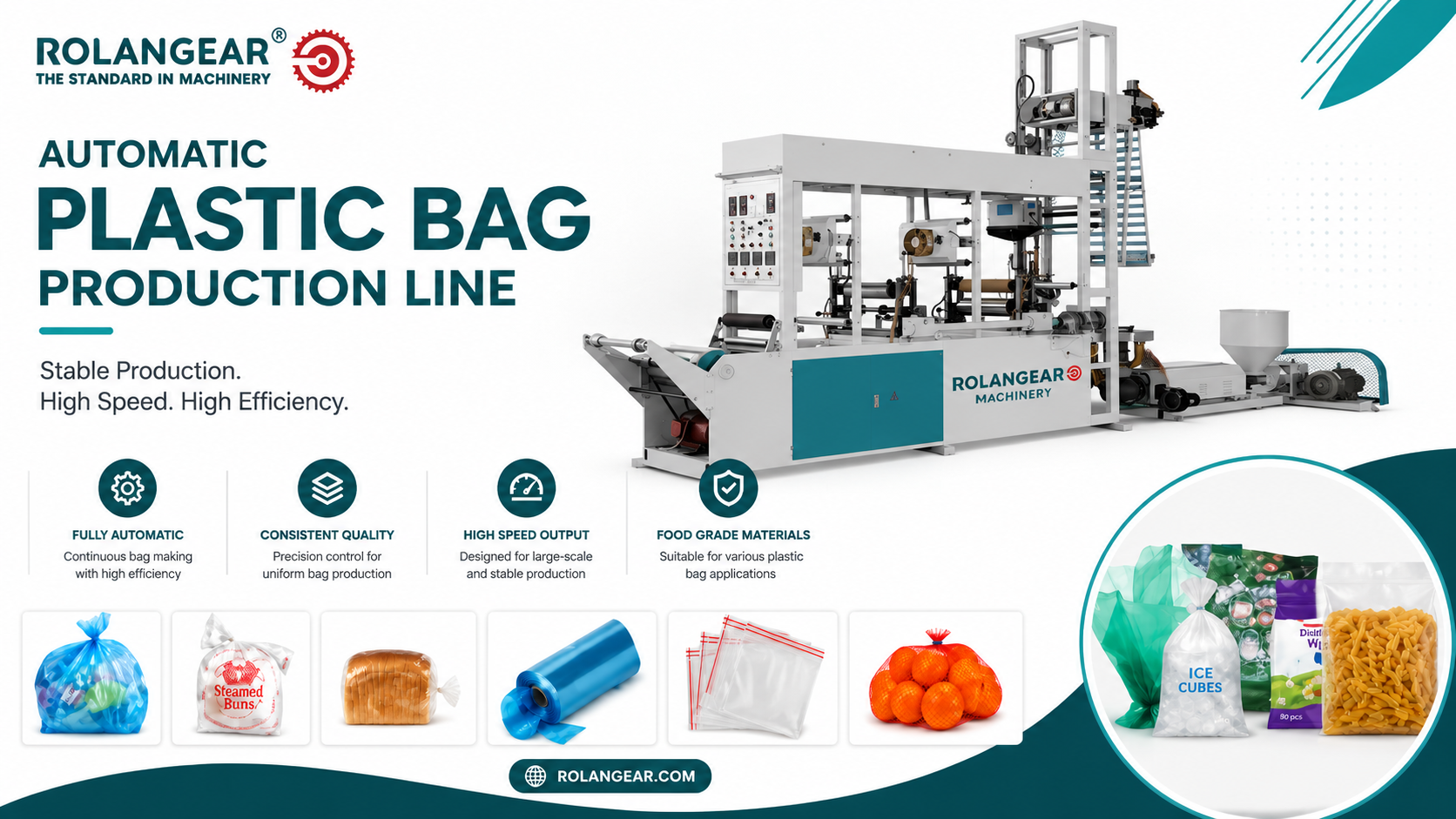
النص البديل للصورة المقترحة:خط إنتاج الأكياس البلاستيكية الأوتوماتيكي مع معدات نفخ الأفلام والطباعة وصنع الأكياس والفحص وإعادة التدوير والتعبئة والتغليف.
تواصل مع رولانجير