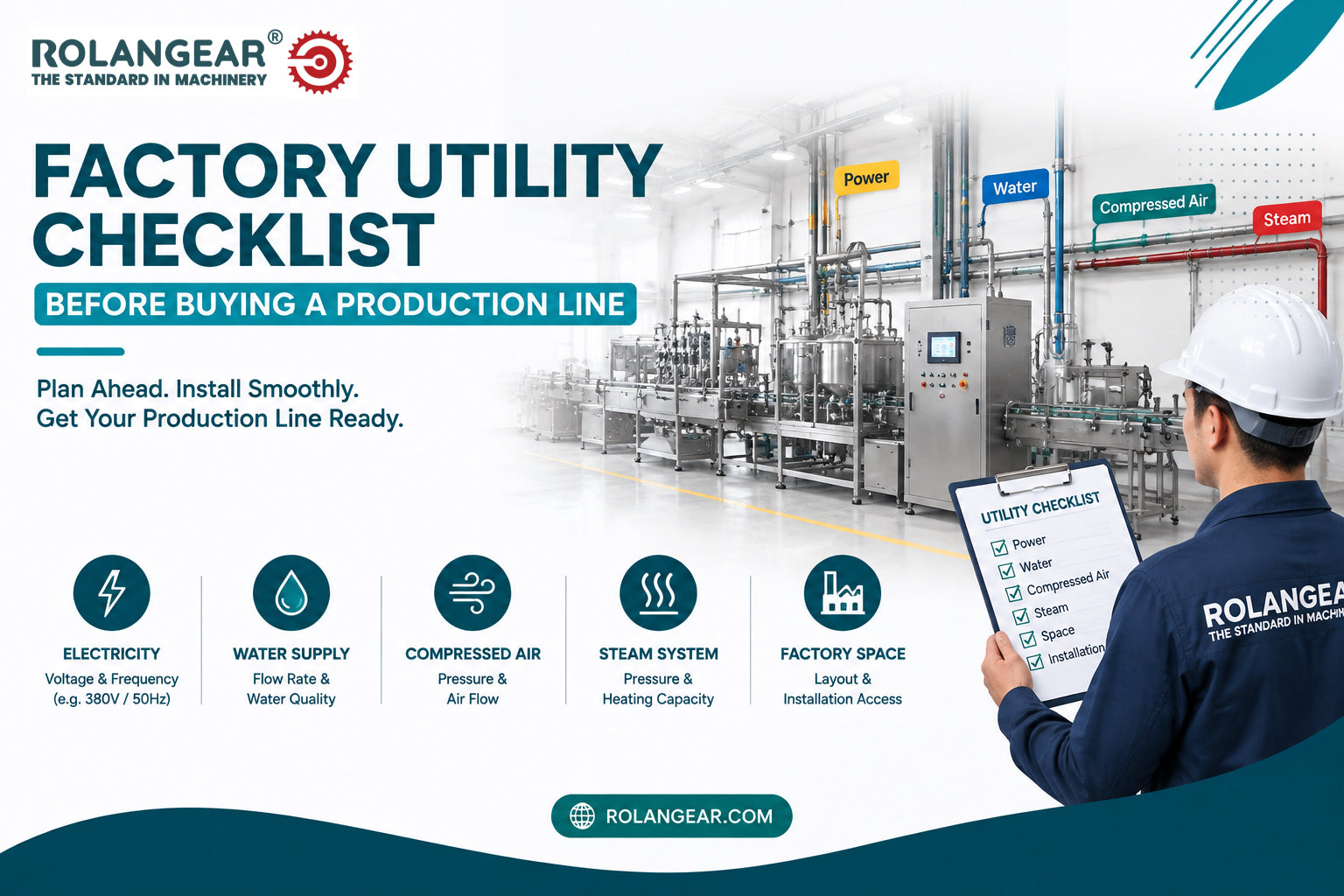
شراء أخط الانتاجمن الصين ليس فقط قرار شراء الآلة. إنه مشروع إعداد المصنع. يقوم العديد من المشترين بمقارنة أسعار المعدات، والقدرة الإنتاجية، وتجربة الموردين، ومستوى الأتمتة، لكنهم لا يؤكدون دائمًا ما إذا كانت ورشة العمل الخاصة بهم جاهزة للخط عند وصوله. يحتاج خط الإنتاج الكامل إلى كهرباء مستقرة، وإمدادات مياه مناسبة، وهواء مضغوط، وتصريف، وتهوية، ومساحة عمل كافية، ووصول آمن للتركيب والصيانة.

إذا لم يتم إعداد هذه الأدوات المساعدة مسبقًا، فحتى المعدات المصممة جيدًا يمكن أن تواجه تأخيرات أثناء التثبيت. قد لا يتمكن الخط من العمل بكامل طاقته، أو قد يواجه المشغلون صعوبة في التخطيط غير الفعال، أو قد يحتاج المشتري إلى أعمال بناء عاجلة بعد وصول الآلات إلى المصنع بالفعل. تؤدي هذه المشكلات إلى زيادة التكلفة وتأخير العائد على الاستثمار.
إجابة سريعة: قبل شراء خط إنتاج، تأكد من الجهد والتردد المطلوبين، وإجمالي حمل الطاقة، وضغط الهواء المضغوط واستهلاكه، وجودة المياه وتدفقها، ومسار الصرف، واحتياجات التدفئة أو التبريد، والتهوية، وحالة الأرضية، وتصميم الماكينة، ومساحة الوصول، ودعم التثبيت المحلي. اطلب من المورد الرسومات التخطيطية وبيانات استهلاك المرافق قبل الشحن، وليس بعد التسليم.
تم تصميم قائمة المراجعة هذه للمشترين الذين يخططون لخطوط معالجة الأغذية، وخطوط المشروبات، وخطوط التعبئة والتغليف، وأنظمة معالجة البلاستيك، ومشاريع التصنيع الصناعية الأخرى. وهو يشرح المتطلبات الرئيسية لمرافق المصنع، والأخطاء الشائعة، والجدول الزمني للتحضير، وكيف يمكن لـ Rolangear دعم مشروع أكثر سلاسة بدءًا من اختيار المعدات وحتى التشغيل.
لماذا تعتبر مرافق المصنع مهمة قبل تركيب خط الإنتاج؟
خط الإنتاج هو نظام صناعي متصل. المحركات تحتاج إلى قوة مستقرة. تحتاج الصمامات الهوائية إلى هواء مضغوط نظيف. قد تحتاج معدات المعالجة إلى الماء أو البخار أو الغاز أو التبريد أو التهوية. عمليات التنظيف تحتاج إلى الصرف. يحتاج المشغلون إلى الوصول الآمن حول المعدات. عندما يكون هناك شرط داعم واحد مفقود، يمكن أن يتأثر الخط بأكمله.

بالنسبة للمشترين الدوليين، يعد تخطيط المرافق مهمًا بشكل خاص لأن الآلات يتم تصميمها عادةً وفقًا للشروط الفنية المؤكدة. يجب التحقق من الجهد والتردد وضغط الهواء واستهلاك المياه وأبعاد الماكينة ومتطلبات التثبيت قبل الإنتاج أو الشحن. إذا كانت حالة المصنع المحلي مختلفة عن متطلبات التصميم، فقد تكون هناك حاجة لإجراء تعديلات.
يساعد الإعداد الجيد المشترين على تجنب توقف الماكينة عن العمل، وانخفاض الإنتاج، والترقيات الكهربائية الطارئة، وسير العمل السيئ، والتأخير غير الضروري في التشغيل. كما أنه يساعد المورد على تصميم حل عملي أكثر لأنه يمكن مطابقة تخطيط المعدات وسرعة الخط والأنظمة المساعدة مع بيئة المصنع الحقيقية.
متطلبات مرافق المصنع لخط الإنتاج الرئيسي
مرافق المصنع هي الأنظمة الداعمة التي تسمح لمعدات التصنيع بالعمل بأمان وكفاءة. تعتمد المتطلبات الدقيقة على المنتج والعملية ومستوى الأتمتة وظروف المصنع المحلية، ولكن معظم خطوط الإنتاج تتطلب عدة أنظمة مشتركة.
| فائدة | لماذا يهم؟ | ما يجب تأكيده |
|---|---|---|
| النظام الكهربائي | تشغيل المحركات وخزائن التحكم وأجهزة الاستشعار والسخانات والمضخات والناقلات وآلات التعبئة والتغليف | الجهد والتردد والمرحلة وإجمالي الطاقة المثبتة وحمل التشغيل ومسار الكابل والتأريض وحماية السلامة |
| إمدادات المياه | يدعم المعالجة أو التنظيف أو التبريد أو توليد البخار أو الاتصال بالمنتج عند الاقتضاء | جودة المياه، الضغط، معدل التدفق، الاستهلاك اليومي، احتياجات الترشيح أو التنقية |
| الهواء المضغوط | تشغيل صمامات الهواء والأسطوانات وأنظمة التعبئة ووحدات الختم والعديد من ماكينات التعبئة والتغليف | ضغط الهواء، والطلب على التدفق، وحجم الضاغط، ومجفف الهواء، والمرشحات، وتخطيط خطوط الأنابيب |
| الصرف الصحي ومياه الصرف الصحي | يزيل مياه التنظيف والمياه المعالجة ومياه الصرف الصحي بأمان | مصارف الأرضية، ومسار التصريف، والانحدار، ومعالجة مياه الصرف الصحي، وتصميم النظافة |
| التدفئة أو التبريد | يتحكم في الطهي أو التجفيف أو التعقيم أو الذوبان أو التبريد أو درجة حرارة المنتج | البخار والتدفئة الكهربائية والغاز والزيت الحراري وسعة التبريد ومياه التبريد والتهوية |
| مساحة المصنع وتخطيطه | يحدد التثبيت وتدفق المواد وحركة المشغل والسلامة وكفاءة الصيانة | مساحة الماكينة، واتجاه الخط، ومساحة العمل، ومناطق التخزين، والوصول إلى الصيانة، ومساحة التوسعة |
يجب على المورد تقديم قائمة المرافق بناءً على تكوين المعدات المحددة. يجب على المشترين مقارنة هذه القائمة بظروف المصنع المحلي والتأكد مما إذا كان البناء أو ترقيات الطاقة أو خطوط الأنابيب أو تعديلات التخطيط مطلوبة قبل الشحن.

1. قائمة مراجعة النظام الكهربائي
عادة ما تكون الكهرباء هي الأداة الأولى التي يتم تأكيدها. قد تشمل خطوط الإنتاج المحركات الرئيسية، ومحركات النقل، وأنظمة التحكم PLC، وأجهزة الاستشعار، ومكونات التدفئة، والمضخات، والضواغط، وآلات الترميز، وأنظمة التعبئة، ومعدات التعبئة والتغليف. يجب أن يوفر المصنع طاقة مستقرة تتوافق مع تصميم المعدات.
تأكيد الجهد والتردد والمرحلة
تستخدم البلدان المختلفة معايير طاقة صناعية مختلفة، مثل 380 فولت، أو 400 فولت، أو 415 فولت، أو 440 فولت، وإما 50 هرتز أو 60 هرتز. قبل تصنيع المعدات، يجب على المشترين التأكد من الجهد والتردد المحلي مع المورد. قد تؤدي المواصفات الكهربائية غير الصحيحة إلى حدوث مشكلات في المحرك أو أخطاء في نظام التحكم أو التشغيل غير المستقر أو أعمال التعديل الإضافية.
حساب إجمالي الطلب على الطاقة
لا تتحقق فقط من قوة الجهاز الرئيسي. وقد يشمل إجمالي الطلب الكهربائي آلات الإنتاج وأنظمة التدفئة والمضخات والضواغط والناقلات ومعدات التعبئة والتغليف والإضاءة والتهوية والآلات المساعدة. يجب أيضًا أن يحتفظ مصدر طاقة المصنع بالقدرة على التوسع المستقبلي أو زيادة الطلب على الإنتاج. قد يواجه الخط الذي يعمل بالقرب من حد نظام الطاقة عملية غير مستقرة أثناء ذروة الحمل.
التخطيط للتوزيع الكهربائي الآمن
يجب أن يشتمل النظام الكهربائي الاحترافي على خزانات توزيع مناسبة، وحجم الكابلات، والتأريض، والحماية من الحمل الزائد، ومحطات التوقف في حالات الطوارئ، وتوجيه الكابلات الآمنة. يجب تحديد نقاط التوصيل الكهربائية وفقًا للتخطيط النهائي للماكينة. يعمل التخطيط الجيد على تحسين سلامة المشغل وموثوقية المعدات واستقرار التشغيل على المدى الطويل.
العناصر الكهربائية للتأكيد:
- الجهد المحلي والتردد والمرحلة ومعيار التأريض
- إجمالي الطاقة المثبتة وقوة التشغيل العادية
- سعة خزانة التوزيع ومسار الكابل
- نقاط الاتصال لكل قسم من أقسام الماكينة
- حماية السلامة والتوقف في حالات الطوارئ ومتطلبات الامتثال المحلية
- الطاقة الاحتياطية للمعدات المساعدة والتوسع المستقبلي
2. تخطيط إمدادات المياه والصرف الصحي والصرف الصحي
تختلف متطلبات المياه بشكل كبير حسب الصناعة. بعضخطوط التعبئة والتغليفاستخدم القليل جدًا من الماء، في حين أن خطوط إنتاج المشروبات والألبان وتجهيز الأغذية والمواد الكيميائية والتنظيف المكثف قد تتطلب نظامًا مائيًا موثوقًا به. يجب على المشترين التأكد مما إذا كان الماء يستخدم كمكون، للغسيل، للتبريد، لتوليد البخار، أو لتنظيف المعدات.
نوعية المياه
بالنسبة لمشاريع الأغذية والمشروبات، يمكن أن تؤثر جودة المياه بشكل مباشر على سلامة المنتج، والطعم، والاتساق، والنظافة. قد يحتاج المصنع إلى الترشيح أو التنقية أو التناضح العكسي أو التعقيم بالأشعة فوق البنفسجية أو أنظمة معالجة أخرى حسب المنتج. قد تكون متطلبات إنتاج الأغذية الجافة أخف من متطلبات معالجة المشروبات أو منتجات الألبان، لكن جودة مياه التنظيف لا تزال مهمة للنظافة.
ضغط الماء ومعدل التدفق
يجب أن يوفر مصدر المياه ما يكفي من الضغط والتدفق أثناء الإنتاج والتنظيف العادي. يمكن أن يؤدي عدم كفاية المياه إلى تقليل كفاءة التنظيف، أو التأثير على استقرار المعالجة، أو الحد من الإنتاج. يجب على الموردين تقديم معلومات الاستهلاك الموصى بها، ولكن يجب على المشتري أيضًا مراعاة ساعات التشغيل اليومية، وتكرار التنظيف، وذروة الاستخدام، ومتطلبات خزان التخزين.
الصرف الصحي ومياه الصرف الصحي
غالبًا ما يتم الاستهانة بالصرف. يمكن أن يؤدي سوء الصرف إلى مشاكل تتعلق بالنظافة، والمياه الراكدة، وتلف الأرضيات، وانقطاع الإنتاج، وارتفاع تكاليف الصيانة. يجب على مصانع الأغذية والمشروبات ومنتجات الألبان والكيماويات تخطيط مصارف الأرضيات والمنحدرات وجمع مياه الصرف الصحي ومتطلبات المعالجة قبل التثبيت. يجب ألا تتداخل طرق الصرف مع حركة المشغل أو أسس المعدات.
3. متطلبات الهواء المضغوط
تستخدم العديد من خطوط الإنتاج الحديثة مكونات هوائية للصمامات والأسطوانات وتحديد موضع المنتج والتعبئة والختم والقطع والرفع والتعبئة. يعد نظام الهواء المضغوط المستقر ضروريًا لحركة الماكينة المتسقة والتشغيل الدقيق.
يجب على المشترين تأكيد ضغط الهواء واستهلاك الهواء المطلوب للخط الكامل. قد تستخدم الأنظمة الصناعية الشائعة حوالي 6 إلى 8 بار، لكن المتطلبات النهائية يجب أن تأتي من تكوين المعدات. يمكن أن يتسبب الضاغط الصغير الحجم في بطء عمل الماكينة، أو الختم غير المستقر، أو أخطاء التعبئة، أو توقف الإنتاج المتكرر.
جودة الهواء مهمة أيضًا. يمكن أن تؤدي الرطوبة وجزيئات الزيت والغبار إلى إتلاف المكونات الهوائية وقد تخلق مخاوف تتعلق بالنظافة في إنتاج الأطعمة أو المشروبات. قد يشتمل نظام الهواء المضغوط الكامل على ضاغط هواء، وخزان تخزين الهواء، ومجفف الهواء، والمرشحات، وفواصل الرطوبة، وشبكة خطوط أنابيب جيدة التخطيط. وينبغي أن يكون حجم النظام مع مراعاة هامش الأمان والتوسع المستقبلي.
4. البخار والتدفئة والتبريد والتهوية
تتطلب بعض خطوط الإنتاج التحكم في التدفئة أو التبريد. قد تستخدم تطبيقات معالجة الأغذية والمشروبات ومنتجات الألبان والمواد الكيميائية والتعبئة والتغليف الغلايات البخارية أو السخانات الكهربائية أو تسخين الغاز أو أنظمة الزيت الحراري أو المبردات أو أبراج التبريد أو معدات التهوية. يعتمد الاختيار الصحيح على متطلبات المنتج، وتوافر الطاقة، وتكلفة التشغيل المحلية، ولوائح السلامة.
قد تكون هناك حاجة للتدفئة للخبز أو الطهي أو التجفيف أو التعقيم أو الذوبان أو الختم أو التحكم في درجة الحرارة. قد تكون هناك حاجة إلى التبريد لتثبيت المنتج، أو التحكم في درجة حرارة الخزان، أو اتساق العملية. إذا لم يقوم المصنع بتجهيز قدرة التدفئة أو التبريد المناسبة، فقد لا يصل الخط إلى الجودة أو الإنتاج المتوقع.
وينبغي أيضا النظر في التهوية. يمكن أن تؤثر الحرارة أو البخار أو الرائحة أو الغبار أو الرطوبة على المشغلين والمكونات الكهربائية وجودة المنتج ونظافة المصنع. يجب أن يتوافق تخطيط التهوية مع العملية ومتطلبات مكان العمل المحلي. في بعض المشاريع، قد تكون هناك حاجة إلى قنوات العادم، أو تغيير الهواء، أو جمع الغبار، أو التحكم في الرطوبة.
5. مساحة المصنع، والتخطيط، ومتطلبات سير العمل
لا ينبغي أن يتناسب خط الإنتاج داخل ورشة العمل فقط. يجب أن يتناسب بطريقة تدعم التشغيل الفعال. يجب على المشترين التحقق من أبعاد الماكينة، واتجاه الخط، وتدفق المنتج، ووصول المشغل، ومناطق التخزين، ومساحة التنظيف، ومساحة الصيانة، وإمكانيات التوسع المستقبلية.

ينتقل تدفق المصنع العملي عادةً من تخزين المواد الخام إلى الإنتاج والفحص والتعبئة ومستودع المنتجات النهائية. عندما يتبع التخطيط اتجاه حركة المنتج، فإنه يقلل من النقل غير الضروري ووقت الانتظار ومتطلبات العمالة ومخاطر التلوث المتبادل. بالنسبة لمشاريع الأغذية والمشروبات، قد يكون الفصل بين مناطق المواد الخام ومناطق الإنتاج ومناطق المنتج النهائي مهمًا أيضًا.
مساحة الصيانة هي نقطة رئيسية أخرى. يقوم بعض المشترين فقط بالتحقق مما إذا كان بإمكان الآلات دخول ورشة العمل فعليًا. ومع ذلك، يحتاج المشغلون والفنيون إلى مساحة للفحص اليومي والتنظيف واستبدال قطع الغيار والتعديل والخدمة. يمكن أن يؤدي الوصول المحدود إلى تحويل الصيانة البسيطة إلى مهمة صعبة وزيادة وقت التوقف عن العمل.
عناصر التخطيط للتأكيد:
- حجم الباب، ومسار التفريغ، وإمكانية الوصول للرفع لتسليم الماكينة
- إجمالي طول الخط وعرضه وارتفاعه ومساحة العمل المطلوبة
- مناطق تخزين المواد الخام ومواد التعبئة والتغليف والمنتجات النهائية
- ممرات المشغل وإمكانية الوصول للصيانة على كلا الجانبين عند الحاجة
- مستوى الأرضية وسعة الحمولة ومنحدر الصرف ومتطلبات الأساس
- مساحة لتوسيع القدرة المستقبلية أو آلات إضافية
ملاحظات المرافق الخاصة بالصناعة

خطوط إنتاج المواد الغذائية
تتطلب خطوط إنتاج الأغذية عادةً اهتمامًا أكبر بالنظافة والتنظيف وجودة المياه والصرف والتحكم في درجة الحرارة والتهوية. قد تتطلب خطوط البسكويت والخبز والوجبات الخفيفة والشوكولاتة ومنتجات الألبان والأطعمة الجاهزة مناطق للكهرباء والماء والهواء المضغوط والتدفئة والتبريد والصرف الصحي. يجب أن يسمح التخطيط بتنظيف المعدات دون عرقلة تدفق الإنتاج. بالنسبة لأنظمة الخبز أو الطهي، يجب التأكد من تصميم مصدر الحرارة والعادم مبكرًا.
خطوط إنتاج المشروبات
غالبًا ما تحتوي خطوط المشروبات على متطلبات مرافق أكثر تعقيدًا لأنها تتضمن معالجة المياه وخزانات الخلط والتعبئة والتغطية ووضع العلامات والتعبئة. نوعية المياه أمر بالغ الأهمية. قد تشمل الأنظمة المرشحات الرملية، ومرشحات الكربون، والتناضح العكسي، والتعقيم بالأشعة فوق البنفسجية، والمبردات، وأبراج التبريد، والهواء المضغوط للصمامات الهوائية أو التعامل مع الزجاجات. يجب أن تكون أنظمة الصرف الصحي والتنظيف مصممة للغسيل المتكرر والصرف الصحي.
خطوط إنتاج التعبئة والتغليف
تركز خطوط التعبئة والتغليف عادة على الكهرباء والهواء المضغوط وظروف المصنع المستقرة ومساحة كافية لتغذية المواد وتفريغ المنتج النهائي. قد تستخدم المعدات مثل آلات تشكيل الكرتون، وآلات التغليف، وماكينات وضع الملصقات، وآلات الترميز، وآلات الختم، والتعبئة الأوتوماتيكية المحركات، وأجهزة PLC، وأجهزة الاستشعار، والسخانات، والأنظمة الهوائية. تساعد الطاقة المستقرة والهواء المضغوط النظيف في الحفاظ على التشغيل الدقيق وتقليل وقت التوقف عن العمل.
الجدول الزمني للتحضير قبل وصول الآلة

أحد الأخطاء الشائعة هو تجهيز المصنع فقط بعد وصول خط الإنتاج. النهج الأفضل هو استخدام المستندات الفنية للمورد لإعداد المرافق أثناء تصنيع المعدات أو قبل الشحن.
| التوقيت | الإجراءات الرئيسية | الغرض |
|---|---|---|
| 60-90 يومًا قبل التسليم | تأكد من نوع المنتج، والقدرة المستهدفة، وتنسيق التغليف، وتكوين الماكينة، ورسم التخطيط، والطلب على الطاقة، والطلب على المياه، والطلب على الهواء، وظروف التثبيت | يتيح الوقت لبناء المصنع، وترقيات المرافق، وتعديلات التخطيط |
| 30 يوما قبل الوصول | التحقق من الكهرباء والماء والهواء المضغوط والصرف الصحي وحالة الأرضية ومسار التفريغ والعمال المحليين والكهربائيين والفنيين ومعدات الرفع إذا لزم الأمر | التأكد من أن المصنع جاهز للتركيب عند وصول الآلات |
| قبل بدء الإنتاج | فحص المعدات، واختبار توصيلات المرافق، وإجراء اختبار الماكينة الفارغة، وإكمال الإنتاج التجريبي، ومشغلي القطارات، وتسجيل نقاط التعديل | يؤكد التشغيل الآمن ويعد الفريق لإنتاج مستقر |
يجب على المشترين طلب مستندات واضحة من المورد، بما في ذلك الرسومات التخطيطية، وأبعاد الماكينة، ونقاط الاتصال، وقائمة الطاقة، واستهلاك الهواء، واستخدام المياه، وتعليمات التثبيت. يجب مراجعة هذه المستندات مع المهندسين أو المقاولين المحليين قبل الشحن.
الأخطاء الشائعة في مرافق المصنع التي يجب على المشترين تجنبها

التركيز فقط على سعر الجهاز
إن انخفاض سعر المعدات لا يضمن انخفاض تكلفة المشروع. قد يشمل إجمالي الاستثمار تجديد المصنع، والتركيبات الكهربائية، ومعالجة المياه، وأنظمة الهواء المضغوط، وإنشاء الصرف الصحي، والنقل، والتشغيل، وتدريب المشغلين. يساعد تخطيط المرافق المشترين على فهم الاستثمار الحقيقي قبل الالتزام بخط الإنتاج.
القدرة الكهربائية غير كافية
إذا لم يتمكن مصدر الطاقة الحالي من دعم الخط الجديد، فقد يحتاج المصنع إلى لوحات أو كابلات أو محولات أو أنظمة توزيع مطورة. وهذا يمكن أن يؤخر التثبيت ويزيد من التكلفة. تأكد من إجمالي الطلب على الطاقة قبل الشراء، خاصة بالنسبة للخطوط أو العمليات الأوتوماتيكية بالكامل مع معدات التدفئة.
سوء تخطيط تخطيط المصنع
يمكن أن يتناسب الخط فعليًا مع المصنع ولكنه لا يزال يعمل بشكل سيئ. يمكن أن تؤدي حركة المواد الطويلة، أو الوصول المحدود للصيانة، أو الممرات المسدودة، أو التخزين غير الكافي إلى تقليل الكفاءة. يجب أن يأخذ التخطيط في الاعتبار سير العمل الكامل، وليس أبعاد الماكينة فقط.
تجاهل التوسع المستقبلي
تبدأ العديد من المصانع بخط واحد ثم تضيف لاحقًا منتجات جديدة أو سعة أكبر أو خيارات تعبئة إضافية. إن التخطيط لمساحة إضافية وقدرة المرافق في وقت مبكر يمكن أن يقلل من تكاليف التجديد المستقبلية ويجعل التوسع أسهل.
كيف تساعد Rolangear العملاء في إعداد مرافق المصنع
تدعم Rolangear العملاء بأكثر من مجرد أجهزة فردية. يتطلب مشروع خط الإنتاج الناجح تكوين المعدات، وتخطيط تخطيط المصنع، وتوجيه متطلبات المرافق، ودعم التثبيت، والتشغيل، وتدريب المشغلين، والتواصل الفني العملي قبل التسليم.
قبل تصنيع المعدات، تساعد Rolangear العملاء على التأكد من القدرة الإنتاجية ومواصفات الماكينة واحتياجات المرافق وظروف التثبيت. يمكن تخصيص الحل وفقًا لنوع المنتج وحجم المصنع ومستوى الأتمتة والأهداف الاستثمارية وظروف المرافق المحلية. وهذا يساعد خط الإنتاج على التوافق مع بيئة المصنع الحقيقية بدلاً من خلق المشاكل بعد الوصول.
بالنسبة للمشترين الذين يبدأون مصنعًا جديدًا أو يقومون بترقية ورشة عمل موجودة، يعد التواصل المبكر أمرًا مهمًا. قم بإعداد تفاصيل المنتج والقدرة المستهدفة والمساحة المتاحة وإمدادات الطاقة المحلية وحالة المياه ونظام الهواء المضغوط وطريقة التغليف المفضلة. باستخدام هذه المعلومات، يمكن تخطيط تصميم خط الإنتاج بشكل أكثر دقة.
أسئلة لإرسال المورد الخاص بك قبل التأكيد النهائي
قبل تأكيد الطلب النهائي، يجب على المشترين تحويل قائمة مراجعة المرافق إلى مناقشة فنية قصيرة مع المورد. تساعد هذه الخطوة كلا الجانبين على تجنب الافتراضات. يجب على المشتري مشاركة حجم ورشة العمل المتاحة، والجهد والتردد المحلي، وظروف المياه، وقدرة ضاغط الهواء، وحالة الصرف، وتدفق المنتج المفضل، وأي حدود ناجمة عن الأبواب، أو الأعمدة، أو الأرضيات، أو الآلات الموجودة. يمكن للمورد بعد ذلك التحقق مما إذا كان تخطيط الخط المقترح وقائمة المرافق يتطابقان مع الموقع الحقيقي.
تتضمن الأسئلة المفيدة ما يلي: ما هو إجمالي الطاقة المثبتة وحمل التشغيل المتوقع؟ أين يجب أن تقع كل نقطة توصيل للكهرباء والماء والهواء؟ هل يتطلب الخط ضاغطًا أو غلاية أو مبردًا أو وحدة معالجة مياه أو نظام عادم منفصل؟ ما هي قوة الأرضية والتسوية الموصى بها؟ ما هي المساحة التي يجب حجزها للتنظيف والصيانة والتوسع المستقبلي؟ هل هناك أي معايير محلية للسلامة أو النظافة قد تؤثر على التصميم؟
يجب أن تتم هذه المحادثة قبل الشحن. عندما يتم تأكيد تفاصيل المرافق مبكرًا، يمكن للمشتري إعداد أعمال البناء أثناء تصنيع الآلات، ويمكن للمورد تعديل التصميم إذا لزم الأمر. يقلل الاتصال الواضح من ضغط التثبيت ويساعد فريق الإنتاج على بدء التشغيل التجريبي بمفاجآت أقل.
قائمة مراجعة مرافق المصنع النهائية قبل الشراء
قبل تأكيد طلب خط الإنتاج، يجب على المشترين التحقق مما يلي:
- هل أكدنا الجهد المحلي والتردد والطور والقدرة الإجمالية للطاقة؟
- هل نعرف نوعية المياه وضغطها ومعدل تدفقها ومتطلبات معالجتها؟
- هل حجم نظام الهواء المضغوط مناسب للضغط والتدفق وجودة الهواء؟
- هل تم تجهيز طرق الصرف الصحي وتصريف المياه العادمة وتنظيف الأرضيات؟
- هل تتطلب العملية بخارًا أم غازًا أم تسخينًا كهربائيًا أم زيتًا حراريًا أم تبريدًا أم تهوية؟
- هل تحتوي الورشة على مساحة كافية للآلات والمشغلين والصيانة والتخزين والتوسعة؟
- هل يتم تأكيد الرسومات التخطيطية ونقاط الاتصال وبيانات استهلاك المرافق مع المورد؟
- هل يتم ترتيب الكهربائيين والفنيين والعمال وأدوات الرفع المحلية للتركيب؟
- هل شملت ميزانية المصنع تحديث المرافق والبناء، وليس فقط سعر الماكينة؟
الأسئلة المتداولة
ما هي المرافق المطلوبة قبل تركيب خط الإنتاج؟
تتطلب معظم خطوط الإنتاج الكهرباء، والهواء المضغوط، ومساحة مناسبة، ووصولاً آمنًا، وفي بعض الأحيان تحتاج إلى الماء، أو الصرف، أو البخار، أو التدفئة، أو التبريد، أو التهوية. تعتمد المتطلبات الدقيقة على عملية الإنتاج وتكوين المعدات.
متى يجب تجهيز مرافق المصنع؟
ينبغي تخطيط المرافق بعد تأكيد تصميم خط الإنتاج وقبل وصول المعدات. يجب على المشترين استخدام المستندات الفنية للمورد لإعداد دعم الطاقة والمياه والهواء والصرف الصحي والتخطيط والتركيب مسبقًا.
كيف يمكنني معرفة متطلبات المرافق لخط الإنتاج الخاص بي؟
اطلب من المورد الرسومات التخطيطية وأبعاد الماكينة وقائمة الطاقة واستهلاك الهواء واستهلاك المياه وملاحظات الصرف وتعليمات التثبيت. يجب مراجعة هذه المستندات مع المهندسين المحليين قبل الشحن.
ماذا يحدث إذا كانت إمدادات الطاقة في المصنع غير كافية؟
قد تؤدي الطاقة غير الكافية إلى منع الخط من العمل بشكل صحيح، أو تقليل كفاءة الإنتاج، أو أنظمة الحماية من التعثر، أو تتطلب ترقيات كهربائية طارئة. تأكد من الحمولة الإجمالية والقدرة الاحتياطية قبل الطلب.
هل يمكن لـ Rolangear المساعدة في تخطيط تخطيط المصنع؟
نعم. يمكن لـ Rolangear دعم تخطيط المصنع استنادًا إلى القدرة الإنتاجية ونوع المنتج وتكوين الماكينة ومتطلبات سير العمل وظروف ورشة العمل المتاحة.
الاستنتاج
يعد تجهيز مرافق المصنع قبل شراء خط إنتاج من الصين من أهم الخطوات لمشروع تصنيع ناجح. تحتاج الآلات إلى البيئة الداعمة الصحيحة لتعمل بأمان وكفاءة وثبات. الكهرباء المستقرة، وإمدادات المياه المناسبة، والهواء المضغوط النظيف، والصرف المناسب، وأنظمة التدفئة أو التبريد، والتهوية، والتخطيط العملي، كلها تؤثر على سرعة التثبيت وأداء الإنتاج على المدى الطويل.
يمكن للمشترين الذين يخططون للمرافق مبكرًا تقليل التكاليف غير المتوقعة، وتجنب تأخير التشغيل، ومساعدة خط الإنتاج في الوصول إلى إنتاجه المتوقع بشكل أسرع. قبل تأكيد الطلب، قم بإعداد معلومات المصنع الخاصة بك، واطلب المستندات الفنية، وراجع قائمة التحقق من المرافق مع المورد الخاص بك وفريق التثبيت المحلي.
توفر Rolangear حلول خطوط إنتاج مخصصة للمصنعين في جميع أنحاء العالم، حيث تدعم العملاء بدءًا من اختيار المعدات وتخطيط المصنع وحتى توجيه التثبيت والتشغيل. إذا كنت تقوم بإعداد مشروع إنتاج جديد، فقم بمشاركة منتجك والقدرة المستهدفة وتخطيط المصنع وظروف المرافق المحلية حتى يمكن تصميم خط الإنتاج وفقًا لاحتياجات التشغيل الحقيقية الخاصة بك.
خطط لخط الإنتاج الخاص بك مع Rolangear
إذا كنت تقوم بإعداد مشروع مصنع جديد، فقم بمشاركة نوع منتجك والقدرة المستهدفة وتخطيط ورشة العمل وظروف المرافق المحلية. يمكن أن تساعد Rolangear في تصميم التكوين المناسب لخط الإنتاج وخطة إعداد المصنع.
تواصل مع رولانجير