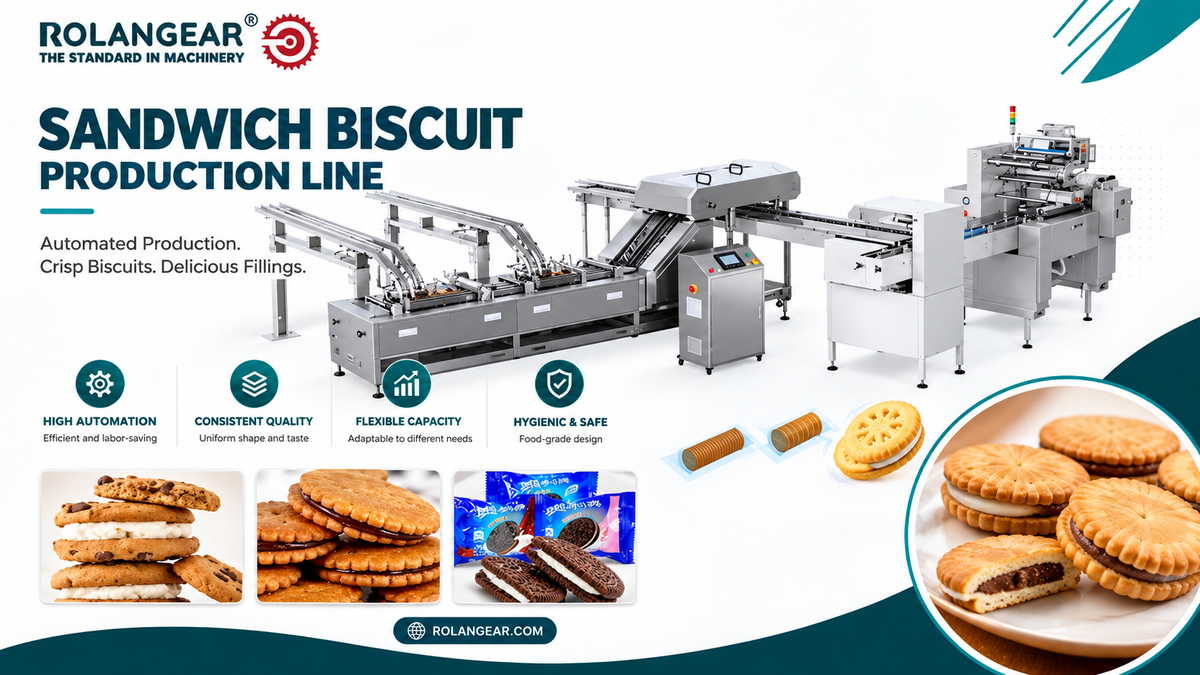
يعد بسكويت الساندويتش أحد أكثر منتجات الوجبات الخفيفة نجاحًا في سوق البسكويت العالمي. فهي تجمع بين البسكويت المقرمش مع حشوات الكريمة الناعمة، مما يخلق منتجًا يسهل بيعه في محلات السوبر ماركت والمتاجر وقنوات البيع بالتجزئة عبر الإنترنت وبرامج العلامات التجارية الخاصة. لا يزال بسكويت ساندويتش الفانيليا والشوكولاتة الكلاسيكي يتمتع بشعبية كبيرة، في حين تستمر منتجات الفاكهة والجبن وزبدة الفول السوداني والبندق والسكر المخفض ومنتجات الكريمة مزدوجة اللون في خلق فرص جديدة للمصنعين.

مع زيادة الطلب، يحتاج المصنعون إلى نظام إنتاج يمكنه توفير وزن تعبئة ثابت ومحاذاة دقيقة للبسكويت ومظهر جذاب وسرعة تعبئة موثوقة. من الصعب توسيع نطاق إنتاج بسكويت الساندويتش يدويًا لأنه يجب على المشغلين تغذية البسكويت ووضع الكريمة وتزاوج المنتجات ونقلها إلى التبريد وإعدادها للتغليف. يربط خط إنتاج بسكويت الساندوتش الأوتوماتيكي الحديث هذه الخطوات في سير عمل متزامن واحد، مما يقلل من الاعتماد على العمالة ويحسن تناسق المنتج.
في هذا الدليل:
1. لماذا يستثمر المصنعون في أتمتة بسكويت الساندويتش؟
2. ما يشمله خط إنتاج بسكويت الساندويتش
3. أنواع المنتجات ومرونة الإنتاج
4. استكمال عملية تصنيع بسكويت الساندويتش
5. وظائف الآلات والمعدات الرئيسية
6. السعة والتخطيط وتخطيط عائد الاستثمار
7. كيفية اختيار المورد المناسب
8. الأسئلة الشائعة
لماذا تستثمر فيخط إنتاج بسكويت الساندوتش الأوتوماتيكي?
صناعة البسكويت تنافسية، ويتوقع العملاء جودة مستقرة بتكلفة تنافسية. يحتاج تجار التجزئة إلى إمدادات موثوقة وتغليف دقيق وعرض متسق للمنتج. وفي الوقت نفسه، يواجه المصنعون ارتفاع تكاليف العمالة، ومتطلبات النظافة الأكثر صرامة، والضغوط لإطلاق نكهات جديدة بسرعة أكبر. تساعد الأتمتة في حل هذه التحديات من خلال جعل عملية الدمج أسرع وأكثر نظافة وأكثر قابلية للتكرار.

يعمل خط إنتاج بسكويت الساندويتش الأوتوماتيكي على تحسين الكفاءة عن طريق تقليل المناولة اليدوية بين حشوة الكريمة والساندويتش والتبريد والتعبئة. يتحرك البسكويت بشكل مستمر من خلال الناقلات وأنظمة تحديد المواقع، بينما يتحكم الإيداع الموجه بواسطة المؤازرة في كمية الكريمة ووضعها. وهذا يقلل من تنوع المنتج ويساعد المصنع في الحفاظ على إنتاج مستقر أثناء فترات الإنتاج الطويلة.
الفوائد الرئيسية للأتمتة:
- إنتاج أعلى مع خطوات يدوية أقل
- ثبات وزن الكريمة ونمط التعبئة وأبعاد المنتج
- محاذاة أفضل للبسكويت وتحسين المظهر النهائي
- تقليل الاعتماد على العمل وتقليل العمل المتكرر
- هدر أقل للكريمة وتقليل رفض المنتجات
- تحسين سلامة الأغذية من خلال تقليل الاتصال المباشر بالمنتج
- تخطيط إنتاج أسهل لمحلات السوبر ماركت والموزعين وعملاء OEM
الأتمتة ليست مناسبة فقط للمصانع الكبيرة جدًا. يمكن للمصنعين الصغار أيضًا استخدام الأنظمة شبه الآلية أو المعيارية لتحسين الجودة والاستعداد لنمو الأعمال. المفتاح هو اختيار خط يتوافق مع حجم المبيعات الحالي مع ترك مجال لتطوير المنتجات في المستقبل والتوسع المستقر على المدى الطويل مع التحكم في نمو تكاليف التشغيل.
ما هو خط إنتاج بسكويت ساندويتش؟
خط إنتاج بسكويت الساندويتش هو نظام آلي لما بعد الخبز يحول قشور البسكويت المخبوزة إلى بسكويت ساندويتش مملوء بالكريمة. على عكس خط خبز البسكويت الكامل، فإنه لا يبدأ عادةً بخلط العجين أو تشكيله أو خبزه. بدلاً من ذلك، يبدأ الأمر بالبسكويت المخبوز الذي يتم توفيره من فرن موجود أو نظام تخزين أو خط نقل علوي.

يشتمل الخط عادةً على تغذية البسكويت، وتحضير الكريمة، ونقل الكريمة، وإيداع الكريمة، والحشو الأوتوماتيكي، والتبريد، والفحص والتعبئة. يتم توصيل كل مرحلة بواسطة ناقلات متزامنة ويتم التحكم فيها لتتناسب مع سرعة الإنتاج المطلوبة. اعتمادًا على المشروع، قد يكون الخط شبه أوتوماتيكي، أو أوتوماتيكي بالكامل أو مدمج مباشرةً مع خط خبز البسكويت الموجود.
قيمة الخط المتكامل هي التنسيق. إذا كانت التغذية غير مستقرة، فلن يتمكن المودع من وضع الكريم بدقة. إذا كان قسم التبريد قصيرًا جدًا، فقد تتشوه المنتجات أو تنفصل أثناء التعبئة. إذا كانت سرعة التعبئة والتغليف منخفضة جدًا، فسوف يتراكم البسكويت النهائي ويخلق اختناقات. خط الإنتاج الجيد يوازن بين جميع الأقسام من أجل التشغيل المستمر السلس.
أنواع منتجات بسكويت الساندويتش
يمكن لخط بسكويت الساندويتش الحديث أن يدعم العديد من أنماط المنتجات عندما يتم تصميم أنظمة التغذية والإيداع والتعبئة بمرونة. يمكن للمصنعين إنتاج بسكويت دائري أو مربع أو مستطيل أو ذو أشكال خاصة، اعتمادًا على توافق نظام التغذية والمحاذاة. يمكن أيضًا تغيير وصفات الكريمة لإنشاء نكهات مختلفة لمختلف الأسواق.

خيارات منتجات بسكويت الساندويتش الشائعة:
- بسكويت ساندويتش بكريمة الفانيليا لأسواق التجزئة الكلاسيكية
- بسكويت كريمة الشوكولاتة للمنتجات السائدة والمتميزة
- بسكويت سندويتش بنكهة الفراولة والليمون والفواكه
- منتجات زبدة الفول السوداني والبندق والقهوة أو كريمة الجبن
- بسكويت كريمي مزدوج اللون أو ثنائي النكهة
- بسكويت ساندويتش قليل السكر أو وظيفي
- بسكويت ساندويتش صغير، عبوات عائلية وأشكال ذات علامات تجارية خاصة
ينبغي التخطيط لمرونة المنتج قبل طلب المعدات. قد تتطلب أقطار البسكويت المختلفة ولزوجة الكريمة وأنماط التعبئة وأحجام العبوات ومجموعات المنتجات إعدادات أو أدوات خاصة بالماكينة. إذا كان المصنع يخطط لخدمة عملاء OEM، يصبح التغيير السريع ومرونة الوصفة أمرًا مهمًا بشكل خاص.
عملية إنتاج بسكويت ساندويتش كاملة
1. تغذية البسكويت وتوجيهه
تبدأ عملية الإنتاج بإدخال البسكويت المخبوز في خط الساندويتش. قد يأتي البسكويت مباشرة من خط الخبز أو من التخزين المؤقت بعد التبريد. قبل وضع الكريمة، يجب ترتيب البسكويت في الاتجاه الصحيح والتباعد حتى يتمكن نظام الإيداع من العمل بدقة.
توفر أنظمة التغذية الأوتوماتيكية إمدادًا مستمرًا للبسكويت وسرعة نقل ثابتة ومعالجة لطيفة للمنتج. وهذا يساعد على تقليل الكسر وتحسين دقة المصب. يجب أن يكون قسم التغذية قابلاً للتعديل ليناسب أشكال البسكويت المختلفة أو الأقطار أو السماكات، خاصة عندما ينتج المصنع منتجات متعددة في خط واحد.
2. تحضير الكريمة
تعتبر حشوة الكريمة أحد أهم أجزاء بسكويت الساندويتش. إنه يؤثر على الطعم والملمس واستقرار الرف ووزن المنتج وإدراك المستهلك. قد تشمل المكونات النموذجية الدهون النباتية أو السمن، والسكر البودرة، ومسحوق الحليب، ومسحوق الكاكاو، والمنكهات، والمستحلبات، والألوان الطبيعية الاختيارية. قد تستخدم المنتجات المتخصصة معجون الفول السوداني أو مسحوق الجبن أو مسحوق الفاكهة أو القهوة أو مكونات النكهة الأخرى.
تجمع خلاطات الكريمة الأوتوماتيكية المكونات في حشوة ناعمة ومتجانسة ذات لزوجة ثابتة. الخلط الجيد يمنع الانفصال ويدعم الترسيب السلس من خلال المضخات والفوهات. يعد التحكم في درجة الحرارة أمرًا مهمًا لأن لزوجة الكريم تتغير مع درجة الحرارة. إذا كان الكريم سميكًا جدًا، فقد يصبح الترسب غير مستقر؛ إذا كان سائلًا جدًا، فقد ينتشر بعيدًا جدًا أو يتسرب من حواف البسكويت.
3. تغذية وترسيب الكريمة
بعد التحضير، يتم نقل الكريم إلى وحدة الإيداع. تطبق أنظمة الترسيب التي يتم التحكم فيها مؤازرًا كمية محددة من الكريمة على كل قطعة بسكويت سفلية. يتحكم الإيداع الدقيق في وزن المنتج ومظهره وتكلفة المواد الخام. حتى الاختلافات الصغيرة في التعبئة يمكن أن تؤثر على اتساق العبوة ورضا العملاء.
يمكن تعديل أنماط الإيداع وفقًا لتصميم المنتج. تشمل الخيارات الشائعة حشوة نقطة واحدة، وأنماط حلزونية، وأنماط حلقات، وأشكال زخرفية، وكريم مزدوج اللون، وتصميمات ثنائية النكهة. تسمح هذه المرونة للمصنعين بإطلاق منتجات جديدة دون استبدال الخط الكامل، بشرط أن يكون نظام الكريم والمودع مصممين للتركيبات المطلوبة.
4. شطيرة البسكويت الأوتوماتيكية
بعد وضع الكريمة، يتم وضع قطعة بسكويت ثانية فوقها لتكوين الساندويتش. تستخدم معدات الساندويش الأوتوماتيكية ناقلات متزامنة وآليات تحديد المواقع لمحاذاة البسكويت العلوي والسفلي بدقة. هذه المرحلة مهمة لأن سوء المحاذاة يخلق منتجات غير جذابة وقد يسبب مشاكل أثناء التعبئة.
اعتمادًا على متطلبات المنتج، قد تطبق الماكينة ضغطًا لطيفًا لتوزيع الكريم بالتساوي دون أن يفيض. الضغط الصحيح يحسن الترابط بين البسكويت والحشوة مع الحفاظ على شكل البسكويت. تتطلب المنتجات المتميزة محاذاة نظيفة بشكل خاص لأن المظهر يؤثر بقوة على قرارات الشراء لدى المستهلك.
5. التبريد وتثبيت الكريم
مباشرة بعد وضع السندوتشات، تمر المنتجات عادةً عبر ناقل تبريد. والغرض من ذلك ليس تجميد البسكويت، بل تثبيت الكريمة حتى يمكن التعامل مع المنتج وفحصه وتعبئته دون تحريكه أو فصله. تعتمد ظروف التبريد على تركيبة الكريم وحجم المنتج وسرعة الخط وبيئة المصنع.
يعمل التبريد المناسب على تحسين صلابة الكريمة والتصاق البسكويت وشكل المنتج وأداء التغليف. إذا دخلت المنتجات إلى آلة التعبئة والتغليف في وقت مبكر جدًا، فقد تتشوه الكريمة أو قد تتحرك الساندويتش خارج مكانها. للإنتاج عالي السرعة، يجب أن يتطابق طول التبريد وسرعة الناقل بعناية مع سعة السندويش الأولية.
6. التفتيش ومراقبة الجودة
قبل التعبئة والتغليف، يجب فحص بسكويت الساندويتش للتأكد من استمرار المنتجات المؤهلة فقط في اتجاه مجرى النهر. قد يشمل الفحص سلامة البسكويت، ووضع الكريمة، والمحاذاة، ووزن المنتج، والكشف عن المعادن، والرفض التلقائي. تساعد هذه الفحوصات على حماية سمعة العلامة التجارية وتقليل مخاطر وصول المنتجات المعيبة إلى العملاء.
تشمل مراقبة الجودة أيضًا مراقبة العملية. يجب على المشغلين التحقق من معدل كسر البسكويت، ودرجة حرارة الكريمة، ووزن التعبئة، وموضع الإيداع، ومحاذاة المنتج، واستقرار التبريد، وجودة إغلاق الغلاف. تعتمد الجودة المتسقة على سير العمل الكامل، وليس على جهاز واحد فقط.
7. التعبئة والتغليف والتعامل مع نهاية الخط
تحمي العبوة بسكويت الساندويتش من الرطوبة والغبار والكسر وتلف التعامل مع إنشاء عرض تقديمي جذاب للبيع بالتجزئة. يتم استخدام التغليف التدفقي على نطاق واسع لأنه سريع ومرن ومناسب للبسكويت الفردي أو مجموعات المنتجات. قد تستخدم المنتجات المتميزة أيضًا الصواني قبل التغليف لمزيد من الحماية.
يمكن أن تشتمل معدات نهاية الخط على التغذية التلقائية، وتغليف التدفق، وترميز التاريخ، والتعبئة في الكرتون، وتدقيق الوزن، والكشف عن المعادن، وتغليف العلب، ووضعها على منصات نقالة. يعتمد تكوين العبوة الصحيح على حجم المنتج وتنسيق العبوة وتكلفة العمالة واحتياجات العمر الافتراضي ومتطلبات العملاء.
الآلات الرئيسية في خط إنتاج بسكويت الساندوتش
يتكون الخط الكامل من عدة آلات تعمل معًا. يعتمد التكوين النهائي على مواصفات البسكويت ونوع الكريمة والسعة المستهدفة ومتطلبات التعبئة والتغليف، ولكن معظم خطوط إنتاج بسكويت الساندويتش تشتمل على معدات أساسية مماثلة.

وظائف المعدات الأساسية:
- نظام تغذية البسكويت: يقوم بترتيب ونقل البسكويت المخبوز بأقل قدر من الكسر.
- خلاط الكريمة: يقوم بتحضير كريمة ناعمة ذات قوام ونكهة ثابتة.
- نظام تغذية الكريمة: ينقل الكريمة إلى المودع بضغط وتدفق ثابتين.
- آلة إيداع الكريمة: تستخدم كمية ونمط تعبئة دقيقين.
- آلة الساندويتش: تقوم بمحاذاة البسكويت ودمجه في منتجات الساندويتش النهائية.
- ناقل التبريد: يقوم بتثبيت الكريم قبل الفحص والتعبئة.
- نظام التفتيش: فحص الكسر والمحاذاة والوزن وسلامة الأغذية.
- آلة التعبئة والتغليف: تغليف وأكواد وكرتون وتجهيز المنتجات للشحن.
قد تشتمل الوحدات الاختيارية على الإيداع المزدوج اللون، وتحميل الدرج تلقائيًا، وفحص الوزن، والكشف عن المعادن، والتحميل الآلي، وتعبئة العلبة، ووضعها على منصات نقالة. ويجب اختيار هذه الخيارات وفقًا لاحتياجات الإنتاج الحقيقية، وليس إضافتها فقط لزيادة تعقيد الماكينة.
اختيار القدرات ومستوى الأتمتة
يعد اختيار السعة الصحيحة أمرًا ضروريًا لتحقيق عائد على الاستثمار. قد يؤدي وجود خط صغير جدًا إلى الحد من نمو الأعمال بسرعة، في حين أن المعدات كبيرة الحجم يمكن أن تزيد من تكلفة الشراء واستهلاك المرافق ومساحة المصنع غير المستخدمة. يجب أن يأخذ تخطيط السعة في الاعتبار أهداف الإنتاج اليومية وعدد التحولات والطلب الموسمي ومجموعة المنتجات وسرعة التعبئة والتغليف والتوسع المستقبلي.
استراتيجيات القدرات المشتركة:
- مصنع صغير: مناسب للشركات الناشئة والعلامات التجارية الإقليمية للبسكويت وتطوير المنتجات.
- مصنع متوسط: مناسب لمحلات السوبر ماركت وتجار الجملة ومصنعي المواد الغذائية المتنامية.
- المصنع الصناعي: مناسب للعلامات التجارية الوطنية والمصدرين والإنتاج متعدد التحولات.
- مصنع تصنيع المعدات الأصلية/العلامة الخاصة: يتطلب وصفات وأحجام وأشكال تعبئة مرنة.
- المصنع الموجه للتصدير: يجب أن يأخذ في الاعتبار إمكانية التتبع والتوثيق والمعايير المحلية والتشغيل الموثوق به على المدى الطويل.
يجب أن يتوافق مستوى الأتمتة مع الميزانية وتوافر العمالة وأهداف الإنتاج. قد تكون الأنظمة شبه الآلية عملية بالنسبة للمصانع الصغيرة ذات الاستثمار الأولي المنخفض. تعمل الأنظمة الأوتوماتيكية بالكامل على دمج التغذية والتعبئة والتحجيم والتبريد والفحص والتعبئة في عملية واحدة متزامنة، مما يؤدي إلى تحسين الإنتاجية وتقليل المناولة اليدوية.
خيارات التخصيص المشتركة
تختلف منتجات بسكويت الساندويتش بشكل كبير حسب السوق، لذلك غالبًا ما يكون التخصيص ضروريًا. تحتاج بعض المصانع فقط إلى حشوة كريمة أحادية اللون، بينما تتطلب مصانع أخرى حشوة مزدوجة اللون، أو أنماط زخرفية، أو أشكال بسكويت خاصة، أو تحميل صينية، أو تنسيقات متعددة العبوات، أو تغييرات متكررة في النكهة. وينبغي تأكيد هذه المتطلبات قبل تصميم الخط.

يمكن أن يؤدي التخصيص إلى تحسين مرونة السوق، ولكنه يؤثر أيضًا على تكوين المعدات والاستثمار. على سبيل المثال، قد تتطلب الحشوة ذات اللون المزدوج تحضيرًا إضافيًا للكريمة وترسيب المكونات. قد يتطلب البسكويت الفاخر المعبأ في صينية قسمًا لتحميل الصينية تلقائيًا. قد يحتاج مصنعو المعدات الأصلية إلى قطع غيار سريعة التغيير وتخزين الوصفات ومعدات تعبئة مرنة للتعامل مع طلبات العملاء المختلفة بكفاءة.
خيارات التخصيص المفيدة للمناقشة:
- ترسيب كريم أحادي اللون أو مزدوج اللون أو ثنائي النكهة
- وزن تعبئة قابل للتعديل وأنماط تعبئة زخرفية
- التوافق مع أشكال البسكويت المستديرة أو المربعة أو المستطيلة
- علبة التعبئة أو التغليف الفردي أو العبوات العائلية أو كرتون البيع بالتجزئة
- الفحص الآلي وفحص الوزن والكشف عن المعادن
- ترقيات معيارية لزيادة السرعة أو توسيع المنتج في المستقبل
الهدف ليس إضافة كل خيار ممكن. يتضمن التصميم الأفضل الوظائف التي تدعم خطط المبيعات الحالية والنمو المستقبلي الواقعي، مع الحفاظ على سهولة التحكم في التشغيل والتنظيف والصيانة لفريق المصنع.
تخطيط المصنع وتخطيط المرافق
يعمل تخطيط المصنع العملي على تحسين سير العمل والنظافة والوصول إلى الصيانة والتوسع المستقبلي. يجب أن يدعم الخط الحركة المنطقية من توريد البسكويت المخبوز إلى التغذية، وتحضير الكريمة، والإيداع، والحشو، والتبريد، والفحص، والتعبئة، وتخزين البضائع تامة الصنع. يحتاج المشغلون إلى مساحة كافية للتنظيف وتغيير الأدوات والضبط والحركة الآمنة حول الآلات.

وينبغي تأكيد تخطيط المرافق قبل التثبيت. قد يتطلب الخط كهرباء أو هواء مضغوط أو هواء تبريد أو مكيف أو تهوية ومساحة كافية لتخزين مواد التعبئة والتغليف. إذا كان خط الإنتاج سيتصل بخط خبز موجود، فيجب مراجعة ارتفاع الناقل ومزامنة السرعة واتجاه نقل المنتج بعناية.
عائد الاستثمار والتنظيف والصيانة
ينبغي تقييم خط إنتاج بسكويت الساندوتش الأوتوماتيكي على أساس قيمة التشغيل طويلة المدى، وليس فقط سعر الشراء. يمكن أن تؤدي الأتمتة إلى تقليل تكاليف العمالة، وزيادة الإنتاج، وتقليل هدر المنتج، وتحسين اتساق الجودة، ودعم تلبية الطلبات بشكل أسرع. تساعد هذه الفوائد على تحسين الربحية على مدار عمر خدمة المعدات.
يتأثر عائد الاستثمار أيضًا بتناسق المنتج. عندما يكون وزن الكريمة والمحاذاة وجودة التغليف مستقرة، يمكن للمصنعين تقليل شكاوى العملاء وحماية سمعة العلامة التجارية وجعل تخطيط الإنتاج أكثر قابلية للتنبؤ به. بالنسبة للمصانع التي تخدم محلات السوبر ماركت أو عملاء العلامات التجارية الخاصة، يمكن أن يكون هذا الاتساق لا يقل أهمية عن السرعة.
التنظيف والصيانة مهمان أيضًا للتشغيل المستقر. يجب أن يكون من السهل الوصول إلى الأجزاء الملامسة للكريم، والفوهات، والمضخات، والناقلات، ومكونات تحديد المواقع، وأقسام التبريد، وأجزاء إغلاق التغليف. تساعد الصيانة الوقائية على تقليل فترات التوقف غير المتوقعة وتحافظ على تشغيل الخط بسلاسة أثناء نوبات الإنتاج الطويلة.

كيفية اختيار مورد خط إنتاج بسكويت الساندوتش المناسب
يجب أن يقدم المورد الموثوق به أكثر من مجرد آلات فردية. يجب أن يفهم المورد التعامل مع البسكويت، وإعداد الكريمة، ودقة الإيداع، ومحاذاة المنتج، والتبريد، والفحص، وتكامل التعبئة والتغليف. الدعم الهندسي الجيد يقلل من مخاطر المشروع ويساعد المصنع على بدء الإنتاج بسلاسة.
أسئلة للإجابة عليها قبل الشراء:
- ما هي أحجام وأشكال وسمك البسكويت الذي سيتم إنتاجه؟
- ما هي نكهات الكريمة واللزوجة وأوزان الحشو المطلوبة؟
- هل هناك حاجة إلى إيداع أحادي اللون أو مزدوج اللون أو زخرفي؟
- ما هي القدرة المستهدفة لكل ساعة أو لكل وردية؟
- هل سيتصل الخط بخط خبز البسكويت الموجود؟
- ما هو تنسيق التغليف المطلوب للبيع بالتجزئة أو التوزيع؟
- ما هي مساحة المصنع المتوفرة للخط؟
- هل تم التخطيط لتوسيع المنتج في المستقبل أو إنتاج OEM؟
يجب أن يوازن أفضل خط إنتاج بين الاستثمار والكفاءة والمرونة والنظافة ودعم الخدمة. يجب أن يكون من العملي بالنسبة للمشغلين تشغيله وصيانته مع منح الشركة المصنعة المرونة الكافية لتغيرات السوق المستقبلية. يساعد التواصل الواضح أثناء تخطيط المشروع على منع الاختيار الخاطئ للمعدات والتعديلات اللاحقة المكلفة.
لماذا تختار رولانجير؟
توفر Rolangear حلول خطوط إنتاج بسكويت الساندويتش الاحترافية للمصنعين الذين يخططون لخطوط إنتاج جديدة أو ترقيات الأتمتة أو المشاريع الجاهزة الكاملة. يدعم فريقنا العملاء من خلال تكوين المعدات، وتصميم العمليات، وتخطيط تخطيط المصنع، وتوجيهات التثبيت، والتشغيل، وتدريب المشغلين، والخدمة الفنية طويلة الأجل.
نظرًا لاختلاف كل مشروع بسكويت، تقوم Rolangear بتخصيص كل خط وفقًا لحجم البسكويت وتركيبة الكريمة والقدرة الإنتاجية ومستوى الأتمتة وشكل التغليف ومساحة المصنع. سواء كنت بحاجة إلى خط نصف أوتوماتيكي مدمج أو نظام تصنيع بسكويت الساندويتشات الصناعي المتكامل بالكامل، يمكن أن تساعد Rolangear في بناء حل عملي وفعال وقابل للتطوير.
الأسئلة المتداولة
ما هو خط إنتاج بسكويت الساندويتش؟
وهو نظام آلي يجمع بين البسكويت المخبوز وحشوة الكريمة من خلال التغذية والإيداع والحشو والتبريد والفحص والتعبئة. يتم تركيبه عادةً بعد خط خبز البسكويت الموجود.
هل يمكن لخط واحد إنتاج أحجام مختلفة من البسكويت؟
نعم. يمكن للعديد من الخطوط الحديثة التعامل مع أبعاد البسكويت المختلفة عن طريق ضبط إعدادات الماكينة أو تغيير الأدوات. يجب التأكد من المرونة الدقيقة وفقًا لشكل البسكويت وحجمه وطريقة التغذية.
ما هي الحشوات الكريمية التي يمكن استخدامها؟
تشمل الحشوات الشائعة الفانيليا والشوكولاتة والفراولة والليمون والجبن وزبدة الفول السوداني والقهوة والبندق وغيرها من التركيبات المخصصة، بشرط أن تكون لزوجة الكريمة مناسبة للترسيب.
كيف يتم التحكم في دقة تعبئة الكريمة؟
تتحكم أنظمة الترسيب المؤازرة في كمية وموضع الكريمة المطبقة على كل قطعة بسكويت. يؤدي الإيداع الدقيق إلى تحسين مظهر المنتج واتساق الوزن والتحكم في تكلفة المواد الخام.
هل يمكن للخط الاتصال بخط الخبز الموجود؟
نعم. غالبًا ما يتم دمج خطوط بسكويت الساندويتش بعد خطوط خبز البسكويت. يجب مراجعة ارتفاع الناقل وسرعته واتجاه المنتج واتجاه النقل أثناء تخطيط التخطيط.
هل توفر Rolangear مشاريع جاهزة مخصصة؟
نعم. يمكن لشركة Rolangear تخصيص خطوط إنتاج بسكويت الساندويتش وفقًا لمواصفات المنتج والقدرة المستهدفة ومتطلبات تعبئة الكريمة وشكل التغليف وتخطيط المصنع.
الاستنتاج
يساعد خط إنتاج بسكويت الساندويتش الحديث الشركات المصنعة على إنتاج بسكويت مملوء بالكريمة جذاب ومتسق وتنافسي تجاريًا بكفاءة أعلى ومراقبة أفضل للجودة. بدءًا من تغذية البسكويت وإيداع الكريمة وحتى وضع الساندويتش والتبريد والفحص والتعبئة، يجب أن تعمل كل مرحلة كجزء من سير عمل متزامن واحد.
بالنسبة للمصنعين الذين يقومون بتوسيع نطاق المنتجات أو ترقية العمليات اليدوية، يمكن لشريك المعدات المناسب تقليل المخاطر وتحسين أداء الإنتاج على المدى الطويل. تقدم Rolangear حلولاً مخصصة لإنتاج بسكويت الساندويتش مصممة خصيصًا لمنتجاتك وأهداف السعة وتصميم المصنع. اتصل بـ Rolangear لمناقشة مشروعك واطلب عرض أسعار جاهزًا مخصصًا لأعمال تصنيع بسكويت الساندويتشات الخاصة بك.
خطط لخط إنتاج بسكويت الساندويتش الخاص بك باستخدام Rolangear
يمكن أن تساعدك Rolangear في تصميم حل عملي لإنتاج بسكويت الساندويتش استنادًا إلى حجم البسكويت وتركيبة الكريمة ومساحة المصنع والقدرة المستهدفة وشكل التغليف ومتطلبات التشغيل الآلي. اتصل بـ Rolangear لمناقشة مشروعك وطلب عرض أسعار مخصص جاهز للاستخدام.
تواصل مع رولانجير