المقال: خط إنتاج صابون التواليت: العملية الكاملة والمعدات ودليل إعداد المصنع
خط إنتاج صابون التواليت: العملية الكاملة والمعدات ودليل إعداد المصنع
خط إنتاج صابون التواليت: العملية الكاملة والمعدات ودليل إعداد المصنع
دليل Rolangear العملي لتدفق عملية تصنيع صابون التواليت، والمعدات الأساسية، وتكوين خط RG-SP1000S، وتخطيط السعة، وتخطيط المصنع، ومراقبة الجودة، والصيانة، وقرارات الاستثمار.

تم تصميم خط إنتاج صابون التواليت الاحترافي لتحويل مواد الصابون الجاهزة إلى ألواح صابون جاهزة من خلال سلسلة مستمرة من عمليات الخلط والتكرير والبثق والقطع والختم والتبريد والنقل.
بالنسبة للمستثمرين والمصنعين، فإن شراء خط إنتاج الصابون لا يقتصر فقط على اختيار خلاط أو آلة ختم. يجب أن يتطابق حل الإنتاج النهائي مع وزن المنتج المطلوب، وأبعاد الشريط، ونمط السطح، والقدرة المستهدفة، ومساحة المصنع، والمرافق، ومستوى الأتمتة، ومتطلبات التعبئة والتغليف النهائية.
يعتمد خط الإنتاج الذي تمت مناقشته في هذا الدليل على خط إنتاج صابون التواليت RG-SP1000S، المصمم لاستخدام معكرونة الصابون والأصباغ والعطور كمواد الإنتاج الرئيسية. تبلغ طاقتها الإنتاجية القياسية 1000-1500 كجم/ساعة، في حين يمكن تخصيص أبعاد وأنماط الصابون النهائي وفقًا لمتطلبات العملاء.
يشرح هذا الدليل الحل الكامل لتصنيع صابون التواليت من منظور الاستثمار في المصنع. فبدلاً من التركيز فقط على مواصفات الماكينة الفردية، فإنها تساعد المشترين على فهم كيفية عمل المعدات معًا وما يجب إعداده قبل الاستثمار في مشروع تجاري لتصنيع الصابون.
ما هو خط إنتاج صابون التواليت؟

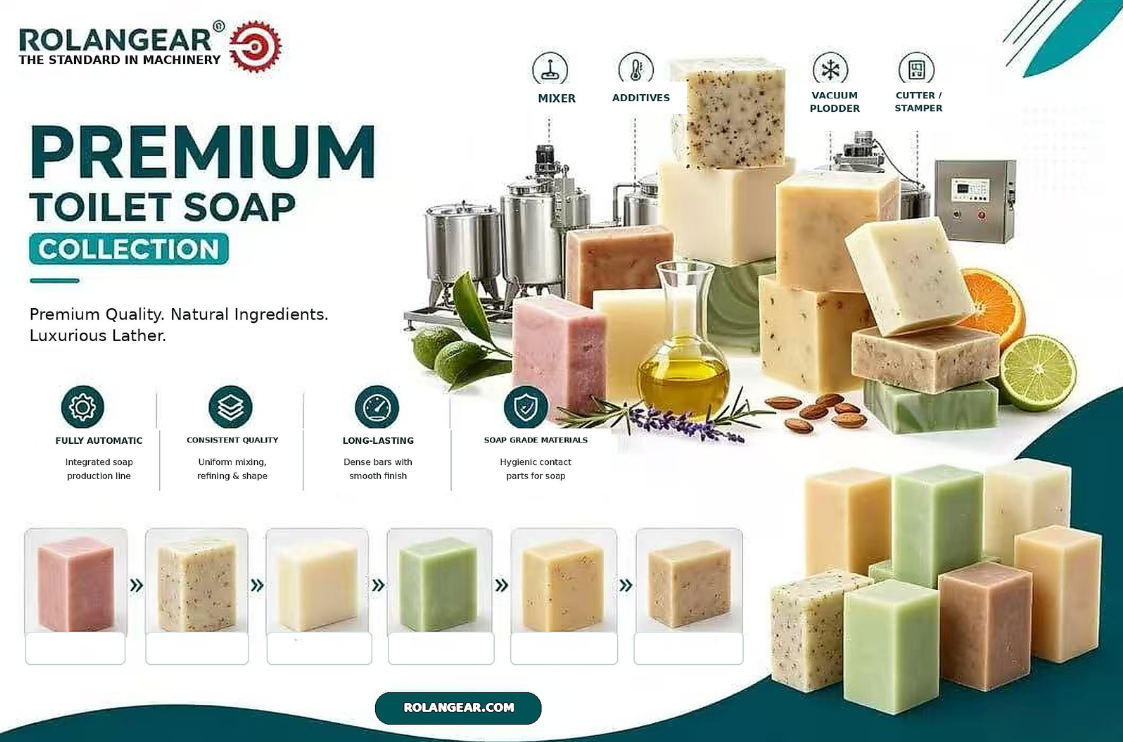
خط إنتاج صابون التواليت هو نظام متكامل يستخدم لمعالجة مواد الصابون المعدة وتحويلها إلى ألواح صابون تواليت جاهزة.
يتضمن تدفق الإنتاج القياسي ما يلي:
تم تصميم تكوين RG-SP1000S المتوفر لتصنيع صابون التواليت باستخدام معكرونة الصابون والصبغة والعطر. يمكن إنتاج الصابون النهائي بأبعاد وأنماط سطحية مخصصة وفقًا لمتطلبات العملاء.
يجمع نظام الإنتاج بين عدة آلات فردية في عملية تصنيع واحدة منسقة. يؤدي كل قسم وظيفة مختلفة، لكن الأداء العام للمصنع يعتمد على مدى فعالية عمل هذه الأقسام معًا.
على سبيل المثال، يقوم الخلاط بتحضير المادة، وتقوم المطحنة ثلاثية الأسطوانات بتحسين هيكل الصابون، ويقوم جهاز التفريغ الفراغي بإنشاء قالب صابون مستمر، وتقسمه آلة القطع إلى قطع فردية، وتشكل آلة الختم شكل ونمط الصابون النهائي.
لهذا السبب، يجب على المشترين تقييم حل الإنتاج الكامل، بدلاً من شراء الآلات وفقًا للمواصفات الفردية فقط.
كيف يعمل خط إنتاج صابون التواليت؟

الغرض الأساسي من خط الإنتاج هو تحويل مادة الصابون المحضرة إلى منتج نهائي موحد وشكل ومختوم.
تلخص وثيقة المعدات الموردة العملية الأساسية على النحو التالي:
خلط المواد ← طحنها إلى رقائق صابون ← بثق قالب الصابون ← قطع الصابون وختمه.
نظام الإنتاج الفعلي أكثر تفصيلاً، مع وجود العديد من الآلات المسؤولة عن تكرير المواد وتشكيلها ونقلها وتبريدها والتحكم فيها.
يتطلب النظام الكامل التنسيق بين:
- تحضير المواد
- خلط دفعة
- تكرير الصابون
- قذف الفراغ
- تعديل حجم المنتج
- مزامنة القطع
- ختم
- تبريد العفن
- نقل المنتج
الهدف الرئيسي هو الحفاظ على تدفق مستقر للمواد عبر الخط.
إذا لم يتمكن أحد الأقسام من مطابقة سرعة التشغيل أو قدرة القسم التالي، فقد تتأثر كفاءة الإنتاج. ولهذا السبب ينبغي اعتبار سعة الخط بأكمله وتكوينه بمثابة نظام واحد.
بالنسبة للمصنعين التجاريين، يمكن أن يدعم التكوين الصحيح أيضًا تخطيط إنتاج أكثر كفاءة، وتخصيص المنتج بشكل أسهل، وتحكم أفضل في مواصفات الصابون النهائي.
عملية إنتاج صابون التواليت كاملة

الخطوة 1: تحضير المواد الخام
يستخدم تكوين الإنتاج RG-SP1000S المصاحب:
- المعكرونة الصابون
- الصباغ
- العطر
ويتم تحضير هذه المواد قبل دخولها إلى قسم الخلط.
لم يتم تفصيل تركيبة المنتج الدقيقة في وثيقة المعدات المرفقة. لذلك، يجب على الشركات المصنعة أن تحدد بشكل منفصل تركيبة منتجاتها ومتطلباتها من المواد الخام وفقًا لنوع صابون التواليت الذي تخطط لإنتاجه.
بالنسبة لخط الإنتاج نفسه، فإن الاعتبار المهم هو أن يتم إعداد المواد الواردة للمعالجة المستقرة من خلال المعدات النهائية.
الخطوة 2: الخلط
قسم المعدات الرئيسية الأول هو محرض الخلط.
يتمتع جهاز تقليب الخلط RG-200S المحدد بسعة دفعة تبلغ 200 كجم ووقت خلط يتراوح من 5 إلى 10 دقائق تقريبًا. يستخدم خلاطًا نصف حلزوني يعمل بمحرك بقدرة 15 كيلو واط.
الغرض من هذه المرحلة هو دمج شعيرية الصابون والمواد الإضافية قبل تكريرها.
يعد الخلط الموحد مهمًا لأن الاختلافات في خليط المواد يمكن أن تستمر في مراحل الإنتاج اللاحقة.
وبالتالي فإن الخلاط ليس مجرد آلة تحضير. فهو يحدد حالة البداية لعملية التكرير والبثق التالية.
الخطوة 3: التكرير ثلاثي الأسطوانات
بعد الخلط، تدخل مادة الصابون إلى مطحنة ثلاثية الأسطوانات.
توضح وثيقة المعدات الموردة أن المطحنة ثلاثية الأسطوانات تعمل على خلط وتنقية مادة الصابون، مما يساعد على إنشاء هيكل أكثر إحكامًا ودعم تحسين كثافة الصابون وجودته.
تحتوي المطحنة ثلاثية الأسطوانات SG405 المحددة على:
يعد التكرير بمثابة انتقال مهم بين إعداد المواد الأولية وعملية البثق النهائية.
الهدف هو إنشاء بنية مادية أكثر اتساقًا قبل أن يدخل الصابون إلى آلة الحفر الفراغي.
الخطوة 4: التثاقل الفراغي
تدخل بعد ذلك مادة الصابون المكررة إلى جهاز التفريغ الفراغي.
يعد جهاز plodder الفراغي أحد الآلات المركزية في خط الإنتاج لأنه يقوم بتحسين المواد وضغطها إلى قالب صابون مستمر.
وفقًا للمواصفات المرفقة، تعمل البراغي العلوية والسفلية وألواح الفتحات معًا لتحسين مادة الصابون والضغط عليها في قالب صابون مدمج بسطح أملس.
يقوم نظام التفريغ بإزالة الهواء من مادة الصابون ويساعد على تقليل مخاطر تكسر الصابون أثناء الإنتاج.
يحتوي جهاز تخطيط الفراغ XT-1000 المحدد على:
يتحرك شريط الصابون المستمر الذي يتم إنتاجه في هذه المرحلة مباشرة نحو قسم القطع.
الخطوة 5: القطع الإلكتروني
يتم نقل شريط الصابون المستمر إلى آلة القطع الإلكترونية.
تصف الوثيقة المرفقة نظام التتبع الإلكتروني الذي يتتبع حركة قطعة الصابون ويقطع المنتج وفقًا للمتطلبات المحددة مسبقًا.
ومن السمات المهمة لهذه المرحلة مرونة المنتج.
يمكن تعديل حجم القطع والوزن من خلال نظام التحكم في الماكينة وفقًا لمتطلبات العميل.
يمكن أن يساعد ذلك الشركات المصنعة على تطوير أحجام منتجات مختلفة دون تغيير خط الإنتاج بأكمله.
ومع ذلك، يجب على المشترين التأكد من وزن المنتج وأبعاده المقصودة قبل الانتهاء من تكوين المعدات.
الخطوة 6: ختم الصابون التلقائي
بعد القطع، تنتقل قطع الصابون الفردية إلى آلة الختم.
يقوم قسم الختم بتشكيل الصابون في شكله النهائي ويطبق نمط السطح المطلوب.
تستخدم آلة الختم الأوتوماتيكية XDA-1500 المحددة التحكم PLC ونظام مؤازرة Yaskawa. وتحدد الوثيقة أيضًا مكونات Omron PLC، وFESTO الهوائية، وأدلة Shangyin الخطية.
آلة الختم لديها:
يمكن اختيار القالب حسب نمط الصابون المطلوب.
وهذا يوفر فرصة للمصنعين لإنشاء منتجات صابون تواليت ذات علامات تجارية أو مخصصة.
الخطوة 7: التبريد
التبريد يدعم عملية الختم.
يتضمن خط الإنتاج المزود ثلاجة تستخدم لتبريد قالب الصابون وتبريد الصابون الدافئ بسرعة.
وفقًا لوثيقة المعدات، يساعد التبريد على تحرر الصابون من القالب بسهولة أكبر ويدعم سطحًا أملسًا ولامعًا.
يشتمل النظام أيضًا على مبرد للمياه المتداولة التي تستخدمها المطحنة ثلاثية الأسطوانات ووحدة التفريغ الفراغي.
ولذلك ينبغي اعتبار التبريد جزءًا من نظام الإنتاج الكامل وليس وظيفة مساعدة منفصلة.
الخطوة 8: النقل والتعامل مع المصب
تقوم أقسام الناقل بتوصيل الآلات الرئيسية ونقل منتجات الصابون بين المراحل المختلفة.
يتضمن التكوين المتوفر أنظمة نقل متعددة للتغذية ونقل المنتج النهائي.
بعد أن يغادر الصابون النهائي خط الإنتاج، يمكن أن يتحرك نحو التعبئة والتغليف النهائية.
تستثني متطلبات ورشة العمل الموردة على وجه التحديد آلة التعبئة، لذلك يجب تخطيط التغليف بشكل منفصل وفقًا للمنتج النهائي للعميل ومتطلبات السوق.
المعدات الرئيسية في خط إنتاج صابون التواليت

يتكون خط إنتاج صابون التواليت الكامل من عدة أقسام من المعدات المنسقة.
يتضمن التكوين المرفق الأجهزة الرئيسية التالية:
- · خلط المحرض
- · مطحنة ثلاثية
- · فراغ plodder
- · مضخة فراغ وخزان عازل
- · آلة القطع الإلكترونية
- · نظام ناقل التغذية
- · آلة الختم الأوتوماتيكية
- · ختم مضخة فراغ
- · ضاغط الهواء
- · ناقل التقاط الصابون
- · قالب الصابون
- · ناقلات المنتجات
- · صناديق التوزيع
- · ثلاجة
- · مبرد
التكوين يتبع قائمة المعدات الموردة.
يجب اختيار كل آلة وفقًا لدورها ضمن نظام الإنتاج الكامل.
كيفية اختيار القدرة الإنتاجية المناسبة

تم تصميم التكوين القياسي RG-SP1000S لوزن يتراوح بين 1000 و1500 كجم/ساعة.
ومع ذلك، فإن اختيار خط الإنتاج يجب أن يتضمن أكثر من مجرد اختيار أعلى قدرة متاحة.
يجب على المشترين النظر في العوامل التالية.
الطلب المتوقع في السوق
ابدأ بمتطلبات الإنتاج الواقعية.
خذ بعين الاعتبار:
- حجم المبيعات المتوقع
- طلبات العملاء الحالية
- شبكة التوزيع
- متطلبات تصنيع المعدات الأصلية
- حجم السوق المستهدف
إن شراء الطاقة الزائدة قبل إنشاء السوق يمكن أن يزيد من الاستثمار الأولي وضغط التشغيل.
وزن المنتج
يمكن للخط إنتاج أوزان صابون مختلفة من خلال نظام القطع القابل للتعديل.
تم تصميم آلة الختم المحددة للمنتجات التي يتراوح وزنها بين 70 و200 جرام.
يؤثر وزن المنتج على عدد قطع الصابون الجاهزة التي يتم إنتاجها في الساعة.
لذلك، يجب على المشترين تحديد نطاق المنتج المستهدف قبل تقييم مخرجات الإنتاج.
عدد نوبات الإنتاج
المصنع الذي يعمل وردية واحدة في اليوم له متطلبات قدرة مختلفة عن المصنع الذي يعمل بشكل مستمر.
يجب أن يأخذ تخطيط الإنتاج بعين الاعتبار:
- ساعات العمل اليومية
- عدد التحولات
- وقت الصيانة
- تحولات المنتج
- كفاءة الإنتاج الفعلية
لا ينبغي التعامل مع قدرة الماكينة النظرية على أنها نفس الناتج السنوي النهائي.
التوسع المستقبلي
قد تقدم شركة تصنيع الصابون المتنامية في النهاية ما يلي:
- أحجام الصابون الإضافية
- أنماط سطحية جديدة
- تنسيقات التعبئة والتغليف الإضافية
- إنتاج OEM
- منتجات ذات علامة خاصة
ولذلك ينبغي مناقشة خطط العمل المستقبلية قبل الانتهاء من تكوين المعدات.
تخطيط المصنع ومتطلبات المرافق

حجم ورشة العمل المرجعية
توصي الوثيقة المرفقة بمساحة ورشة عمل تزيد عن 125 مترًا مربعًا، بحجم مرجعي:
25 م × 5 م × 3.5 م
تتضمن المنطقة المرجعية مساحة التشغيل ولكنها لا تشمل آلة التعبئة.
يجب أن يتبع تخطيط الإنتاج العملي تدفق المواد.
التخطيط المقترح
يجب تعديل التصميم الدقيق وفقًا لأبعاد الماكينة الفعلية وبناء المصنع.
المتطلبات الكهربائية
تحدد شروط الإنتاج الموردة ما يلي:
يجب على العملاء التأكد من توافق الطاقة المحلية قبل التثبيت.
الهواء المضغوط
يشتمل التكوين المرفق على ضاغط هواء مصنّف على النحو التالي:
5.5 كيلو واط
0.8 م³/دقيقة
يجب تخطيط البنية التحتية للهواء المضغوط بشكل صحيح لدعم المعدات ذات الصلة.
التبريد
يشتمل الخط على ثلاجة ومبرد.
يتم استخدام الثلاجة لقالب الختم، بينما يدعم المبرد دوران مياه التبريد للمطحنة ثلاثية الأسطوانات وآلة التفريغ الفراغي.
يجب أن يوفر تخطيط المصنع مساحة كافية للتركيب والصيانة لهذه المعدات.
مراقبة الجودة في جميع أنحاء إنتاج الصابون

لا ينبغي أن تبدأ مراقبة الجودة إلا بعد إنتاج الصابون النهائي.
النهج الأكثر فعالية هو مراقبة عملية الإنتاج في المراحل الرئيسية.
فحص المواد الخام
يجب على الشركات المصنعة وضع إجراءات التفتيش الواردة على معكرونة الصابون ومواد الإنتاج الأخرى.
يجب تحديد معايير القبول الدقيقة وفقًا لمتطلبات المنتج الخاص بالشركة المصنعة وصياغته.
خلط الاتساق
يجب أن توفر مرحلة الخلط مادة مستقرة وموحدة بما فيه الكفاية قبل التكرير.
يمكن أن تساعد سجلات الإنتاج المشغلين على تحديد التغييرات غير العادية بين الدُفعات.
التكرير والبثق
يجب مراقبة أقسام التكرير والتثاقل لضمان التدفق المستقر للمواد.
تعمل المطحنة ثلاثية الأسطوانات على تحسين مادة الصابون، في حين يقوم جهاز التفريغ الفراغي بتحسينها وضغطها في قالب صابون مدمج.
وزن المنتج وأبعاده
يسمح نظام القطع الإلكتروني بتعديل حجم الصابون ووزنه.
يجب على الشركات المصنعة إجراء فحوصات منتظمة للتأكد من أن المنتج النهائي يظل ضمن المواصفات المحددة.
المظهر السطحي
بعد الختم والتبريد، يمكن للمشغلين فحص ما يلي:
- شكل المنتج
- نمط السطح
- جودة الحافة
- الاتساق البصري
يهدف نظام تبريد القالب المصاحب إلى دعم إطلاق الصابون بشكل أسهل وسطح أملس ولامع.
فحص المنتج النهائي
قبل التعبئة والتغليف، يجب على الشركات المصنعة تحديد معايير قبول المنتج النهائي الخاصة بهم.
اعتمادًا على السوق المستهدف، قد تشمل هذه المتطلبات مظهر المنتج، وأبعاده، ووزنه، وحالة التعبئة والتغليف، ومتطلبات أخرى خاصة بالعميل.
لا توفر وثيقة المعدات الموردة مواصفات كاملة لإدارة الجودة، لذا يجب على الشركات المصنعة وضع هذه المعايير بشكل منفصل.
تخطيط الصيانة وقطع الغيار

يعد خط إنتاج صابون التواليت أحد أصول التصنيع طويلة الأجل.
يجب أن يبدأ تخطيط الصيانة قبل بدء الإنتاج.
التفتيش الروتيني
يجب على المشغلين إجراء فحص منتظم:
- حركة ميكانيكية
- تشغيل الناقل
- مكونات القطع
- مكونات الختم
- الأنظمة الكهربائية
- الأنظمة الهوائية
- أنظمة فراغ
- أنظمة التبريد
يجب أن يتبع جدول الصيانة الدقيق تعليمات التشغيل والصيانة الخاصة بمورد المعدات.
التنظيف
يجب أن تظل مناطق الإنتاج منظمة، خاصة حول أقسام معالجة المواد وتصنيع الصابون.
يجب تطوير إجراءات التنظيف وفقًا لتصميم الماكينة ومتطلبات التشغيل الخاصة بالشركة المصنعة.
قطع الغيار الحرجة
قبل البدء بالإنتاج التجاري، يجب على المشترين مناقشة قطع الغيار الموصى بها مع مورد المعدات.
قد يتضمن التخطيط المحتمل لقطع الغيار مكونات تتعلق بما يلي:
- أنظمة القطع
- أنظمة الناقل
- أنظمة فراغ
- مكونات هوائية
- المكونات الكهربائية
- معدات الختم
- قوالب
يجب أن تعتمد حزمة قطع الغيار الدقيقة على التكوين النهائي للماكينة.
الصيانة الوقائية
قد يؤدي انتظار تعطل المعدات قبل استبدال المكونات المهمة إلى توقف الإنتاج بشكل غير ضروري.
يمكن لخطة الصيانة الوقائية أن تساعد الشركات المصنعة على جدولة عمليات الفحص وأنشطة الاستبدال حول فترات انقطاع الإنتاج المخطط لها.
بالنسبة لخط إنتاج عالي السعة، يعد تخطيط الصيانة جزءًا من إدارة الإنتاج وليس مشكلة منفصلة لما بعد البيع.
9. ما الذي يحدد تكلفة الاستثمار؟
لا يوجد سعر واحد للمعدات يمثل الاستثمار الكامل المطلوب لإنشاء مصنع صابون التواليت.
يعتمد الاستثمار النهائي على عدة عوامل.
1. القدرة الإنتاجية
يوفر تكوين RG-SP1000S المرفق 1000-1500 كجم/ساعة.
تؤثر السعة بشكل مباشر على تكوين المعدات المطلوبة والبنية التحتية للمصنع.
2. مواصفات المنتج
يمكن تخصيص أبعاد الصابون ووزنه وأنماطه.
يمكن أن تؤثر هذه المتطلبات على تكوين القطع والختم، وخاصة تصميم القالب.
3. نطاق المعدات
قد يشمل المشروع الإجمالي ما يلي:
- معدات الإنتاج الرئيسية
- معدات التبريد
- الناقلون
- التحكم الكهربائي
- أنظمة التعبئة والتغليف
- دعم التثبيت
- قطع غيار
يجب على المشترين أن يحددوا بوضوح ما هو مدرج في عرض الأسعار.
4. تجهيز المصنع
تتطلب ورشة العمل مساحة كافية وبنية تحتية كهربائية مناسبة.
يحدد التكوين المرجعي أكثر من 125 مترًا مربعًا وطاقة كهربائية تزيد عن 160 كيلووات.
يمكن أن تختلف تكاليف إعداد المصنع المحلي.
5. متطلبات التغليف
لم يتم تضمين التغليف في مرجع حجم ورشة العمل المرفق.
ولذلك ينبغي تقييم حل التغليف النهائي بشكل منفصل وفقًا للمنتج والسوق المستهدف.
6. التثبيت والدعم
وينبغي أيضًا أخذ التركيب والتشغيل والتدريب والدعم الفني وقطع الغيار في الاعتبار عند المقارنة بين الموردين.
إن أدنى سعر للمعدات لا يمثل بالضرورة أقل تكلفة إجمالية للمشروع.
قائمة مراجعة المشتري لخط إنتاج صابون التواليت

قبل طلب عرض أسعار تفصيلي، قم بإعداد المعلومات التالية.
المنتج
ما هو نوع صابون التواليت الذي تريد إنتاجه؟
ما هو وزن الصابون المستهدف؟
ما هي الأبعاد المطلوبة؟
ما هو نمط السطح أو تصميم العلامة التجارية المطلوبة؟
هل تحتاج إلى مواصفات منتج متعددة؟
القدرة
ما هو هدفك الناتج بالساعة؟
كم ساعة سيعمل المصنع؟
كم عدد التحولات الإنتاجية المخطط لها؟
هل تتوقع التوسع مستقبلا؟
مصنع
ما هو طول وعرض الورشة المتاحة؟
ما هو ارتفاع المبنى؟
ما هي الطاقة الكهربائية المتوفرة؟
هل الهواء المضغوط متوفر؟
أين سيتم وضع التغليف؟
المواد
ما هي مواصفات المعكرونة الصابون التي سيتم استخدامها؟
ما هي المواد الإضافية التي سيتم تضمينها؟
ما هي طريقة توريد المواد الخام المخططة؟
التعبئة والتغليف
ما هو تنسيق التغليف الذي تحتاجه؟
هل التغليف الفردي مطلوب؟
ما هي كمية العبوة المطلوبة؟
ما هي معدات التعبئة والتغليف النهائية اللازمة؟
دعم الموردين
اسأل المورد عن:
- تكوين المعدات
- تخطيط الآلة
- الوثائق الفنية
- دعم التثبيت
- تدريب المشغلين
- قطع الغيار الموصى بها
- إرشادات الصيانة
- الدعم الفني بعد البيع
كلما تم تحديد هذه المتطلبات بشكل أكثر وضوحًا قبل الطلب، أصبح من الأسهل تطوير حل إنتاج يتوافق مع العمل الفعلي.
11. الأسئلة المتداولة
ما هو خط إنتاج صابون التواليت؟
إنه نظام تصنيع متكامل يقوم بمعالجة مواد الصابون المحضرة من خلال الخلط، والتكرير، والتفريغ الفراغي، والقطع، والختم، والتبريد، والنقل لإنتاج ألواح صابون التواليت النهائية.
ما هي قدرة خط الإنتاج RG-SP1000S؟
تم تصنيف التكوين المتوفر عند 1000-1500 كجم/ساعة.
ما هي المواد التي يستخدمها الخط؟
يحدد التكوين المرفق:
- المعكرونة الصابون
- الصباغ
- العطر
هل يمكنني تخصيص حجم الصابون؟
نعم. تنص المواصفات المرفقة على أنه يمكن تخصيص أبعاد الصابون وفقًا لمتطلبات العميل.
هل يمكنني تغيير وزن الصابون؟
نعم. تم تصميم نظام القطع الإلكتروني بحيث يمكن تعديل حجم الصابون ووزنه وفقًا لمتطلبات العميل.
هل يمكنني تخصيص نمط الصابون؟
نعم. يمكن تخصيص نمط الصابون من خلال تكوين القالب والختم.
ما هي وظيفة الطاحونة ثلاثية الأسطوانات؟
تعمل المطحنة ثلاثية الأسطوانات على خلط وتنقية مادة الصابون، مما يساعد على إنشاء هيكل أكثر إحكامًا ودعم الكثافة والجودة المحسنة.
ماذا يفعل فراغ plodder؟
يقوم جهاز التفريغ الفراغي بتكرير مادة الصابون وضغطها في قالب صابون مستمر. يقوم نظام التفريغ بإزالة الهواء من المادة للمساعدة في تقليل خطر تكسر الصابون.
ما حجم الورشة المطلوبة؟
توصي الوثيقة المرفقة بأكثر من 125 مترًا مربعًا، مع حجم ورشة عمل مرجعية يبلغ حوالي 25 م × 5 م × 3.5 م.
ما هي المرافق المطلوبة؟
يحدد التكوين المرجعي الطاقة الكهربائية التي تزيد عن 160 كيلووات، و380 فولت، و50 هرتز. ويشمل أيضًا نظام الهواء المضغوط ومعدات التبريد.
هل تشمل آلة التغليف؟
إن مرجع حجم ورشة العمل المرفق لا يشمل على وجه التحديد آلة التعبئة. يجب تخطيط التغليف وفقًا لمنتج العميل ومتطلبات السوق.
12. قم ببناء حل إنتاج صابون التواليت الخاص بك باستخدام Rolangear
يتضمن الاستثمار في خط إنتاج صابون التواليت أكثر من مجرد اختيار المعدات الفردية.
يجب أن يربط الحل الكامل متطلبات المنتج والمواد الخام والقدرة الإنتاجية والتكرير والبثق والقطع والختم والتبريد ومساحة المصنع والمرافق والتعبئة النهائية والصيانة والتوسع المستقبلي.
يوفر تكوين RG-SP1000S حلاً لتصنيع صابون التواليت على نطاق تجاري بقدرة مرجعية تبلغ 1000-1500 كجم/ساعة، باستخدام أنظمة الخلط والتكرير ثلاثي الأسطوانات والتفريغ الفراغي والقطع الإلكتروني والختم التلقائي والتبريد والنقل.
في Rolangear، نركز على مساعدة المشترين في النظر إلى ما هو أبعد من مواصفات الماكينة الفردية والتخطيط لحل الإنتاج الكامل حول أهداف التصنيع الفعلية الخاصة بهم.
سواء كنت تقوم بإنشاء مصنع جديد لصابون التواليت، أو توسيع الإنتاج الحالي، أو تطوير القدرة على تصنيع المعدات الأصلية، أو إنشاء منتجات صابون ذات علامة تجارية خاصة، فإن الخطوة الأولى هي تحديد مشروعك بوضوح.
أخبرنا عن مشروعك لصابون التواليت
أرسل لنا الخاص بك:
وزن الصابون + أبعاد الصابون + نمط السطح + سعة الهدف + حجم المصنع + المرافق المتوفرة + متطلبات التغليف
يمكن أن تساعدك Rolangear في تقييم التكوين المناسب لخط إنتاج صابون التواليت وتطوير حل عملي لمشروع التصنيع الخاص بك.
ابدأ في التخطيط لمصنع صابون التواليت الخاص بك باستخدام Rolangear
بدءًا من تكوين المعدات وتخطيط الإنتاج وحتى تخطيط المصنع والدعم الفني طويل المدى، تساعد Rolangear في تحويل مشروع تصنيع الصابون الخاص بك إلى حل عملي للإنتاج.
قم ببناء خط إنتاج صابون التواليت الخاص بك باستخدام Rolangear
يمكن أن تساعدك Rolangear في مقارنة القدرة الإنتاجية وتكوين المعدات وتخطيط المصنع ومتطلبات المرافق وتفاصيل عروض الأسعار للحصول على حل متكامل لتصنيع صابون التواليت.
تواصل مع رولانجير