
مقدمة
خط إنتاج العصير الكامل هو نظام تصنيع متكامل يحول الفاكهة الطازجة، أو المكونات النباتية، أو العصير المركز إلى مشروبات جاهزة من خلال الغسيل، والفرز، والاستخلاص، والترشيح، والصياغة، والتجنيس، وإزالة الغازات، والتعقيم، والتخزين المعقم، والتعبئة، والتغليف. بالنسبة لشركات تصنيع المشروبات، لا يقتصر الهدف على صنع العصير فقط. يجب على المصنع حماية النكهة، واللون، والقيمة الغذائية، وسلامة الغذاء، ومدة الصلاحية، وجودة التعبئة مع الحفاظ على كفاءة الإنتاج وقابليته للتكرار.
يستمر سوق المشروبات في النمو لأن المستهلكين يريدون مشروبات مريحة، وصحية، وأكثر تنوعاً. يمكن إنتاج عصير الفاكهة، وعصير NFC (غير مركز)، والعصير من المركز، وعصير الخضروات، ومشروبات الشاي، ومشروبات الألبان، ومشروبات جوز الهند، وحليب الصويا، وحليب الشوفان، والمشروبات الغذائية الوظيفية، وكل ذلك باستخدام أنظمة معالجة مُعدة بشكل صحيح. ومع ذلك، لكل منتج سلوك مختلف للمواد الخام، وحساسية للحرارة، ولزوجة، واستقرار، ومتطلبات تغليف. وهذا هو السبب في وجوب تأكيد اختيار الماكينة وتصميم العملية قبل الشراء.
يزيل هذا الدليل المُحسّن الكلمات المتكررة من المسودة الأصلية ويركز على المعلومات العملية التي يحتاجها المشترون: كيف تعمل عملية الإنتاج، وما هي الآلات المتضمنة، وكيفية اختيار السعة، وما الذي يؤثر على تكلفة الاستثمار، وما هي مرافق المصنع المطلوبة، ولماذا تعتبر التعبئة المعقمة في علب الكرتون الورقية مهمة لمنتجات المشروبات ذات العمر الطويل. يجب دائماً تأكيد الأبعاد الدقيقة للآلة، والقوة، والمخرجات، ووقت التثبيت، والتكوين النهائي وفقاً لوصفة العميل، وتنسيق التغليف، وتصميم المصنع، والمرافق المحلية.
لماذا تستثمر في خط إنتاج عصير كامل؟
يسمح خط إنتاج العصير الكامل للمصنعين بتحويل المواد الخام الزراعية إلى مشروبات معبأة ذات قيمة أعلى. الفاكهة الطازجة موسمية وسريعة التلف، في حين يمكن توزيع العصير المعالج بشكل صحيح عبر محلات السوبر ماركت، ومتاجر البقالة، والمطاعم، والمدارس، والفنادق، وشركات تقديم الطعام، وقنوات التصدير. كما تساعد المعالجة على تقليل الخسائر بعد الحصاد وتخلق فرص إيرادات أكثر استقراراً للمناطق المنتجة للفاكهة، وعلامات المشروبات التجارية، وشركات تصنيع الأغذية.
تدعم العديد من اتجاهات السوق الاستثمار في تصنيع العصير والمشروبات الوظيفية. يولي المستهلكون اهتماماً أكبر لملصقات المكونات، ومستويات السكر، ومحتوى الفاكهة الطبيعي، والفيتامينات المضافة، والمكونات النباتية، والتعبئة المريحة. كما أن المنتجات الجاهزة للشرب شائعة لأنها تتناسب مع أنماط الحياة المزدحمة وأنظمة البيع بالتجزئة الحديثة. المصنعون الذين يمكنهم توفير مذاق ثابت، وتعبئة جذابة، ومدة صلاحية آمنة، وإمدادات موثوقة، هم في وضع أفضل لخدمة كل من عملاء التجزئة وخدمات الطعام.
الأتمتة هي سبب رئيسي آخر للاستثمار. يقلل الخط الحديث من التعامل اليدوي، ويثبت سرعة الإنتاج، ويحسن دقة الوصفة، ويقلل من فقدان المنتج، ويساعد في الحفاظ على ظروف معالجة صحية. يسمح التحكم المركزي بواسطة PLC، والمراقبة التلقائية لدرجة الحرارة، وتنظيف CIP، والتعبئة المعقمة، والإنذارات الذكية للمشغلين بإدارة الإنتاج بكفاءة أكبر. بمرور الوقت، يمكن أن تؤدي هذه التحسينات إلى تقليل تكلفة العمالة، وتحسين اتساق الجودة، ودعم تطوير العلامة التجارية على المدى الطويل.
ما هو خط إنتاج العصير؟

خط إنتاج العصير هو نظام منسق من معدات المعالجة والتعبئة المصممة لتصنيع المشروبات باستمرار. بدلاً من تشغيل كل آلة على حدة، يربط الخط إعداد الفاكهة في المراحل الأولية، واستخلاص العصير، والصياغة، والمعالجة الحرارية، والتخزين المعقم، والتعبئة في سير عمل واحد متحكم فيه. يقلل هذا التكامل من مخاطر التلوث، ويمنع الاختناقات، ويحسن كفاءة الإنتاج، ويجعل من السهل تكرار نفس جودة المنتج من دفعة إلى دفعة.
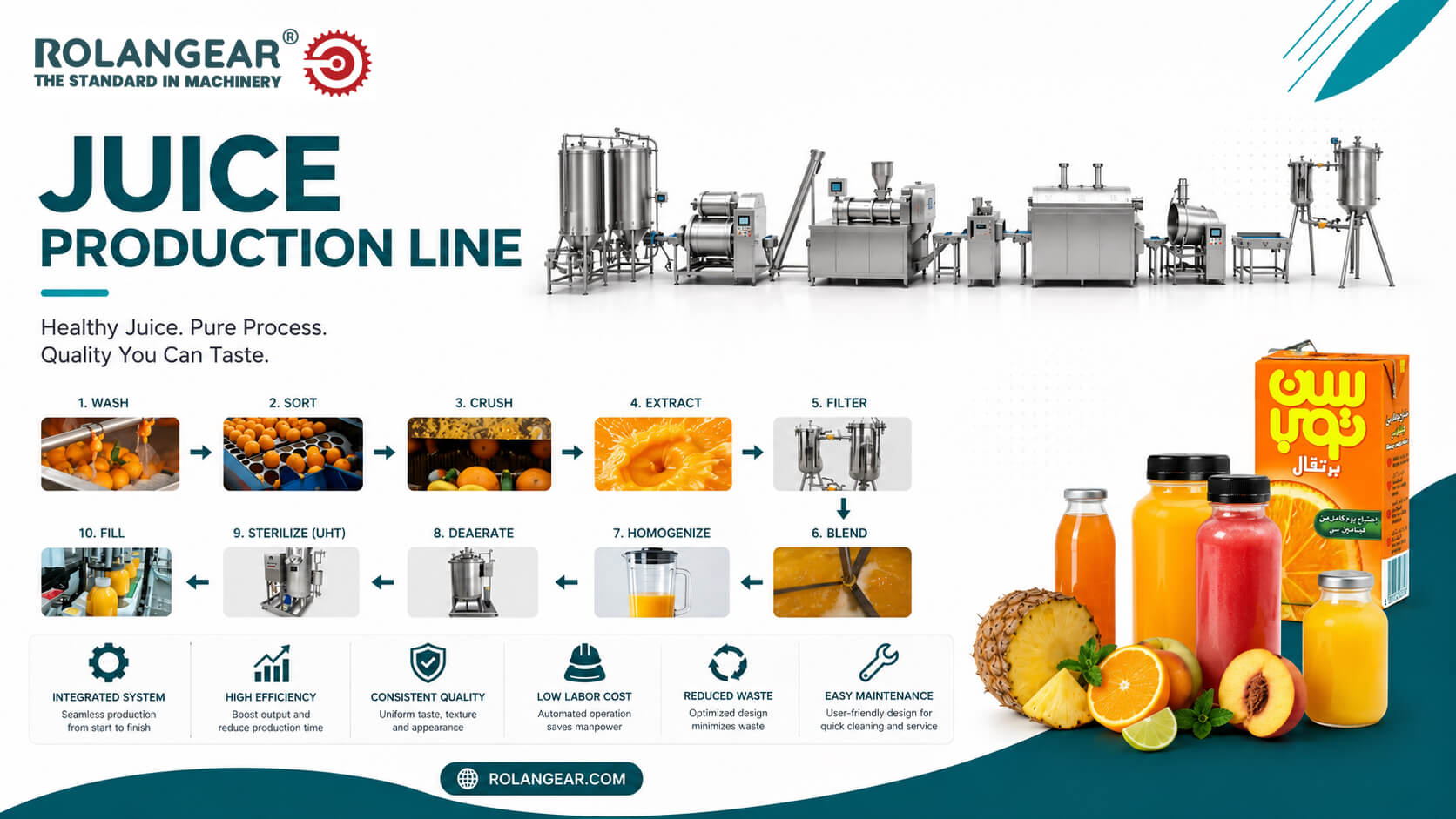
قد يشتمل الخط الكامل النموذجي على سيور نقل استقبال الفاكهة، وغسالات الفقاعات، وسيور الفحص، والكسارات، وأجهزة تقشير اللب أو أجهزة الاستخلاص، وأنظمة الترشيح، وخزانات الخلط، وأنظمة إذابة السكر، وأجهزة التجانس، وأجهزة إزالة الغازات بالمكنسة الكهربائية، وأجهزة البسترة أو أجهزة التعقيم UHT، وخزانات التخزين المعقمة، وآلات التعبئة المعقمة، وسيور التغليف، وأنظمة ترميز التاريخ، ووزن الفحص، وتعبئة الكرتون، ومعدات مناولة المنتج النهائي. يعتمد التكوين النهائي على نوع المادة الخام، ووصفة المشروب، والسعة المستهدفة، ومتطلبات مدة الصلاحية، وتنسيق التغليف، وتصميم المصنع.
بالنسبة للمشترين، فإن المبدأ الأهم هو مطابقة العملية. لا يمكن لآلة تعبئة عالية السعة حل مشاكل الإنتاج إذا كانت أقسام الاستخلاص، أو الترشيح، أو التعقيم، أو التعبئة ذات حجم غير مناسب. وبالمثل، فإن معدات المعالجة المتقدمة لن تحقق قيمتها الكاملة إذا كان المصنع يفتقر إلى ما يكفي من الماء، والبخار، والهواء المضغوط، والكهرباء، والصرف الصحي، أو التصميم الصحي. لذلك يجب تخطيط الحل الكامل كنظام واحد، وليس كمجموعة من الآلات غير المرتبطة.
أنواع المشروبات التي يمكن للخط إنتاجها

إحدى مزايا خط معالجة العصير الحديث هي المرونة. مع الإدارة الصحيحة للوصفات، ومعلمات المعالجة، والوحدات الاختيارية، يمكن لنظام واحد دعم فئات متعددة من المشروبات. عصير الفاكهة هو التطبيق الأساسي، بما في ذلك عصير البرتقال، وعصير التفاح، وعصير المانجو، وعصير الأناناس، وعصير العنب، وعصير الخوخ، وعصير الفاكهة المختلطة، ومشروبات الليمون. تتطلب بعض الفواكه معدات استخلاص متخصصة، ولكن يمكن مشاركة العديد من الخطوات اللاحقة مثل الترشيح، والخلط، والتعقيم، والتعبئة.
العصير من المركز شائع أيضاً لأن المركز أسهل في النقل ويمكن تخزينه بشكل أكثر اتساقاً على مدار العام. في هذه العملية، يمزج العصير المركز بالماء النقي قبل الصياغة، والتجنيس، والتعقيم، والتعبئة. يتم وضع عصير NFC، أو العصير غير المركز، كمنتج ممتاز لأنه يصنع مباشرة من الفاكهة الطازجة دون إعادة التكوين. تتطلب منتجات NFC تحكماً دقيقاً في جودة الفاكهة الخام، والأكسدة، والمعالجة الحرارية، والتعبئة للحفاظ على النكهة الطازجة.
يمكن أيضاً تكييف نفس مفهوم الإنتاج لعصير الخضروات، ومشروبات الشاي، ومشروبات الألبان، ومشروبات جوز الهند، وحليب الصويا، وحليب الشوفان، وحليب اللوز، ومشروبات البروتين، ومشروبات التغذية الوظيفية. قد تتطلب هذه المنتجات تعديلات إضافية في الصياغة، أو الاستقرار، أو التجانس، أو المعالجة الحرارية. قبل طلب المعدات، يجب على المشتري تحديد الفئة الرئيسية للمنتج والمنتجات المستقبلية المحتملة حتى يتم تصميم الخط بمرونة كافية.
عملية تصنيع العصير الكاملة

على الرغم من اختلاف الوصفات، فإن عملية إنتاج العصير العامة تتبع تدفقاً صناعياً واضحاً: استقبال الفاكهة الطازجة ← الغسيل والفرز ← إعداد الفاكهة ← الكسر أو التلبية ← استخلاص العصير ← الترشيح ← الخلط والصياغة ← التجنيس ← إزالة الغازات بالمكنسة الكهربائية ← البسترة أو التعقيم UHT ← التخزين المعقم ← التعبئة المعقمة ← التعبئة الثانوية ← مستودع المنتجات النهائية. تؤثر كل مرحلة على جودة المنتج وسلامته وتكلفة الإنتاج.
استقبال الفاكهة الطازجة وغسلها وفرزها
يبدأ كل مشروب ناجح بالتحكم في المواد الخام. يجب فحص الفاكهة من حيث النضج، ومستوى السكر، واتساق الحجم، والنضارة، والأمراض، والعفن، والتلف الميكانيكي. يمكن أن تؤدي المواد الخام الرديئة إلى تقليل إنتاج العصير، وتكوين نكهات غريبة، وتسبب لوناً غير مستقر، وتزيد من الهدر. بعد الفحص، تُوزن الفاكهة المؤهلة وتُنقل إلى قسم الغسيل. تستخدم غسالات الفقاعات الماء المتداول وحركة الهواء لإزالة التربة، والغبار، والأوراق، والكائنات الدقيقة، والشوائب السطحية. اعتماداً على الفاكهة، قد يشتمل الخط أيضاً على غسالات رذاذ، أو غسالات فرشاة، أو خزانات نقع، أو أنظمة تعقيم.
بعد الغسيل، تمر الفاكهة عبر حزام فحص حيث يقوم المشغلون أو أنظمة الفرز البصري بإزالة المواد الفاسدة، أو الخضراء، أو غير الناضجة، أو المكسورة، أو الغريبة. تحمي هذه الخطوة المعدات النهائية وتحسن اتساق العصير النهائي. تتطلب فئات الفاكهة المختلفة أيضاً إعداداً مختلفاً. تحتاج الحمضيات إلى استخلاص متخصص لتقليل تلوث زيت القشر. قد تتطلب المانجو، والخوخ، والمشمش إزالة البذور، والتقشير، والتلبية. تُكسر التفاح والكمثرى عادة قبل العصر. قد تتطلب الطماطم والجزر الكسر والتسخين المسبق لتحسين كفاءة الاستخلاص.
الكسر، والتلبية، والاستخلاص، والترشيح
تفصل مرحلة الاستخلاص العصير عن أنسجة الفاكهة مع الحفاظ على النكهة، والرائحة، واللون، والقيمة الغذائية. تُستخدم مستخلصات الكبس الحلزونية غالباً للفواكه والخضروات الليفية مثل الطماطم، والأناناس، والجزر. تُستخدم أنظمة الكبس بالحزام بشكل شائع لعصير التفاح، والكمثرى، والعنب لأنها تدعم الإنتاج المستمر واستعادة جيدة للعصير. صُممت مستخلصات الحمضيات لفصل العصير عن القشر والبذور مع تقليل النكهة المرة. تؤثر طريقة الاستخلاص الصحيحة بشكل مباشر على الإنتاج، وجودة المنتج، وتكلفة المواد الخام.
قد يحتوي العصير المستخلص حديثاً على لب، وبذور، وشظايا قشر، وألياف، وجزيئات عالقة. يزيل الترشيح المواد الصلبة غير المرغوب فيها وفقاً لأسلوب المنتج المستهدف. يزيل الترشيح الخشن الجزيئات الكبيرة بعد الاستخلاص. يخلق الترشيح الدقيق مشروباً أكثر نعومة. قد يستخدم الترشيح الغشائي للعصائر الصافية الفاخرة التي تتطلب وضوحاً عالياً. قد تحتفظ العصائر الغائمة مثل البرتقال أو المانجو عمداً بلب متحكم به، بينما يتطلب عصير التفاح أو العنب الصافي توضيحاً أكثر دقة. يحسن قسم الترشيح المصمم بشكل صحيح المظهر ويحمي المعدات النهائية.
الخلط، والتجنيس، وإزالة الغازات، والتعقيم
بعد الترشيح، يدخل العصير إلى قسم الصياغة. قد تشمل المكونات عصير الفاكهة، والماء النقي، وشراب السكر، والنكهات الطبيعية، والفيتامينات، والمعادن، والمثبتات، ومنظمات الحموضة، أو المكونات الوظيفية. تتحكم أنظمة الخلط الحديثة في نسب المكونات، ودرجة الحرارة، ووقت الخلط، وسرعة التحريك. تعمل أوزان خلايا التحميل وإدارة الوصفات التلقائية على تحسين الدقة وتقليل هدر المواد، خاصة عندما ينتج المصنع عدة منتجات على خط واحد.
التجنيس مهم للمنتجات التي تحتوي على لب، أو بروتين، أو دهون، أو جزيئات معلقة. من خلال تقليل حجم الجسيمات تحت الضغط، يحسن المجانس قوام الفم، والمظهر، وتوزيع النكهة، واستقرار التخزين. تزيل إزالة الغازات بالمكنسة الكهربائية الأكسجين المذاب الممتص أثناء الكسر، والاستخلاص، والخلط. يعني الأكسجين الأقل تقليل الأكسدة، واحتفاظ أفضل بالنكهة، وحماية محسنة للفيتامينات، ورغوة أقل أثناء التعبئة. تضمن المعالجة الحرارية بعد ذلك السلامة الميكروبيولوجية. تُستخدم البسترة بشكل شائع للمشروبات المبردة أو ذات العمر الافتراضي الأقصر، بينما يُستخدم التعقيم UHT للمنتجات طويلة العمر التي يجب أن تظل معقمة تجارياً قبل الفتح.
التخزين المعقم، والتعبئة، والتغليف
بعد التعقيم، يُنقل العصير إلى خزان تخزين معقم. يعمل هذا الخزان كمخزن مؤقت معقم بين جهاز التعقيم وآلة التعبئة، مما يساعد الخط على الحفاظ على التشغيل المستمر مع منع التلوث الثانوي. قد تشمل الميزات الرئيسية بناء من الفولاذ المقاوم للصدأ بدرجة الغذاء، وحماية الهواء المعقم، والتحكم التلقائي في الضغط، ومراقبة درجة الحرارة، والتوافق مع CIP، والتصميم الصحي المغلق تماماً.
يحمي قسم التعبئة والتغليف المنتج لبقية مدة صلاحيته. بالنسبة للمشروبات طويلة الأمد، تقوم التعبئة المعقمة بتعبئة العصير المعقم في عبوات معقمة مسبقاً داخل بيئة معقمة ومتحكم بها. بعد التعبئة، تنتقل المنتجات عبر ترميز التاريخ، والفحص، والتعبئة الثانوية، ومناولة الكرتون، والتكديس على المنصات، وتخزين السلع النهائية. تُعد دقة التعبئة وجودة الختم أمرًا بالغ الأهمية لأن حتى المشروبات الجيدة يمكن أن تفشل تجارياً إذا تسربت العبوة، أو تشوهت، أو لم تتمكن من حماية المنتج أثناء التوزيع.
المعدات الرئيسية في خط إنتاج عصير كامل

يجب تخصيص قائمة المعدات وفقًا للمنتج والسعة. يلخص الجدول أدناه الآلات الشائعة ونقاط الاختيار الرئيسية.
| المعدات | الوظيفة | نقاط الاختيار الرئيسية |
|---|---|---|
| نظام استقبال الفاكهة والناقل | ينقل الفاكهة الخام إلى منطقة المعالجة | السعة، الأجزاء الملامسة للطعام، سهولة التنظيف، اتصال التصميم |
| غسالة الفقاعات | تزيل الأوساخ والشوائب السطحية | تدوير الماء، قوة الفقاعات الهوائية، التحكم في تلف الفاكهة، التعقيم |
| ناقل الفرز | يسمح بإزالة الفاكهة المعيبة والمواد الغريبة | الإضاءة، مساحة المشغل، عرض الحزام، الفرز البصري الاختياري |
| الكسارة، أو جهاز إزالة اللب، أو المستخلص | يكسر أنسجة الفاكهة ويفصل العصير | نوع الفاكهة، إنتاج العصير، التحكم في الأكسدة، الصيانة |
| نظام الترشيح | يتحكم في اللب، والألياف، والبذور، والوضوح | الترشيح الخشن، أو الدقيق، أو الغشائي؛ أسلوب المنتج؛ تصميم التنظيف |
| خزانات الخلط والصياغة | يمزج العصير، والماء، والسكر، والمثبتات، والمكونات الوظيفية | دقة الوصفة، التحريك، خلايا التحميل، التحكم في درجة الحرارة |
| المجانس | يحسن الاستقرار وقوام الفم | نطاق الضغط، لزوجة المنتج، معدل التدفق، التصميم الصحي |
| مزيل الغازات بالمكنسة الكهربائية | يزيل الأكسجين المذاب قبل التسخين | مستوى الفراغ، التحكم في الرغوة، حماية النكهة، مطابقة السعة |
| جهاز البسترة أو المعقم UHT | يوفر السلامة الميكروبيولوجية | هدف مدة الصلاحية، استعادة الحرارة، التحكم في درجة الحرارة، حساسية المنتج |
| خزان تخزين معقم | يخزن المشروبات المعقمة قبل التعبئة | الحماية المعقمة، التحكم في الضغط، CIP، حجم الخزان |
| آلة التعبئة المعقمة | تعبئ المشروبات المعقمة في عبوات معقمة | نوع التعبئة، دقة التعبئة، جودة الختم، السرعة، التنظيف |
| نظام التعبئة الثانوية | يرمز ويتحقق ويحزم ويجهز السلع النهائية | ترميز التاريخ، فحص الوزن، تعبئة الكرتون، خيارات التكديس على المنصات |
يجب ألا يتم اختيار مواصفات الماكينة الدقيقة بناءً على سعة الكتالوج فقط. يجب على المورد تأكيد لزوجة المنتج، ومحتوى اللب، وحجم التعبئة والتغليف، وساعات العمل المتوقعة، ووقت التنظيف، وإمدادات المرافق، وخطة التوسع. تقلل الهندسة الجيدة من مخاطر الإفراط في الإنفاق على معدات غير ضرورية أو إنشاء عنق زجاجة يحد من المصنع بأكمله.
تعبئة كرتون الورق المعقم (Aseptic Brick Paper Carton Filling): لماذا هو مهم

بالنسبة للعديد من مصنعي العصائر والمشروبات، تعد تعبئة كرتون الورق المعقم أحد أهم الأنظمة النهائية. تقوم بتعبئة المشروبات المعقمة في علب ورقية معقمة مسبقًا داخل غرفة معقمة، ثم تغلق العبوة لحماية المنتج من التلوث. تدعم هذه التقنية فترة صلاحية طويلة دون مواد حافظة مفرطة، ويمكن أن تقلل الحاجة إلى التبريد قبل الفتح، اعتمادًا على المنتج والعملية.
تُعد تعبئة الكرتون المعقمة شائعة لأن الكرتون خفيف الوزن وفعال للنقل وجذاب للعرض في المتاجر ومناسب للعديد من فئات المشروبات. تشمل التطبيقات النموذجية عصير الفاكهة، عصير NFC، العصير من المركز، عصير الخضروات، مشروبات الشاي، مشروبات الألبان، حليب الصويا، حليب الشوفان، مشروبات جوز الهند، والمشروبات الوظيفية. قد تدمج آلة التعبئة تشكيل الكرتون، وتعقيم الكرتون، والتعبئة الدقيقة، والختم الحراري، وترميز التاريخ، والنقل التلقائي. يجب تقييم دقة التعبئة، وموثوقية الختم، والتحكم المعقم، وسهولة التنظيف بعناية قبل الشراء.
لا تعمل التعبئة المعقمة وحدها. يجب أن تتطابق مع جهاز التعقيم الأولي، وخزان التخزين المعقم، ونظام CIP، والمرافق المعقمة، ومواد التعبئة والتغليف، وتصميم نظافة المصنع. إذا لم يتم تنسيق هذه الأقسام، فلن تتمكن آلة التعبئة من توفير فترة صلاحية مستقرة. لذلك، يجب على المشترين مناقشة عملية التعقيم الكاملة، وليس فقط سرعة التعبئة.
اختيار السعة وعوامل التكلفة
يجب أن يبدأ اختيار القدرة الإنتاجية من طلب المبيعات والخطة التسويقية. قد يكون خط إنتاج العصير صغير النطاق مناسبًا لشركات المشروبات الناشئة، أو العلامات التجارية المحلية للعصائر، أو التعاونيات الزراعية، أو تطوير المنتجات. قد تركز المشاريع الصغيرة النموذجية على التشغيل المرن والاستثمار الأقل. غالبًا ما تستخدم خطوط النطاق المتوسط من قبل مصنعي المشروبات الإقليميين، وموردي المتاجر الكبرى، وشركات معالجة الأغذية المتوسعة التي تحتاج إلى أتمتة أعلى وتكلفة وحدة أقل. يتم تصميم الخطوط الصناعية الكبيرة للعلامات التجارية الوطنية، والمصنعين الموجهين للتصدير، ومنتجي المشروبات الأصليين (OEM)، والمجموعات الغذائية الكبيرة التي تتطلب إنتاجًا مستمرًا عالي الإنتاج.
تعتمد تكلفة خط إنتاج العصير الكامل على عدة عوامل. تؤثر الطاقة الإنتاجية على حجم الخزان، وقوة المضخة، وسعة المعقم، وسرعة التعبئة، والأنظمة الداعمة. نوع المشروب مهم أيضًا. قد يتطلب عصير التفاح الصافي توضيحًا متقدمًا، وقد يتطلب عصير المانجو تجانسًا أقوى، وقد تتطلب المشروبات النباتية تثبيتًا إضافيًا. يغير شكل التعبئة نظام التعبئة، وتصميم الناقل، ومعدات الفحص، والتعبئة الثانوية. تتطلب عبوات الكرتون المعقمة، وزجاجات PET، وزجاجات الزجاج، وعلب الصفيح، والأكياس جميعها تكوينات آلة مختلفة.
يؤثر مستوى الأتمتة بشكل مباشر على الاستثمار وتكلفة العمالة. تتطلب الأنظمة الأوتوماتيكية بالكامل ميزانية أولية أعلى ولكنها تحسن الاتساق، وإمكانية التتبع، وكفاءة التشغيل. قد تناسب الأنظمة شبه الأوتوماتيكية المصانع الأصغر. يجب أيضًا تضمين أنظمة المرافق في الميزانية، مثل معالجة المياه، وإمدادات البخار أو الماء الساخن، وضاغطات الهواء، والتبريد، وتنظيف CIP، والبنية التحتية الكهربائية، والصرف، والتهوية. يجب أن تشمل ميزانية المشروع الكاملة أيضًا التركيب، والتشغيل، وتدريب المشغلين، ومواد التعبئة والتغليف، وقطع الغيار، والصيانة المستقبلية.
تخطيط المصنع، المرافق، مراقبة الجودة، والصيانة
يدعم تصميم المصنع العملي النظافة والإنتاجية والتوسع المستقبلي. يجب أن ينتقل التدفق العام من مستودع المواد الخام إلى الغسيل والمعالجة والخلط والتعقيم والتعبئة المعقمة والتعبئة الثانوية ومستودع المنتجات النهائية والتوزيع. يجب فصل مناطق المواد الخام ومناطق المنتجات النهائية لتقليل التلوث المتقاطع. تحتاج المناطق الرطبة إلى تصريف مناسب وأسطح قابلة للغسل. يجب تخطيط منطقة التعبئة مع الأخذ في الاعتبار النظافة والتحكم في الهواء ووصول المشغل وتدفق مواد التعبئة ومساحة الصيانة.
تأكيد المرافق ضروري قبل الانتهاء من المعدات. يجب على المشتري تأكيد توفر الكهرباء، والجهد الكهربائي، ونظام البخار أو الماء الساخن، والهواء المضغوط، وإمدادات المياه، وتصريف مياه الصرف الصحي، ومياه التبريد، والتبريد إذا لزم الأمر، والتهوية. يجب على المورد أيضًا فحص أبعاد المبنى، وارتفاع السقف، وحجم الباب، وحمل الأرضية، وموضع الصرف، ووصول المعدات. يمنع التخطيط المبكر للتخطيط تأخيرات التثبيت ويتجنب التعديلات باهظة الثمن بعد وصول الآلات.
يجب أن تغطي مراقبة الجودة فحص المواد الخام، ونتائج الغسيل، ومحصول الاستخلاص، ووضوح الترشيح، ودقة الوصفة، ودرجة بريكس، والحموضة، وتأثير التجانس، والأكسجين المذاب، ودرجة حرارة التعقيم، وحجم التعبئة، وقوة الختم، ودقة الترميز، ومظهر العبوة، والسلامة الميكروبيولوجية. لا تقل النظافة والصيانة أهمية. يساعد تنظيف CIP، وتصميم الأنابيب الصحية، والخزانات التي يمكن الوصول إليها، وتنظيف الفلاتر، وفحص المضخات، واستبدال الحشيات، ومعايرة أجهزة الاستشعار، وصيانة الصمامات، وتخطيط قطع الغيار على تقليل وقت التوقف عن العمل وحماية جودة المنتج.
لماذا تختار رولانجير؟

توفر رولانجير حلولاً كاملة لمعالجة المشروبات وتعبئتها للعملاء الذين يخططون لمصانع عصائر جديدة أو لتحديث مصانع المشروبات الحالية. بدلاً من توفير آلات مستقلة غير مترابطة، تركز رولانجير على مطابقة العمليات، وتكوين المعدات، وتخطيط تصميم المصنع، وإرشادات التركيب، ودعم التشغيل، وتدريب المشغلين، وتوريد قطع الغيار، والدعم الفني بعد البيع.
يجب تصميم خط إنتاج عصير مخصص وفقًا لنوع المشروب، وحالة المواد الخام، والسعة المستهدفة، وشكل التعبئة والتغليف، ومتطلبات مدة الصلاحية، والمرافق المتاحة، وأهداف التوسع المستقبلية. يمكن لـ Rolangear مساعدة العملاء في مناقشة سير العمل الكامل من استلام الفاكهة إلى التعبئة المعقمة ومعالجة المنتجات النهائية. يقلل هذا من مخاطر الاختناقات، أو اختيار الآلات غير المناسبة، أو التحضير غير الكامل للمصنع. قبل تقديم عرض الأسعار النهائي، يجب تأكيد جميع المعايير الفنية الهامة بوضوح حتى يتناسب الحل المقترح مع ظروف الإنتاج الحقيقية للعميل.
الأسئلة المتداولة
هل يمكن لخط إنتاج عصير واحد إنتاج مشروبات مختلفة؟
نعم. يمكن للعديد من الخطوط إنتاج عصير الفاكهة، وعصير الخضروات، ومشروبات الشاي، ومشروبات الألبان، والمشروبات النباتية عن طريق تعديل الوصفات ومعايير العملية. ومع ذلك، يجب تأكيد متطلبات الاستخلاص، والترشيح، والتجانس، والتعقيم، والتعبئة لكل منتج.
ما هو الفرق بين البسترة والتعقيم UHT؟
تستخدم البسترة عادة للمشروبات المبردة أو ذات فترة صلاحية أقصر. تعمل عملية التعقيم بالحرارة الفائقة (UHT) على تسخين المنتج وتبريده بسرعة لتحقيق تعقيم تجاري للمنتجات طويلة الأجل، خاصة عند دمجها مع التعبئة المعقمة.
لماذا تختار عبوات الكرتون الورقية المعقمة؟
تحمي الكرتونات المعقمة المشروبات من الضوء والتلوث، وتدعم فترة صلاحية طويلة، وتقلل وزن النقل، وتوفر عبوات بيع بالتجزئة مريحة. وهي تستخدم على نطاق واسع للعصائر ومشروبات الشاي ومشروبات الألبان والمشروبات النباتية.
ما هي المعلومات التي يجب علي تحضيرها قبل طلب عرض أسعار؟
جهز نوع المشروب، فئة الوصفة، السعة المستهدفة، حجم العبوة، شكل العبوة، المرافق المتاحة، أبعاد المصنع، هدف العمر الافتراضي، مستوى الأتمتة، ومتطلبات التوسع المستقبلية.
هل يحتاج المصنع إلى نظام تنظيف CIP؟
لإنتاج المشروبات الحديث، يوصى بشدة بنظام تنظيف CIP لأنه ينظف الخزانات والأنابيب والصمامات ومعدات المعالجة بشكل أكثر كفاءة وصحية من التنظيف اليدوي. يعتمد تصميم CIP النهائي على تخطيط العملية.
هل يمكن لـ Rolangear تخصيص خط إنتاج كامل؟
نعم. يمكن تخصيص الخط وفقًا للمواد الخام، وصيغ المشروبات، وهدف الإنتاج، وطريقة التعبئة، ونمط التعبئة والتغليف، وتخطيط المصنع، وظروف المرافق المحلية.
الخلاصة
يساعد خط إنتاج العصير الكامل المصنعين على تحويل الفاكهة الطازجة أو مكونات الخضروات أو العصير المركز إلى مشروبات آمنة ومستقرة وجاهزة للسوق. تعتمد أنجح المشاريع على عملية منسقة: فحص المواد الخام، والغسيل، والتحضير، والاستخلاص، والترشيح، والصياغة، والتجانس، وإزالة الغازات، والتعقيم، والتخزين المعقم، والتعبئة، والتعبئة والتغليف. عندما تتطابق هذه الأقسام بشكل صحيح، يمكن للمصنع تحسين الكفاءة، وتقليل الهدر، وحماية النكهة، والحفاظ على جودة المنتج المتسقة.
بالنسبة للمشترين، فإن الحل الأفضل ليس مجرد الآلة الأقل سعرًا. إنه نظام إنتاج كامل مصمم حول نوع المنتج، والقدرة المستهدفة، ومتطلبات مدة الصلاحية، وشكل التعبئة والتغليف، وتخطيط المصنع، وظروف المرافق. إذا كنت تخطط لمشروع مشروبات جديد أو تقوم بتحديث مصنع قائم، فقم بإعداد تفاصيل منتجك ومعلومات المصنع قبل مناقشة المشروع مع Rolangear. يمكن لخط إنتاج عصير كامل مصمم جيدًا أن يدعم النمو طويل الأجل في أسواق التجزئة، وخدمات الطعام، والعلامات التجارية الخاصة، وأسواق المشروبات المصدرة.
خطط لخط إنتاج عصير مخصص
إذا كنت تستعد لإنشاء مصنع عصير جديد أو ترقية خط إنتاج مشروبات موجود، فقم بإعداد نوع منتجك، وسعتك المستهدفة، وتنسيق التعبئة والتغليف، والمرافق المتاحة، ومتطلبات تخطيط المصنع قبل مناقشة المشروع.
اتصل بـ رولانجير