
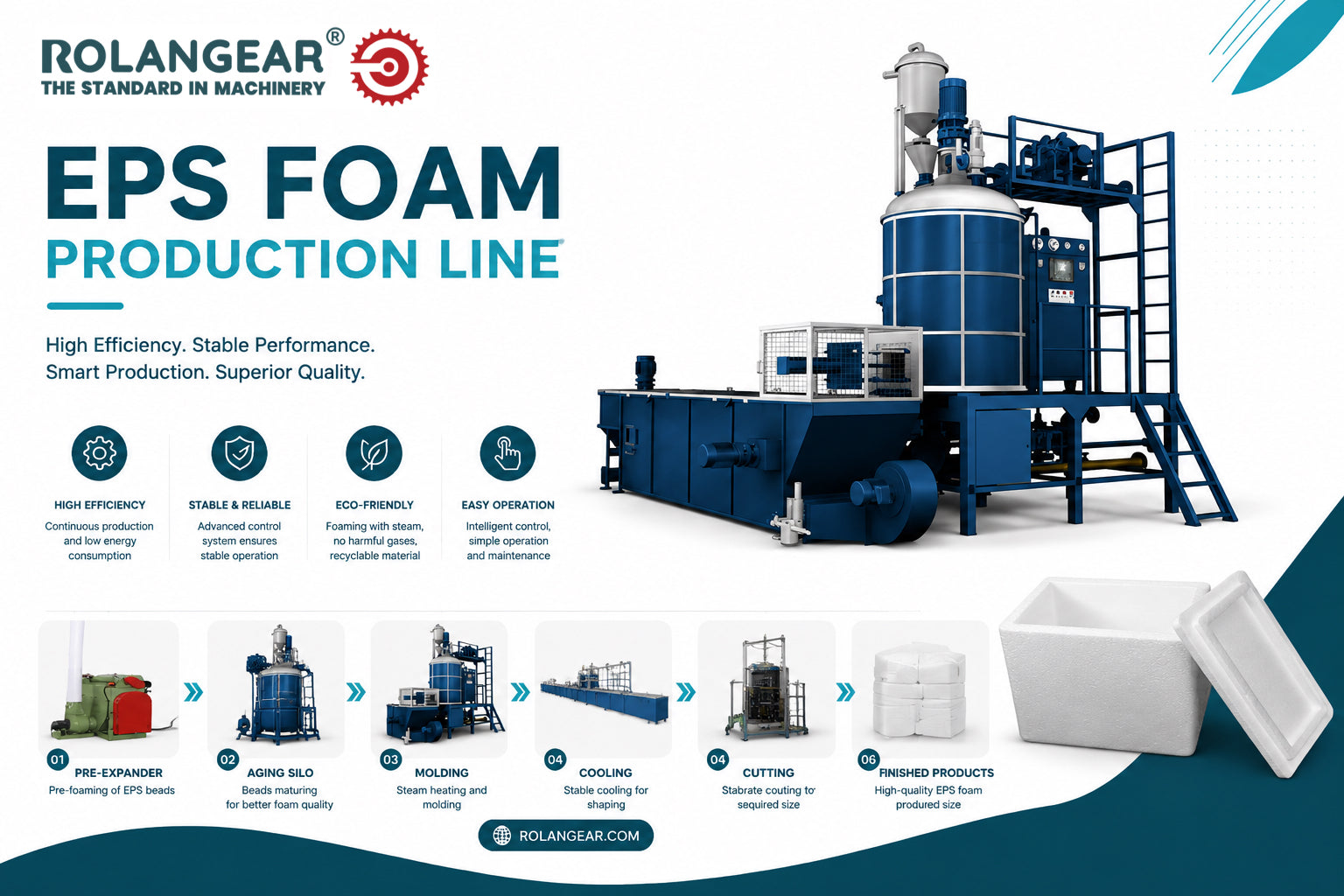

توفر Rolangear حلولاً كاملة لخطوط إنتاج رغوة EPS المصممة لمساعدة المصانع على تحويل المواد الخام EPS إلى منتجات EPS مصبوبة ومستقرة. يمكن تكوين نظام الإنتاج لصناديق EPS، وصناديق الأسماك EPS، والإدراجات الواقية، وألواح العزل، وأجزاء البناء، والصواني، ومكونات التعبئة والتغليف، والمنتجات المقولبة المخصصة وفقًا لرسم المنتج وخطة الإنتاج الخاصة بالمشتري.
يجمع خط إنتاج EPS الاحترافي عادة بين جهاز التوسيع المسبق لدفعة EPS، وصوامع تخزين المواد، وآلة تشكيل الفراغ الأوتوماتيكية، والقوالب المخصصة، وغلاية بخار، وخزان بخار، ونظام الهواء المضغوط، ونظام مياه التبريد، ومضخة المياه، ومعدات المرافق الداعمة. يجب أن يتطابق كل قسم مع حجم منتج العميل وكثافته ومتطلبات الدورة وظروف ورشة العمل والسعة المستهدفة المستقبلية.
يشرح هذا الدليل كيفية عمل خط إنتاج رغوة EPS الكامل، وما هي المعدات المضمنة، وكيف يتم تطوير المنتجات باستخدام قوالب مخصصة، وما يجب على المشترين إعداده قبل طلب عرض أسعار أو مقترح خط إنتاج من Rolangear.

حل تصنيع EPS الكامل بدءًا من المواد الخام وحتى المنتج النهائي
يتطلب مشروع تصنيع EPS الناجح أن تعمل جميع مراحل الإنتاج معًا. يحتاج المصنع إلى إعداد مستقر للمواد، وتوسعة متسقة للخرز، وتخزين كافٍ ووقت تعتيق، وملء قالب يمكن التحكم فيه، وقولبة بخار موثوقة، وتبريد مائي وتفريغ فعال، ومعالجة منظمة للمنتج النهائي.
يتضمن تدفق إنتاج EPS الأساسي ما يلي:
أنظمة المرافق لها نفس القدر من الأهمية. ينتقل البخار عادةً من الغلاية إلى خزان البخار ثم إلى آلة التشكيل. ينتقل الهواء المضغوط من ضاغط الهواء إلى خزان الهواء ومعدات الإنتاج. يتم تدوير مياه التبريد من خلال برج التبريد، ومضخة المياه، وآلة التشكيل لدعم استقرار الدورة.
عندما يتم تخطيط هذه الأقسام كنظام واحد، يمكن للمصنع تقليل ارتباك التثبيت، وتجنب المرافق ذات الحجم الصغير، وإنشاء مسار إنتاج أكثر وضوحًا من مادة EPS الخام إلى المنتجات النهائية.
يتمثل دور Rolangear في مساعدة المشترين على التفكير فيما هو أبعد من آلة واحدة. الهدف هو تكوين حل عملي لتصنيع رغوة EPS الذي يتوافق مع ظروف مصنع المشتري ومجموعة المنتجات والإنتاج المستهدف واتجاه الميزانية.

لماذا تختار خط إنتاج رغوة Rolangear EPS؟
أكثر من مجرد معدات — حل متكامل لتصنيع EPS
يتطلب الاستثمار في خط إنتاج EPS أكثر من مجرد اختيار آلة التمدد المسبق أو آلة التشكيل. يجب على الشركات المصنعة مراعاة أبعاد المنتج، وكثافة المنتج، والقدرة الإنتاجية، وهيكل القالب، واستهلاك البخار، وظروف الهواء المضغوط، ودوران مياه التبريد، ومساحة المصنع، والمتطلبات الكهربائية، وخطط التوسع المستقبلية.
يركز Rolangear على تكوين هذه العناصر كنظام إنتاج كامل واحد. يساعد هذا الشركات المصنعة على تجنب مشكلات المشروع الشائعة مثل عدم تطابق الآلات، وعدم كفاية سعة البخار، وضعف تدفق ورشة العمل، وتصميمات القوالب التي لا تتناسب مع هدف الإنتاج المقصود.
التكامل الكامل لنظام الإنتاج
يعتمد إنتاج EPS المستقر على التنسيق بين معدات الإنتاج وأنظمة المرافق. قد يشتمل التكوين الكامل على جهاز التوسيع المسبق لدفعة EPS، ونظام تخزين المواد، وآلة قولبة الشكل الفراغي الأوتوماتيكية، وقوالب EPS المخصصة، وبنادق التعبئة، والقاذفات، وغلاية بخار الغاز، وخزان البخار العازل، ونظام الهواء المضغوط، ونظام مياه التبريد، ومضخة المياه.
فائدة تكامل النظام عملية. يمكن للمشترين مراجعة المشروع بالكامل كمسار إنتاج واحد بدلاً من شراء آلات غير مرتبطة بشكل منفصل. يمكن مراعاة تخطيط المصنع، وتدفق المواد، وخطوط أنابيب المرافق، وإمكانية وصول المشغل قبل بدء التثبيت.
صب شكل EPS التلقائي
آلة تشكيل الشكل بالفراغ الأوتوماتيكية هي المعدات الأساسية لمنتجات EPS المقولبة. فهو يجمع بين تعبئة القالب، وتسخين البخار، ودمج الخرز، والتبريد الفراغي، وإخراج المنتج، والتحكم القابل للبرمجة. إن التحكم PLC وتشغيل الشاشة التي تعمل باللمس يجعل من السهل ضبط الماكينة لتناسب المنتجات ومتطلبات الإنتاج المختلفة.
إمدادات البخار مستقرة لصب EPS
يعد البخار أحد أهم شروط الإنتاج في صب EPS. يعمل على تنعيم ودمج الخرزات الموسعة مسبقًا داخل القالب. تساعد غلاية البخار وخزان البخار المختارين بشكل صحيح في الحفاظ على ضغط مستقر وتقليل التقلبات أثناء الإنتاج.
نظام تبريد فراغ فعال
بعد القولبة بالبخار، يجب أن يبرد المنتج قبل إخراجه. يساعد التبريد الفراغي والماء على تقصير دورة التشكيل، وتثبيت شكل المنتج، ودعم التشغيل المستمر. يجب أن يتوافق أداء التبريد مع حجم القالب وسمك المنتج وكثافته والإنتاج المتوقع.
قوالب EPS مخصصة
تتطلب منتجات EPS المختلفة قوالب مختلفة. تحتاج صناديق EPS، والألواح العازلة، والتغليف الواقي، وأجزاء البناء، والصواني، والمكونات الصناعية المشكلة إلى هياكل قوالب مصممة حول أبعاد المنتج، والوزن، والكثافة، وتخطيط التجويف، وطريقة التشكيل.
قبل إنتاج القالب، يجب على العملاء إعداد رسومات المنتج، وعينات الصور، والأبعاد، ووزن المنتج، والكثافة المستهدفة، وتطبيق المواد، ومتطلبات الإخراج. تساعد هذه المعلومات Rolangear في التوصية بتكوين مناسب للقالب والماكينة.
تخطيط المصنع حسب الطلب
كل مشروع EPS له ظروف مصنع مختلفة. قد يحتاج المصنع الجديد إلى تخطيط كامل لورشة العمل، بينما قد يحتاج المصنع الحالي إلى معدات موضوعة حول المرافق المتاحة وحدود البناء. يمكن لـ Rolangear دعم ترتيب خطوط الإنتاج وفقًا لحجم المصنع، وحركة المواد، والوصول إلى المرافق، ومساحة الصيانة، ومسار معالجة المنتج النهائي.
الدعم المهني من تخطيط المشروع إلى الإنتاج
يتطلب بناء مصنع EPS التخطيط الفني قبل تركيب المعدات. يمكن لـ Rolangear أن يدعم تكوين خط الإنتاج، واختيار المعدات، ومتطلبات القوالب، وتخطيط السعة، وتخطيط تخطيط المصنع، وتكوين المرافق، وإرشادات التثبيت، والدعم الفني.

المنتجات التي يمكنك إنتاجها باستخدام خط إنتاج رغوة EPS
خط إنتاج EPS واحد، وإمكانيات إنتاج قوالب مرنة
تم تصميم خط إنتاج EPS لتصنيع منتجات رغوة EPS المقولبة. يعتمد نطاق المنتج النهائي على القالب المحدد وأبعاد المنتج والكثافة والوزن وتطبيق السوق. من خلال تغيير تصميم القالب وإعدادات العملية، يمكن للمصنعين تطوير مجموعة واسعة من أشكال المنتجات.
تشمل المنتجات النهائية النموذجية صناديق التعبئة والتغليف EPS، وصناديق الأسماك، وحاويات سلسلة التبريد، وإدراج الحماية، وصواني الرغوة، وتغليف الأجهزة، وأجزاء عزل البناء، ومواد البناء المشكلة، ومكونات الرغوة الصناعية المخصصة.
منتجات مصبوبة EPS مخصصة
يمكن تكوين آلة تشكيل الأشكال الأوتوماتيكية بقوالب مصنوعة وفقًا لرسومات المنتج الخاصة بالعميل. وهذا يسمح لخط الإنتاج بالتكيف مع الأشكال والأبعاد المختلفة مع استخدام نفس مفهوم الإنتاج العام.
قبل إنتاج القالب، يجب على العملاء تقديم رسومات المنتج، الأبعاد، الوزن المستهدف، الكثافة المطلوبة، تطبيق المنتج، رقم التجويف، والقدرة الإنتاجية المستهدفة. تساعد هذه التفاصيل في تحديد هيكل القالب واختيار المعدات.
تطوير المنتجات المرنة
يمنح نظام القوالب المخصص الشركات المصنعة المرونة لتطوير المنتجات وفقًا لطلب السوق المحلي. إذا كان المشتري يخطط لإنتاج أنواع متعددة من منتجات EPS، فيجب تخطيط خط الإنتاج مع مراعاة تغيير القالب ومساحة التخزين وتوازن القدرة.

استكمال عملية إنتاج رغوة EPS
كيف يتم تصنيع منتجات الرغوة EPS خطوة بخطوة
تبدأ عملية تصنيع EPS بخرز المواد الخام. يتم توسيع هذه الخرزات بالبخار داخل الموسع المسبق للوصول إلى الكثافة المستهدفة. بعد التوسيع، تدخل الخرزات في صوامع التخزين للتعتيق قبل نقلها إلى آلة التشكيل.
الخطوة 1: إعداد المواد الخام EPS
يتم اختيار حبات EPS وفقًا لتطبيق المنتج ومتطلبات الكثافة وهدف التشكيل. تؤثر جودة المواد الخام على قوة المنتج النهائي وجودة السطح والاستقرار.
الخطوة 2: التوسع المسبق للدفعة
يستخدم الموسع المسبق لدفعة EPS البخار لتوسيع الخرز. يتحكم المشغل في الكثافة وظروف البخار وعملية التغذية وفقًا لمتطلبات المنتج.
الخطوة 3: توسيع تخزين الخرزة والشيخوخة
بعد التوسيع المسبق، تتطلب الخرزات تخزينًا ووقتًا للشيخوخة. وهذا يدعم استقرار المواد ويجهز الخرز لعملية التشكيل.
الخطوة 4: تعبئة القالب تلقائيًا
يتم نقل الخرز المجهز إلى القالب المخصص. يساعد نظام التعبئة المناسب على توزيع الخرز بالتساوي داخل تجويف القالب.
الخطوة 5: صب البخار
يدخل البخار إلى القالب ويدمج الخرزات معًا. وهذا يخلق الشكل النهائي وهيكل المنتج.
الخطوة 6: فراغ وتبريد المياه
يساعد التبريد على استقرار المنتج بعد القولبة بالبخار. يدعم التبريد الفعال وقت الدورة وجودة المنتج النهائي.
الخطوة 7: إخراج المنتج
بعد التبريد، تقوم القاذفات بتحرير منتج EPS المقولب النهائي من القالب. يجب التخطيط للتعامل مع المنتج لمنع الضرر وتحسين سير العمل.
الخطوة 8: التجفيف والتعبئة والتخزين
قد تتطلب منتجات EPS النهائية التجفيف أو الراحة قبل التعبئة. يجب أن يوفر التصميم العملي للمصنع مساحة كافية للتكديس والفحص والتعبئة والشحن.

المزايا التقنية لخط إنتاج EPS الكامل
مصمم لإنتاج EPS المستقر والمرن والفعال
يجمع خط إنتاج رغوة EPS الاحترافي بين تقنية القولبة الأوتوماتيكية وتكوين القالب المخصص وأنظمة المرافق الخاضعة للتحكم وتخطيط الإنتاج المتكامل. وهذا يساعد الشركات المصنعة على بناء عملية إنتاج أكثر موثوقية لتطبيقات EPS المختلفة.
PLC والتحكم بشاشة اللمس
تستخدم معدات الإنتاج الرئيسية التحكم PLC وتشغيل شاشة اللمس. يؤدي ذلك إلى تحسين راحة المشغل ودعم التحكم الأكثر اتساقًا في إعدادات الإنتاج.
التبريد الفراغي والقولبة المتحكم بها
يساعد التبريد الفراغي على تقصير دورات الإنتاج وتحقيق استقرار جودة المنتج. تعتبر ظروف البخار والتبريد التي يتم التحكم فيها أمرًا مهمًا لأجزاء EPS المقولبة ذات الشكل والكثافة المتسقين.
تصميم قالب مخصص
تسمح قوالب EPS المخصصة لخط الإنتاج بإنتاج أشكال وأبعاد وفئات منتجات مختلفة. يجب أن يأخذ تصميم القالب في الاعتبار قوة المنتج، وتشكيل القالب، وتخطيط التجويف، وسمك الجدار، ومتطلبات السطح.
تخطيط المرافق المتكامل
البخار والهواء المضغوط ومياه التبريد ليست تفاصيل اختيارية؛ فهي ضرورية لإنتاج مستقر. يجب أن يتطابق نظام المرافق مع الماكينة المحددة وحجم القالب وهدف الإخراج وظروف المصنع.
تحسين سير عمل المصنع
عندما يتم تخطيط المعدات كنظام كامل، يمكن للمصنع إنشاء طريق أكثر سلاسة من المواد الخام إلى المنتج النهائي. وهذا يقلل من التعامل غير الضروري ويحسن كفاءة التشغيل اليومية.
مرونة التطبيق
تُستخدم منتجات EPS في التعبئة والتغليف والعزل والبناء والخدمات اللوجستية لسلسلة التبريد وحماية الأجهزة والمكونات الصناعية المخصصة. يساعد خط الإنتاج المرن الشركات المصنعة على الاستجابة لاحتياجات السوق المختلفة.
تخطيط الجودة
تعتمد جودة المنتج على التحكم في الكثافة ودقة القالب وتوزيع البخار وأداء التبريد والتعامل السليم بعد الطرد. وينبغي أخذ هذه العوامل في الاعتبار أثناء مرحلة تخطيط المشروع، وليس فقط بعد التثبيت.
التوسع على المدى الطويل
يجب على المصانع التي تخطط للنمو المستقبلي أن تأخذ في الاعتبار القوالب الإضافية، ومساحة ورشة العمل، وقدرة المرافق، وتخزين المواد، ومنطقة معالجة المنتج النهائي من البداية.

تخطيط المصنع لورشة تصنيع EPS
تصميم مساحة إنتاج EPS فعالة
يجب أن يوفر التصميم الجيد لمصنع EPS مساحة كافية لوضع المعدات، وتخزين المواد الخام، وصوامع الخرز الموسعة، وتشغيل القوالب، وأنظمة المرافق، وتجفيف المنتجات، والتعبئة، وتخزين المستودعات، والوصول إلى الصيانة، وحركة المشغل.
يجب أن يكون تدفق الإنتاج منطقيًا. يجب أن تتحرك المواد الخام نحو مرحلة ما قبل التوسيع، ويجب أن تتحرك الخرزات الموسعة نحو التخزين والقولبة، ويجب أن تتحرك المنتجات النهائية نحو التجفيف والتعبئة، ويجب وضع معدات المرافق للوصول الآمن والصيانة.
تشمل عوامل التخطيط المهمة ما يلي:
• حجم الورشة المتاحة وارتفاع السقف
• طريق استلام وتخزين المواد الخام
• ترتيب ما قبل المتوسع والصومعة
• الوصول إلى آلة التشكيل ومساحة تغيير القالب
• موقع غلايات البخار وخزان البخار
• وضعية ضاغط الهواء ونظام تبريد الماء
• منطقة تكديس وتعبئة المنتجات النهائية
• مساحة الصيانة وسلامة المشغل
قبل الانتهاء من المشروع، توصي Rolangear بمراجعة أبعاد المصنع، والأبواب، وإمدادات الطاقة، وإمدادات المياه، ومسار خط أنابيب البخار، والصرف الصحي، والتهوية، والخدمات اللوجستية للمنتج النهائي.

ما الذي يحدد تكلفة خط إنتاج رغوة EPS؟
يختلف كل مشروع تصنيع EPS. يعتمد الاستثمار النهائي على تكوين المعدات، ومتطلبات المنتج، والقدرة، وظروف المصنع، وكمية القالب، ومستوى الأتمتة، وأنظمة المرافق، واحتياجات التثبيت.
تشمل عوامل التكلفة الرئيسية ما يلي:
1. نوع المنتج وأبعاده
قد تتطلب المنتجات الكبيرة والأجزاء العازلة السميكة والصناديق والصواني والمكونات المقولبة المخصصة تخطيطًا مختلفًا للقالب والآلة.
2. كثافة المنتج ووزنه
تؤثر الكثافة على استخدام المواد الخام، والتحكم قبل التوسيع، ووقت التشكيل، وأداء المنتج.
3. كمية العفن والتعقيد
المزيد من القوالب أو هياكل القوالب المعقدة تزيد من متطلبات المشروع ولكنها تخلق أيضًا المزيد من مرونة المنتج.
4. هدف الإخراج
قد تتطلب السعة الأعلى معدات أكبر، وتبريدًا أسرع، وأدوات مساعدة أقوى، ومساحة أكبر في المصنع.
5. أنظمة البخار والهواء والتبريد
يجب أن يكون حجم أنظمة المرافق بشكل صحيح. يمكن لمعدات الدعم ذات الحجم الصغير أن تحد من الإنتاج حتى عندما تكون آلة التشكيل قادرة.
6. تخطيط المصنع وشروط التثبيت
قد تحتاج المصانع القائمة إلى ترتيبات خاصة، بينما يمكن تصميم المصانع الجديدة حول عملية الإنتاج منذ البداية.
بدلاً من مقارنة أسعار الماكينات فقط، يجب على المشترين مراجعة التكوين الكامل للمشروع. يجب أن يوضح الاقتراح الكامل تدفق الإنتاج وقائمة المعدات وخطة القالب ومتطلبات المرافق واعتبارات تخطيط المصنع.

لماذا الاستثمار في خط إنتاج رغوة EPS؟
يستمر استخدام منتجات EPS في العديد من الأسواق لأنها خفيفة الوزن، وواقية، وعازلة، ومناسبة للأشكال المخصصة. يمكن للمصنعين إنتاج منتجات للتغليف والنقل بسلسلة التبريد والبناء والعزل وحماية الأجهزة والزراعة والتطبيقات الصناعية.
بالنسبة للشركات التي تشتري بالفعل منتجات EPS من قنوات الشراء الخارجية، فإن بناء خط إنتاج EPS داخلي قد يؤدي إلى تحسين استقرار العرض ودعم تخصيص المنتج. بالنسبة للمصانع التي تدخل سوقًا جديدًا، يمكن للخط الذي تم تكوينه بشكل صحيح إنشاء قاعدة تصنيع مرنة لأنواع منتجات متعددة.
قائمة مراجعة المشتري قبل طلب العرض
للحصول على مقترح أكثر دقة لخط إنتاج رغوة EPS، قم بإعداد المعلومات التالية:
• رسم المنتج أو صورة العينة
• أبعاد المنتج
• وزن المنتج وكثافته المستهدفة
• المتوقع الإنتاج اليومي أو كل ساعة
• تطبيق المنتج ومتطلبات السوق
• حجم المصنع والرسم التخطيطي إن وجد
• الجهد المحلي والظروف الكهربائية
• مصدر البخار أو متطلبات المرجل
• ظروف الهواء المضغوط ومياه التبريد
• عدد أنواع المنتجات أو القوالب المخطط لها
أسئلة المشتري الشائعة
ما هو الفرق بين التوسيع المسبق لـ EPS وقولبة EPS؟
يقوم التوسيع المسبق بتحضير خرزات المواد الخام عن طريق توسيعها بالبخار. يقوم القالب بملء الخرزات المعدة في قالب مخصص ودمجها في شكل المنتج النهائي.
هل يمكن لخط إنتاج EPS واحد أن يصنع منتجات مختلفة؟
نعم. يمكن تصنيع منتجات مختلفة عن طريق تغيير القوالب وضبط ظروف العملية، طالما أن حجم الماكينة ونظام المرافق مناسبان لمتطلبات المنتج.
ما هي المعلومات اللازمة لتصميم القالب؟
يجب على العملاء تقديم رسم المنتج، وحجم المنتج، والوزن المستهدف، والكثافة، ومتطلبات التجويف، ومتطلبات التشكيل، وعينة من الصور إذا كانت متوفرة.
كيف ينبغي للمصنع أن يخطط للمرافق لإنتاج EPS؟
يجب أن يقوم المصنع بتخطيط البخار والهواء المضغوط ومياه التبريد والصرف وإمدادات الطاقة والتهوية حول المعدات المحددة وهدف الإنتاج.
هل خط إنتاج رغوة EPS مخصص؟
نعم. تقوم Rolangear بتكوين خط الإنتاج وفقًا لمتطلبات المنتج، ومساحة المصنع، وهدف الإنتاج، وظروف المرافق. ينبغي تأكيد التكوين النهائي من مشروع إلى مشروع.
الخلاصة: قم ببناء مشروع تصنيع EPS موثوق به باستخدام Rolangear
تساعد Rolangear العملاء على مراجعة متطلبات المنتج، وتخطيط المصنع، واحتياجات القالب، وأهداف السعة، وظروف المرافق لتكوين حل عملي لإنتاج EPS. إذا كنت تخطط لتعبئة EPS، أو العزل، أو صندوق السمك، أو التغليف الواقي، أو مشروع الرغوة المقولبة المخصصة، فيمكن أن تساعد Rolangear في إعداد مقترح خط الإنتاج بناءً على متطلبات المصنع الخاص بك.
اتصل بـ Rolangear لمناقشة مشروع خط إنتاج رغوة EPS الخاص بك واحصل على تكوينات مخصصة للمعدات لمصنعك.
تواصل مع رولانجير

%20%D9%85%D8%A7%D8%AF%D8%A9%20%D9%85%D9%87%D9%85%D8%A9%20%D9%84%D9%84%D8%AA%D8%BA%D9%84%D9%8A%D9%81%D8%8C%20%D9%88%D8%A7%D9%84%D8%B9%D8%B2%D9%84%D8%8C%20%D9%88%D8%A7%D9%84%D8%A8%D9%86%D8%A7%D8%A1%D8%8C%20%D9%88%D8%A7%D9%84%D8%AE%D8%AF%D9%85%D8%A7%D8%AA%20%D8%A7%D9%84%D9%84...)