
يستمر سوق تغليف المواد الغذائية العالمي في النمو حيث أصبح توصيل الطعام والوجبات الجاهزة ومحلات السوبر ماركت وخدمات تقديم الطعام والمنتجات الجاهزة للأكل جزءًا من الاستهلاك اليومي. بالنسبة لمصنعي التغليف، يخلق هذا الطلب فرصة واضحة: يحتاج العملاء إلى حاويات أغذية موثوقة يمكن التخلص منها تكون خفيفة الوزن، صحية، فعالة من حيث التكلفة، ومتوفرة بأحجام وأشكال مختلفة.
ومع ذلك، فإن بناء مصنع ناجح لتغليف المواد الغذائية القابل للتصرف لا يقتصر فقط على شراء آلة تشكيل واحدة. يجب تخطيط عملية التصنيع الكاملة كنظام متكامل. إعداد المواد الخام، وقذف صفائح الرغوة PS، والتشكيل التلقائي، وتكديس المنتجات، وإعادة تدوير النفايات، ومساحة المصنع، ومهارة المشغل، والمرافق، وتصميم القالب، كلها تؤثر على جودة المنتج النهائي وربحية الأعمال.
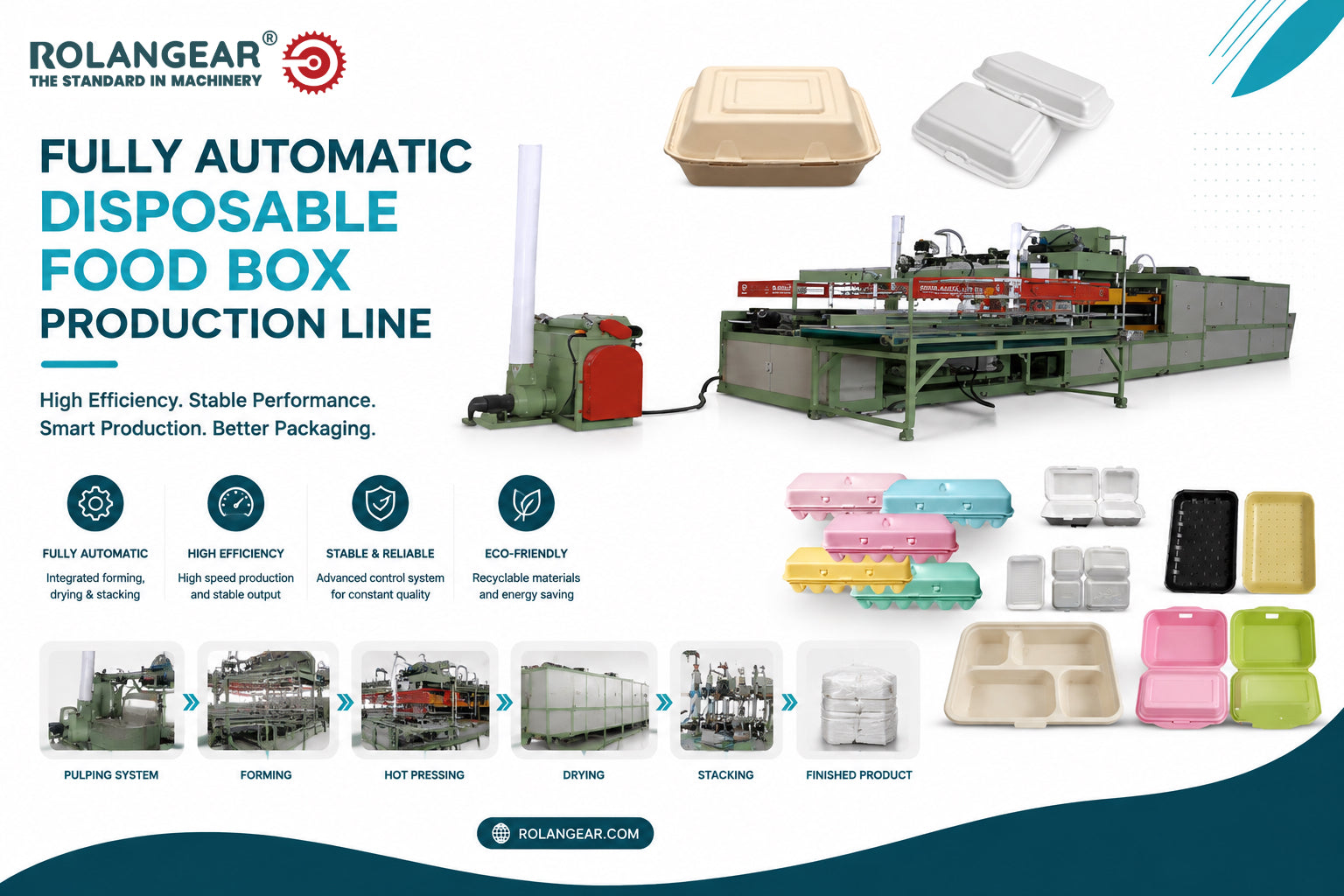
يوفر Rolangear خط إنتاج علب الطعام القابل للتصرف الأوتوماتيكي بالكامل حلول للمصنعين الذين يرغبون في بناء أو توسيع مصنع تغليف المواد الغذائية الاحترافي. يشرح هذا الدليل كيفية عمل خط الإنتاج، وما هي المعدات المضمنة، وما هي المنتجات التي يمكن إنتاجها، وما هي العوامل التي تؤثر على الاستثمار، وكيف يمكن للمشترين اختيار التكوين المناسب للإنتاج على المدى الطويل.
ما سبب أهمية خط الإنتاج هذا لمصنعي التغليف
يمنح خط إنتاج صناديق الطعام الحديث القابل للتصرف المصنعين المزيد من التحكم في جودة المنتج، واستقرار الإخراج، واستخدام المواد، والقدرة على التسليم. فبدلاً من الاعتماد على عدة آلات منفصلة قد لا تعمل معًا بسلاسة، يقوم نظام متكامل بربط كل مرحلة من مراحل الإنتاج في سير عمل واحد واضح.
بالنسبة للمصانع الجديدة، يعمل هذا النهج المتكامل على تقليل عدم اليقين أثناء إعداد المشروع. بالنسبة لموردي التغليف الحاليين، فهو يوفر مسارًا عمليًا لتوسيع القدرة وإضافة فئات منتجات جديدة وتحسين كفاءة الإنتاج. بالنسبة لمصنعي المعدات الأصلية، فهو يخلق المرونة لخدمة العملاء المختلفين بخيارات قوالب متعددة وتصميمات حاويات مخصصة.
القيمة الأساسية هي الاتساق. يتوقع مشترو عبوات المواد الغذائية حوافًا نظيفة وأبعادًا مستقرة وقوة مناسبة ومظهرًا جيدًا وإمدادات موثوقة. إذا كان بثق الورقة غير مستقر، فإن قسم التشكيل لا يمكنه إنتاج منتجات متسقة. إذا كان التراص بطيئا، تزيد تكاليف العمالة. إذا لم يتم إعادة تدوير الخردة بكفاءة، تصبح نفايات المواد مشكلة تكلفة طويلة المدى.
تركز Rolangear على حلول الإنتاج الكاملة بدلاً من مبيعات الماكينات المعزولة. الهدف هو مساعدة العملاء على بناء مصنع عملي لتغليف المواد الغذائية يتوافق مع احتياجات المنتج وأهداف السعة وظروف المصنع وخطط التوسع المستقبلية.
طلب السوق على صناديق الطعام وصواني الطعام التي تستخدم لمرة واحدة
تُستخدم عبوات المواد الغذائية التي تستخدم لمرة واحدة على نطاق واسع في الوجبات الجاهزة، ومطاعم الوجبات السريعة، ومنصات التوصيل، ومحلات السوبر ماركت، وتغليف المواد الغذائية الطازجة، وتغليف المخابز، وأحداث تقديم الطعام، وخدمات إعداد الوجبات. تتطلب هذه التطبيقات حاويات خفيفة ومريحة وسهلة التكديس ومناسبة للإنتاج الضخم.
تظل صناديق الغداء الرغوية وصواني الطعام الرغوية PS شائعة في العديد من الأسواق لأنها توفر وزنًا خفيفًا وأداء عزل وتكلفة منخفضة للوحدة وتصميم قالب مرن. يمكن للمصنعين إنتاج أحجام وأشكال مختلفة من المنتجات وفقًا لمتطلبات السوق المحلية واحتياجات المطاعم وعادات التعبئة والتغليف في السوبر ماركت وخطط العلامات التجارية للعملاء.

بالنسبة للمستثمرين، السؤال المهم ليس ببساطة ما إذا كان السوق يحتاج إلى صناديق الطعام. والسؤال الحقيقي هو ما إذا كان المصنع قادراً على إنتاجها بكفاءة، وبشكل متسق، وبمستوى تكلفة يدعم المنافسة على المدى الطويل. يساعد خط ماكينة تصنيع علب الطعام الأوتوماتيكي بالكامل في الإجابة على هذا التحدي.
كيف يعمل خط إنتاج علب الطعام القابل للتصرف الأوتوماتيكي بالكامل
يبدأ خط الإنتاج بمواد خام PS وينتهي بحاويات المواد الغذائية الجاهزة للاستخدام مرة واحدة والجاهزة للفحص والتعبئة والتخزين. كل مرحلة تؤثر على المرحلة التالية، لذلك يجب تصميم الخط كنظام تصنيع واحد مستمر.

الخطوة 1 - تحضير المواد الخام
PS يتم تحضير الحبيبات والإضافات المطلوبة وخلطها وفقًا للمنتج المستهدف. يؤثر إعداد المواد على جودة ألواح الرغوة، وثبات السمك، وأداء التشكيل، وقوة الحاوية النهائية. تعتبر عملية الخلط والتغذية المستقرة مهمة للإنتاج المستمر.
أسئلة يجب مراعاتها:
- ما هو سمك المنتج المطلوب للسوق المحلي؟
- هل سينتج المصنع صناديق خفيفة للوجبات الجاهزة، أو صواني أقوى، أو درجات متعددة من المنتجات؟
- ما هي تركيبة المادة المناسبة لنسبة الرغوة المطلوبة وجودة المنتج؟
الخطوة 2 - بثق لوح الرغوة PS
يقوم خط البثق بتحويل المواد الخام إلى لفات صفائح رغوة PS المستمرة. أثناء البثق، يتم تسخين المواد، وترغيتها، وتصفيتها، وتشكيلها من خلال القالب، وتبريدها، ونقلها، ولفها على شكل لفات. تصبح هذه اللفات المادة الأساسية لتشكيل الفراغ.
تعد مرحلة بثق الورقة أمرًا بالغ الأهمية لأن جودة الورقة الرديئة تؤدي إلى تشكيل مشاكل أو منتجات ضعيفة أو مظهر غير متساوٍ أو إخراج غير مستقر. يجب على المشترين الانتباه إلى عرض الورقة، نطاق السمك، السعة، طريقة التبريد، الطاقة المثبتة، ومساحة المصنع المطلوبة لخط البثق.
تتضمن النقاط المرجعية النموذجية سمك الورقة حوالي 1-4 مم، وعرض الورقة حوالي 640-1080 مم، والمخرجات المستندة إلى المشروع اعتمادًا على تكوين النموذج ومتطلبات المنتج. يجب تأكيد القيم النهائية وفقًا للماكينة المحددة وظروف المشروع المحلية.
الخطوة 3 - تسخين الورقة قبل التشكيل
قبل التشكيل، يجب تسخين لوح الرغوة PS إلى درجة حرارة مناسبة. يعمل التسخين الصحيح على تحسين دقة التشكيل وجودة الحافة واتساق المنتج. إذا كان التسخين غير متساوٍ، فقد تكون الحاويات ذات شكل رديء أو مساحات رقيقة أو قوة غير مستقرة.
يجب أن يدعم قسم التشكيل الاحترافي التغذية المستقرة للصفائح، والتسخين المتحكم فيه، ومحاذاة القالب، ووقت الدورة المتسق. قد تبدو هذه التفاصيل صغيرة، لكنها تؤثر بشكل مباشر على جودة صناديق وصواني الطعام الجاهزة للاستخدام مرة واحدة.
الخطوة 4 - تشكيل الفراغ تلقائيًا
تدخل الورقة الساخنة إلى آلة التشكيل بالفراغ الأوتوماتيكية، حيث تقوم القوالب بتشكيل الورقة في صناديق الطعام، وصناديق الغداء، والصواني، وتصميمات الحاويات الأخرى. قد يقوم نظام التشكيل بدمج التشكيل والقطع والتكديس وإخراج المنتج تلقائيًا لتقليل التشغيل اليدوي.
بالنسبة للعديد من المشترين، فإن آلة التشكيل هي الجزء الأكثر وضوحًا في الخط. تشمل عوامل الاختيار المهمة منطقة التشكيل، وتوافق القالب، ووقت الدورة، ودقة القطع، ونظام التحكم، وطريقة التكديس، وأبعاد الماكينة، ومتطلبات الطاقة، وسهولة التشغيل.
الخطوة 5 - القطع والتراص
بعد التشكيل، يتم قطع المنتجات وجمعها. يقلل التجميع التلقائي من المناولة اليدوية، ويحسن كفاءة التعبئة، ويساعد في الحفاظ على تنظيم مخرجات المنتج. بالنسبة للإنتاج بكميات كبيرة، يعد التكديس المستقر أمرًا مهمًا لأن تجميع المنتجات البطيء يمكن أن يصبح عنق الزجاجة.
يؤثر القطع النظيف أيضًا على إدراك العملاء. يجب أن تتمتع منتجات تغليف المواد الغذائية بحواف ناعمة وشكل متناسق ومظهر احترافي. القطع الدقيق والتكديس المنظم يجعل الفحص والتعبئة النهائية أسهل.
الخطوة السادسة - إعادة تدوير الخردة
لا يمكن تجنب المواد الطرفية ونفايات الإنتاج في تشكيل علب الطعام. يقوم نظام إعادة التدوير بسحق الخردة ومعالجتها إلى حبيبات قابلة لإعادة الاستخدام والتي يمكن أن تعود إلى قذف الألواح عندما يكون ذلك مناسبًا. ويساعد ذلك على تقليل هدر المواد ويدعم التحكم بشكل أفضل في التكاليف على المدى الطويل.
يجب التخطيط لعملية إعادة التدوير بعناية وفقًا لمتطلبات جودة المنتج واللوائح المحلية وتوقعات العملاء. بالنسبة للتغليف الملامس للأغذية، يجب أن يتبع استخدام المواد دائمًا القواعد المعمول بها ومتطلبات العملاء.
المعدات الرئيسية في خط إنتاج علب الطعام القابل للتصرف الكامل
يشتمل خط الإنتاج الكامل عادةً على نظام بثق صفائح الرغوة PS، ونظام التشكيل التلقائي بالفراغ، وقسم القطع والتكديس، وكسارة الخردة، ومحبب إعادة التدوير، والقوالب، وأنظمة التحكم، وأدوات الدعم المطلوبة. تساعد Rolangear العملاء على تهيئة المعدات وفقًا للمنتج المستهدف وخطة المصنع.

PS خط بثق الألواح الرغوية
خط بثق لوح الرغوة PS ينتج لفات لوح الرغوة المستمرة من حبيبات PS. ويشمل تغذية المواد، والبثق، والرغوة، والترشيح، والتبريد، والتشكيل، والنقل، واللف، وأقسام التحكم. تحدد جودة الورقة مدى جودة أداء عملية التشكيل التالية.
النقاط الرئيسية للمشترين:
- قم بمطابقة عرض الورقة مع آلة التشكيل وحجم القالب.
- اختر نطاق السُمك وفقًا لقوة المنتج وطلب السوق.
- تأكد من مساحة المصنع وإمدادات الطاقة ومتطلبات التبريد وسير العمل.
آلة تشكيل الفراغ الأوتوماتيكية
تقوم آلة التشكيل بالفراغ الأوتوماتيكية بتشكيل لوح رغوة PS المسخن في حاويات يمكن التخلص منها. يمكن للآلة المناسبة أن تجمع بين التشكيل والقطع والتكديس وإخراج المنتج، مما يساعد الشركات المصنعة على تقليل المعدات المنفصلة وتبسيط إدارة الإنتاج.
النقاط الرئيسية للمشترين:
- التحقق من منطقة التشكيل وتوافق القالب.
- تأكد من وقت الدورة وفقًا لتصميم المنتج.
- ضع في اعتبارك طريقة التجميع، وراحة المشغل، والصيانة طويلة المدى.
كسارة الخردة ومحبب إعادة التدوير
يقوم نظام إعادة التدوير بمعالجة قطع الخردة والمواد الطرفية إلى حبيبات قابلة لإعادة الاستخدام. تعتبر هذه المعدات مهمة للمصانع التي ترغب في تحسين استخدام المواد وتقليل تراكم النفايات حول منطقة الإنتاج.
النقاط الرئيسية للمشترين:
- تأكد من قدرة إعادة التدوير بناءً على حجم نفايات الإنتاج.
- قم بتخطيط منطقة إعادة التدوير في مخطط المصنع.
- اتبع متطلبات جودة المنتج عند إعادة استخدام المواد المعاد تدويرها.
القوالب وتصميم المنتجات
تحدد القوالب شكل المنتج النهائي وحجمه وعمقه وأقسامه وبنية الحافة والمظهر. يمكن لخط الإنتاج أن يدعم منتجات التعبئة والتغليف المتعددة عندما يتم تصميم القوالب بشكل صحيح. وهذا يسمح للمصنعين بخدمة مجموعات العملاء المختلفة وقطاعات السوق.
تتضمن الأمثلة صناديق الغداء الصدفة، وصواني الطعام، وصواني اللحوم، وصواني الفاكهة، وصواني المخابز، وصواني السوبر ماركت، وحاويات الوجبات الجاهزة المخصصة.
المنتجات التي يمكن للمصنعين إنتاجها

يمكن استخدام خط إنتاج علب الطعام الأوتوماتيكي بالكامل لتصنيع مجموعة واسعة من منتجات التعبئة والتغليف الرغوية PS. ومن خلال تغيير القوالب وتعديل مواصفات المنتج، يمكن لمصنع واحد بناء مجموعة منتجات مرنة.
نطاق المنتج
- صناديق طعام يمكن التخلص منها للوجبات الجاهزة وخدمات التوصيل.
- صناديق الغداء الرغوية للمطاعم، وتقديم الطعام، وتغليف الوجبات السريعة.
- صواني الطعام لمحلات السوبر ماركت والأطعمة الطازجة واللحوم والفواكه والخضروات ومنتجات المخابز.
- حاويات مخصصة لمتطلبات السوق المحلية ومشاريع التعبئة والتغليف OEM.
هذه المرونة مهمة لأن طلب السوق قد يتغير. قد يواجه المصنع الذي يمكنه إنتاج مقاس واحد فقط أو نمط منتج واحد حدودًا. يمكن للمصنع الذي لديه قوالب مناسبة ونظام تشكيل متطابق أن يستجيب لمتطلبات العملاء بسرعة أكبر.
المزايا الرئيسية للنظام التلقائي بالكامل

تساعد الأتمتة الشركات المصنعة للتغليف على تحسين الإنتاجية وتقليل الاعتماد على العمالة والحفاظ على جودة منتج أكثر استقرارًا. في حين أن بعض العمليات قد لا تزال تتطلب الفحص أو دعم التعبئة، إلا أن التغذية التلقائية والتشكيل والقطع والتكديس وإعادة التدوير يمكن أن تحسن تدفق الإنتاج بشكل كبير.
- تحسين كفاءة الإنتاج من خلال التشغيل المستمر.
- أبعاد ومظهر المنتج أكثر استقرارًا.
- تقليل التعامل اليدوي أثناء التشكيل والتكديس.
- استخدام أفضل للمواد من خلال إعادة تدوير الخردة.
- إدارة أسهل للمصنع من خلال التخطيط المتكامل للمعدات.
- إنتاج أكثر مرونة من خلال القوالب المخصصة والتكوين القائم على المشروع.
تخطيط القدرات لأهداف العمل المختلفة
تعتمد السعة المناسبة على طلب السوق وخطة الاستثمار ومساحة المصنع المتاحة وحجم المنتج والنمو المتوقع. قد يختار المصنع الناشئ تكوينًا مرنًا لاختبار السوق، بينما قد تحتاج الشركة المصنعة القائمة إلى أتمتة أعلى وإنتاج مستمر.
حل الإنتاج على نطاق صغير
مناسب لشركات التغليف الجديدة والموردين المحليين والشركات المصنعة الصغيرة ومشاريع اختبار السوق. وينصب التركيز على الإنتاج المرن والاستثمار العملي والتشغيل الأسهل وإمكانية الترقية المستقبلية.
حل إنتاج متوسط الحجم
مناسب لشركات التعبئة والتغليف المتنامية والموردين الإقليميين والشركات المصنعة للمعدات الأصلية والمصانع التي تعمل على توسيع الإنتاج الحالي. وينصب التركيز على تحسين الكفاءة والتشغيل المستقر والتحكم بشكل أفضل في التكاليف وقدرة أقوى على توريد السوق.
حل كبير للإنتاج الصناعي
مناسب لمصنعي التغليف الكبار، والمصانع الموجهة للتصدير، وموردي تغليف المواد الغذائية بكميات كبيرة. وينصب التركيز على الأتمتة، والإنتاج المستمر، والقدرة الكبيرة، وانخفاض تكلفة التشغيل على المدى الطويل، والتخطيط الاحترافي للمصنع.
تخطيط المصنع وتخطيط تدفق الإنتاج
يعد تخطيط المصنع جزءًا مهمًا من المشروع. حتى الآلات الجيدة يمكن أن تؤدي أداءً سيئًا إذا أدى التخطيط إلى حركة مواد غير ضرورية، أو صعوبة الوصول إلى الصيانة، أو ضعف تدفق التخزين، أو مشاكل تتعلق بالسلامة. يجب أن يأخذ التخطيط الاحترافي بعين الاعتبار تخزين المواد الخام، ومنطقة البثق، ومنطقة التشكيل، ومنطقة إعادة التدوير، وفحص المنتج النهائي، والتعبئة، وتخزين البضائع التامة الصنع.
تشمل مناطق المصنع النموذجية ما يلي:

- منطقة تخزين المواد الخام لحبيبات PS والمواد المضافة.
- منطقة بثق الصفائح لإنتاج صفائح رغوة PS بشكل مستمر.
- تشكيل منطقة الإنتاج للتشكيل الفراغي، والقطع، والتكديس.
- منطقة إعادة التدوير لسحق الخردة وتحبيبها.
- منطقة المنتج النهائي للفحص والتعبئة والتخزين.
يساعد التخطيط المصمم جيدًا على تقليل الحركة غير الضرورية، وتحسين كفاءة الإنتاج، ودعم التشغيل الأكثر أمانًا، وإفساح المجال للتوسع المستقبلي.
عوامل الاستثمار وسعر آلة علب الطعام
يبحث العديد من المشترين عن سعر آلة صنع صناديق الطعام التي تستخدم لمرة واحدة، أو تكلفة آلة صنع صناديق الغداء الرغوية، أو سعر خط إنتاج حاويات الطعام الرغوية PS. يعتمد السعر النهائي على تفاصيل المشروع، لذلك يكون تقييم التكلفة بناءً على التكوين أكثر دقة بدلاً من رقم قياسي واحد.
تشمل العوامل الرئيسية ما يلي:
- القدرة الإنتاجية وهدف الإخراج.
- حجم المنتج وشكله وسمكه وكمية القالب.
- مستوى الأتمتة ومتطلبات التراص.
- تكوين بثق الورقة ونموذج آلة التشكيل.
- سعة نظام إعادة التدوير وتخطيط المصنع.
- الجهد المحلي والمرافق وشروط التثبيت وخطة التوسعة.
للحصول على عرض أسعار موثوق به، يجب على المشترين تقديم عينات المنتج أو الرسومات، والمخرجات المستهدفة، وأبعاد المصنع، ومستوى الأتمتة المفضل، ومعلومات مصدر الطاقة المحلي. يمكن لـ Rolangear بعد ذلك أن يوصي بالتكوين المناسب.
مراقبة الجودة في إنتاج عبوات المواد الغذائية التي تستخدم لمرة واحدة

يجب دمج مراقبة الجودة في عملية الإنتاج بأكملها. يدعم إعداد المواد الخام المستقر اتساق الورقة. يدعم بثق الورقة المتسق تشكيلًا أفضل. تسخين دقيق وتشكيل شكل المنتج الداعم. يدعم القطع والتكديس النظيف المظهر الاحترافي والتعبئة الأسهل.
تتضمن نقاط الجودة المهمة ما يلي:
- استقرار سمك الورقة.
- رغوة متناسقة ومظهر سطحي.
- تشكيل دقيق وتنظيف حواف المنتج.
- قوة مناسبة لتطبيق تغليف المواد الغذائية المقصود.
- التجميع المنظم والتعامل مع المنتج النهائي.
- استخدام المواد الذي يتبع اللوائح المحلية ومتطلبات العملاء.
قيمة استخدام المواد وإعادة تدويرها
يؤثر استخدام المواد بشكل مباشر على تكلفة الإنتاج. نظرًا لأن خردة القطع تتولد أثناء التشكيل، فلا ينبغي التعامل مع إعادة التدوير كفكرة لاحقة اختيارية. يساعد نظام إعادة التدوير المخطط له على تحويل نفايات الإنتاج إلى مواد قابلة لإعادة الاستخدام ويحافظ على نظافة المصنع وأكثر تنظيمًا.
وفي الوقت نفسه، يجب على المصانع إدارة المواد المعاد تدويرها بعناية. يجب تحديد النسبة المئوية واستخدام المواد المعاد تدويرها وفقًا لجودة المنتج ومتطلبات العملاء والقواعد المحلية للتغليف الملامس للأغذية.
كيفية اختيار المورد والتكوين المناسبين
اختيار مورد خط إنتاج علب الطعام القابل للتصرف لا يقتصر فقط على مقارنة أسماء الآلات. يجب على المورد المحترف فهم عملية الإنتاج الكاملة، والتوصية بالمعدات المناسبة، ودعم تخطيط تخطيط المصنع، وشرح خيارات السعة بوضوح، ومساعدة العملاء على تجنب المعدات غير المتطابقة.
قائمة مراجعة اختيار المعدات
- ما هي المنتجات التي سيتم إنتاجها أولاً؟
- ما الأحجام وتصميمات القوالب المطلوبة؟
- ما هو الإنتاج المتوقع بالساعة أو اليومي؟
- ما هي مساحة المصنع المتوفرة؟
- ما هي ظروف الجهد الكهربي والمرافق المتوفرة؟
- هل سيتطلب المشروع توسعة مستقبلية؟
قائمة مراجعة تخطيط المصنع

- احتفظ بمساحة كافية للبثق والتشكيل وإعادة التدوير والتعبئة والتخزين.
- حافظ على تدفق المواد بشكل منطقي من المواد الخام إلى السلع النهائية.
- خطة وصول المشغل، والوصول إلى الصيانة، ومساحة الأمان.
- تأكد من ظروف الطاقة والتبريد والهواء والتركيب مبكرًا.
- قم بإعداد عينات المنتج أو الرسومات قبل طلب عرض الأسعار.
الأسئلة المتداولة
السؤال 1 — ما هي المنتجات التي يمكن أن ينتجها خط الإنتاج هذا؟
يمكنها إنتاج صناديق الطعام التي تستخدم لمرة واحدة، وصناديق الغداء الرغوية، وصواني الطعام، وحاويات الوجبات الجاهزة، وصواني السوبر ماركت، ومنتجات تغليف المواد الغذائية الرغوية PS المخصصة وفقًا لتصميم القالب.
السؤال 2 - ما هي المادة المستخدمة؟
يعتمد مفهوم الإنتاج المتوفر بشكل أساسي على إنتاج ألواح الرغوة PS وتشكيل حاوية الطعام الرغوية PS. يجب أن يتبع اختيار المواد اللوائح المحلية ومتطلبات العملاء.
السؤال 3 — هل يستطيع الخط إعادة تدوير نفايات الإنتاج؟
نعم. يمكن لآلة إعادة التدوير المزودة بكسارة ومحبب معالجة خردة الإنتاج إلى حبيبات قابلة لإعادة الاستخدام، مما يساعد على تقليل هدر المواد ودعم التحكم بشكل أفضل في التكلفة.
السؤال 4 — هل خط الإنتاج أوتوماتيكي بالكامل؟
يمكن أن يدمج الخط التغذية الأوتوماتيكية، وتشكيل الألواح، والقطع، والتكديس، وإخراج المنتج، وإعادة التدوير. يعتمد مستوى الأتمتة النهائي على التكوين المحدد ومتطلبات المشروع.
السؤال 5 - ما هي المعلومات المطلوبة لعرض الأسعار؟
يرجى تقديم حجم المنتج، وصور المنتج أو رسوماته، والقدرة المستهدفة، وأبعاد المصنع، والجهد المحلي، وتوقعات التشغيل الآلي، وأي خطة توسع مستقبلية.
السؤال 6 — هل توفر شركة Rolangear دعمًا لتخطيط المصنع؟
نعم. يمكن لـ Rolangear أن يدعم تصميم حلول الإنتاج، وتكوين المعدات، وتخطيط تخطيط المصنع، وتوجيهات التثبيت، ودعم التشغيل، والخدمات الفنية.
الخلاصة
يعد خط إنتاج علب المواد الغذائية القابل للتصرف الأوتوماتيكي بالكامل حلاً تصنيعيًا متكاملاً للشركات التي ترغب في الدخول أو التوسع في سوق تغليف المواد الغذائية القابل للتصرف. من خلال الجمع بين بثق صفائح رغوة PS، والتشكيل بالفراغ، والقطع، والتكديس، وإعادة التدوير، يمكن للمصنعين تحسين كفاءة الإنتاج، وتحقيق الاستقرار في جودة المنتج، وتقليل النفايات على المدى الطويل.
يعتمد أفضل تكوين على حجم المنتج، وتصميم القالب، والسعة المستهدفة، وظروف المصنع، وخطة الاستثمار. يساعد التقييم الاحترافي للمشروع المشترين على تجنب المعدات غير المناسبة وبناء نظام إنتاج يدعم النمو على المدى الطويل.
قم ببناء مشروع تغليف المواد الغذائية القابل للتصرف باستخدام Rolangear: إذا كنت تخطط لمشروع تصنيع صندوق طعام يمكن التخلص منه، أو صندوق غداء رغوي، أو مشروع تصنيع صينية طعام، فاتصل بـ Rolangear وأخبرها بمتطلبات منتجك، والسعة المستهدفة، وحجم المصنع، ومستوى الأتمتة المفضل. يمكن لفريقنا مساعدتك في تصميم حل خط إنتاج علب الطعام القابل للتصرف المخصص لسوقك.
قم ببناء مشروع تغليف المواد الغذائية القابل للتصرف باستخدام Rolangear
أرسل حجم منتجك، والسعة المستهدفة، وتخطيط المصنع، والجهد، ومتطلبات التشغيل الآلي. يمكن أن تساعد Rolangear في تصميم حل خط إنتاج علب الطعام القابل للتصرف المناسب لسوقك.
اتصل بـ Rolangear