Las cajas de cartón se utilizan en casi todas las cadenas de suministro modernas, desde el comercio electrónico y la logística hasta la alimentación, las bebidas, la electrónica, el comercio minorista y la fabricación industrial. Dado que los envases de cartón son un producto de consumo diario, muchos inversores ven la fabricación de cajas de cartón como una oportunidad de negocio práctica con una amplia demanda en el mercado.

Sin embargo, una fábrica de cajas de cartón exitosa requiere más que comprar varias máquinas. Una línea de producción automática completa de cajas de cartón debe conectar la preparación de la materia prima, la producción de cartón corrugado, la impresión, el ranurado, el corte, el plegado, el pegado o el cosido, la inspección y el manejo del producto terminado. Si estas secciones no se ajustan correctamente, la fábrica puede enfrentarse a baja eficiencia, calidad de cartón inestable, alto desperdicio o dificultad en la gestión de pedidos.
¿Por qué invertir en una línea de producción automática de cajas de cartón?
El mercado del embalaje sigue expandiéndose porque las empresas necesitan envases seguros, resistentes y rentables para el almacenamiento, el transporte y la presentación en el comercio minorista. Las cajas de cartón son especialmente importantes porque son ligeras, fáciles de imprimir, reciclables en muchos mercados y adecuadas para una amplia gama de productos.

La demanda está respaldada por el comercio electrónico, la distribución de alimentos y bebidas, los bienes de consumo, la electrónica, los envases farmacéuticos, las industrias de exportación y los servicios logísticos. A diferencia de los productos altamente especializados con clientes limitados, los cartones corrugados pueden servir a muchas industrias. Esto brinda a los fabricantes de cartón la oportunidad de construir una base de clientes diversificada.
Amplia aplicación en muchas industrias
Una fábrica de cartón puede producir cajas de envío, cajas de embalaje de productos, cajas de alimentos, cajas expositoras para minoristas, cajas industriales de alta resistencia y embalajes personalizados. Diferentes clientes requieren diferentes tamaños de caja, calidades de papel, diseños de impresión y resistencia estructural. Una línea de producción flexible ayuda a la fábrica a responder a múltiples segmentos de mercado en lugar de depender de un solo tipo de producto.
Demanda estable de envases de consumo
Las cajas de cartón se consumen continuamente. Los fabricantes, almacenes y minoristas suelen necesitar un suministro repetido de envases para su funcionamiento diario. Esto crea un potencial para contratos de clientes a largo plazo, suministro local de envases, asociaciones industriales y servicios de embalaje de exportación. Para los inversores, el valor del negocio proviene de una producción estable, una entrega fiable y una calidad constante del cartón.
Mayor eficiencia gracias a la automatización
Los equipos de producción automáticos pueden conectar varias etapas de fabricación en un flujo de trabajo más organizado. En comparación con la producción manual, la automatización mejora la velocidad de producción, reduce las interrupciones, admite pedidos más grandes y ayuda a mantener dimensiones constantes, el registro de impresión, la precisión de plegado y la resistencia del cartón. También ayuda a reducir el desperdicio de material mediante un corte más preciso y un mejor control del proceso.
¿Qué es una línea de producción automática de cajas de cartón?
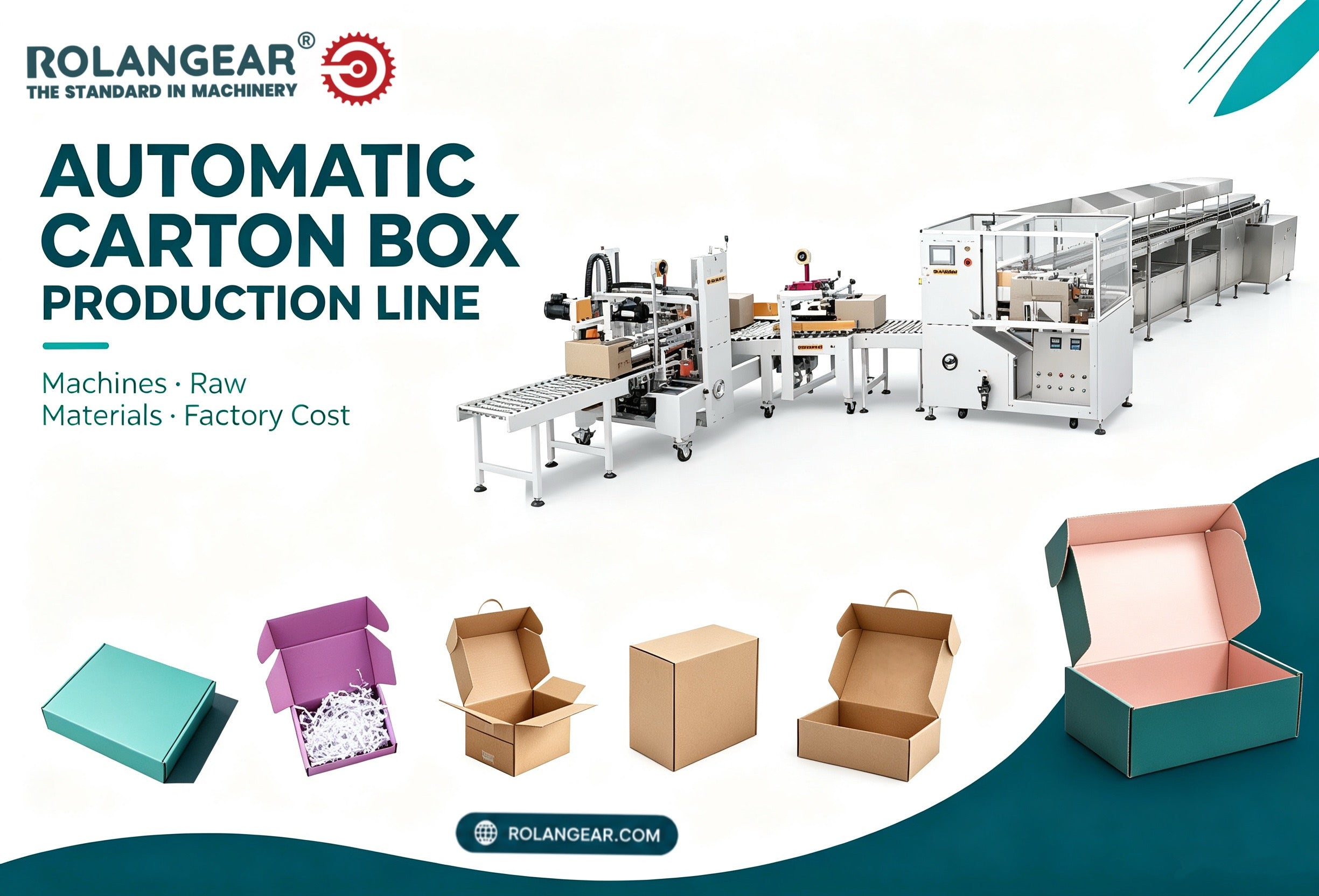
Una línea de producción automática de cajas de cartón es un sistema de fabricación integrado que convierte materiales de papel en cajas de cartón terminadas a través de pasos de procesamiento conectados. La línea puede diseñarse para cajas de envío estándar, cartones impresos, envases expositores, cartones industriales o envases personalizados, según el mercado objetivo.
Una línea completa puede incluir equipos de producción de cartón corrugado, equipos de impresión flexográfica, máquinas de ranurado y corte, máquinas troqueladoras, máquinas plegadoras-encoladoras, máquinas de cosido, transportadores, sistemas de apilado y equipos de embalaje o agrupación. La configuración final debe basarse en la capacidad de producción, el diseño del cartón, los requisitos de impresión y el diseño de la fábrica.

Para muchos inversores, adquirir una solución completa es más eficaz que comprar máquinas separadas sin considerar el equilibrio del flujo de trabajo. Si la velocidad de impresión, la velocidad de corte y la capacidad de formado no coinciden, una sección puede convertirse en un cuello de botella y reducir el valor de todo el sistema de producción.
Materias primas para la producción de cajas de cartón
La calidad de la materia prima afecta directamente la resistencia del cartón, su apariencia, su capacidad de impresión y la estabilidad de la producción. Una fábrica de cartón profesional debe evaluar el gramaje del papel, la fiabilidad del proveedor, las condiciones de almacenamiento y los requisitos del cliente antes de seleccionar los materiales.

Cartón corrugado
El cartón corrugado es el material principal utilizado para la fabricación de cajas de cartón. Proporciona resistencia estructural al tiempo que mantiene el envase ligero. Diferentes aplicaciones requieren diferentes estructuras de cartón. El cartón de pared simple es adecuado para muchos productos ligeros y necesidades generales de embalaje. El cartón de doble pared se utiliza a menudo para productos más pesados o transporte de larga distancia. El cartón de triple pared puede seleccionarse para embalajes industriales pesados o requisitos de alta resistencia.
Papel Kraft y papel liner
El papel kraft y el papel liner influyen en la durabilidad del cartón, la resistencia a la compresión y la calidad de la superficie. Los materiales de papel resistentes ayudan a proteger las mercancías durante la manipulación y el transporte. Una superficie de papel adecuada también mejora la calidad de impresión, lo cual es importante para los envases de marca y los cartones para venta al por menor.
Tinta, adhesivo y materiales de unión
Los materiales de soporte incluyen tinta de impresión, adhesivos y alambre de costura o materiales de unión cuando sea necesario. Estos materiales afectan la apariencia de la impresión, la fuerza de unión, la calidad de formación del cartón y la estabilidad de la producción. Los fabricantes deben elegir los materiales de acuerdo con la aplicación del cartón, los requisitos del cliente y las regulaciones locales.
Proceso completo de fabricación de cajas de cartón
1. Preparación de la materia prima
El proceso comienza con rollos de papel, cartón corrugado o láminas preparadas, según la configuración de la fábrica. Se debe verificar la calidad del material en cuanto a resistencia, condiciones de humedad, consistencia de la superficie e idoneidad para la estructura de cartón planificada. Una materia prima deficiente puede crear problemas de producción posteriormente en la impresión, el corte o el formado.
2. Producción de cartón corrugado
En las fábricas que producen su propio cartón corrugado, los materiales de papel se procesan para obtener la flauta y la estructura de cartón requeridas. Esta etapa determina la resistencia básica y el rendimiento de amortiguación del cartón. La temperatura, la calidad del pegado, la planitud del cartón y la tensión del material deben controlarse para soportar una producción estable aguas abajo.
3. Impresión
Muchas cajas de cartón requieren logotipos, información del producto, marcas de manipulación o diseños decorativos. La impresión flexográfica se usa comúnmente para la producción de cajas de cartón corrugado porque puede manejar trabajos de embalaje de gran volumen de manera eficiente. Una calidad de impresión estable mejora la satisfacción del cliente y permite que la fábrica de cajas de cartón proporcione más servicios de valor añadido.
4. Ranurado, corte y troquelado
Después de la impresión, el cartón debe cortarse, ranurarse, plegarse o troquelarse según el diseño de la caja. El corte preciso es esencial porque pequeños errores dimensionales pueden afectar el plegado, el montaje y la apariencia final de la caja. El troquelado se utiliza para formas especiales, cajas expositoras y envases minoristas personalizados.
5. Plegado, pegado o cosido
La lámina de cartón procesada se forma en una estructura de caja terminada. Las máquinas plegadoras-encoladoras mejoran la velocidad y la consistencia para muchos cartones estándar. Las máquinas de cosido pueden usarse para cartones de alta resistencia o productos que requieren una unión más fuerte. La elección depende del peso del producto, las condiciones de transporte y los requisitos del cliente.
6. Inspección y manipulación del producto terminado
Los cartones terminados deben revisarse en cuanto a dimensiones, calidad de impresión, precisión de plegado, resistencia de la unión y apariencia. Después de la inspección, los cartones se apilan, empaquetan y preparan para el almacenamiento en el almacén o la entrega. Un equipo de manipulación eficiente reduce el movimiento manual y soporta la producción continua.
Máquinas principales en una línea de producción automática de cajas de cartón
Una fábrica profesional de cajas de cartón normalmente utiliza varias máquinas que deben trabajar juntas como un solo sistema de producción. La lista de equipos se puede ajustar para proyectos de producción pequeños, medianos o grandes.

- Máquina de producción de cartón corrugado: produce cartón corrugado con la estructura y resistencia requeridas.
- Máquina de impresión flexográfica: imprime logotipos, información de productos y diseños de embalaje.
- Máquina de ranurado y corte: crea las dimensiones del cartón, ranuras, líneas de plegado y bordes.
- Máquina troqueladora: produce formas especiales, cajas expositoras y estructuras de embalaje personalizadas.
- Máquina plegadora-encoladora: pliega y pega las láminas de cartón en estructuras de cartón terminadas.
- Máquina de cosido: une cartones de alta resistencia donde se requiere una unión mecánica más fuerte.
- Sistema de transportadores y manipulación: transfiere materiales entre las secciones de producción.
- Equipos de embalaje, apilado y empaquetado: prepara los cartones terminados para su almacenamiento y entrega.
- Equipo de inspección o codificación: soporta el control de calidad y la identificación de pedidos cuando sea necesario.
La combinación correcta de máquinas depende de si la fábrica desea producir cartón corrugado internamente o comprar cartón preparado, si los clientes necesitan impresión multicolor, si se requieren productos troquelados especiales y si los productos principales son cartones estándar o embalajes de alta resistencia.
El equilibrio de la línea es especialmente importante en la fabricación de cartón. Si la sección de ondulado produce cartón más rápido de lo que la impresión y el formado pueden manejar, el material en proceso puede acumularse y ocupar espacio en la fábrica. Si la velocidad de impresión o ranurado es demasiado alta para el plegado y encolado posterior, las hojas terminadas pueden esperar entre procesos. Un diseño profesional debe hacer coincidir las velocidades de las máquinas, el flujo del transportador, las posiciones del operador y los requisitos de cambio de pedido para que la fábrica pueda funcionar sin problemas durante la producción diaria.
Cómo elegir la línea de producción de cajas de cartón adecuada
Defina su mercado objetivo
Antes de seleccionar el equipo, los inversores deben identificar sus principales grupos de clientes. Los envases de comercio electrónico pueden requerir una alta producción, tamaños de caja estándar y entrega rápida. Los envases de alimentos pueden requerir una producción más limpia, una impresión estable y un rendimiento constante del cartón. Los envases industriales pueden requerir cartón más resistente, equipos de cosido y durabilidad fiable. El mercado objetivo decide la configuración de la máquina.
Confirme los tipos de productos y la estructura del tablero
Diferentes productos de cartón requieren diferentes capacidades de producción. Los cartones de envío estándar pueden necesitar una impresión, ranurado y encolado eficientes. Las cajas expositoras y los envases minoristas pueden requerir troquelado y una mejor calidad de impresión. Los cartones de alta resistencia pueden requerir materiales más resistentes y cosido. La planificación del producto ayuda a evitar equipos innecesarios al tiempo que garantiza que la línea pueda producir los tipos de cartón requeridos.
Compare la capacidad con los pedidos reales
La capacidad de producción debe coincidir con la demanda actual y el crecimiento futuro. Elegir una capacidad demasiado baja puede limitar las oportunidades de negocio, mientras que una capacidad excesiva puede aumentar la presión de la inversión y el costo operativo. Una solución práctica debe equilibrar el volumen de pedidos, el desarrollo de clientes, la planificación de la mano de obra y el crecimiento esperado del mercado.
Seleccione el nivel de automatización adecuado
Las soluciones semiautomáticas pueden ser adecuadas para nuevas empresas, fábricas más pequeñas o negocios con presupuestos iniciales limitados. Los sistemas totalmente automáticos son mejores para fabricantes que requieren mayor producción, calidad estable, menor dependencia de la mano de obra y producción continua. La automatización debe resolver problemas de producción reales en lugar de simplemente aumentar el costo del equipo.

Costo de la línea de producción de cajas de cartón y planificación de la fábrica
El costo de la línea de producción de cajas de cartón depende de la capacidad de producción, la configuración del equipo, el nivel de automatización, los requisitos de impresión, la estructura del cartón, el manejo de la materia prima, el diseño de la fábrica y las necesidades de expansión futuras. Una configuración de producción simple para cajas de cartón estándar locales y una línea automática de alta velocidad para clientes industriales requerirán diferentes planes de inversión.

Los inversores no deben evaluar el coste solo por el precio de la máquina. Un proyecto completo también incluye el almacenamiento de la materia prima, los servicios públicos, el espacio de instalación, los operarios, el acceso de mantenimiento, las piezas de repuesto, la gestión de residuos y la planificación del almacén de producto acabado. El coste operativo a largo plazo puede ser tan importante como la inversión inicial.
Fábrica de Cajas de Cartón Pequeñas
Las fábricas pequeñas suelen centrarse en entrar en el mercado, controlar la inversión inicial y servir a clientes locales. Una configuración más sencilla puede proporcionar flexibilidad mientras el negocio desarrolla relaciones con los clientes y aprende la demanda del mercado. Este enfoque puede requerir más trabajo manual, pero reduce la presión financiera en la etapa inicial.
Fábrica de Fabricación de Cartón Mediana
Las fábricas medianas a menudo sirven a fabricantes regionales, empresas de alimentos, proveedores minoristas y negocios de comercio electrónico. En esta etapa, la automatización se vuelve más valiosa porque un mayor volumen de pedidos requiere mejor eficiencia, calidad estable y entrega más rápida. Una línea de producción de cajas de cartón automática más completa puede mejorar la competitividad.
Fábrica de Cartón Industrial Grande
Las fábricas grandes normalmente requieren producción de alta velocidad, operación continua y automatización avanzada. Para estos proyectos, reducir el desperdicio, mejorar el equilibrio del flujo de trabajo y disminuir la dependencia de la mano de obra puede crear un valor económico significativo a largo plazo. La planificación profesional del diseño de la fábrica es especialmente importante para proyectos grandes.
Planificación del Diseño de la Fábrica
Un diseño práctico debe crear un flujo suave desde el almacén de materia prima hasta la ondulación, impresión, corte, formación, inspección y almacenamiento del producto acabado. El diseño debe reducir la distancia de transporte del material, evitar el tiempo de espera de producción y proporcionar suficiente espacio para los operarios y el mantenimiento. Los materiales de papel también requieren condiciones de almacenamiento adecuadas para proteger la calidad.
La futura expansión debe considerarse desde el principio. Una fábrica de cartón en crecimiento puede añadir máquinas, aumentar la capacidad, expandir las opciones de impresión o ampliar el espacio del almacén. Una planificación de diseño flexible puede reducir el coste de futuras renovaciones.
Control de Calidad, Mantenimiento y Reducción de Residuos
El control de calidad debe cubrir la inspección de la materia prima, la resistencia del cartón, el registro de impresión, la precisión del corte, la calidad del plegado, la resistencia del pegado o cosido, las dimensiones del cartón y la apariencia del producto acabado. La calidad consistente es importante porque los clientes utilizan los cartones para proteger sus propios productos durante el almacenamiento y el transporte.

La reducción de residuos es un factor importante en la rentabilidad de la fabricación de cartón. El coste del material de papel es significativo, por lo que el corte preciso, la configuración estable de la máquina, la formación adecuada del operario y las comprobaciones regulares del proceso pueden reducir los desperdicios. Una planificación de producción eficiente también ayuda a reducir el desperdicio por cambio al alternar entre tamaños de caja o diseños de impresión.
También se debe considerar el control de la humedad y la gestión del almacenamiento. Los materiales de papel pueden verse afectados por la humedad, el mal apilamiento o el tiempo de almacenamiento prolongado. Si la condición del papel es inestable, la fábrica puede experimentar deformaciones, pegado débil, defectos de impresión o plegado inconsistente. Una buena planificación del almacén, la rotación de materiales y la disciplina del proceso ayudan a proteger la calidad del cartón incluso antes de que comience la producción.
El mantenimiento preventivo protege la estabilidad de la producción. Los operarios deben supervisar las cuchillas de corte, los rodillos de impresión, los sistemas de pegamento, las piezas del transportador, los sensores, los cojinetes y los componentes de cosido. La planificación de las piezas de repuesto es importante para las fábricas ocupadas porque una pequeña pieza puede interrumpir todo el programa de producción.
¿Por qué elegir Rolangear?
Rolangear ofrece soluciones personalizadas de líneas de producción de cajas de cartón automáticas para fabricantes de embalajes que planifican nuevas fábricas o actualizan sistemas de producción existentes. En lugar de recomendar una lista de máquinas estándar para cada cliente, Rolangear ayuda a diseñar la solución de producción de acuerdo con el tipo de cartón, la capacidad, las necesidades de impresión, el espacio de la fábrica y el presupuesto.
Un proyecto de Rolangear puede incluir la configuración del equipo, el diseño de la línea de producción, la planificación del diseño de la fábrica, el soporte de instalación, la asistencia para la puesta en marcha, la guía del operario y el servicio posventa. Esto ayuda a los clientes a construir un sistema de fabricación de cartón más estable y a mejorar el valor de producción a largo plazo.
Preguntas frecuentes
¿Qué es una línea de producción de cajas de cartón automática?
Es un sistema de fabricación completo que convierte materiales de papel en cajas de cartón acabadas a través de procesos de ondulación, impresión, corte, formación, inspección y embalaje.
¿Qué máquinas se necesitan para fabricar cajas de cartón?
Una línea completa puede incluir una máquina de cartón corrugado, una máquina de impresión, una máquina ranuradora y cortadora, una troqueladora, una plegadora-encoladora, una máquina de coser, transportadores y equipos de embalaje o manipulación.
¿Qué materias primas se utilizan para la producción de cajas de cartón?
Los principales materiales incluyen papel kraft, papel liner, cartón corrugado, tinta de impresión, adhesivos y materiales de costura o encuadernación cuando sea necesario. La selección del material afecta a la resistencia, la calidad de impresión y el rendimiento del cartón.
¿Cuánto cuesta una línea de producción de cajas de cartón?
El coste depende de la capacidad de producción, la configuración de la máquina, el nivel de automatización, los requisitos de impresión, el tipo de cartón, el diseño de la fábrica y el plan de materias primas. Se necesita una evaluación personalizada para una fijación de precios precisa.
¿Cuánto espacio de fábrica se requiere?
El espacio de fábrica depende de la configuración del equipo, el almacenamiento de materia prima, el almacén de productos terminados, la capacidad de producción y el plan de expansión futura. Un diseño profesional debe dejar suficiente espacio para la operación y el mantenimiento.
¿Puede Rolangear diseñar una fábrica completa de cajas de cartón?
Sí. Rolangear puede ayudar a planificar la selección de equipos, la configuración de la línea, el diseño de la fábrica, el soporte de instalación y la asistencia técnica para proyectos de fabricación automática de cajas de cartón.
Conclusión
La industria del embalaje de cartón ofrece grandes oportunidades porque las cajas de cartón se utilizan ampliamente en el comercio electrónico, la logística, la alimentación, el comercio minorista y las cadenas de suministro industriales. Pero una fábrica de cajas de cartón exitosa depende de algo más que la demanda del mercado. Los inversores deben elegir la línea de producción, las materias primas, el nivel de automatización, el diseño de la fábrica y el sistema de control de calidad adecuados.
La mejor línea de producción automática de cajas de cartón es la que coincide con la gama de productos del fabricante, el volumen de pedidos, los requisitos del cliente y el plan de expansión futura. Una configuración equilibrada puede mejorar la eficiencia, reducir los residuos, controlar las necesidades de mano de obra y respaldar una operación estable a largo plazo.
Antes de adquirir equipos, los inversores deben comparar cuidadosamente las diferentes configuraciones de línea y confirmar qué máquinas son esenciales para sus productos actuales. Un plan de proyecto claro ayuda a evitar inversiones duplicadas, capacidad de máquina inadecuada y cuellos de botella en la producción después de la instalación.