Línea de Producción Automática de Zumos y Bebidas: Guía Completa para la Fabricación de Bebidas
Línea de Producción Automática de Zumos y Bebidas: Guía Completa de Fabricación de Bebidas
Una guía profesional de compra de Rolangear para bebidas de zumos mezclados, bebidas formuladas, tratamiento de agua, procesamiento, llenado, limpieza CIP y planificación de fábrica.
Línea de Producción Automática de Zumos y Bebidas: Desde la Preparación del Agua hasta el Llenado Final
El mercado moderno de bebidas se mueve rápidamente. Las nuevas marcas desean gamas de productos flexibles, las fábricas establecidas buscan una producción más estable y los fabricantes de marcas blancas necesitan equipos que puedan manejar diferentes fórmulas de bebidas sin crear una complejidad de producción innecesaria. Para muchos inversores, la primera pregunta es si solo necesitan una máquina llenadora de zumo o una línea de producción automática de zumo completa. En la mayoría de los proyectos de fábrica reales, la respuesta depende de la cantidad de preparación, mezcla, esterilización, llenado, limpieza y soporte de servicios públicos que el producto requiera.
Rolangear aborda los proyectos de bebidas como sistemas de producción completos. En lugar de tratar cada máquina como una compra separada, una línea de producción de bebidas bien diseñada conecta la preparación del agua, la disolución de polvos, la mezcla de bebidas, la filtración, la homogeneización, el almacenamiento temporal, la esterilización, el enfriamiento, el llenado, la codificación y la limpieza CIP en un flujo de fabricación lógico. Esto facilita la planificación de la fábrica, su operación y su expansión cuando las ventas crecen.

Respuesta rápida: Una línea de producción automática de zumos y bebidas no es solo una máquina llenadora. Es una solución coordinada de fabricación de bebidas que prepara el agua y los ingredientes, mezcla la bebida, mejora la uniformidad del producto, realiza el tratamiento térmico, enfría el producto, llena el envase final, imprime códigos y soporta la limpieza higiénica CIP.
Por qué es Importante una Línea de Producción de Bebidas Completa
Una fábrica de bebidas debe operar como un proceso conectado. Si el sistema de tratamiento de agua, los tanques de mezcla, el esterilizador, la máquina llenadora y el equipo de limpieza se compran sin coordinación, la fábrica puede enfrentarse a una capacidad desajustada, una transferencia de materiales ineficiente, un flujo de producción inestable o un mayor coste de instalación. Una línea de producción de bebidas completa ayuda al comprador a evaluar todo el proceso antes de seleccionar el equipo.
Para las bebidas de zumos formulados y las bebidas líquidas mezcladas, la etapa de preparación es especialmente importante. La calidad del agua, la disolución de los ingredientes, el tiempo de mezcla, la filtración, la presión de homogeneización y la temperatura de esterilización pueden afectar la calidad final del producto. Por lo tanto, una sólida solución de producción de bebidas considera tanto las máquinas principales como los sistemas de apoyo, incluyendo aire comprimido, vapor, agua fría, control eléctrico, tuberías e instalación.
El sistema Rolangear descrito en esta guía está diseñado para bebidas formuladas a base de zumo y otras bebidas mezcladas. No se presenta como una línea de extracción de fruta fresca a menos que se añadan equipos adicionales de lavado, trituración, prensado o pulpado de fruta. Esta distinción es importante para la precisión y para la confianza del cliente. Los compradores que buscan una línea de producción automática de zumo pueden referirse a cosas diferentes, por lo que un proveedor profesional debe explicar el estándar.
Productos Principales que esta Línea Puede Soportar
El sistema es adecuado para fábricas que producen bebidas a base de zumo, bebidas mezcladas, bebidas a base de polvo y bebidas líquidas personalizadas que requieren mezcla, homogeneización, esterilización y llenado controlados. Puede ser utilizado por marcas de bebidas, fábricas de bebidas regionales, fabricantes de bebidas OEM e inversores que planifican una nueva instalación de producción.
Las bebidas a base de zumo se pueden preparar cuando la fórmula utiliza agua preparada, concentrado de zumo o ingredientes relacionados con el zumo. Las bebidas a base de polvo se benefician del tanque de disolución de polvo de 1000 L, que crea un punto de partida controlado antes de que el producto entre en los tanques de mezcla. Las bebidas personalizadas se pueden configurar según la receta del cliente, el formato de envasado, la capacidad de producción y el diseño de la fábrica.

Proceso Completo de Fabricación de Zumos y Bebidas
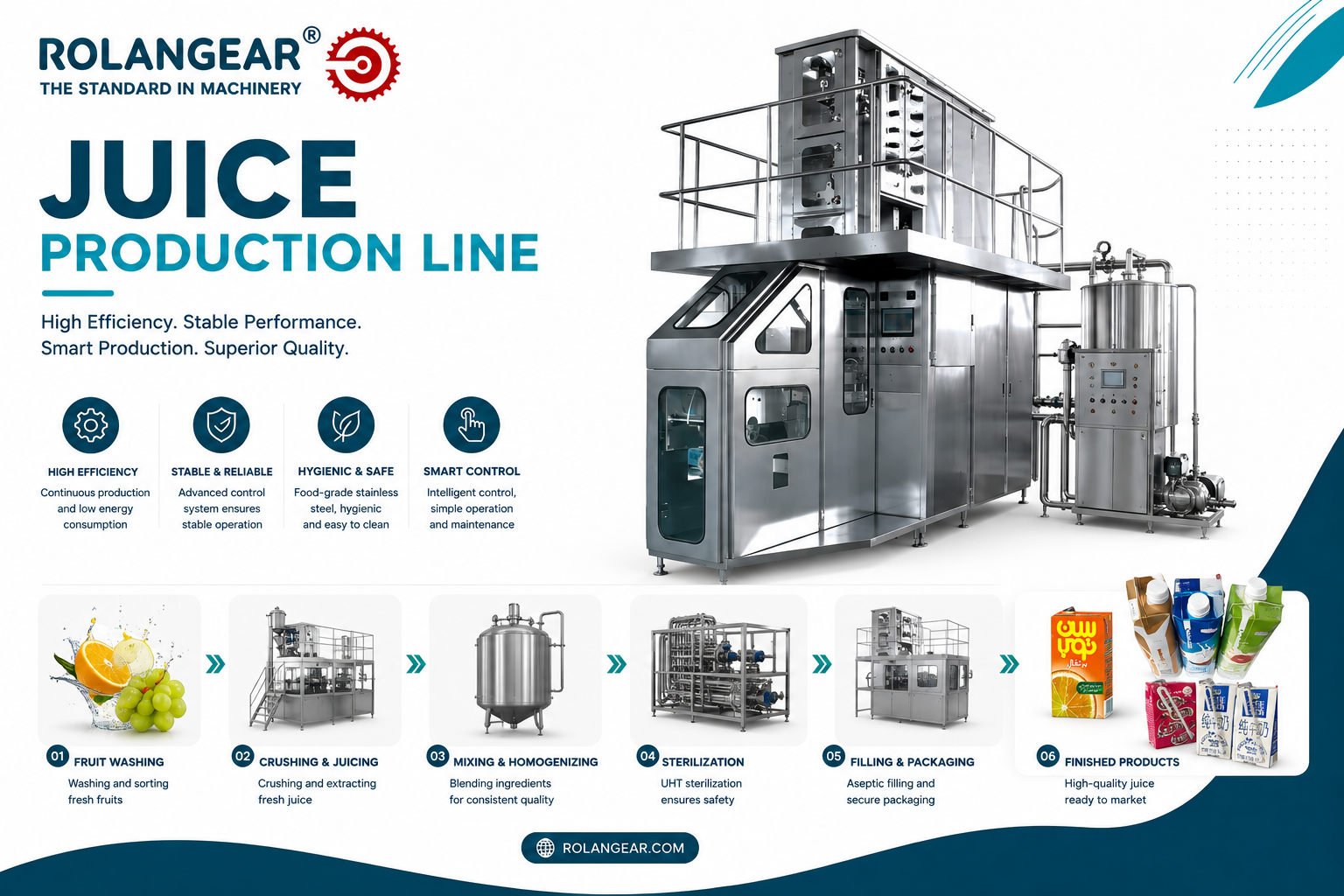
El flujo de trabajo de fabricación básico se puede resumir en preparación de agua pura, disolución de polvo, mezcla de bebidas, filtración, homogeneización, almacenamiento temporal, esterilización, enfriamiento, llenado, codificación y salida del producto terminado. Esta secuencia ayuda a la fábrica a mantener la producción organizada y ayuda a los operarios a entender cómo cada etapa afecta a la siguiente.
Paso 1: Preparación de Agua Pura
El agua cruda entra primero en la sección de tratamiento de agua. La configuración suministrada incluye una unidad de agua pura de ósmosis inversa de una etapa de 2 T/H con pretratamiento, que incluye filtración de arena de cuarzo y filtración de carbón activado. El objetivo es preparar agua de proceso para la fabricación de bebidas. El sistema también incluye un tanque de agua cruda de 2000 L, un tanque de agua pura de 5000 L y una bomba sanitaria para el suministro de agua.
Paso 2: Disolución de Polvo
Los ingredientes en polvo se preparan en el tanque de disolución de polvo de 1000 L. El tanque utiliza construcción de acero inoxidable SUS304, aislamiento, una boca de hombre de apertura rápida, conexiones de agua y CIP, conexión de salida y un cabezal de cizallamiento de alta velocidad montado en la parte superior. Esta etapa ayuda a los fabricantes a disolver los polvos antes de transferir el material al sistema de mezcla.
Paso 3: Mezcla de Bebidas
Los ingredientes preparados se transfieren a dos tanques de mezcla de 3000 L. Estos tanques incluyen aislamiento, bocas de hombre de apertura rápida, respiradores a prueba de polvo, agitadores de paleta montados en la parte superior, conexiones de entrada y salida, entrada CIP e indicadores digitales de temperatura. La mezcla es donde la fórmula de la bebida se combina bajo condiciones de procesamiento controladas.
Paso 4: Filtración y Homogeneización
Después de la mezcla, la bebida pasa por equipos de filtración como filtros de barril dúplex y filtros de tubería dúplex. La configuración suministrada también incluye un homogeneizador de 5 T/H con una presión de trabajo de 25 MPa. La homogeneización ayuda a mejorar la uniformidad del producto y crea una estructura de producto más controlada antes de la esterilización.
Paso 5: Almacenamiento Temporal, Esterilización y Enfriamiento
Los tanques de almacenamiento temporal proporcionan un búfer entre la preparación de la bebida y el procesamiento térmico posterior. Luego, la bebida entra en el esterilizador de serpentín de 3 T/H. La temperatura de esterilización documentada es de 120°C, con una temperatura de descarga especificada de 50°C. Después de la esterilización, el producto pasa por un enfriador de placas de 5 T/H para reducir la temperatura antes del llenado.
Paso 6: Llenado, Colocación de Tubos y Codificación
La sección de llenado incluye una máquina llenadora 250B/5000, una máquina de colocación de tubos y una impresora de inyección de tinta. Esta sección permite que la línea de producción pase del procesamiento de bebidas al envasado final. La impresora de inyección de tinta soporta la codificación de fecha o lote, lo cual es importante para la producción comercial de bebidas y la trazabilidad del producto.

Configuración de Equipos Principales
Una línea de producción de bebidas profesional debe mostrar tanto los sistemas principales como los equipos pequeños. Sin embargo, un blog no necesita una imagen separada para cada válvula, bomba o accesorio. Para un artículo más limpio, las imágenes deben introducir el proceso de producción y los sistemas importantes, mientras que los accesorios detallados se enumeran en la configuración del equipo.
Sistema de Disolución de Polvo y Mezcla de Bebidas
Esta sección incluye el tanque de disolución de polvo de 1000 L, bombas sanitarias, dos tanques de mezcla de 3000 L, filtros dúplex, homogeneizador de 5 T/H, tanques de almacenamiento temporal, bomba de retorno CIP y plataforma de mezcla. Es responsable de la preparación de ingredientes, mezcla, filtración, homogeneización y transferencia sanitaria de material antes de la esterilización.
Sistema de Esterilización y Búfer de Llenado
El sistema de esterilización incluye el esterilizador de serpentín, válvulas de vapor, filtro de vapor, válvula reductora de presión de vapor, purga de vapor, enfriador de placas, tanques de búfer de llenado, bombas sanitarias, bomba de retorno CIP y plataforma de búfer de llenado. Este sistema crea la transición controlada del procesamiento de bebidas al llenado.
Sistema de Llenado
El sistema de llenado incluye la máquina llenadora, la máquina de colocación de tubos y la impresora de inyección de tinta. Para los compradores que comparan el precio de la máquina llenadora de zumos o los proveedores de líneas de producción de llenado de bebidas, es importante recordar que el llenado es solo una etapa de toda la solución de producción.
Sistemas de Agua RO, CIP y Servicios Públicos
Los sistemas de apoyo incluyen la unidad de agua pura RO, el sistema de preparación de agua caliente, el sistema CIP de tres tanques, el sistema de compresor de aire, el sistema de caldera de aceite, el sistema de agua fría, las tuberías de materiales, las tuberías de no materiales, el armario de control eléctrico, los materiales de ingeniería eléctrica, la instalación, la puesta en marcha y el soporte de transporte. Estos sistemas hacen que la línea de producción sea práctica para la operación real de la fábrica.

Ventajas Técnicas de la Línea de Bebidas Rolangear
La primera ventaja es la integración. La línea conecta la preparación de bebidas, la homogeneización, la esterilización, el enfriamiento, el llenado, el tratamiento de agua, la limpieza CIP y los servicios públicos en un proyecto coordinado. Esto reduce el riesgo de comprar máquinas que no coinciden entre sí y apoya un plan de instalación de fábrica más fluido.
La segunda ventaja es el control de calidad. La línea incluye tratamiento de agua controlado, tanques sanitarios, filtración, homogeneización, procesamiento térmico y enfriamiento. Estas etapas ayudan a los fabricantes a construir un proceso más repetible y reducir la incertidumbre en la operación diaria.
La tercera ventaja es la gestión de la producción higiénica. Las fábricas de bebidas necesitan procedimientos de limpieza predecibles. El sistema CIP de tres tanques proporciona soluciones de limpieza con agua caliente, ácido y álcali para tanques y tuberías. Esto apoya una limpieza organizada y ayuda a los operarios a gestionar el saneamiento rutinario de manera más eficiente.
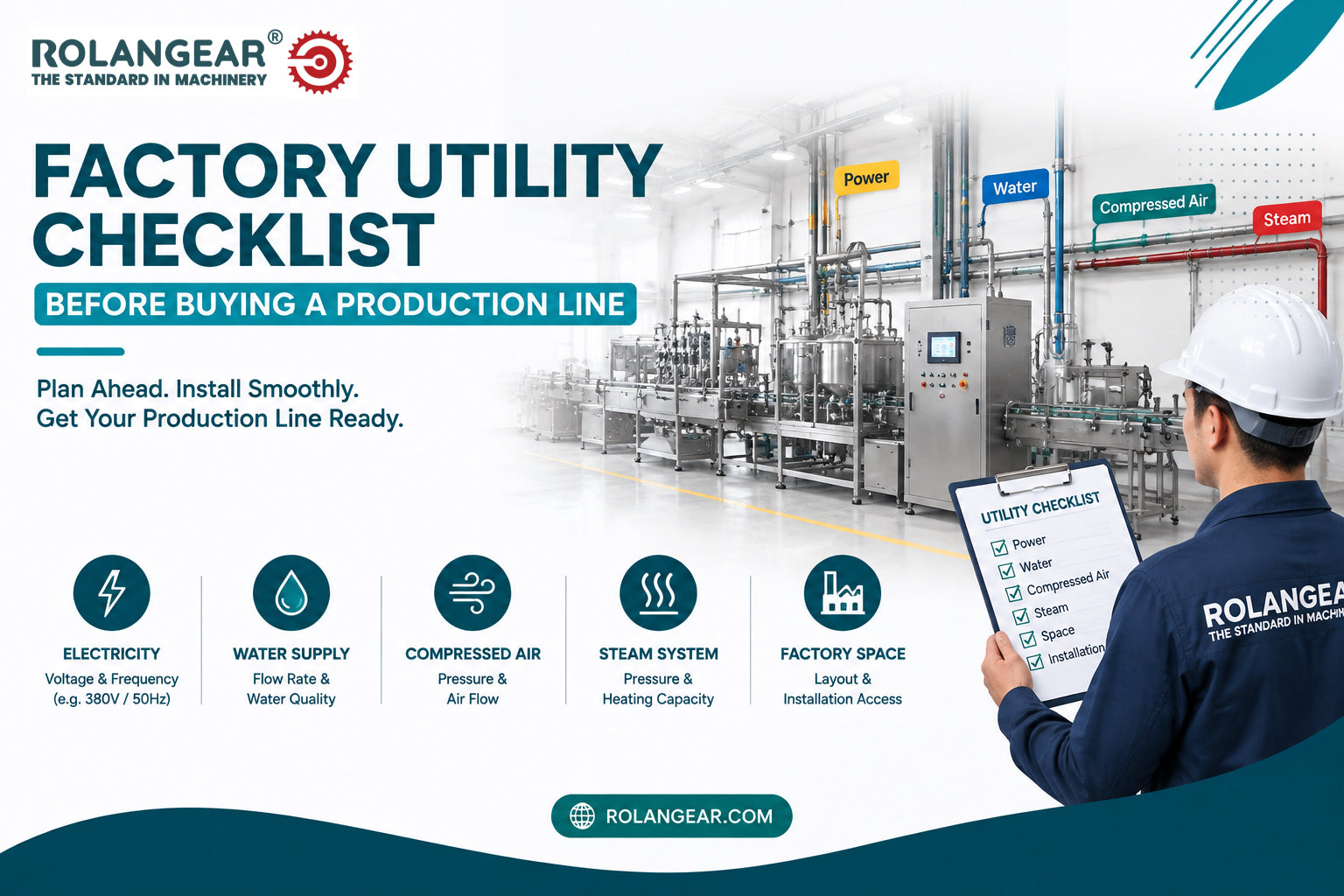
La cuarta ventaja es la planificación de servicios públicos. Muchas fábricas nuevas se centran en las máquinas de producción visibles y olvidan que el vapor, el aire comprimido, el agua fría, la electricidad, las tuberías y el drenaje son igualmente importantes. Rolangear considera estos sistemas de apoyo durante la etapa de configuración para que el comprador pueda planificar la fábrica de manera más realista.
Planificación de Capacidad: No Mirar Solo una Máquina
La selección de la capacidad no debe basarse solo en la máquina llenadora. En una línea de producción de bebidas completa, la capacidad de mezcla, la capacidad del homogeneizador, la capacidad del esterilizador, la capacidad de tratamiento de agua, la capacidad de almacenamiento y la velocidad de llenado deben funcionar en conjunto. Si una etapa es demasiado pequeña, puede convertirse en el cuello de botella. Si una etapa es demasiado grande, la fábrica puede pagar por una capacidad no utilizada.
La configuración suministrada incluye tratamiento de agua RO de 2 T/H, esterilización de 3 T/H y equipos relacionados con la mezcla u homogeneización de 5 T/H. Esto no significa que cada etapa funcione exactamente al mismo número. Significa que el proyecto debe equilibrarse según el producto real, las horas de trabajo, el formato de llenado, el almacenamiento intermedio y el objetivo de producción.
Antes de confirmar una cotización de línea de producción automática de zumos, los compradores deben preparar información básica: tipo de bebida, producción objetivo por hora o por día, tipo de botella o envase, volumen de llenado, espacio de fábrica disponible, servicios públicos disponibles y estándar de limpieza requerido. Con esta información, Rolangear puede recomendar una configuración de línea de producción más precisa.
Diseño de Fábrica y Planificación de Servicios

Un buen diseño de fábrica de bebidas sigue el flujo del proceso. El agua cruda y el tratamiento de agua deben colocarse lógicamente antes de la preparación de la bebida. La disolución de polvos, la mezcla, la filtración y la homogeneización deben conectarse sin problemas con el almacenamiento temporal. La esterilización y el enfriamiento deben organizarse antes del llenado, mientras que los sistemas CIP y de servicios públicos deben ser accesibles para la operación y el mantenimiento.
Las áreas funcionales recomendadas incluyen el área de agua cruda y tratamiento RO, el área de preparación de bebidas, el área de homogeneización y almacenamiento, el área de esterilización y enfriamiento, el área de llenado y codificación, el área de limpieza CIP, el área de calderas, el área de compresores de aire, el área de agua fría y el área de control eléctrico. Mantener estas áreas organizadas ayuda a reducir movimientos innecesarios de materiales y facilita la gestión de la fábrica.
La planificación de servicios públicos también es importante. El proyecto requiere electricidad, agua, vapor, aire comprimido, agua fría, drenaje y suficiente espacio de producción. Debido a que la configuración incluye una caldera de aceite, un enfriador, un compresor de aire, tuberías y materiales eléctricos, el comprador debe revisar las condiciones de los servicios públicos de la fábrica antes de finalizar el pedido de la máquina.
Factores de Inversión y Consideraciones de Precio
Muchos compradores buscan el precio de una línea de producción automática de zumos o el precio de una máquina llenadora de zumos, pero la inversión final depende de algo más que el nombre de la máquina. El precio se ve afectado por la capacidad, el volumen del tanque, los requisitos de material, el formato de llenado, el nivel de automatización, el método de esterilización, el sistema de tratamiento de agua, la configuración CIP, los sistemas de servicios públicos, las tuberías, la instalación y el alcance de la puesta en marcha.
Para un proyecto de bebidas más pequeño, el comprador puede centrarse en una configuración más simple con funciones esenciales de mezcla, llenado y limpieza. Para una fábrica comercial, el comprador puede necesitar un sistema más completo con tratamiento de agua, homogeneización, procesamiento térmico, llenado, codificación, CIP y soporte completo de servicios públicos. Un proveedor profesional debe ayudar al comprador a comparar tanto las necesidades actuales como los planes de expansión futuros.

Cómo Elegir un Proveedor de Líneas de Producción de Bebidas
Un proveedor confiable de líneas de producción de bebidas debe entender el proceso completo, no solo la máquina llenadora. Los compradores deben preguntar si el proveedor puede explicar el tratamiento de agua, la mezcla, la filtración, la homogeneización, la esterilización, el enfriamiento, el llenado, la limpieza CIP, los requisitos de servicios públicos y el diseño de la fábrica. Si el proveedor no puede conectar estas secciones, la fábrica puede enfrentar problemas durante la instalación o la producción de prueba.
Rolangear apoya a los clientes con el diseño de la línea de producción, la configuración de equipos, la planificación del diseño de la fábrica, la planificación de requisitos de servicios públicos, la guía de instalación, el soporte de puesta en marcha y la asistencia técnica. El objetivo es ayudar a los clientes a pasar de la planificación de la inversión a la producción comercial práctica con un sistema coordinado.
Los compradores también deben confirmar las opciones de personalización. Las diferentes fórmulas de bebidas pueden requerir diferentes métodos de mezcla, tamaños de tanques, métodos de calentamiento, parámetros de esterilización o formatos de llenado. Una línea de producción para bebidas de jugo formulado puede no ser la misma que una línea para bebidas carbonatadas, bebidas lácteas, extracción de frutas frescas o productos de llenado en caliente. El diseño final debe coincidir con el producto real del cliente.

Puntos de Control de Calidad para Fabricantes de Bebidas
El control de calidad comienza antes de que la bebida llegue a la máquina llenadora. En una fábrica de jugos formulados o bebidas mezcladas, los operadores deben verificar la calidad del agua cruda, la dosificación de ingredientes, el rendimiento de disolución del polvo, la uniformidad de la mezcla, la condición de filtración, la presión de homogeneización, la temperatura de esterilización, la temperatura de enfriamiento y la apariencia final del envase. Estos puntos de control ayudan a la fábrica a encontrar problemas temprano en lugar de descubrirlos solo después de que los productos terminados estén empacados.
Por ejemplo, la calidad inestable del agua puede afectar el sabor y la consistencia de la formulación. Una disolución deficiente puede dejar partículas o crear una distribución desigual del sabor. Una filtración insuficiente puede aumentar el riesgo de impurezas visibles. Una presión de homogeneización incorrecta puede reducir la uniformidad del producto. Si la esterilización y el enfriamiento no se controlan correctamente, el flujo de producción puede volverse menos predecible. Una línea de producción de bebidas completa brinda a los fabricantes más lugares para medir, ajustar y mejorar el proceso.
Cuando los clientes discuten un proyecto con Rolangear, es útil preparar información sobre la receta de la bebida, los requisitos de vida útil deseados, la temperatura de llenado, el material de empaque y las expectativas de limpieza. Rolangear puede entonces revisar si la configuración estándar es adecuada o si se debe considerar equipo adicional. Esta etapa de planificación profesional es especialmente importante para las fábricas que desean construir marcas de bebidas a largo plazo en lugar de solo comprar maquinaria de bajo costo.
Operación, Mantenimiento y Gestión Diaria de la Producción
Una línea de producción de bebidas debe evaluarse no solo por el precio de compra, sino también por lo fácil que es de operar y mantener. Los operadores necesitan acceso claro a tanques, bombas, válvulas, filtros, armarios de control y conexiones de limpieza. Las plataformas operativas en las secciones de mezcla y amortiguación de llenado mejoran el acceso para la alimentación, la inspección y la operación rutinaria. El diseño adecuado de las tuberías también ayuda a reducir curvas innecesarias, puntos de limpieza difíciles y rutas de transferencia de material confusas.
La planificación del mantenimiento debe incluir la limpieza de filtros, la inspección de bombas, la verificación de válvulas, el reemplazo de sellos, la inspección del sistema CIP, el mantenimiento de la caldera y el enfriador, las comprobaciones de calidad del aire comprimido y la revisión del control eléctrico. Una fábrica que planifica el mantenimiento desde el principio suele experimentar menos interrupciones inesperadas. Por esta razón, Rolangear trata la línea de producción como una solución completa de fábrica, incluyendo los servicios públicos y el soporte de instalación, en lugar de una simple lista de máquinas separadas.
Para los nuevos inversores, la formación es otro factor importante. El equipo de la fábrica debe comprender el flujo de producción, la función de cada sistema, la diferencia entre el equipo de proceso y el equipo auxiliar, y el procedimiento básico de limpieza. Cuando los operarios entienden cómo la preparación de agua pura, la mezcla, la homogeneización, la esterilización, el enfriamiento y el llenado se conectan entre sí, la producción diaria se vuelve más fácil de gestionar y los problemas son más fáciles de localizar.
Lo que el comprador quiere saber de este blog
Esta guía está escrita para compradores que buscan términos como línea de producción automática de zumos, línea de producción de bebidas, equipo de procesamiento de zumos, máquina de llenado de zumos, línea de mezcla de bebidas, línea de embotellado de zumos, línea de producción de bebidas CIP, tratamiento de agua RO para fábricas de bebidas y proveedor de líneas de producción de llenado de bebidas. Estas palabras clave no son solo frases de búsqueda; representan preguntas reales de los compradores sobre el diseño del proceso, la selección de máquinas, el equilibrio de capacidad, la higiene y el costo del proyecto.
Un proveedor sólido debe responder a estas preguntas con claridad. ¿Qué equipos se incluyen? ¿Qué capacidad es realista? ¿La línea incluye tratamiento de agua? ¿Se incluye la limpieza CIP? ¿El sistema es adecuado para la extracción de fruta fresca o para bebidas formuladas? ¿Qué servicios públicos se requieren? ¿Se puede personalizar la línea? Al responder a estas preguntas en el blog, Rolangear puede ayudar a los clientes a comprender el proyecto antes de solicitar un presupuesto.
Errores comunes que debe evitar el comprador
Un error común es comprar una máquina de llenado primero y considerar la preparación después. Sin sistemas adecuados de mezcla, filtración, esterilización y limpieza, la máquina de llenado no puede crear una fábrica de bebidas completa. Otro error es ignorar el tratamiento del agua. La calidad del agua es una parte clave de la fabricación de bebidas, y el sistema de ósmosis inversa debe planificarse como parte del proceso.
Un tercer error es subestimar los requisitos de limpieza. Los tanques y las tuberías de bebidas necesitan procedimientos de limpieza organizados. El sistema CIP no es solo un accesorio; apoya la higiene, el funcionamiento diario y la gestión de la producción. Un cuarto error es olvidar los servicios públicos de la fábrica. El vapor, el aire comprimido, el agua fría y los sistemas eléctricos pueden afectar el costo de instalación y la estabilidad de la producción.
Preguntas frecuentes: Línea de producción automática de zumos y bebidas
¿Qué tipo de bebida puede producir esta línea de producción?
La línea está diseñada para bebidas líquidas formuladas y mezcladas, incluidas bebidas a base de zumo, bebidas a base de polvo y productos de bebida personalizados según la formulación y los requisitos de procesamiento del cliente.
¿La línea incluye tratamiento de agua?
Sí. La configuración incluye un sistema de agua pura RO de una etapa de 2 T/H, un tanque de agua bruta, un tanque de agua pura y equipos de bombeo sanitario.
¿Cuál es la capacidad del homogeneizador?
La configuración suministrada incluye un homogeneizador de 5 T/H con una presión de trabajo de 25 MPa.
¿Cuál es la capacidad de esterilización?
El esterilizador de serpentín configurado tiene una capacidad nominal de 3 T/H, con una temperatura de esterilización especificada de 120 °C y una temperatura de descarga de 50 °C.
¿Se puede personalizar la línea de producción?
Sí. Rolangear puede ajustar la configuración según el tipo de bebida, la fórmula, la capacidad objetivo, el formato de llenado, el diseño de la fábrica, las condiciones de los servicios públicos y los planes de expansión futuros.
¿El sistema incluye limpieza CIP?
Sí. El proyecto incluye un sistema CIP de tres tanques de un solo lazo con tanques de agua caliente, solución ácida y solución alcalina para la limpieza de tanques y tuberías de proceso.

Conclusión: Construya una mejor fábrica de bebidas con Rolangear
Un negocio de bebidas exitoso necesita más que una sola máquina. Necesita un sistema de producción coordinado que prepare el agua, disuelva los ingredientes, mezcle la fórmula, filtre la bebida, homogenice el producto, controle la esterilización y el enfriamiento, llene el envase, imprima los códigos de producto y soporte la limpieza higiénica.
La línea de producción automática de mezcla y llenado de zumos y bebidas de Rolangear proporciona una base práctica para bebidas a base de zumo formuladas y otras bebidas líquidas mezcladas. Al combinar equipos de procesamiento, equipos de llenado, tratamiento de agua, limpieza CIP y sistemas de servicios públicos, Rolangear ayuda a los clientes a planificar una solución de fabricación de bebidas más completa y escalable.
Si está planificando una nueva fábrica de bebidas, ampliando un taller de producción existente o desarrollando un proyecto de fabricación de bebidas OEM, comparta con Rolangear su tipo de bebida, capacidad objetivo, formato de llenado, condiciones de la fábrica y rango de presupuesto. Nuestro equipo puede ayudarle a revisar el proceso y desarrollar una propuesta personalizada de línea de producción de zumos y bebidas.

¿Listo para construir su línea de producción de bebidas? Póngase en contacto con Rolangear para obtener una propuesta personalizada de línea de producción automática de zumos y bebidas basada en su producto, capacidad, formato de llenado y diseño de fábrica.
Hable con Rolangear sobre su línea de producción de bebidas
Comparta su tipo de bebida, capacidad objetivo, formato de llenado y diseño de fábrica. Rolangear le ayudará a preparar una propuesta práctica de línea de producción automática de zumos y bebidas.
Contactar con Rolangear