Introducción: una forma práctica de convertir botellas de PET de desecho en materia prima reciclada

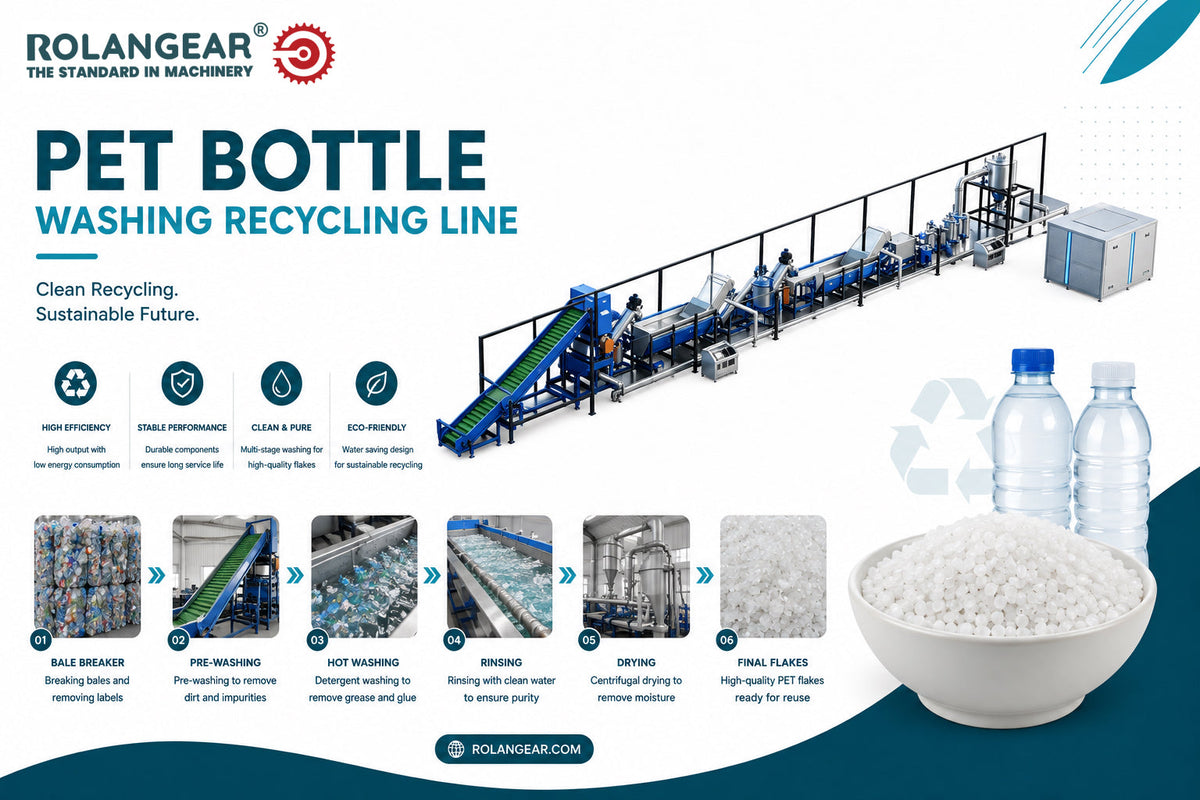
El reciclaje de botellas de PET es una forma práctica de convertir residuos plásticos postconsumo en materia prima reutilizable. Una línea de reciclaje de lavado de botellas de PET bien diseñada ayuda a las empresas de reciclaje a procesar las botellas recolectadas en escamas de PET limpias mediante alimentación controlada, clasificación, trituración, lavado, separación, deshidratación, secado y recolección.
Para los inversores en reciclaje, este tipo de línea de producción no es simplemente un grupo de máquinas colocadas dentro de un taller. Es un sistema completo de flujo de materiales. Cada etapa afecta la siguiente, y la calidad final de las escamas de PET depende de la condición de las botellas entrantes, la intensidad del lavado, la eficiencia de la separación, la gestión del agua, el rendimiento del secado, la disciplina de mantenimiento y el requisito del producto final.
Para proyectos que requieren un procesamiento posterior, la línea de lavado también se puede combinar con una línea de máquina de granulación de PET separada. Las dos etapas tienen funciones diferentes: el lavado produce escamas de PET limpias, mientras que la granulación convierte las escamas calificadas en gránulos o pellets reciclados. Mantener estas etapas claramente separadas facilita la planificación del proyecto, especialmente al evaluar la inversión, los servicios públicos, el espacio de la fábrica, el costo operativo y el producto final que se venderá.
Productos que puede producir

El producto principal de una línea de reciclaje de lavado de botellas de PET son las escamas de PET recicladas limpias. Las escamas de PET se pueden suministrar a aplicaciones de procesamiento de plástico posteriores cuando cumplen con los estándares requeridos de limpieza, nivel de humedad, tamaño de partícula, consistencia de color y contaminación restante.
Escamas de PET limpias
Después de que las botellas de PET de desecho se clasifican, trituran, lavan, separan, enjuagan, deshidratan y secan, el material terminado se recolecta como escamas de PET recicladas. Estas escamas se pueden vender directamente a procesadores posteriores o utilizarse dentro de la propia fábrica del cliente para su posterior procesamiento.
La calidad de las escamas depende de la calidad de las botellas entrantes, la intensidad del lavado, la eficiencia de la separación, la gestión del agua, el rendimiento del secado y la disciplina operativa. Antes de confirmar la configuración del equipo, el proyecto debe definir la especificación de las escamas terminadas requeridas y el uso final esperado.
Factores clave de calidad de las escamas de PET
Diferentes compradores pueden requerir diferentes especificaciones de escamas de PET. Algunos compradores se centran en la baja humedad, otros en la separación de colores y otros en reducir la contaminación restante de etiquetas o tapas. Por esta razón, una línea de reciclaje debe seleccionarse en función de la calidad del producto requerida en lugar de asumir que cada proyecto de reciclaje necesita la misma combinación de máquinas.
- Tamaño de la escama: determinado principalmente por la criba de la trituradora, la disposición de las cuchillas, el filo de las cuchillas y el uso posterior previsto.
- Limpieza: afectada por la clasificación, el pretratamiento, la intensidad del lavado, la calidad del enjuague y la gestión del agua.
- Nivel de humedad: afectado por la deshidratación mecánica, el secado de tuberías, el flujo de aire y la consistencia operativa.
- Separación de colores: importante cuando el comprador final requiere escamas de PET transparentes, azules, verdes o mezcladas por separado.
- Contaminación de etiquetas y tapas: reducida mediante la clasificación, el lavado, la separación y la disciplina del proceso.
- Materiales extraños restantes: controlados por una inspección temprana, etapas de separación y una gestión cuidadosa de la materia prima.
Gránulos o Pellets Opcionales Posteriores
Si el cliente necesita un producto posterior de mayor valor, las escamas de PET lavadas pueden transferirse a una línea de máquina de granulación de PET separada. Esta es una etapa de procesamiento adicional y no debe confundirse con la propia línea de lavado.
Por lo tanto, el proyecto completo se puede planificar con uno de dos objetivos de producción. La primera ruta es: Botellas de PET de desecho → Reciclaje por lavado → Escamas de PET limpias. La segunda ruta, cuando se requiere procesamiento adicional, es: Botellas de PET de desecho → Reciclaje por lavado → Escamas de PET limpias → Granulación → Gránulos o pellets de PET reciclados.
Esta estructura modular permite a los clientes invertir según la materia prima disponible, la demanda del mercado y la estrategia del producto terminado. Un cliente que solo necesita escamas de PET limpias no necesita invertir en peletización de inmediato. Un cliente que desea pellets reciclados debe asegurarse primero de que las escamas lavadas estén lo suficientemente limpias, secas y estables para el proceso de granulación.

Proceso completo de reciclaje de lavado de botellas de PET

La línea de reciclaje de lavado de botellas de PET funciona como un sistema continuo de flujo de materiales. La disposición exacta del equipo depende de la condición de la materia prima y la calidad de salida requerida, pero la función de cada etapa principal sigue siendo consistente.
Concepto de proceso estándar: Botellas de PET de desecho → Clasificación → Trituración → Lavado → Separación → Enjuague → Deshidratación → Secado → Escamas de PET limpias
1. Alimentación de botellas de PET de desecho
Las botellas de PET recolectadas entran en la línea a través de la sección de alimentación. La materia prima puede llegar suelta, comprimida, parcialmente clasificada o mezclada con otros materiales. Un método de alimentación estable ayuda a la línea a mantener un rendimiento constante y reduce las interrupciones en las siguientes etapas.
Un buen control de la alimentación también contribuye a una operación más segura y a un rendimiento de producción más predecible. Cuando la alimentación es inestable, las máquinas posteriores pueden recibir demasiado material a la vez o muy poco material durante otro período, lo que puede reducir la eficiencia del lavado y causar cuellos de botella.
2. Clasificación y pretratamiento
La clasificación es importante porque los residuos plásticos recolectados rara vez contienen solo botellas de PET adecuadas. Los recipientes inadecuados, los materiales extraños, la contaminación pesada, los metales y los plásticos que no son PET deben eliminarse lo antes posible antes de que lleguen a las máquinas principales.
Un pretratamiento eficaz protege el equipo posterior y mejora la calidad del flujo de PET reciclado. La eliminación temprana de materiales inadecuce puede reducir el desgaste de la máquina, mejorar la calidad del lavado y ayudar a los operadores a mantener una producción más estable.
3. Separación de etiquetas y material no PET
Las botellas de PET normalmente incluyen etiquetas, tapas, anillos, adhesivos y otros materiales que difieren del cuerpo de la botella de PET. Estos materiales deben reducirse lo máximo posible durante el proceso porque afectan la calidad y pureza de las escamas terminadas.
El sistema de reciclaje está organizado para separar estas fracciones no deseadas y reducir la contaminación antes del lavado y secado finales. El objetivo es mantener el flujo de material PET más limpio y fácil de procesar en etapas posteriores.
4. Trituración de botellas de PET
Las botellas clasificadas se reducen a escamas o trozos de PET más pequeños. La trituración aumenta la superficie del material, lo que hace que el lavado y la separación sean más efectivos. Si las botellas permanecen demasiado grandes, la eficiencia del lavado puede ser menor porque la suciedad, el pegamento y los residuos son más difíciles de eliminar.
La selección de la trituradora debe coincidir con la capacidad objetivo, el tipo de botella, el tamaño de la criba, la disposición de las cuchillas y las características deseadas de las escamas terminadas. En la especificación de referencia de 300 kg/h, la trituradora incluye 6 cuchillas giratorias, 4 cuchillas fijas, una capacidad de molienda de 300 kg/h, una abertura de tamiz de Φ16 mm que se puede ajustar según el requisito y un motor de 22 kW.
5. Lavado
El lavado es la etapa central del proceso de reciclaje de PET. El sistema de lavado ayuda a eliminar la suciedad, los residuos, las etiquetas, los adhesivos y otras sustancias no deseadas del material PET. La intensidad del lavado debe seleccionarse de acuerdo con el nivel de contaminación de las botellas entrantes.
Las materias primas más limpias pueden requerir una disposición de lavado más simple, mientras que las botellas postconsumo muy contaminadas suelen necesitar un sistema de lavado y separación más completo. Para proyectos con pegamento, aceite, residuos de bebidas o contaminación difícil de etiquetas, puede ser necesario el lavado en caliente y detergente.
6. Separación
Después del lavado, el material PET pasa por etapas de separación para eliminar fracciones ligeras o pesadas no deseadas. Esto ayuda a reducir las tapas, los residuos de etiquetas, la suciedad y otros contaminantes que quedan en el PET reciclado.
El rendimiento de la separación es importante porque los cuerpos de las botellas de PET, las tapas, las etiquetas, los anillos y la suciedad pueden tener propiedades físicas diferentes. Una sección de separación correctamente organizada puede mejorar la limpieza final de las escamas y reducir la carga en las etapas posteriores de enjuague y secado.
7. Enjuague
El enjuague mejora la limpieza final al eliminar los residuos de lavado restantes y los contaminantes sueltos. El número de etapas de lavado y enjuague debe seleccionarse de acuerdo con la calidad de escama final requerida.
Si el cliente planea vender escamas a un comprador con requisitos de calidad más altos, el enjuague y la gestión del agua se vuelven más importantes. Un enjuague deficiente puede dejar residuos de detergente, suciedad suelta u otra contaminación que afecta el valor del producto final.
8. Deshidratación
Las escamas de PET lavadas contienen una cantidad significativa de agua superficial después del enjuague. La deshidratación mecánica elimina gran parte de esta agua antes de la etapa de secado, lo que reduce la carga del sistema de secado con aire caliente.
Una deshidratación eficiente contribuye a un menor contenido de humedad y a una manipulación más estable en las etapas posteriores. En la configuración de referencia, la máquina de deshidratación centrífuga utiliza un motor de 15 kW, una velocidad del husillo principal de 1000 rpm, un método de deshidratación centrífuga y material de acero inoxidable.
9. Secado
El secado prepara las escamas de PET para su almacenamiento, transporte, venta o procesamiento posterior. El control de la humedad es importante porque el exceso de humedad puede afectar el embalaje, el almacenamiento, la extrusión y el rendimiento de la peletización.
En la configuración de referencia, el sistema de secado por tuberías incluye un motor soplador de 5,5 kW, una potencia de calentamiento de 24 kW, material de apilador de acero inoxidable, método de enfriamiento por soplado, una longitud de tubo de 12 m y un diámetro de tubo de Φ159 mm.
10. Recolección de escamas de PET terminadas
Después del secado, las escamas de PET limpias se transfieren a una sección de almacenamiento o embalaje. En este punto, la etapa de lavado está completa. Si el cliente vende escamas de PET directamente, este material se convierte en el producto terminado.
Si se incluye la granulación posterior, las escamas limpias se convierten en materia prima para la siguiente etapa de producción. En cualquier caso, la recolección del material terminado debe planificarse con suficiente espacio, manipulación adecuada y arreglos convenientes de embalaje o transferencia.
Ventajas técnicas de la línea de reciclaje de lavado de PET
Una línea de reciclaje de PET exitosa debe ofrecer más que una capacidad horaria nominal. El sistema completo debe proporcionar una transferencia de material estable, una limpieza efectiva, una operación práctica, un mantenimiento conveniente y una configuración que coincida con la materia prima real del cliente.

Capacidad de producción estable
La configuración de 300 kg/h está diseñada para un objetivo de producción comercial práctico. La producción real puede variar según la calidad de la botella entrante, el nivel de contaminación, la eficiencia de clasificación, la humedad, el tipo de botella y las condiciones de funcionamiento.
Estos factores deben considerarse al evaluar el rendimiento de producción esperado y la producción diaria. Una línea clasificada para 300 kg/h puede no siempre producir la misma cantidad utilizable de escamas terminadas si la materia prima está muy sucia, húmeda, comprimida o mezclada con materiales que no son PET.
Limpieza eficaz en múltiples etapas
Las botellas de PET postconsumo pueden contener suciedad, etiquetas, pegamento, residuos líquidos y contaminación plástica mezclada. Un sistema de lavado correctamente seleccionado brinda al material varias oportunidades para ser limpiado y separado antes de la recolección final.
El objetivo es producir escamas de PET que coincidan con el estándar de calidad deseado por el cliente, no simplemente pasar las botellas por agua. Por esta razón, el lavado debe planificarse junto con la clasificación, separación, enjuague, deshidratación, secado y control de calidad final.
Mejor separación de materiales
Tapas, etiquetas, anillos, suciedad y materiales extraños pueden entrar a la fábrica junto con las botellas de PET. La separación efectiva reduce estas fracciones no deseadas y contribuye a una producción de PET más limpia.
Una mejor separación también puede mejorar el procesamiento posterior. Si las escamas contienen demasiada contaminación de tapas o etiquetas, los compradores pueden rechazar el material o requerir un precio más bajo. Para proyectos que incluyen la peletización, la pureza de las escamas se vuelve aún más importante.
Transferencia continua de material
Los equipos de transporte conectan cada etapa principal del proceso y reducen la manipulación manual innecesaria. Esto crea un flujo de producción más organizado y facilita el funcionamiento de la línea completa.
En la especificación de referencia, los cargadores de tornillo y los alimentadores de tornillo transportan las escamas de PET entre diferentes secciones. Estas máquinas de transporte ayudan a mantener la continuidad de la línea y reducen la presión laboral durante el funcionamiento normal.
Configuración de línea flexible
Las diferentes empresas de reciclaje trabajan con diferentes materias primas, condiciones de fábrica y objetivos de producto terminado. La línea de lavado se puede configurar de acuerdo con el proyecto real en lugar de usar una lista fija de máquinas para cada cliente.
Por ejemplo, las botellas con mucha suciedad y contaminación por pegamento pueden requerir un lavado y una separación más intensos. Una corriente de botellas más limpia puede no necesitar el mismo nivel de procesamiento. La mejor configuración depende de equilibrar la inversión, el costo operativo, la calidad final y los requisitos del mercado.
Mantenimiento práctico
Los equipos de reciclaje de PET manipulan materiales de desecho, por lo que la limpieza, la inspección y el reemplazo de piezas de desgaste son partes normales de la operación diaria. La línea debe organizarse con un acceso razonable para el mantenimiento, la limpieza y las revisiones de rutina.
Las cuchillas de la trituradora, las cribas, los sistemas de transporte, los tanques de lavado, los componentes de deshidratación y los sistemas de secado requieren atención regular. Una planificación de mantenimiento práctica ayuda a reducir el tiempo de inactividad y respalda una producción estable a largo plazo.
Planificación de la gestión del agua
El agua es un servicio público clave para el reciclaje de botellas de PET. El suministro, la circulación, el drenaje, la filtración y la gestión de aguas residuales deben considerarse durante la etapa inicial de planificación de la fábrica.
Planificar estos requisitos con anticipación ayuda a evitar problemas de instalación y funcionamiento después de la llegada del equipo. Dependiendo de las regulaciones locales y las condiciones de la fábrica, también pueden ser necesarios sistemas de tratamiento de aguas residuales o de reciclaje de agua.
Línea opcional de granulación de PET
Para los clientes que necesitan pellets en lugar de escamas, se puede planificar una línea de granulación separada después de la línea de lavado. Una línea de granulación de PET de referencia puede incluir cargador de tornillo, alimentador dosificador de doble tornillo, extrusora paralela, intercambiador de pantalla hidráulico, tanque de enfriamiento de agua, soplador de aire, unidad de peletizado, silo y gabinete eléctrico.
La extrusora paralela de referencia se basa en una capacidad de 300 kg/h con estructura de doble husillo paralelo. Sin embargo, la línea de granulación debe evaluarse por separado de la línea de lavado porque su función, demanda de servicios públicos, requisitos de calidad y puntos de operación son diferentes.
Opciones de capacidad
La línea de reciclaje de lavado de botellas de PET de 300 kg/h es una opción práctica para empresas que establecen o expanden una operación de reciclaje de PET. La capacidad debe seleccionarse de acuerdo con la materia prima disponible, las horas de trabajo diarias, las condiciones de los servicios públicos y la demanda del mercado.
Línea de lavado de PET de 300 kg/h
Un sistema de 300 kg/h puede adaptarse a empresas con un suministro fiable de botellas de PET de desecho y un mercado claro para las escamas de PET recicladas. Proporciona una escala de producción útil para clientes que necesitan más que un pequeño sistema de prueba pero que aún no requieren una gran instalación industrial.
Líneas de reciclaje de PET de mayor capacidad
Cuando el cliente tiene acceso a mayores volúmenes de botellas, la línea puede diseñarse para un mayor rendimiento. Una mayor capacidad normalmente requiere una planificación correspondiente para un almacenamiento de materia prima más grande, una mayor demanda eléctrica, mayores requisitos de agua, mayor capacidad de transporte, mayores requisitos de gestión de aguas residuales, más espacio en la fábrica y mayor capacidad de manipulación de productos terminados.
Haga coincidir la capacidad con el suministro de materia prima
La máquina más grande disponible no siempre es la mejor inversión. Si una fábrica no puede mantener un suministro fiable de botellas de PET adecuadas, una capacidad excesiva puede provocar equipos infrautilizados y una presión operativa innecesaria.
La planificación de la capacidad debe comenzar con el volumen real de recogida de botellas del cliente, las horas de trabajo y el crecimiento futuro esperado. Un plan de capacidad práctico ayuda al cliente a evitar la sobreinversión sin dejar de tener espacio para el desarrollo empresarial.
Factores de inversión para una línea de lavado y reciclaje de botellas de PET
La inversión necesaria para un proyecto de reciclaje de PET depende de algo más que la capacidad nominal de 300 kg/h. Dos proyectos con la misma capacidad nominal pueden tener costes diferentes porque las materias primas, los requisitos de lavado, los niveles de automatización, los servicios públicos, las condiciones de la fábrica y los productos finales pueden diferir.

Configuración del equipo
El número y el tipo de máquinas incluidas en el sistema de lavado afectan directamente a la inversión total. Una línea para botellas muy contaminadas puede requerir más secciones de lavado y separación que una línea que procese material relativamente limpio.
Estado de la materia prima
La calidad de la materia prima es uno de los factores de coste más importantes. Si las botellas entrantes contienen altos niveles de suciedad, etiquetas, residuos orgánicos, plásticos mezclados u otros materiales extraños, puede ser necesario un procesamiento adicional.
Nivel de automatización
La automatización puede reducir la manipulación manual y favorecer un funcionamiento más estable. El nivel de automatización adecuado depende del coste de la mano de obra, el objetivo de producción, las preferencias operativas y el presupuesto de inversión.
Sistema de agua y aguas residuales
El lavado de PET requiere una gestión fiable del agua. Dependiendo de las condiciones locales y los requisitos medioambientales, el proyecto puede requerir circulación de agua, filtración, tratamiento de aguas residuales, infraestructura de drenaje o sistemas de apoyo. Estos costes deben incluirse al evaluar la inversión completa del proyecto.
Infraestructura de la fábrica
La fábrica puede necesitar preparación para el suministro eléctrico, el suministro de agua, el drenaje, el suelo, los cimientos de los equipos, la ventilación, el almacenamiento de materias primas y el almacenamiento de productos terminados. Estos elementos de infraestructura son independientes del precio de los equipos, pero aun así afectan al presupuesto total del proyecto.
Transporte e instalación
Para proyectos internacionales, los compradores deben considerar el envío, los costes relacionados con la aduana, la instalación, la puesta en marcha, la formación de los operadores y las piezas de repuesto. Por lo tanto, el presupuesto final debe evaluarse como una inversión de fábrica completa, en lugar de solo el precio de compra de la máquina.
Granulación posterior
Si el cliente requiere gránulos o pellets de PET reciclado en lugar de escamas de PET, la granulación posterior se convierte en una etapa de inversión adicional. Por esta razón, la línea de lavado de PET y la línea de máquinas de granulación de PET deben evaluarse como secciones separadas dentro del proyecto general de reciclaje.
¿Por qué invertir en el lavado y reciclaje de botellas de PET?
El reciclaje de botellas de PET puede crear valor comercial al tiempo que apoya la recuperación de materiales plásticos posconsumo. Para las empresas con un suministro fiable de botellas y compradores de material reciclado, una línea de reciclaje por lavado puede convertirse en la base de una operación de reciclaje escalable.

Transformar residuos en materia prima reciclada
Las botellas de PET usadas tienen un valor limitado como residuos recogidos. Después de la clasificación, el lavado, la separación y el secado, se convierten en una materia prima reciclada más útil para los mercados de procesamiento de plásticos posteriores.
Apoyar el suministro circular de materiales
El reciclaje de PET ayuda a recuperar plástico que de otro modo permanecería en el flujo de residuos. En lugar de tratar las botellas solo como residuos, las empresas de reciclaje pueden procesarlas para convertirlas en materia prima secundaria.
Construir un negocio escalable
Una línea de 300 kg/h puede proporcionar un punto de partida práctico para un negocio dedicado al reciclaje de PET. A medida que se desarrollen las redes de recogida y la demanda del mercado, se puede ampliar la capacidad o el procesamiento posterior.
Crear más valor a partir de la recogida local
Las empresas con acceso a botellas de PET usadas pueden integrar la recogida y el procesamiento en una única operación comercial. La rentabilidad del proyecto depende de los precios locales de compra de botellas, la mano de obra, la electricidad, el agua, el transporte, el mantenimiento, los precios del producto terminado y la eficiencia operativa.
Satisfacer la demanda de materiales reciclados
Muchos fabricantes necesitan materiales plásticos reciclados para sus procesos de producción. Un suministro estable de hojuelas de PET procesadas correctamente puede crear oportunidades para la cooperación B2B a largo plazo.
Añadir valor posterior cuando sea necesario
Algunos clientes pueden vender escamas de PET limpias directamente, mientras que otros pueden procesar aún más las escamas para convertirlas en gránulos o pellets reciclados. La estructura modular del proyecto permite que el modelo de negocio determine cuánto procesamiento debe incluirse.
¿Por qué elegir Rolangear?
Seleccionar el proveedor adecuado de reciclaje de PET implica algo más que comparar los precios de los equipos. Un proveedor fiable debe comprender cómo se conectan las materias primas, la selección de equipos, los servicios públicos, la distribución de la fábrica, la capacidad y los requisitos del producto final.
Rolangear se centra en soluciones completas de líneas de producción industrial, ayudando a los clientes a desarrollar sistemas de reciclaje en función de las condiciones reales del proyecto.
Solución completa en lugar de máquinas individuales
Una fábrica de reciclaje de PET requiere múltiples secciones de equipos coordinados. Rolangear puede planificar la línea completa para que la selección de máquinas, el flujo de materiales y la disposición de la fábrica se consideren en conjunto.
Personalizado según la materia prima
Las condiciones de las botellas de PET usadas difieren de un mercado a otro. Rolangear puede evaluar la situación de la materia prima del cliente antes de recomendar una configuración de lavado adecuada.
Planificación de la capacidad
La configuración de 300 kg/h puede servir como un punto de partida práctico, mientras que se pueden considerar sistemas más grandes cuando el suministro de botellas y la demanda del mercado justifiquen una mayor capacidad.
Soporte de diseño de fábrica
La disposición de los equipos se puede planificar junto con las dimensiones de la fábrica, el almacenamiento de materias primas, los servicios públicos, la manipulación de productos terminados y el acceso para el mantenimiento.
Opciones de procesamiento posterior
Para los clientes que requieren procesamiento adicional, la línea de máquinas de granulación de PET se puede considerar por separado como una etapa posterior. Esto hace que el proyecto total sea más fácil de entender y permite a los clientes invertir de acuerdo con sus objetivos de producción reales.
Soporte para proyectos internacionales
Para clientes extranjeros, un proyecto de línea de producción implica la fabricación de equipos, el envío, la instalación, la puesta en marcha, la comunicación técnica y el soporte posventa. Un proveedor coordinado puede facilitar la gestión del proceso.
Preguntas frecuentes
¿Qué es una línea de lavado y reciclaje de botellas de PET?
Es un sistema completo que se utiliza para procesar botellas de PET usadas en escamas de PET limpias y secas. La línea normalmente incluye alimentación, clasificación, trituración, lavado, separación, enjuague, deshidratación, secado, transporte y recogida de material terminado.
¿Cuál es la capacidad de esta línea de lavado de PET?
Este proyecto se basa en una línea de lavado y reciclaje de PET de 300 kg/h. La producción real puede variar según la calidad de la botella, el nivel de contaminación, el estado de clasificación, la composición del material y las condiciones de funcionamiento.
¿Cuál es el principal producto final?
El producto principal son escamas de PET limpias, lavadas, separadas y secas. La calidad exacta de las escamas depende del estado de la materia prima y de la configuración del equipo seleccionada.
¿Puede la línea procesar botellas de PET posconsumo?
Sí. La línea se puede configurar para botellas de PET posconsumo. La disposición de lavado y separación requerida depende de cuán contaminado y mezclado esté el material entrante.
¿La línea de lavado de PET produce pellets de PET?
La línea de lavado de PET en sí está diseñada principalmente para producir escamas de PET limpias. Si se requieren pellets o gránulos de PET reciclado, se puede agregar una línea de máquinas de granulación de PET separada.
¿Cuál es la diferencia entre el lavado de PET y la granulación de PET?
El lavado de PET limpia, separa, seca y prepara escamas de PET a partir de botellas usadas. La granulación de PET es una etapa posterior que procesa escamas de PET recicladas calificadas en gránulos o pellets. Son etapas relacionadas en un proyecto de reciclaje completo, pero no son el mismo proceso.
¿Puedo comprar solo la línea de lavado de PET?
Sí. Los clientes que solo necesitan escamas de PET limpias pueden centrar el proyecto en la línea de lavado de PET. Si se requiere procesamiento posterior más adelante, la granulación se puede considerar como una expansión separada.
¿Se puede incluir la línea de granulación de PET en el proyecto completo?
Sí. Para los clientes que requieren un procesamiento adicional, la línea de máquinas de granulación de PET se puede planificar como una sección posterior del proyecto general de reciclaje de PET. Las dos secciones aún deben evaluarse por separado porque sus máquinas, funciones, servicios públicos y resultados son diferentes.
¿Cuánto espacio de fábrica requiere una línea de 300 kg/h?
El espacio requerido depende de la configuración final del equipo y las instalaciones de apoyo. Se deben considerar el almacenamiento de materias primas, los equipos de producción, los sistemas de agua, la gestión de aguas residuales, el almacenamiento de productos terminados, el acceso de los operadores y la futura expansión.
¿Qué servicios públicos se requieren?
El proyecto normalmente requiere energía eléctrica, suministro de agua, drenaje e instalaciones adecuadas de gestión de aguas residuales. Los requisitos exactos dependen del equipo seleccionado y de las condiciones locales de la fábrica.
¿Cuánta agua consume la línea de lavado de PET?
El consumo de agua depende de la configuración de lavado, la contaminación de la materia prima, la estrategia de reciclaje de agua y las condiciones de funcionamiento. El requisito final de agua debe confirmarse una vez que se determine la configuración del equipo.
¿Qué información debo proporcionar para solicitar una cotización de reciclaje de PET?
Para una propuesta precisa, los compradores deben proporcionar la capacidad objetivo, la fuente de las botellas de PET, el estado de la materia prima, el suministro diario esperado de botellas, la calidad deseada de las escamas de PET, las dimensiones de la fábrica, el estándar de electricidad local, la disponibilidad de agua, las horas de trabajo, el nivel de automatización deseado, si se requiere granulación posterior y el país de destino.
Construya su proyecto de reciclaje de botellas de PET con Rolangear
Informe a Rolangear sobre su fuente de botellas de PET, capacidad objetivo, dimensiones de la fábrica, estado de la materia prima, producto final deseado, estándar de electricidad, disponibilidad de agua y país de destino. Nuestro equipo puede ayudarle a desarrollar una solución práctica de línea de reciclaje de PET para su proyecto.
Contactar con Rolangear