Ir al contenido

Cesta

La cesta está vacía

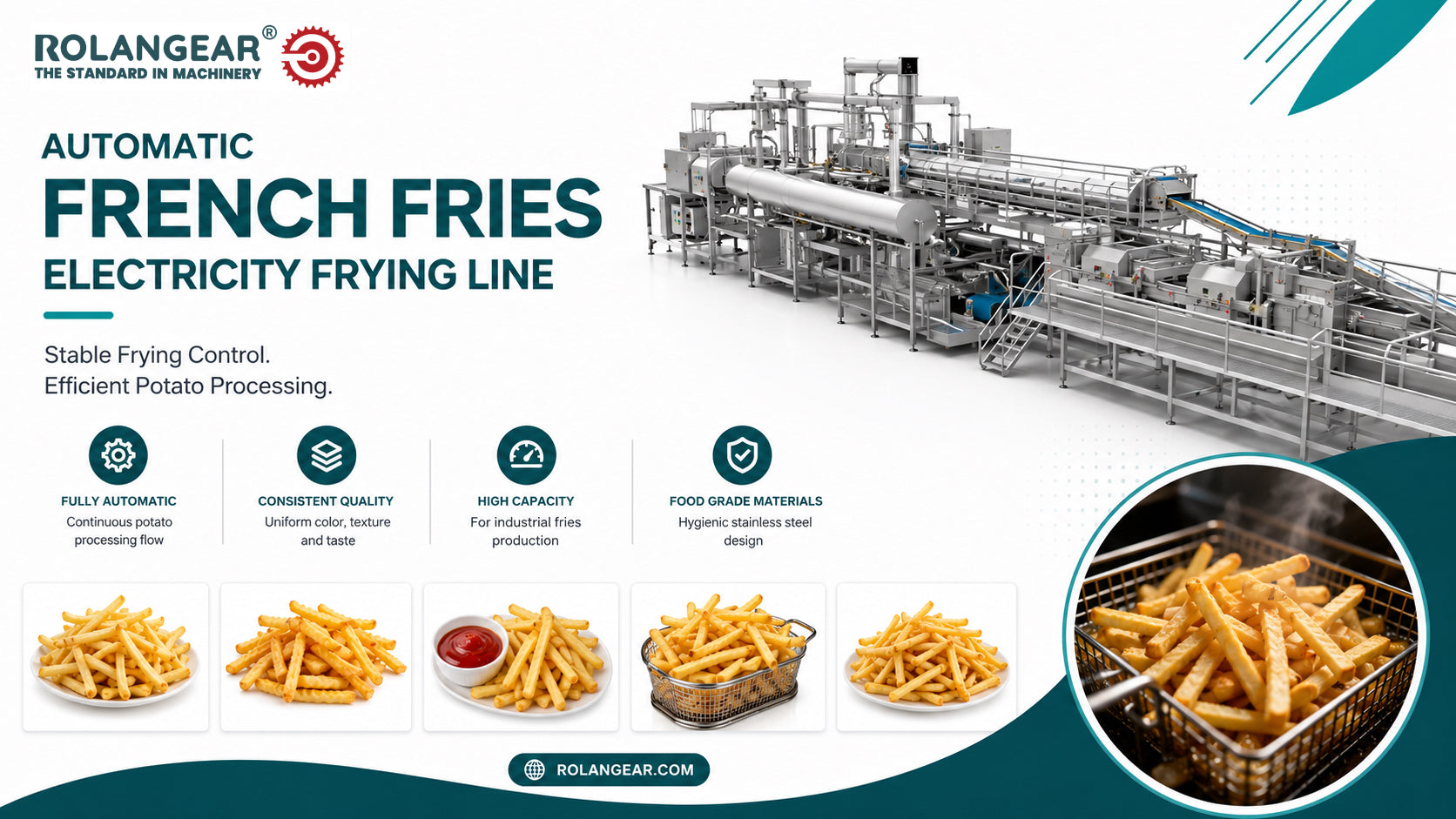
Automatic French Fries Electricity Frying Line

Automatic French Fries Electricity Frying Line: Complete Equipment Guide, Working Process, Cost & Factory Solution

Explore las últimas noticias, información sobre productos y actualizaciones de la industria de rolangear, su fuente de líneas de producción y soluciones de maquinaria avanzadas.


Artículo: Automatic French Fries Electricity Frying Line: Complete Equipment Guide, Working Process, Cost & Factory Solution

Automatic French Fries Electricity Frying Line: Complete Equipment Guide, Working Process, Cost & Factory Solution

Rolangear Equipment Guide

Automatic French Fries Electricity Frying Line: Complete Equipment Guide, Working Process, Cost & Factory Solution

1. Introduction

An automatic French fries electricity frying line is a continuous industrial system used to wash, peel, cut, blanch, dewater, fry, cool, freeze, and package potato strips with stable quality. It is designed for food manufacturers that need consistent golden color, controlled texture, lower labor dependence, and repeatable production results. Compared with small batch frying, an integrated electric frying line gives the factory better control over oil temperature, conveyor speed, frying time, hygiene, and downstream packaging efficiency.

French fries are sold through fast-food chains, supermarkets, frozen food distributors, hotels, catering companies, cloud kitchens, and private-label food brands. These buyers expect fries that look uniform, cook quickly, taste reliable, and meet food safety requirements. For a manufacturer, the challenge is not only frying potatoes. The complete process must control raw potato quality, cutting accuracy, blanching conditions, surface water, oil management, cooling, freezing, and packing. If one step is unstable, the final product may become dark, oily, soft, broken, or inconsistent.

This SEO pillar guide explains how a complete automatic French fries electricity frying line works, why electric heating is widely chosen, which machines are normally included, how to select production capacity, what cost factors should be confirmed, and what questions buyers should ask before ordering. Exact specifications such as output, power consumption, machine dimensions, freezing capacity, and factory layout should always be confirmed according to the final product size, packaging format, and site conditions.

2. Why Invest in an Automatic French Fries Frying Line?

The demand for processed potato products continues to grow because French fries are convenient, familiar, and suitable for many sales channels. Restaurants need reliable fries for daily service, supermarkets need attractive frozen products, and food distributors need stable supply. A factory that can produce consistent fries at controlled cost has opportunities in foodservice, retail, institutional kitchens, and private-label supply.

Growing Demand for Processed Potato Products

French fries are not a seasonal product in most markets. They are consumed throughout the year and can be sold fresh, chilled, semi-fried, or frozen. This creates a stable product category for food processing companies. Manufacturers may serve fast-food restaurants, supermarkets, frozen food distributors, hotels, schools, catering companies, cloud kitchens, and export customers. Different markets may prefer different cuts, such as shoestring fries, straight-cut fries, crinkle-cut fries, or thicker steak fries.

Automation is important because these buyers usually require repeatable color, size, texture, oil content, and packaging weight. Manual frying depends heavily on operator experience and is difficult to standardize at higher output. A continuous electric frying line uses controlled conveying and digital temperature management to keep every batch closer to the same result. This reduces product rejection, improves brand reliability, and helps the manufacturer meet stricter buyer requirements.

Automation Improves Efficiency and Brand Consistency

A modern automatic line reduces manual transfer between machines. Potatoes move from washing and peeling to cutting, blanching, dewatering, frying, cooling, freezing, and packaging through conveyors and matching equipment. This smoother flow reduces handling damage, keeps the process hygienic, and makes labor planning easier. The factory can also record and repeat processing parameters, which is valuable when supplying chain restaurants or retail brands.

Electric frying technology is especially useful where factories want a cleaner production environment and accurate heat control. Electric heaters respond quickly, support digital temperature adjustment, and avoid combustion-related emissions inside the production area. Stable oil temperature helps prevent dark color, excessive oil absorption, and uneven texture. Over time, automation can reduce labor cost, waste, oil degradation, production interruptions, and customer complaints.

3. What Is an Automatic French Fries Electricity Frying Line?

An automatic French fries electricity frying line is an integrated potato processing solution centered around an electric continuous fryer. It is normally used as part of a complete French fries production line. The system prepares potatoes before frying, controls frying parameters during cooking, removes excess oil after frying, and connects to cooling, IQF freezing, weighing, and packaging equipment when frozen fries are required.

The line can be configured for different factory sizes and product types. A smaller factory may use a compact semi-automatic configuration with manual inspection and simple packing. A larger factory may choose automatic potato receiving, steam peeling, optical sorting, continuous blanching, oil filtration, IQF freezing, multi-head weighing, automatic bagging, metal detection, and carton packing. The best configuration depends on target capacity, potato quality, product size, available utilities, labor cost, and market standards.

For buyers, the most important point is system matching. A fryer with high capacity cannot perform well if the cutting machine, blancher, dewatering machine, freezer, or packaging machine cannot match the same throughput. The complete production line should be designed as one coordinated process, not as separate machines purchased without engineering confirmation.

4. Complete French Fries Production Process

The frying stage is the heart of the line, but final quality depends on every step before and after frying. A typical process flow is: Fresh potato receiving → washing and peeling → sorting and inspection → cutting → blanching → dewatering → automatic electricity frying → oil draining → cooling → IQF freezing if required → weighing and packaging → cold storage. Each stage affects color, texture, oil absorption, shelf life, and packaging performance.

4.1 Fresh Potato Receiving and Inspection

High-quality French fries start with suitable potatoes. Incoming potatoes should be inspected for size, dry matter, sugar level, surface defects, mechanical damage, green areas, rot, and foreign materials. Potatoes with excessive reducing sugar may turn too dark during frying, while potatoes with low dry matter may absorb more oil and create a softer texture. A good receiving and inspection system protects downstream equipment and reduces waste later in production.

4.2 Washing and Peeling

Fresh potatoes usually carry soil, stones, and surface impurities. Industrial washing equipment removes these contaminants using water flow, rotating brushes, or drum systems. Clean potatoes then enter the peeling section. Brush peeling is often selected for small and medium factories because it is simple and economical. Steam peeling is commonly used in large industrial factories because it offers higher efficiency, better appearance, and lower potato loss. The correct peeling method should be selected according to capacity, raw potato condition, investment budget, and finished product standard.

4.3 Sorting and Cutting

After peeling, potatoes should pass through an inspection conveyor where operators or sorting systems remove defective pieces. The cutting machine then transforms whole potatoes into uniform strips. Common sizes may include 7 × 7 mm, 9 × 9 mm, 10 × 10 mm, and customized dimensions. Uniform cutting is important because different sizes require different frying times. If strips are uneven, thin pieces may overcook while thick pieces remain soft. The knife assembly, feeding stability, and changeover convenience should be confirmed before ordering.

4.4 Blanching and Dewatering

Blanching removes excess starch, improves color consistency, reduces enzyme activity, and prepares potato strips for frying. Blanching time and temperature should be adjusted according to potato variety and final product requirements. After blanching, surface water must be removed before frying. Effective dewatering reduces oil splashing, improves frying performance, lowers oil absorption, and helps the fryer maintain stable temperature. Poor dewatering can increase energy consumption and shorten oil life.

4.5 Automatic Electricity Frying

In the electric continuous fryer, potato strips travel through hot oil on a controlled conveyor. Key parameters include oil temperature, frying time, conveyor speed, product layer thickness, oil circulation, and heating power. The goal is to achieve a uniform golden color, crisp surface, soft interior, stable moisture content, and controlled oil absorption. Electric heating provides accurate temperature control and fast recovery when product load changes. Oil filtration and circulation are also important because cleaner oil supports better flavor, color, and food safety.

4.6 Oil Draining, Cooling, Freezing, and Packaging

After frying, fries pass through oil draining and cooling sections. Removing excess surface oil improves mouthfeel and reduces packaging problems. Cooling protects downstream equipment, prevents deformation, improves freezing efficiency, and reduces condensation. For frozen French fries, an IQF freezer can freeze individual pieces quickly so they do not stick together. Finally, weighing and packaging equipment fills bags with accurate weight, seals them, and may connect to date coding, metal detection, check weighing, carton packing, and cold storage systems.

5. Main Equipment in an Automatic French Fries Electricity Frying Line

A complete line should be configured according to the factory’s product plan. The following table summarizes typical equipment and selection points. Exact model numbers, dimensions, power, and output must be confirmed during engineering design.

Equipment Function Key selection points
Potato washer Removes soil and surface impurities Capacity, water circulation, brush or drum structure, easy cleaning
Peeling machine Removes potato skin before cutting Brush or steam peeling, potato loss, peeling efficiency, maintenance
Inspection conveyor Allows removal of defective potatoes Length, lighting, labor positions, optional optical sorting
Cutting machine Cuts potatoes into uniform strips Cut size, knife quality, changeover time, breakage rate
Blanching machine Improves color, texture, and enzyme stability Temperature control, residence time, water circulation, cleaning design
Dewatering machine Removes surface water before frying Air knife or vibration design, moisture removal efficiency, hygiene
Electric continuous fryer Cooks fries under controlled oil temperature Heating power, oil volume, filtration, conveyor speed, safety control
Oil draining and cooling conveyor Removes excess oil and stabilizes fries Conveyor length, air flow, oil recovery, product spacing
IQF freezer optional Freezes fries individually for frozen products Freezing capacity, temperature, energy use, floor space
Packaging system Weighs, fills, seals, and checks finished product Bag size, speed, accuracy, metal detector, check weigher

The key is balance. If one machine is undersized, it becomes a bottleneck. If one section is oversized, the factory may pay for unused capacity. A professional supplier should confirm the full process flow, expected loss rate, product size, labor plan, utilities, and building layout before recommending equipment.

6. Electric Frying vs. Gas Frying: Which Is Better?

Both electric and gas frying can be used in industrial potato processing, but they suit different factory conditions. Electric frying is often selected when the factory needs clean operation, accurate temperature control, easier installation, and stable production management. Because the heat source is controlled digitally, operators can adjust parameters more precisely and maintain consistent oil temperature during continuous production.

Option Best for Advantages Limitations
Electric frying Factories with reliable electrical supply and clean production requirements Accurate temperature control, cleaner environment, simpler monitoring, lower combustion risk Requires sufficient electrical capacity and proper wiring design
Gas frying Factories with economical gas supply or limited electrical capacity Can be cost-effective where gas is cheaper, suitable for some high-energy sites Requires combustion management, ventilation, and more safety controls
Customized heating solution Special factory conditions or high-capacity projects Can match local energy costs and layout requirements Needs detailed engineering confirmation before quotation

Many manufacturers choose electric frying because it supports consistent product quality and easier process documentation. However, the final choice should be based on local energy cost, utility availability, production capacity, safety requirements, and building conditions.

7. How to Choose the Right Production Capacity

Capacity selection should start from market demand, not only from machine price. A small line may be suitable for new food processing businesses, restaurant suppliers, or pilot production. It offers lower investment, easier operation, and faster learning. A medium line is often selected by regional distributors, supermarkets, and OEM producers that need better automation and stable daily output. A large line is suitable for national food brands, central kitchens, export factories, and frozen food manufacturers that require continuous operation and lower manufacturing cost per kilogram.

Before choosing capacity, buyers should calculate expected sales volume, working hours per day, number of shifts, potato availability, freezing and cold storage capacity, packaging speed, and future expansion plans. It is also useful to confirm whether the line will produce only one cut size or several product styles. Frequent product changeovers may require more flexible cutting, washing, and packing designs.

8. What Determines the Cost of an Automatic French Fries Electricity Frying Line?

The cost of an automatic French fries electricity frying line depends on production capacity, automation level, machine materials, heating design, freezing requirements, packaging configuration, factory infrastructure, and customization needs. A simple line for fresh fries will cost less than a complete frozen French fries factory with IQF freezing, automatic weighing, bagging, metal detection, carton packing, and cold storage. Buyers should avoid comparing prices without comparing the complete scope of supply.

Important cost factors include the number of machines, stainless-steel material grade, oil filtration system, control system, conveyor design, electrical components, safety guards, installation support, spare parts, and after-sales service. Factory infrastructure also affects investment. The project may require electrical power supply, water treatment, drainage, compressed air, ventilation, cold storage, wastewater treatment, and sufficient floor space. Operating costs include potatoes, cooking oil, electricity, water, labor, packaging materials, maintenance, and freezing energy.

A serious quotation should clearly state what is included and what must be prepared by the buyer. This includes utility requirements, layout drawings, installation responsibilities, commissioning support, training, spare parts, warranty terms, and any optional equipment. Exact prices should be confirmed only after the supplier understands the product specification, output target, packaging method, and factory conditions.

8.1 Factory Layout and Utility Requirements

Factory layout should allow smooth movement from raw potato receiving to finished product storage. The production area normally needs space for raw potato handling, washing and peeling, inspection, cutting, blanching, frying, cooling, freezing, packaging, carton handling, maintenance access, and operator walkways. Wet processing areas require reliable drainage and floor cleaning access, while the frying area needs proper ventilation and safe oil handling. If frozen fries are produced, the IQF freezer, packing room, and cold storage should be planned together to avoid temperature loss and product delays.

Utility confirmation is essential before equipment manufacturing. The supplier should confirm electrical capacity, voltage, water supply, drainage, compressed air, ventilation, and any freezer-related refrigeration requirements. A line that is technically suitable but poorly matched to the factory building can create installation delays and extra cost. For this reason, buyers should share factory drawings, available power, ceiling height, door size, drainage position, and preferred material flow before finalizing the project.

9. Quality Control, Cleaning, and Maintenance

Quality control should be built into the process instead of checked only at the end. Important inspection points include raw potato quality, peeling result, strip size, blanching condition, surface moisture before frying, oil temperature, frying time, finished color, texture, oil content, freezing result, package weight, sealing quality, and metal detection. Operators should record key parameters so stable products can be repeated from shift to shift.

Cleaning and maintenance are equally important. Food-contact surfaces should be easy to access and clean. Oil residue, starch, broken potato pieces, and moisture can affect hygiene and equipment performance if not removed regularly. Preventive maintenance should include conveyor belts, bearings, motors, heating elements, pumps, filters, cutting knives, sealing parts, sensors, and electrical control systems. Factories should also prepare wearing parts and critical spare parts to reduce downtime.

Good oil management improves both quality and cost control. Filtration removes crumbs and fines that can burn in the oil. Stable temperature control slows oil degradation. Proper draining reduces oil carryover into the final product. These practices improve flavor, color, and shelf life while helping the factory control daily operating expense.

10. Why Choose Rolangear?

Rolangear provides industrial machinery solutions for customers planning complete production lines and customized factory projects. For French fries production, the equipment configuration should be designed around the buyer’s raw potatoes, product size, capacity target, energy source, packaging style, and factory layout. A practical solution may include process design, equipment matching, layout planning, installation guidance, commissioning support, operator training, spare parts planning, and future expansion consultation.

The advantage of working with an experienced production-line supplier is coordination. Instead of purchasing separate machines without matching, buyers can discuss the full process from potato receiving to packaging and cold storage. This helps avoid bottlenecks, unsuitable utilities, poor machine connection, and unnecessary investment. For every project, technical details should be confirmed before final quotation so the proposed line matches actual production goals.

11. Frequently Asked Questions

Can one frying line produce different types of French fries?

Yes, many lines can be adjusted for different cut sizes and product styles, but the cutter, fryer settings, blanching conditions, freezer, and packaging system must support those changes. The required flexibility should be confirmed before ordering.

Why choose electric heating instead of gas heating?

Electric heating offers accurate temperature control, cleaner operation, and easier process monitoring. It is a strong choice for factories with reliable electrical capacity and strict production environment requirements.

How much factory space is required?

Factory space depends on capacity, machine layout, freezer size, packaging area, raw material storage, finished product cold storage, drainage, and maintenance access. A layout drawing should be prepared according to the actual building.

Can the line produce frozen French fries?

Yes. For frozen French fries, the line normally includes oil draining, cooling, IQF freezing, weighing, packaging, and cold storage. The freezing system must match the fryer capacity and product size.

What information should I prepare before requesting a quotation?

Prepare target capacity, product cut size, fresh or frozen product type, packaging weight, available utilities, factory dimensions, labor plan, local energy conditions, and required automation level.

Does the production line need customization?

Most industrial French fries projects require some customization because potato varieties, factory layouts, capacity goals, energy sources, and packaging formats differ by market. Customization should be confirmed through technical discussion.

12. Conclusion

An automatic French fries electricity frying line helps manufacturers produce consistent, attractive, and commercially reliable French fries through controlled washing, peeling, cutting, blanching, dewatering, electric frying, cooling, freezing, and packaging. The value of the line comes from process stability, equipment matching, food safety, lower labor dependence, and repeatable product quality. For buyers, the best solution is not simply the cheapest fryer. It is a complete production system designed around target capacity, product specifications, factory utilities, packaging requirements, and long-term market goals.

If you are planning a French fries production project, prepare your product size, capacity target, packaging format, available factory space, and utility conditions before discussing the project with Rolangear. A properly designed automatic French fries electricity frying line can help your factory improve production efficiency, reduce process variation, and build a stronger supply position in foodservice, retail, and frozen food markets.

Plan Your French Fries Electricity Frying Line

If you are preparing a new French fries processing project, confirm your raw potato condition, target capacity, product size, frying method, freezing requirement, packaging format, and factory utilities before final equipment design.

Jack Doe

Hola, soy Jack, un ingeniero mecánico especializado en diseño mecánico patentado.

Leer más
Complete Bread Production Line
bakery machinery

Bread Manufacturing Plant in 2026,Complete Guide to Bread Production Line

Learn how a bread production line works, from dough mixing and dividing to proofing, baking, cooling, and packing for efficient industrial bakery production.

Leer más