
Introducción
Iniciar una planta de fabricación de pan en 2026 puede ser una gran oportunidad de negocio para inversores, empresas alimentarias y empresarios panaderos. El pan es un producto de consumo diario con una demanda estable en supermercados, tiendas de conveniencia, restaurantes, hoteles, escuelas y canales de alimentos en línea. A medida que los consumidores buscan alimentos convenientes, listos para comer y asequibles, los productos de pan envasados continúan respaldando el crecimiento de la panadería industrial en muchos mercados.
Sin embargo, una fábrica de pan exitosa no se construye solo comprando máquinas. Requiere un sistema de producción completo que conecte la planificación del producto, el control de recetas, la selección de equipos, el diseño de la fábrica, el empaquetado, la gestión de calidad y la distribución en el mercado. La línea de producción de pan adecuada debe ayudar al fabricante a producir pan consistente con peso estable, buena textura, apariencia atractiva, empaquetado seguro y uso eficiente de la mano de obra.
Una línea de producción de pan industrial moderna suele incluir preparación de materia prima, mezclado de masa, división de masa, redondeo, moldeado, fermentación, horneado, enfriamiento, rebanado opcional, empaquetado y almacenamiento de productos terminados. Cada etapa afecta la siguiente. Si el mezclado de la masa es inestable, la fermentación y el horneado también lo serán. Si el pan se empaqueta antes de enfriarse correctamente, la condensación puede reducir la vida útil y dañar la apariencia.
¿Por qué invertir en una planta de fabricación de pan en 2026?

El mercado de la panadería sigue evolucionando porque los estilos de vida de los consumidores están cambiando. Muchos clientes prefieren alimentos fáciles de comprar, fáciles de almacenar y listos para comer. El pan satisface estos requisitos mejor que muchas otras categorías de alimentos. Se puede vender como producto de desayuno, base de sándwich, artículo de aperitivo, ingrediente de servicio de alimentos o producto minorista de marca privada.
La fabricación industrial de pan permite a las empresas producir productos estandarizados a escala. En comparación con las pequeñas panaderías artesanales, una línea de producción de pan automática puede mejorar la producción, reducir la manipulación manual, mantener un tamaño de producto consistente y apoyar una distribución más amplia. Esto es importante para los supermercados y distribuidores porque necesitan un suministro estable y una calidad predecible.
Un negocio de fabricación de pan también puede ser flexible. Una fábrica puede centrarse en el pan de molde básico para el consumo diario, mientras que otra puede dirigirse a pan de leche premium, pan integral, bollos dulces, bollos de hamburguesa o productos de panadería rellenos. Los fabricantes pueden expandir las categorías de productos ajustando recetas, moldes, sistemas de formado, dispositivos de llenado, equipos de rebanado y formatos de empaque.
La principal ventaja comercial es la demanda repetida. El pan se compra con frecuencia, y esto crea una oportunidad de mercado constante cuando la calidad del producto, el precio, el envasado y la estrategia de distribución se gestionan bien. Para los inversores, la clave es evitar la sobredimensión demasiado pronto. Un plan de fábrica práctico debe coincidir con el tamaño actual del mercado, dejando espacio para futuras expansiones de capacidad.
Principales productos de pan que puedes fabricar

Antes de comprar maquinaria, define los productos que quieres elaborar. Diferentes productos de pan requieren diferentes diseños de proceso, configuraciones de equipo y soluciones de envasado.
Línea de producción de pan de sándwich (pan de molde)

Introducción del producto
El pan de sándwich, también conocido como pan de molde, es uno de los productos de pan industrial más comunes en todo el mundo.
Es ampliamente consumido para:
Desayuno
Preparación de sándwiches
Consumo doméstico
Aplicaciones de servicio de alimentos
Debido a que el pan de sándwich se produce en grandes cantidades y se distribuye a través de supermercados y canales minoristas, los fabricantes requieren un proceso de producción altamente estable y automatizado.
Los consumidores esperan que el pan de sándwich tenga:
Forma rectangular uniforme
Textura interna suave
Peso consistente
Estructura de miga fina
Larga vida útil
Proceso de producción de pan de sándwich
El proceso de producción completo incluye:
↓
↓
↓
↓
↓
Moldeado de pan
↓
Fermentación
↓
Horneado
↓
Enfriamiento
↓
Equipo principal requerido
| Etapa de producción | Equipo |
|---|---|
| Preparación de ingredientes | Sistema de almacenamiento, sistema de pesaje |
| Preparación de la masa | Mezcladora de masa industrial |
| Porcionado de la masa | Divisora de masa |
| Formado de la masa | Redondeadora de masa |
| Formado de pan | Moldeadora de pan |
| Fermentación | Cámara de fermentación |
| Horneado | Horno de túnel |
| Enfriamiento | Transportador de enfriamiento |
| Envasado | Máquina de envasado automática |
Ventajas de la producción
Una línea de producción de pan de sándwich profesional proporciona:
Capacidad de producción continua
Calidad de producto estable
Reducción de la operación manual
Mayor eficiencia de producción
Es adecuada para empresas que abastecen a supermercados, distribuidores y grandes cadenas minoristas.
Línea de producción de pan tostado rebanado

Introducción del producto
El pan tostado rebanado es un producto de pan comercial premium con una gran demanda en los mercados de alimentos modernos.
En comparación con el pan de molde tradicional, el pan tostado rebanado requiere un procesamiento adicional después de la cocción para lograr:
Espesor de rebanada uniforme
Superficie de corte limpia
Aspecto atractivo
El pan tostado rebanado se suministra comúnmente a:
Supermercados
Cafeterías
Restaurantes
Proveedores de desayunos
Proceso de producción de pan tostado rebanado
El proceso de producción incluye:
Mezclado
↓
División
↓
Redondeo
↓
Moldeado
↓
Fermentación
↓
Horneado
↓
Enfriamiento
↓
Rebanado automático
↓
Envasado
Equipo principal requerido
| Etapa de producción | Equipo |
|---|---|
| Mezclado | Mezcladora de masa |
| Procesamiento de masa | Divisora y redondeadora |
| Formado | Moldeadora de pan |
| Fermentación | Cámara de fermentación |
| Horneado | Horno industrial |
| Enfriamiento | Transportador de enfriamiento |
| Corte | Rebanadora de pan automática |
| Envasado | Máquina de envasado tipo flow-pack |
Ventajas de la producción
La producción automática de tostadas rebanadas proporciona:
Grosor de rebanada preciso
Mejor apariencia
Menos requisitos de mano de obra
Mayor eficiencia de envasado
Para la producción a gran escala, los sistemas automáticos de rebanado y envasado mejoran significativamente la productividad de la fábrica.
Línea de producción de bollos dulces

Introducción del producto
Los bollos dulces y los bollos de piña son productos de panadería populares debido a su atractivo aspecto y sabor único.
Estos productos se venden ampliamente en:
Panaderías
Supermercados
Cafeterías
Tiendas de conveniencia
En comparación con el pan estándar, los bollos dulces suelen requerir un mejor control de:
Suavidad de la masa
Apariencia de la superficie
Consistencia de la forma
Proceso de producción de bollos dulces
El proceso de fabricación incluye:
↓
Preparación de la masa
↓
División
↓
Redondeo
↓
Formado especial de la superficie
↓
Fermentación
↓
Horneado
↓
Enfriamiento
↓
Envasado
Equipo principal requerido
| Etapa de producción | Equipo |
|---|---|
| Mezclado de masa | Mezcladora de masa |
| Control de porciones | Divisora de masa |
| Formado | Máquina formadora de bollos |
| Fermentación | Cámara de fermentación |
| Horneado | Horno |
| Enfriamiento | Transportador de enfriamiento |
| Envasado | Sistema de envasado automático |
Ventajas de la producción
La producción industrial de bollos dulces permite a los fabricantes lograr:
Aspecto consistente del producto
Mayor velocidad de producción
Mejor control de calidad
Suministro al mercado a gran escala
Línea de producción de pan largo con jarabe

Introducción del producto
Los productos de pan largo con jarabe son artículos de panadería atractivos que combinan una apariencia única con un sabor mejorado.
Estos productos están comúnmente diseñados para:
Mercados de panadería premium
Canales minoristas de snacks
Tiendas de alimentos especializados
La línea de producción se enfoca en mantener:
Forma de producto larga
Tamaño uniforme
Decoración atractiva de la superficie
Proceso de producción
El proceso incluye:
Mezclado de masa
↓
División
↓
Formado de forma larga
↓
Fermentación
↓
Horneado
↓
Enfriamiento
↓
Aplicación de jarabe
↓
Envasado
Equipo principal requerido
| Etapa de producción | Equipo |
|---|---|
| Mezclado | Mezcladora de masa |
| División | Divisora de masa |
| Formado | Máquina formadora de pan largo |
| Fermentación | Cámara de fermentación |
| Horneado | Horno de túnel |
| Decoración | Sistema de rociado de jarabe |
| Envasado | Máquina de envasado automática |
Ventajas de la producción
Esta línea de producción ayuda a los fabricantes a crear:
Productos de aspecto premium
Artículos de panadería diferenciados
Productos de mayor valor
Línea de producción de pan decorativo/con formas especiales

Introducción del producto
Los consumidores modernos prefieren cada vez más productos de panadería creativos y visualmente atractivos.
El pan con formas especiales y decorativo permite a los fabricantes desarrollar productos únicos que se destacan en mercados competitivos.
Ejemplos incluyen:
Productos de panadería decorativos
Productos de pan de temporada
Proceso de Producción
El proceso incluye:
Preparación de la Masa
↓
División
↓
Formado Especial
↓
Decoración
↓
Fermentación
↓
Horneado
↓
Enfriamiento
↓
Empaquetado
Equipo Principal Requerido
| Etapa de Producción | Equipo |
|---|---|
| Mezclado | Mezcladora de masa |
| División | Divisora |
| Formado | Equipo de moldeo personalizado |
| Decoración | Sistema de formado decorativo |
| Fermentación | Cámara de fermentación |
| Horneado | Horno |
| Empaquetado | Máquina de envasado |
Ventajas de Producción
La tecnología de producción flexible permite a los fabricantes:
Desarrollar nuevos productos
Adaptarse a las tendencias del mercado
Crear marcas de panadería premium
Línea de Producción de Pan Dulce Relleno

Introducción del Producto
El pan dulce relleno es una de las categorías de panadería de más rápido crecimiento porque los fabricantes pueden crear muchos sabores y variaciones de productos.
Los productos populares incluyen:
Pan relleno de crema
Pan relleno de chocolate
Pan de natillas
Pan relleno de frutas
Estos productos suelen tener un mayor valor de mercado porque los clientes se sienten atraídos por:
Rellenos únicos
Mejor experiencia de sabor
Empaque premium
Proceso de Producción de Pan Dulce Relleno
El flujo de producción incluye:
Mezclado de la Masa
↓
División
↓
Inyección de Relleno
↓
Formado
↓
Fermentación
↓
Horneado
↓
Enfriamiento
↓
Empaquetado
Equipo Principal Requerido
| Etapa de Producción | Equipo |
|---|---|
| Preparación de la masa | Mezcladora de masa |
| Control de porciones | Divisora de masa |
| Relleno | Máquina de llenado automática |
| Formado | Máquina formadora de pan |
| Fermentación | Cámara de fermentación |
| Horneado | Horno industrial |
| Empaquetado | Máquina de envasado automática |
Ventajas de Producción
La producción de pan relleno permite a los fabricantes:
Expandir las categorías de productos
Aumentar el valor del producto
Dirigirse a clientes premium
El pan relleno puede incluir crema, chocolate, natillas, pasta de frutas u otros rellenos. El pan decorativo puede incluir formas especiales, patrones de superficie, glaseados de jarabe o diseños de temporada. Estos productos a menudo tienen un valor percibido más alto, pero requieren un formado, relleno, control de higiene y empaquetado más precisos.
Proceso Completo de Fabricación de Pan
Un flujo típico de producción industrial de pan es:
Preparación de Materias Primas → Mezclado de Masa → División de Masa → Boleado de Masa → Reposo Intermedio → Formado y Moldeado → Fermentación → Horneado → Enfriamiento → Rebanado (si es necesario) → Empaquetado → Almacenamiento del Producto Terminado
Preparación de Materias Primas
El proceso de fabricación de pan comienza con la preparación de las materias primas. Los ingredientes comunes incluyen harina de trigo, agua, levadura, azúcar, sal, leche en polvo, mantequilla o aceite, mejoradores y rellenos o coberturas opcionales. La calidad de los ingredientes afecta directamente el volumen del pan, la suavidad, el sabor, el color y la vida útil.
Las fábricas industriales deben establecer un sistema confiable de almacenamiento y pesaje de materias primas. La harina debe almacenarse en un área seca y limpia. La levadura y los ingredientes sensibles a la temperatura deben gestionarse de acuerdo con las recomendaciones del proveedor. El pesaje preciso es esencial porque pequeños errores en la receta pueden causar grandes diferencias de producción. Para fábricas más grandes, los sistemas automáticos de alimentación de ingredientes pueden reducir la mano de obra y mejorar la consistencia de la receta.
Mezclado de Masa
El mezclado de masa es uno de los pasos más importantes en la producción de pan. La mezcladora combina los ingredientes y desarrolla la estructura del gluten para que la masa pueda retener el gas durante la fermentación y el horneado. El tiempo de mezclado, la velocidad, la temperatura de la masa y la hidratación deben controlarse cuidadosamente.
Una masa insuficientemente mezclada puede producir un volumen deficiente y una textura irregular. Una masa excesivamente mezclada puede volverse débil, pegajosa o difícil de formar. Diferentes productos necesitan diferentes características de la masa. El pan tostado a menudo requiere un fuerte desarrollo de la masa, mientras que el pan de leche suave puede requerir un control más cuidadoso para mantener la ternura.
División y Boleado de la Masa
Después de mezclar, el gran lote de masa debe dividirse en piezas con peso preciso. En la producción industrial, la división manual es demasiado lenta e inconsistente. Un divisor de masa ayuda a controlar el tamaño de las porciones, reducir el desperdicio y mantener una producción estable. El peso preciso de la masa es especialmente importante para el empaque al por menor porque los clientes esperan un tamaño y valor consistentes.
Después de la división, las piezas de masa pasan por una boleadora. El boleado mejora la superficie, crea una bola de masa uniforme y prepara la masa para el reposo y el formado. Esta etapa mejora el manejo y ayuda al producto final a lograr una mejor consistencia de forma.
Reposo Intermedio
Algunos productos de pan requieren un reposo intermedio después del boleado. Durante este breve reposo, el gluten se relaja, lo que facilita el moldeado de la masa sin rasgarla. Un reposo adecuado ayuda a mejorar el volumen del pan, la estructura interna y la apariencia final. Si la masa se forma demasiado pronto, puede resistir el formado o encogerse.
Formado y Moldeado
El formado determina la forma final del producto. Una moldeadora de pan puede aplanar, desgasificar, enrollar y dar forma a la masa para pan tostado o pan de sándwich. El equipo para formar bollos puede crear formas redondas u ovaladas. Los sistemas de pan relleno pueden depositar el relleno antes de dar forma.
El sistema de formado debe coincidir con el diseño del producto. Por ejemplo, el pan de molde requiere un enrollado y una colocación en el molde consistentes, mientras que los bollos dulces pueden requerir un equipo de formado y decoración más flexible. Un formado incorrecto puede crear una textura irregular, una mala apariencia y resultados de horneado inestables.
Fermentación y Leudado
La fermentación permite que la levadura produzca gas y expanda la masa. Una cámara de fermentación profesional controla la temperatura, la humedad y el tiempo. Una fermentación estable es esencial para el volumen, la suavidad, el sabor y la apariencia del pan.
Si la fermentación es demasiado corta, el pan puede volverse denso y pequeño. Si la fermentación es demasiado larga, la masa puede colapsar o producir una textura indeseable. Los fermentadores industriales ayudan a los fabricantes a mantener condiciones repetibles, lo cual es importante para la producción diaria a gran escala.
Horneado
El horneado transforma la masa fermentada en pan terminado. Durante el horneado, el producto se expande, la estructura de la miga se fija, la humedad se reduce, el color de la corteza se desarrolla y el sabor mejora. Los hornos industriales de pan pueden usar gas, electricidad u otros métodos de calentamiento. Los hornos de túnel son comunes para la producción continua de alta capacidad porque los productos se mueven a través de zonas de temperatura controlada en una cinta transportadora.
La selección del horno debe considerar la capacidad, el tamaño del producto, la fuente de energía, el control de temperatura, el tiempo de horneado y la distribución de la fábrica. El horno es a menudo una de las inversiones más importantes en una planta de fabricación de pan porque afecta tanto la calidad del producto como el costo operativo.
Enfriamiento
El pan recién horneado debe enfriarse antes de rebanarlo o empaquetarlo. El enfriamiento estabiliza la estructura del producto y reduce la temperatura interna. Si el pan se empaqueta demasiado caliente, se puede formar condensación de humedad dentro de la bolsa, lo que reduce la vida útil y daña la apariencia del producto.
Una cinta transportadora de enfriamiento debe coincidir con la producción del horno y la máquina de envasado. El tiempo de enfriamiento depende del tamaño del producto, las condiciones de la fábrica y los requisitos de envasado. Un buen diseño de enfriamiento mejora la higiene, reduce el manejo manual y soporta la producción continua.
Rebanado y Empaquetado
El rebanado es necesario para el pan tostado y el pan de sándwich. La rebanadora debe producir rebanadas limpias y uniformes sin aplastar la barra. Después de rebanar o enfriar directamente, el pan entra en el empaquetado. Las máquinas de empaquetado automáticas pueden alimentar productos, envolver film, sellar paquetes, imprimir fechas y preparar productos para la distribución.
El empaque protege el pan de la contaminación, la pérdida de humedad y los daños durante el transporte. También contribuye al reconocimiento de la marca. Para los productos al por menor, el diseño del empaque, la calidad del sellado, la claridad de la etiqueta y la apariencia en el estante influyen en las decisiones de compra del cliente.
Equipo Principal en una Línea de Producción Industrial de Pan

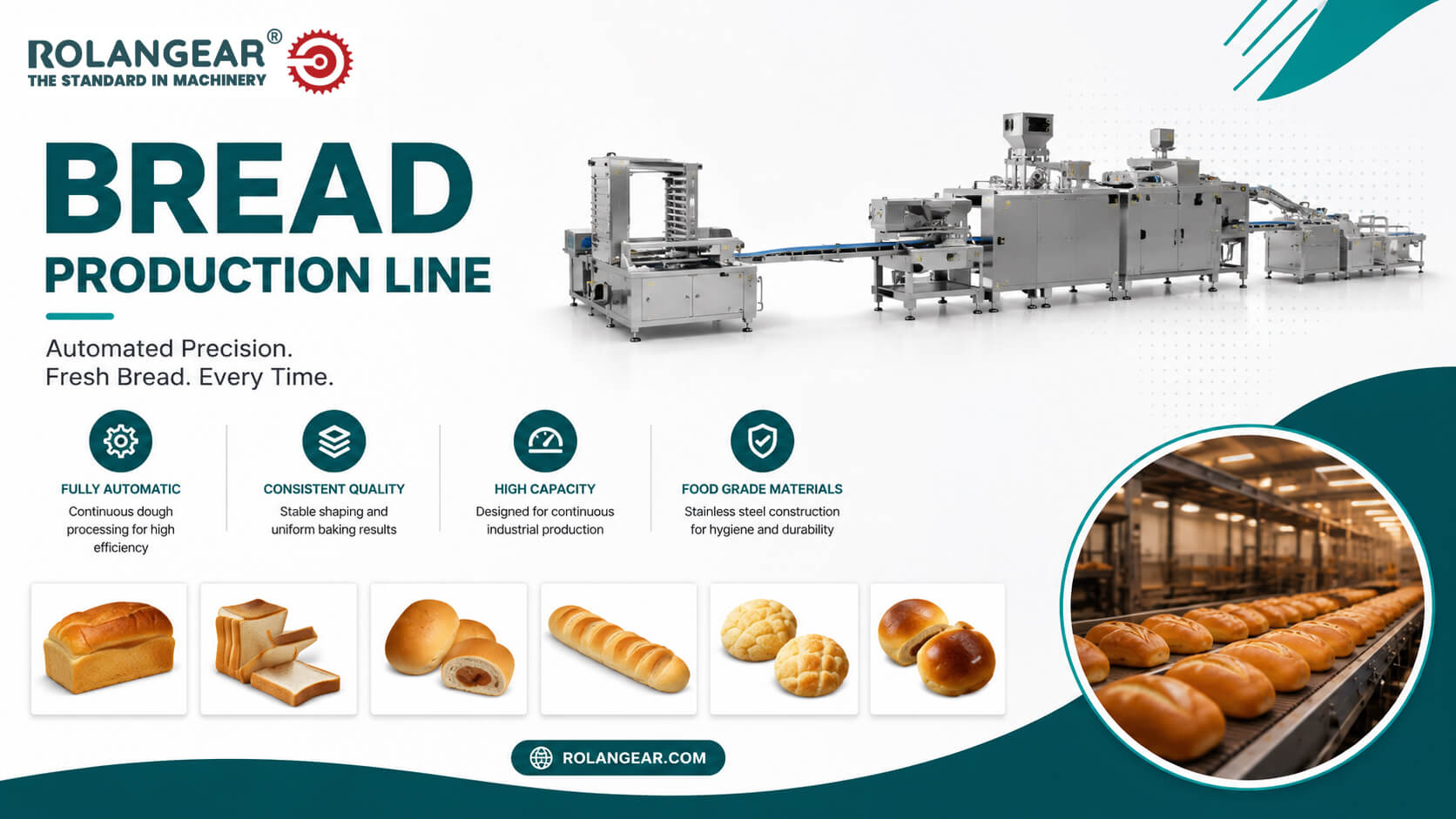
Una línea completa de producción de pan suele incluir varias máquinas conectadas. La configuración exacta depende del tipo de producto, la capacidad, el nivel de automatización, el tamaño del horno, el método de empaquetado y el espacio de la fábrica.
| Equipo | Función | Puntos Clave de Selección |
|---|---|---|
| Sistema de almacenamiento y pesaje de ingredientes | Almacena y mide harina y otros ingredientes | Precisión, higiene, capacidad, control de recetas |
| Mezcladora industrial de masa | Mezcla ingredientes y desarrolla la masa | Tamaño del lote, velocidad de mezclado, control de temperatura de la masa, limpieza |
| Divisora de masa | Divide la masa en porciones iguales | Precisión de peso, velocidad de salida, gama de productos |
| Boleadora de masa | Bolea las piezas de masa divididas | Superficie lisa, manejo suave, velocidad de línea |
| Fermentadora intermedia | Permite el relajamiento de la masa antes de formarla | Tiempo de reposo, diseño del transportador, higiene |
| Moldeadora de pan o máquina formadora | Da forma a la masa en hogazas, bollos o formas especiales | Rango de tamaño del producto, flexibilidad del molde, método de ajuste |
| Cámara de fermentación | Controla la fermentación | Temperatura, humedad, capacidad, estabilidad |
| Horno industrial de pan | Hornea pan de forma continua o por lotes | Método de calentamiento, zonas, eficiencia energética, capacidad |
| Transportador de enfriamiento | Enfría el pan antes de rebanarlo o empaquetarlo | Longitud, flujo de aire, diseño higiénico, velocidad de producción |
| Rebanadora de pan | Corta el pan de molde en rebanadas | Grosor de la rebanada, calidad de corte, fácil limpieza |
| Máquina de empaquetado | Envuelve y sella el pan terminado | Tipo de film, velocidad, codificación de fecha, calidad de sellado |
Cuando no se disponga de parámetros técnicos exactos, deben confirmarse en función del producto objetivo, la capacidad horaria, la disposición de la fábrica y las condiciones de los servicios públicos locales.
Distribución de la Fábrica de Pan y Requisitos de Servicios Públicos

Una planta de fabricación de pan exitosa necesita más que maquinaria. La distribución de la fábrica debe permitir un movimiento fluido de materiales, trabajadores, empaques y productos terminados. Una mala distribución puede causar riesgos de contaminación cruzada, retrasos en la producción, dificultad para la limpieza y altos costos de mano de obra.
El área de almacenamiento de materias primas debe ser seca, limpia y fácil de gestionar. La harina, el azúcar, la levadura, el aceite y los materiales de empaque deben almacenarse por separado según los requisitos de higiene y el inventario. El área de producción debe seguir un flujo lógico desde la mezcla hasta el formado, la fermentación, el horneado, el enfriamiento y el empaquetado. Los productos terminados deben moverse hacia el almacén o el área de despacho sin cruzar el tráfico de materias primas.
El área de empaquetado debe ser limpia y controlada porque el pan queda expuesto después del horneado y el enfriamiento. El almacenamiento del producto terminado debe considerar la temperatura, la vida útil, el inventario FIFO (primero en entrar, primero en salir) y el acceso para la entrega.
Los servicios públicos deben planificarse con anticipación. Una fábrica de pan puede requerir electricidad, gas, aire comprimido, agua, drenaje, ventilación, extracción y, a veces, vapor, dependiendo del diseño del horno y del proceso. El suministro de energía debe coincidir con la configuración completa del equipo, no solo con las máquinas principales. La ventilación y la gestión del calor son especialmente importantes alrededor de los hornos y las áreas de enfriamiento. Se deben revisar las regulaciones locales de seguridad alimentaria, seguridad contra incendios, construcción y laborales antes del diseño final de la fábrica.
Factores de Costo de la Línea de Producción de Pan

Muchos inversores preguntan: "¿Cuánto cuesta una línea de producción de pan?". La respuesta depende de los requisitos del proyecto. No existe un precio fijo único para cada fábrica porque el costo está influenciado por el tipo de producto, la capacidad de producción, el nivel de automatización, el tamaño del horno, el método de envasado, la construcción de la fábrica y las condiciones de instalación locales.
La primera categoría de costo es la inversión en equipos. Una pequeña línea de panadería semiautomática puede requerir una inversión menor, pero generalmente necesita más mano de obra y tiene una producción más baja. Una línea de producción de pan industrial totalmente automática requiere una inversión inicial más alta, pero puede reducir el costo de mano de obra, mejorar la consistencia y soportar canales de distribución más grandes.
La segunda categoría es la preparación de la fábrica. Esto puede incluir la renovación del edificio, pisos, drenaje, paredes, ventilación, instalación eléctrica, tuberías de gas, áreas de almacenamiento, iluminación e instalaciones de seguridad alimentaria. La preparación de la fábrica no debe ignorarse porque la maquinaria no puede funcionar bien en un entorno inadecuado.
La tercera categoría es el costo operativo. Los costos diarios incluyen harina, levadura, azúcar, aceite, película de empaque, electricidad, gas, mano de obra, mantenimiento, repuestos, logística, pruebas de calidad y devoluciones de productos. El equipo eficiente y un buen control del proceso pueden reducir el desperdicio y mejorar la rentabilidad a largo plazo.
Para controlar la inversión, comience con un plan de negocios realista. Confirme los productos objetivo, la producción diaria, los canales de mercado, el formato de empaque, la disponibilidad de mano de obra y los planes de expansión futuros antes de pedir máquinas. Un proveedor profesional debe ayudar a diseñar una configuración práctica en lugar de recomendar equipos innecesarios.
Rentabilidad y Canales Comerciales

Una planta de fabricación de pan puede ser rentable cuando la producción, la calidad, los precios y la distribución se gestionan bien. La ganancia no proviene solo de la compra de equipos. Depende de cuán eficazmente la fábrica convierte las materias primas en productos vendibles con calidad estable y costos controlados.
La distribución minorista es un canal comercial común. El pan se puede vender a través de supermercados, tiendas de comestibles, tiendas de conveniencia y plataformas en línea. El éxito minorista depende de la imagen de marca, la apariencia en el estante, la frescura del producto, la competitividad de precios y la fiabilidad de la entrega.
La distribución mayorista permite a las fábricas suministrar a restaurantes, hoteles, escuelas, empresas de catering y distribuidores de alimentos. Este modelo puede proporcionar mayores volúmenes de pedidos y una planificación de producción más estable. La producción de marca blanca es otra opción. En este modelo, la fábrica produce pan para la marca de otra empresa. Puede aumentar la utilización del equipo y reducir la presión de marketing si la fábrica tiene un control de calidad confiable.
Los productos premium también pueden mejorar los márgenes. El pan integral, el pan de leche, el pan proteico, el pan relleno y los bollos especiales pueden alcanzar precios de venta más altos que el pan blanco básico. Sin embargo, el posicionamiento premium requiere mejores ingredientes, un desarrollo de producto más sólido, un empaque atractivo y una calidad constante.
La rentabilidad mejora cuando las fábricas reducen los residuos, controlan el uso de las materias primas, optimizan el consumo de energía, mantienen el equipo adecuadamente y construyen canales de venta fiables. Los sistemas automáticos pueden ayudar, pero la disciplina de gestión sigue siendo esencial.
Errores comunes que hay que evitar
Un error importante es elegir el equipo antes de definir el plan de negocio. Una fábrica que produce pan tostado para supermercados necesita una configuración diferente a la de una fábrica que produce bollos de hamburguesa o pan dulce relleno. La secuencia correcta es la investigación de mercado, la selección del producto, la planificación de la capacidad, la disposición de la fábrica y, por último, la selección del equipo.
Otro error es seleccionar la capacidad incorrecta. Un equipo sobredimensionado crea una presión de inversión innecesaria y puede aumentar el costo de la energía. Un equipo subdimensionado limita el crecimiento y puede impedir que la empresa cumpla con grandes pedidos. Los inversores deben equilibrar la demanda actual con la expansión futura.
Muchos nuevos inversores también se centran solo en el precio de la máquina. El equipo más barato puede generar costos más altos a largo plazo si causa tiempo de inactividad, calidad inestable, limpieza difícil, poca disponibilidad de piezas de repuesto o un soporte técnico deficiente. Una línea de producción de pan es un activo comercial a largo plazo, por lo que la fiabilidad y el soporte son importantes.
Ignorar la distribución de la fábrica es otro problema común. Las máquinas deben organizarse para un flujo de producto suave, la seguridad de los trabajadores, la facilidad de limpieza, el acceso para el mantenimiento y futuras actualizaciones. Una mala distribución puede reducir el valor incluso de un buen equipo.
Finalmente, no ignore el soporte postventa. La guía de instalación, la puesta en marcha, la capacitación del operador, el asesoramiento de mantenimiento y el suministro de piezas de repuesto son importantes para una producción estable. Elija un proveedor que entienda el proyecto completo, no solo las máquinas individuales.
Cómo elegir el proveedor adecuado para una línea de producción de pan

El proveedor adecuado debería ayudarle a construir una solución de producción completa. Evalúe la experiencia en ingeniería, el conocimiento del producto, la calidad del equipo, la capacidad de personalización y el soporte postventa.
Un proveedor profesional de líneas de producción de pan debe primero comprender su producto objetivo. Debe preguntar sobre el tipo de pan, el tamaño, el peso, el formato de envasado, la producción esperada, el espacio de la fábrica, el suministro de energía, la fuente de energía, el nivel de mano de obra y el rango de presupuesto. Sin esta información, es difícil recomendar una configuración fiable.
El proveedor también debe ofrecer soporte para la distribución. Las dimensiones del equipo, la dirección del transportador, la longitud del horno, el tiempo de enfriamiento, la posición del envasado y el espacio de mantenimiento deben considerarse en conjunto. Una línea de producción debe funcionar como un sistema conectado.
La capacidad de personalización es importante porque los proyectos de panadería rara vez son idénticos. Una startup puede necesitar una solución semiautomática compacta, mientras que una gran empresa alimentaria puede necesitar una línea automática de alta capacidad con mezcla continua, horneado en túnel, enfriamiento, rebanado y envasado. Los productos especiales pueden requerir relleno, cobertura, decoración o moldes personalizados.
Rolangear ofrece soluciones completas de líneas de producción de pan para clientes que planifican proyectos de panadería industrial. Las soluciones pueden incluir configuración de equipos, soporte de diseño de fábrica, planificación del flujo de producción y orientación técnica según el tipo de producto, el objetivo de capacidad y los requisitos del proyecto. El objetivo es ayudar a los clientes a construir sistemas de fabricación de pan eficientes, escalables y fiables.
Preguntas frecuentes
¿Cuánto cuesta poner en marcha una planta de fabricación de pan?
El costo depende de la capacidad de producción, el nivel de automatización, el tipo de producto, el tamaño del horno, el sistema de envasado, la preparación de la fábrica y las condiciones de instalación locales. Una pequeña línea semiautomática requiere menos inversión, mientras que una línea de producción de pan industrial totalmente automática requiere un presupuesto mayor. El costo final debe confirmarse después de definir las especificaciones del producto y la capacidad.
¿Qué equipos se necesitan para una planta de fabricación de pan?
Una línea típica incluye equipos de almacenamiento y pesaje de ingredientes, mezcladora de masa, divisora de masa, boleadora, fermentadora intermedia, formadora o moldeadora de pan, cámara de fermentación, horno industrial, transportador de enfriamiento, rebanadora opcional y máquina de envasado.
¿Puede una misma línea de producción de pan fabricar diferentes productos?
Sí, dependiendo de la configuración. Algunas líneas pueden producir pan de molde, pan tostado, bollos y pan dulce con los ajustes adecuados o módulos opcionales. Los productos especiales como el pan relleno o el pan decorado pueden requerir sistemas adicionales de formado, relleno o cobertura.
¿Cuánto espacio se necesita para una fábrica de pan?
El espacio de la fábrica depende de la longitud del equipo, la capacidad, el tipo de horno, el diseño del transportador de enfriamiento, las áreas de almacenamiento, el área de envasado, el movimiento de los trabajadores y los planes de expansión futuros. Se debe preparar un diseño profesional antes de la confirmación final del equipo.
¿Es rentable la producción automática de pan?
La producción automática puede mejorar la rentabilidad al aumentar la producción, reducir la mano de obra, controlar el peso del producto, mejorar la consistencia y reducir el desperdicio. La rentabilidad también depende de la demanda del mercado, el precio, el costo de la materia prima, el costo de la energía, el envasado y la estrategia de distribución.
¿Cómo elijo la capacidad adecuada?
Comience con los canales de venta objetivo y la demanda diaria. Considere los pedidos actuales, el crecimiento esperado del mercado, los turnos de producción, la frecuencia de entrega y el capital disponible. Evite comprar una línea demasiado pequeña para el crecimiento o demasiado grande para la demanda actual.
¿Por qué es importante el enfriamiento antes del envasado?
El enfriamiento reduce la temperatura interna del pan y estabiliza la humedad. Si el pan tibio se envasa demasiado pronto, puede formarse condensación dentro del envase, afectando la vida útil, la apariencia y la seguridad del producto.
¿Por qué elegir Rolangear para un proyecto de línea de producción de pan?
Rolangear se enfoca en soluciones completas para panaderías industriales, incluyendo la configuración de líneas de producción, selección de equipos, soporte de planificación de diseño y orientación de proyectos. Cada solución debe confirmarse según el tipo de producto, el objetivo de producción, las condiciones de la fábrica y los requisitos de envasado.
Conclusión
Poner en marcha una planta de fabricación de pan en 2026 es una oportunidad prometedora para las empresas que planifican cuidadosamente e invierten en el sistema de producción adecuado. El pan tiene una fuerte demanda diaria, categorías de productos flexibles y múltiples canales de negocio, incluyendo venta al por menor, venta al por mayor, servicios de alimentos, marcas blancas y mercados de exportación.
Una fábrica de pan exitosa requiere más que máquinas individuales. Necesita una línea de producción de pan bien diseñada, una gestión estable de las materias primas, una disposición eficiente de la fábrica, sistemas fiables de horneado y enfriamiento, un envasado profesional y un control de calidad constante. Cada etapa, desde la mezcla de la masa hasta el envasado final, influye en el producto final y en la rentabilidad del negocio.
Antes de invertir, defina sus productos objetivo, la capacidad requerida, el método de envasado, el espacio disponible en la fábrica, las condiciones de los servicios públicos y la estrategia de mercado. Luego, trabaje con un proveedor experimentado para diseñar una solución práctica y escalable.
Si está planificando una nueva planta de fabricación de pan, expandiendo una panadería existente o desarrollando nuevos productos de pan envasados, Rolangear puede ayudarle a evaluar el proceso de producción y configurar una línea de producción de pan adecuada según los objetivos de su proyecto. Contacte a Rolangear para discutir la configuración de su fábrica de pan y recibir una solución personalizada de producción de pan industrial.
Planifique su planta de fabricación de pan con Rolangear
Si está preparando un nuevo proyecto de producción de pan, confirme su capacidad objetivo, tamaño del producto, requisitos de receta, formato de envasado y servicios públicos de la fábrica antes de seleccionar la configuración final de la línea de producción.