La producción industrial de croissants se ha convertido en una oportunidad atractiva para panaderías, fabricantes de alimentos, proveedores de alimentos congelados, cadenas de cafeterías, hoteles y marcas de supermercados. Los croissants ya no son solo pasteles premium hechos a mano. Con el crecimiento de los estantes de panadería minorista, los productos congelados listos para hornear, los menús de desayuno y la distribución de servicios de alimentos, muchas empresas ahora necesitan una forma estable de producir croissants en mayores cantidades, manteniendo una forma, textura, peso y apariencia consistentes.

Una línea de producción de croissants es un sistema completo de fabricación de panadería que conecta la mezcla de masa, el reposo, el laminado, el laminado de mantequilla, el corte, el formado, la fermentación, el horneado, el enfriamiento y el envasado. En lugar de depender principalmente de la habilidad manual, la línea utiliza máquinas coordinadas y controles de proceso para crear productos de masa laminada a escala industrial. El resultado es una mayor producción, una mejor estandarización, una menor dependencia de la mano de obra y una mayor capacidad para abastecer supermercados, restaurantes, canales de panadería congelada y mercados de exportación.
Esta guía explica cómo funciona una línea de producción de croissants, qué equipo se incluye normalmente, cómo seleccionar la capacidad, qué factores de costo afectan el proyecto y qué diseño de fábrica y puntos de servicios públicos deben confirmarse antes de realizar el pedido.
01¿Qué es una línea de producción de croissants?
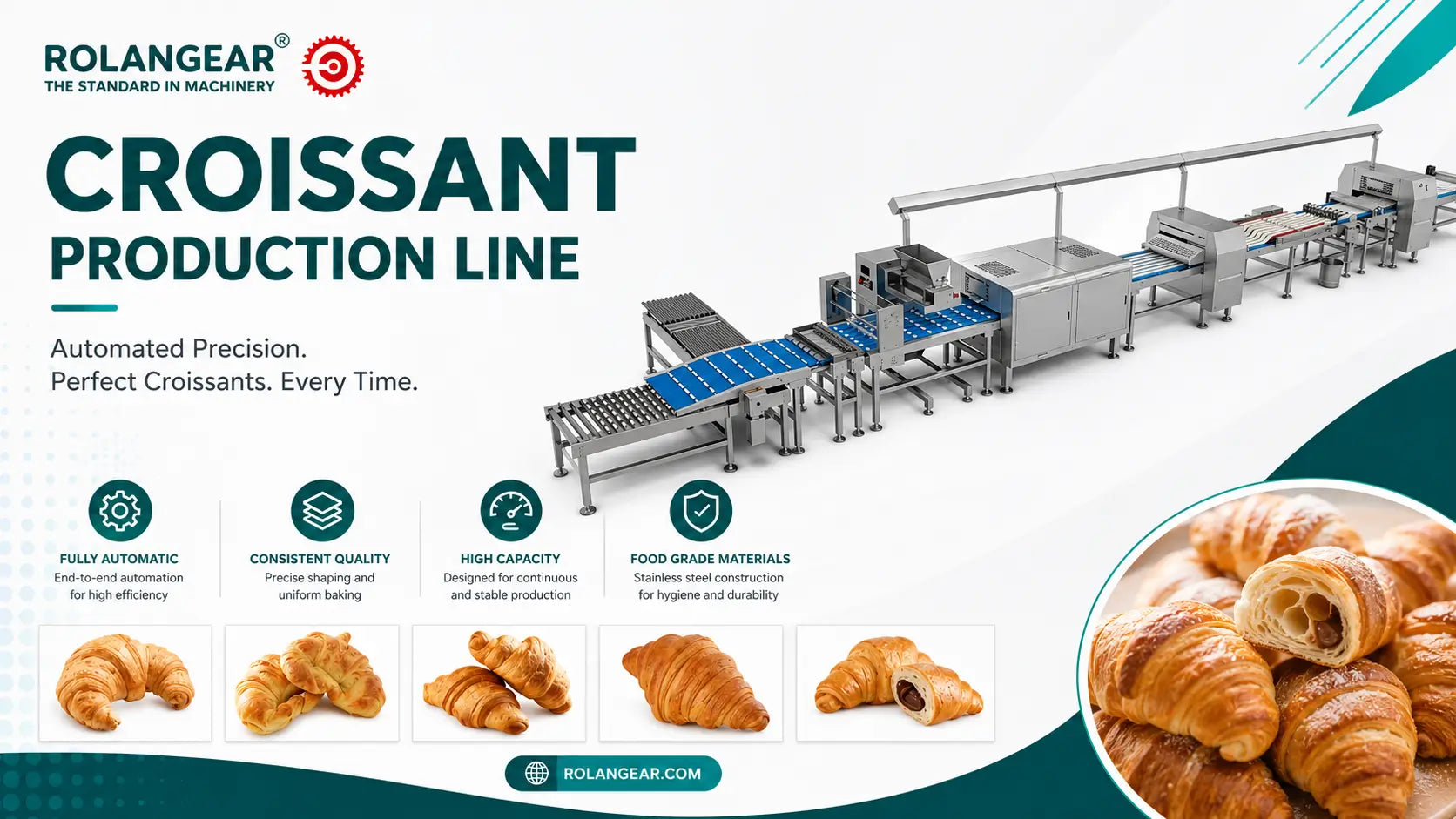
Una línea de producción de croissants es un sistema automatizado o semiautomatizado diseñado para fabricar croissants continuamente desde la materia prima hasta el producto final. Combina equipos de preparación de masa, tecnología de laminación, máquinas formadoras, equipos de procesamiento térmico, transportadores de enfriamiento y soluciones de envasado en un flujo de trabajo coordinado.
La línea se puede configurar para diferentes tipos de productos, incluyendo croissants clásicos de mantequilla, croissants de chocolate, croissants rellenos, mini croissants, croissants congelados sin hornear, croissants precocidos y croissants envasados listos para comer. La configuración final depende de la receta del producto, la capacidad objetivo, el tamaño del producto, los requisitos de relleno, el estilo de envasado, el espacio disponible en la fábrica y las condiciones de los servicios públicos locales.
La característica más importante de la producción de croissants es el laminado. A diferencia del pan común, los croissants requieren muchas capas alternas de masa y mantequilla o margarina. Durante el horneado, la humedad se convierte en vapor y separa estas capas, creando la familiar textura hojaldrada, la estructura interna abierta, la superficie crujiente y la rica sensación en boca. Debido a que este proceso es sensible a la temperatura, la fuerza de la masa, la plasticidad de la mantequilla, el grosor de la lámina y la precisión del plegado, la producción industrial necesita equipos estables y un control cuidadoso del proceso.
02¿Por qué invertir en la producción automática de croissants?


La producción manual de croissants puede crear excelentes productos, pero es difícil de escalar. Los panaderos expertos deben mezclar, reposar, estirar, laminar, cortar, rellenar, dar forma, fermentar y hornear con gran consistencia. A medida que aumenta el volumen de pedidos, la producción manual a menudo enfrenta un peso de producto desigual, una forma inconsistente, altos costos de mano de obra, una producción lenta y dificultad para mantener la calidad estándar en todos los lotes.
Una línea de producción automática de croissants ayuda a resolver estos problemas controlando el grosor de la masa, el tamaño del corte, la cantidad de relleno, la forma de moldeado, el ambiente de fermentación, las condiciones de horneado y la transferencia de producto entre máquinas. Esto permite a las fábricas producir más croissants con menos operaciones manuales y resultados más predecibles.
Las ventajas comerciales son claras. Los fabricantes pueden abastecer supermercados, cadenas de cafeterías, hoteles, restaurantes, tiendas de conveniencia, servicios de catering aéreo y distribuidores de alimentos congelados. También pueden desarrollar una variedad de productos, como croissants de chocolate, crema, natillas, frutas, queso, mini y congelados listos para hornear. Para muchos inversores en panadería, la automatización no es solo la compra de maquinaria; es una forma de construir un sistema de producción repetible y expandirse a canales de venta de mayor valor.
03Proceso completo de fabricación de croissants

Un flujo típico de producción industrial de croissants es:
- 01Preparación de la materia prima
- 02Mezclado de la masa
- 03Reposo de la masa
- 04Laminado
- 05Laminado de mantequilla
- 06Plegado y formación de capas
- 07Corte
- 08Formado o relleno
- 09Fermentación
- 10Horneado o congelación
- 11Enfriamiento
- 12Envasado
- 13Almacenamiento y distribución
Cada paso afecta al siguiente. Si la masa está demasiado caliente, la mantequilla puede derretirse durante el laminado. Si el laminado es irregular, el peso del corte variará. Si la fermentación es inestable, el volumen y la apariencia pueden cambiar. Si el enfriamiento es insuficiente, la condensación puede dañar el envase y acortar la vida útil. Un buen diseño de línea, por lo tanto, se enfoca en el proceso completo, no solo en máquinas individuales.
1. Preparación de la materia prima
La producción de croissants generalmente comienza con harina de trigo, agua, levadura, azúcar, sal, leche en polvo, mantequilla o margarina, huevos y materiales de relleno opcionales. La calidad de la harina afecta la fuerza del gluten, la elasticidad de la masa y la expansión final. La calidad de la mantequilla o margarina afecta el sabor, la separación de capas, el hojaldre y la apariencia. Para la producción industrial, los ingredientes deben pesarse con precisión y prepararse de acuerdo con una receta repetible.
La gestión de la temperatura comienza en esta etapa. La masa de croissant debe permanecer adecuada para el laminado, por lo que la temperatura de la harina, el agua, la grasa y el ambiente del taller deben controlarse. Un control deficiente de los ingredientes puede causar fugas de aceite, masa débil, capas irregulares, textura densa o volumen de producto inestable.
2. Mezclado de la masa
La mezcladora de masa combina los ingredientes en una masa uniforme con suficiente fuerza y flexibilidad para el posterior laminado y plegado. Los puntos clave de control incluyen el tiempo de mezclado, la velocidad de mezclado, la hidratación, la temperatura de la masa y el tamaño del lote. El mezclado excesivo puede hacer que la masa sea demasiado apretada o cálida, mientras que el mezclado insuficiente puede resultar en un desarrollo deficiente del gluten y un bajo rendimiento de laminado.
Para las panaderías en crecimiento, el mezclado de masa automático o industrial mejora el control de la receta, reduce la mano de obra y proporciona una consistencia de masa más estable. Esto es especialmente importante cuando el plan de producción requiere miles de croissants al día.
3. Reposo y fermentación de la masa
Después de mezclar, la masa necesita tiempo para relajarse y desarrollarse. El reposo mejora la elasticidad y facilita el laminado de la masa sin que se rompa. El control de la fermentación también afecta el volumen del producto, la estructura interna, el sabor y la suavidad final.
La producción profesional normalmente controla el tiempo de reposo, la temperatura, la humedad y el método de manipulación de la masa. Una masa poco fermentada puede crear productos pequeños y densos. Una masa sobrefermentada puede volverse débil, pegajosa, difícil de laminar o inestable durante el formado. La condición correcta debe ajustarse según la receta y el entorno de la fábrica.
4. Laminado y hojaldrado
El laminado reduce los bloques de masa en láminas de masa suaves y uniformes. La laminadora controla la separación de los rodillos, la velocidad del transportador, el ancho de la lámina y la reducción del grosor. Un laminado estable es esencial porque el grosor de la masa afecta el tamaño final del producto, la distribución de la mantequilla, el número de capas y el resultado del horneado.
El hojaldrado es la tecnología central de la producción de croissants. La mantequilla o margarina se inserta entre las capas de masa, luego la masa se pliega y se enrolla para multiplicar las capas. Un buen hojaldrado crea una distribución uniforme de la mantequilla, una estructura de capas clara, un volumen atractivo y una textura hojaldrada después de hornear. Un hojaldrado deficiente puede causar capas rotas, fugas de mantequilla, forma irregular o calidad inconsistente del producto.
5. Corte, relleno y formado
Después del laminado, la lámina de masa entra en la sección de corte. El sistema de corte forma piezas triangulares precisas u otras formas según el diseño del producto. Los puntos de control importantes incluyen el tamaño del corte, el peso de la masa, el desperdicio de recortes, el estado de la cuchilla, la velocidad de la línea y la alineación con la máquina formadora.
La máquina formadora enrolla los triángulos de masa para darles forma de croissant. Para los croissants rellenos, un sistema de relleno automático puede depositar chocolate, crema, natillas, mermelada de frutas, queso u otros rellenos antes o durante el formado. La precisión del relleno es importante porque demasiado relleno puede filtrarse durante el horneado, mientras que muy poco relleno reduce el valor del producto y la satisfacción del consumidor.
El formado automático mejora la consistencia de la apariencia y reduce la dependencia de trabajadores manuales altamente calificados. Esto ayuda a las fábricas a cumplir grandes pedidos donde cada producto debe verse similar en el estante o en el empaque de servicios de alimentos.
6. Fermentación
La fermentación permite que la levadura continúe fermentando después de dar forma a la masa. Una cámara de fermentación controla la temperatura, la humedad, la circulación del aire y el tiempo de permanencia. Una fermentación correcta produce un mejor volumen, una textura más suave y una apariencia más atractiva.
Si la fermentación es demasiado corta, los croissants pueden ser densos y pequeños. Si la fermentación es demasiado larga, la estructura puede debilitarse y la forma puede colapsar. Debido a que los croissants contienen capas de grasa laminada, las condiciones de fermentación deben ser estables y no demasiado agresivas. La sección de fermentación también debe coincidir con la capacidad de la línea para que los productos pasen sin problemas al horneado o la congelación sin esperar demasiado tiempo.
7. Horneado, congelación, enfriamiento y envasado
Para productos frescos o listos para comer, los croissants formados y fermentados entran en un horno industrial. Los hornos de túnel se utilizan comúnmente para la producción continua porque pueden proporcionar zonas de temperatura estables, tiempo de horneado controlado y calentamiento uniforme. El horneado determina el color, la corteza, la estructura interna, el aroma y la humedad final.
Para la producción de croissants congelados, la línea puede incluir equipos de congelación en lugar de un horneado completo, dependiendo de si el producto está crudo, precocido o listo para comer. Los productos congelados requieren una cuidadosa planificación de la cadena de frío, un envasado adecuado y condiciones de almacenamiento.
Después de hornear, los croissants deben enfriarse antes de envasar. Envasar productos calientes puede causar condensación, textura blanda, riesgo de moho y una vida útil corta. Los transportadores de enfriamiento ayudan a reducir la temperatura del producto gradualmente mientras mantienen el flujo de la línea continuo. El envasado puede incluir paquetes individuales, paquetes de varias piezas, bandejas, bolsas, cajas o envasado de productos congelados, según el canal de ventas.
04Equipo principal en una línea de producción de croissants

| Equipo | Función principal | Puntos clave de selección |
|---|---|---|
| Mezcladora de masa | Combina los ingredientes en una masa uniforme | Tamaño del lote, velocidad de mezclado, control de temperatura, método de descarga |
| Sistema de reposo | Permite la relajación y fermentación de la masa | Tiempo, humedad, temperatura, método de manipulación de la masa |
| Laminadora de masa | Extiende la masa en láminas controladas | Espacio entre rodillos, ancho de la lámina, precisión del grosor, velocidad del transportador |
| Sistema de laminado | Inserta mantequilla/grasa y crea capas | Distribución de mantequilla, método de plegado, consistencia de las capas, control de temperatura |
| Máquina de corte | Corta la masa laminada en piezas precisas | Tamaño del producto, control de peso, diseño de la cuchilla, desperdicio de recortes |
| Formadora de croissants | Enrolla y da forma a las piezas de masa | Consistencia de la forma, velocidad, gama de productos, tiempo de cambio |
| Sistema de relleno | Deposita el relleno para productos de valor añadido | Tipo de relleno, precisión de la dosificación, diseño higiénico, control de fugas |
| Cámara de fermentación | Controla la fermentación antes de hornear | Temperatura, humedad, flujo de aire, tiempo de permanencia, coincidencia de capacidad |
| Horno de túnel | Hornea productos continuamente | Método de calentamiento, zonas de temperatura, ancho de la cinta, fuente de energía |
| Transportador de enfriamiento | Reduce la temperatura del producto antes del envasado | Longitud, flujo de aire, diseño higiénico, velocidad de la línea |
| Máquina de envasado | Envasa productos para venta al por menor, servicios de alimentos o distribución congelada | Estilo de envase, tipo de película, velocidad, etiquetado, requisitos de cajas |
La lista final de equipos debe confirmarse según el tipo de producto. Una simple línea de cruasanes de mantequilla fresca puede no necesitar equipo de relleno o congelación, mientras que una fábrica de cruasanes rellenos congelados puede requerir módulos adicionales de relleno, congelación, almacenamiento en frío y embalaje especial.
05Producción de cruasanes frescos vs. congelados

La producción de cruasanes frescos es adecuada para panaderías, cafeterías, hoteles, supermercados y distribución diaria local. Las principales ventajas son la frescura premium, una fuerte experiencia del consumidor y una rápida rotación minorista. Sin embargo, los productos frescos suelen tener una vida útil más corta y requieren canales de venta locales fiables.
La producción de cruasanes congelados es adecuada para redes de distribución más grandes, mercados de exportación, cadenas de supermercados, restaurantes y proveedores de servicios de alimentos. Los cruasanes congelados sin hornear o parcialmente horneados permiten a los clientes terminar de hornear cerca del punto de venta, creando una experiencia de recién horneado sin instalaciones de producción completas. Este modelo puede ampliar el alcance del mercado y reducir el desperdicio, pero requiere equipo de congelación, almacenamiento en frío, logística de cadena de frío y embalaje diseñado para la manipulación a bajas temperaturas.
Muchos fabricantes eligen una línea flexible que puede soportar ambas estrategias comerciales, tanto de productos frescos como congelados. Esto debe discutirse durante la planificación del proyecto porque los requisitos de horneado, congelación, enfriamiento y envasado pueden ser diferentes.
06Selección de capacidad y factores de costo
La elección de la capacidad es una de las decisiones más importantes al planificar una fábrica de cruasanes. Una línea pequeña puede ser adecuada para nuevas marcas de panadería, proveedores regionales o empresas que prueban el mercado. Una línea mediana puede soportar el suministro a supermercados, pedidos de servicios de alimentos y distribución regional. Una línea grande es más adecuada para fabricantes de exportación, marcas nacionales de panadería y grandes grupos alimentarios.
La capacidad no debe seleccionarse solo por la producción más alta posible. Los inversores deben considerar el volumen de ventas objetivo, el tamaño del producto, los turnos de trabajo, la velocidad de envasado, la capacidad del horno, el tiempo de enfriamiento, el plan de mano de obra, el espacio disponible y la expansión futura. Si una sección es demasiado pequeña, se convierte en un cuello de botella. Por ejemplo, una máquina formadora rápida no puede ofrecer todo su beneficio si el horno, el transportador de enfriamiento o la máquina de envasado no pueden seguir el ritmo.
El costo de una línea de producción de cruasanes depende de varios factores:
- Capacidad de producción y horas de funcionamiento
- Nivel de automatización y sistema de control
- Número de tipos de producto y rangos de tamaño
- Si se requiere relleno, congelación o embalaje especial
- Tipo de horno, método de calentamiento y fuente de energía
- Requisitos de acero inoxidable y diseño higiénico
- Diseño de fábrica, instalación, servicios públicos y soporte de puesta en marcha
- Repuestos, capacitación del operador y servicio posventa
Dado que cada proyecto es diferente, una cotización precisa debe basarse en la especificación del producto del comprador, la capacidad objetivo, el diseño de la fábrica, las condiciones de los servicios públicos y el plan de embalaje. Un paquete de máquinas de bajo costo puede parecer atractivo al principio, pero una configuración inadecuada puede generar mayores desperdicios, calidad inestable y retrasos en la producción más adelante.
07Distribución de fábrica y requisitos de servicios públicos

Un diseño práctico de fábrica de cruasanes debe soportar un flujo de material suave y unidireccional:
- 01Almacén de materia prima
- 02Área de mezcla
- 03Área de reposo de la masa
- 04Área de laminado y estirado
- 05Área de corte y formado
- 06Cámara de fermentación
- 07Área de horneado o congelación
- 08Área de enfriamiento
- 09Área de envasado
- 10Almacén de producto terminado
Esta disposición reduce movimientos innecesarios, mejora el control de la higiene y facilita la gestión de la producción. El diseño debe separar la manipulación de la materia prima de las áreas de producto terminado siempre que sea posible. También debe reservar espacio para el acceso de mantenimiento, el movimiento del operador, el almacenamiento de ingredientes, los materiales de envasado, los productos terminados y la expansión futura.
Los servicios públicos deben confirmarse antes de pedir el equipo. Los elementos importantes pueden incluir el suministro de energía, aire comprimido, agua, drenaje, ventilación, gas o electricidad para hornos, control de vapor o humedad para la fermentación, aire acondicionado para áreas de laminación y almacenamiento en frío para productos congelados. Dado que la masa de cruasán y la mantequilla son sensibles a la temperatura, el control climático del taller puede ser muy importante para una laminación estable y la calidad del producto.
08Control de calidad, limpieza y mantenimiento
El control de calidad debe integrarse en cada etapa de la producción. Los puntos de control importantes incluyen el pesaje de ingredientes, la temperatura de la masa, la elasticidad de la masa, el grosor de la lámina, la distribución de la mantequilla, el peso del corte, la forma, la cantidad de relleno, la condición de fermentación, el color del horneado, la textura interna, la temperatura de enfriamiento, el sellado del paquete y la apariencia final.
La limpieza y el mantenimiento también son esenciales. Las piezas en contacto con alimentos deben ser fáciles de limpiar. Los residuos de masa, el polvo de harina, el aceite y los materiales de relleno deben eliminarse regularmente para mantener la higiene y prevenir problemas mecánicos. El mantenimiento preventivo debe cubrir correas, rodillos, cuchillas, rodamientos, cadenas, sensores, componentes del horno, sistemas de humedad de fermentación y piezas de sellado del embalaje.
Un buen plan de repuestos reduce el tiempo de inactividad. Los compradores deben confirmar las piezas de desgaste, los repuestos recomendados, el programa de mantenimiento, la capacitación del operador y el soporte técnico antes de finalizar el pedido.
09Errores comunes de planificación a evitar

Muchos proyectos de cruasanes enfrentan problemas porque la línea de producción se selecciona antes de que el comprador haya confirmado el producto real y el plan de mercado. Un error común es elegir la capacidad solo por la velocidad de la máquina. Una línea debe estar equilibrada desde la mezcla hasta el envasado. Si el horno, el transportador de enfriamiento o la máquina de envasado son más lentos que la sección de formado, la fábrica seguirá perdiendo eficiencia.
Otro error es ignorar la temperatura de laminación. La calidad del cruasán depende de una relación estable entre la masa y la mantequilla. Si el taller está demasiado caliente, la grasa puede ablandarse demasiado rápido y dañar la separación de capas. Si la masa está demasiado fría o demasiado apretada, puede romperse durante el estirado. Por esta razón, el ambiente de la fábrica, la temperatura de los ingredientes y el proceso de reposo de la masa deben considerarse junto con la configuración de la máquina.
Los compradores también deben evitar tratar los productos frescos y congelados como el mismo proyecto. Los cruasanes congelados pueden requerir capacidad de congelación, almacenamiento en frío, un embalaje más resistente, distribución en cadena de frío y una programación de producción diferente. Estos requisitos deben incluirse en la etapa de cotización, no agregarse después de la instalación.
Finalmente, no se debe pasar por alto la capacitación del operador y el acceso para el mantenimiento. Incluso una línea automática necesita operadores capacitados que comprendan el control de la receta, la velocidad de la línea, la limpieza, el reemplazo de cuchillas, el seguimiento de la correa, el ajuste de la fermentación y los controles de envasado. Un plan de proyecto práctico debe incluir pruebas de puesta en marcha, capacitación, repuestos y una comunicación clara con el proveedor del equipo.
10Cómo elegir al proveedor adecuado
Una línea de producción de cruasanes es un proyecto de ingeniería completo, no solo un conjunto de máquinas. El proveedor debe comprender el flujo del proceso de panadería, el laminado de masa, los requisitos de formado, la fermentación, el horneado, la congelación, el envasado y la planificación de la fábrica. Antes de elegir una solución, prepare información clara sobre su tipo de producto, peso del producto, capacidad objetivo, dirección de la receta, estrategia de producto fresco o congelado, formato de envasado, dimensiones de la fábrica, condiciones de los servicios públicos y rango de presupuesto.
Un proveedor profesional debe ayudar a confirmar la configuración del equipo, la disposición de la línea, la coincidencia de capacidad, los requisitos de instalación y las opciones de personalización. Rolangear ofrece soluciones completas de producción de cruasanes, que incluyen consultoría de proyectos, configuración de equipos, sugerencias de diseño de fábrica, soporte de instalación, orientación de puesta en marcha y servicio técnico a largo plazo. Para los fabricantes que planifican una nueva fábrica de cruasanes o mejoran una línea de panadería existente, una planificación personalizada ayuda a reducir el riesgo y mejorar la eficiencia de la producción.
11Preguntas frecuentes
¿Qué productos puede fabricar una línea de producción de cruasanes?
Una línea de producción de cruasanes puede producir cruasanes clásicos de mantequilla, cruasanes de chocolate, cruasanes rellenos de crema, cruasanes rellenos de frutas, cruasanes de queso, mini cruasanes, cruasanes congelados sin hornear, cruasanes parcialmente horneados y cruasanes envasados listos para consumir, según la configuración del equipo.
¿Puede una línea producir diferentes tamaños de cruasanes?
Sí, muchas líneas pueden producir diferentes tamaños cambiando los parámetros de corte, la configuración de formado, los moldes o las recetas de los productos. La flexibilidad exacta depende del diseño de la máquina, la gama de productos y los requisitos de cambio.
¿Cuánto cuesta una línea automática de producción de cruasanes?
El costo depende de la capacidad, el nivel de automatización, la configuración del equipo, el tipo de producto, el sistema de horneado o congelación, los requisitos de envasado, las necesidades de instalación y las condiciones de la fábrica. Se recomienda una cotización personalizada porque cada proyecto tiene requisitos diferentes.
¿Qué capacidad debo elegir?
Elija la capacidad según sus canales de venta, volumen de pedidos diarios, peso del producto, número de turnos, espacio de fábrica, presupuesto y plan de expansión futura. La mezcladora, laminadora, máquina formadora, horno, transportador de enfriamiento y sistema de envasado deben estar equilibrados para evitar cuellos de botella.
¿Es la producción de cruasanes congelados una buena opción de negocio?
Los cruasanes congelados pueden ser atractivos para supermercados, restaurantes, cafeterías, hoteles y distribución de exportación porque extienden la vida útil y permiten el horneado final cerca del cliente. Sin embargo, el proyecto debe incluir equipos de congelación, embalaje adecuado, almacenamiento en frío y logística de cadena de frío.
¿Qué información debo proporcionar antes de solicitar una cotización?
Prepare su tipo de producto objetivo, peso o tamaño del producto, capacidad deseada, plan de producción fresco o congelado, requisitos de relleno, estilo de embalaje, diseño de la fábrica, suministro de energía, preferencia de energía del horno y cualquier requisito especial de higiene o automatización.
12Conclusión
Una línea de producción profesional de cruasanes transforma la producción tradicional de pastelería en un sistema de fabricación industrial estable. Al conectar la mezcla de masa, el reposo, el estirado, el laminado, el corte, el formado, la fermentación, el horneado o la congelación, el enfriamiento y el envasado, los fabricantes pueden mejorar la capacidad, la consistencia del producto, la eficiencia laboral y la competitividad del mercado.
La mejor solución depende de su gama de productos, producción objetivo, condiciones de fábrica, método de embalaje y estrategia comercial. Si está planificando una nueva fábrica de cruasanes o actualizando una operación de panadería existente, Rolangear puede ayudar a diseñar una línea de producción de cruasanes personalizada basada en sus objetivos de producción y las condiciones de fábrica disponibles. Contacte a Rolangear para discutir su proyecto y solicitar una solución de procesamiento de cruasanes adecuada.