
Línea de producción de jabón de tocador
El precio indicado es solo un depósito . El precio final puede variar según sus requisitos y opciones. Contáctenos para obtener una cotización personalizada. 40 mini
Tenga en cuenta que el precio indicado es solo un depósito. El precio final de la máquina puede variar según sus requisitos específicos, configuraciones y características opcionales. Una vez que recibamos sus necesidades detalladas, le proporcionaremos un presupuesto completo. No dude en contactarnos para obtener una oferta personalizada.
Contáctanos para los catálogos de productos no subidos
Compra directa: (7-10 días)
Personalizar: (8-12 días)
Línea de producción de jabón de tocador para la fabricación comercial de jabón
Construya una fábrica profesional de jabón de tocador con una línea integrada para mezcla, refinado en tres rodillos, extrusión al vacío, corte electrónico, estampado automático, enfriamiento y transporte.

Solución automática completa
La línea de producción de jabón de tocador RG-SP1000S de Rolangear está diseñada para convertir materiales de jabón preparados en barras de jabón de tocador estampadas terminadas a través de un sistema de producción coordinado.
La línea utiliza fideos de jabón como material principal, junto con pigmento y fragancia. Admite dimensiones de jabón, peso y patrones de superficie personalizados según los requisitos del cliente.
La mezcla, el refinado, la extrusión, el corte, el estampado, el enfriamiento y el transporte se planifican como una única línea de producción.
El tamaño, el peso y el patrón del molde del jabón se pueden discutir según las necesidades del mercado o de la marca privada.

Productos que puede producir

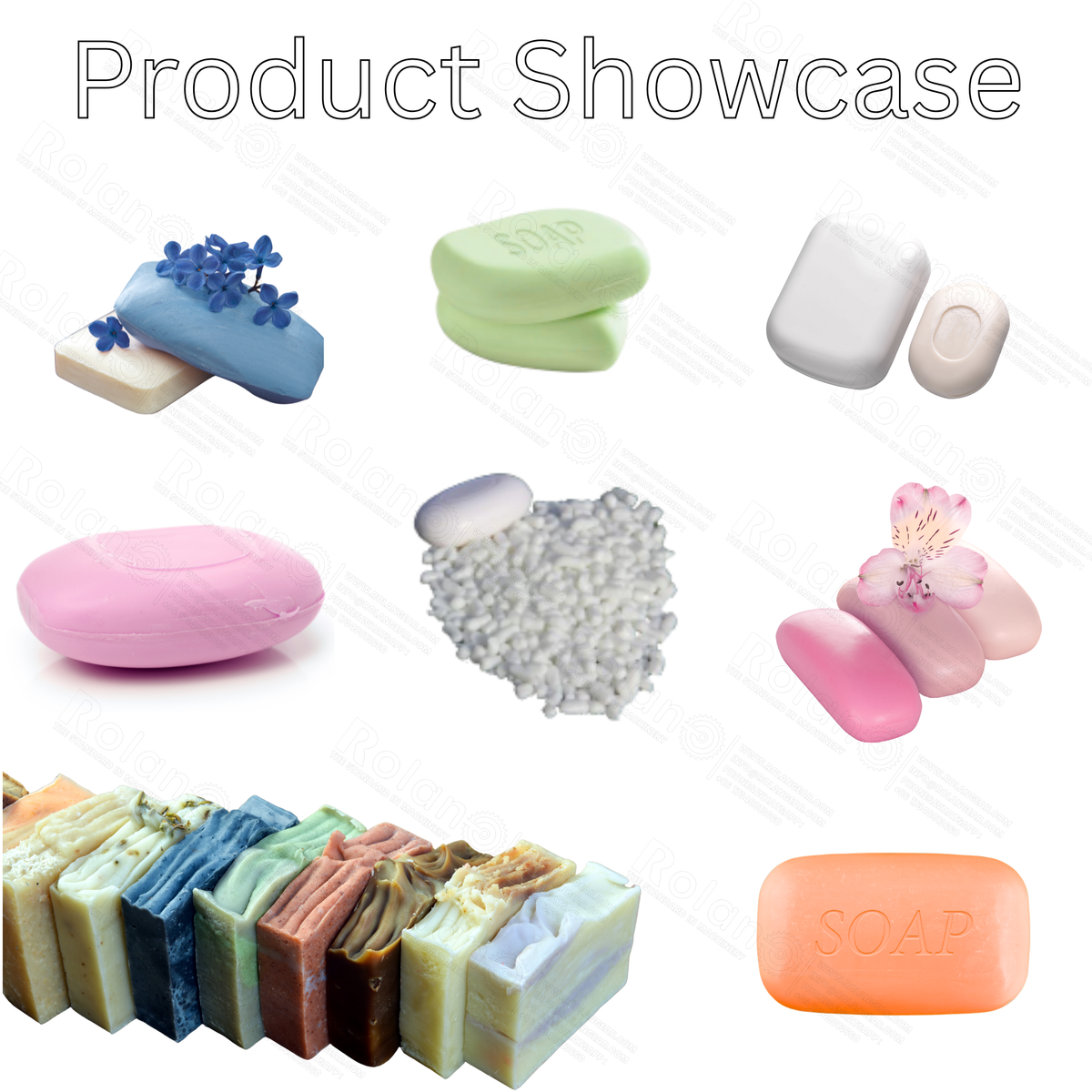
El producto principal es jabón de tocador fabricado a partir de fideos de jabón, pigmento y fragancia. La especificación de origen indica un contenido de ácidos grasos/contenido de materia activa del 60 % al 80 % para el jabón de tocador terminado.
Diferentes mercados pueden requerir diferentes dimensiones de barra. El sistema de corte se puede ajustar por tamaño y peso del producto.
El molde de estampado se puede seleccionar de acuerdo con el patrón de superficie de jabón o el diseño de marca requerido.
La máquina de estampado XDA-1500 está especificada con tres cavidades para productos de 70 a 200 g.
Adecuado para fabricantes que desarrollan marcas minoristas, suministro OEM, productos de hostelería o barras de jabón de marca privada.
Proceso completo de producción de jabón de tocador
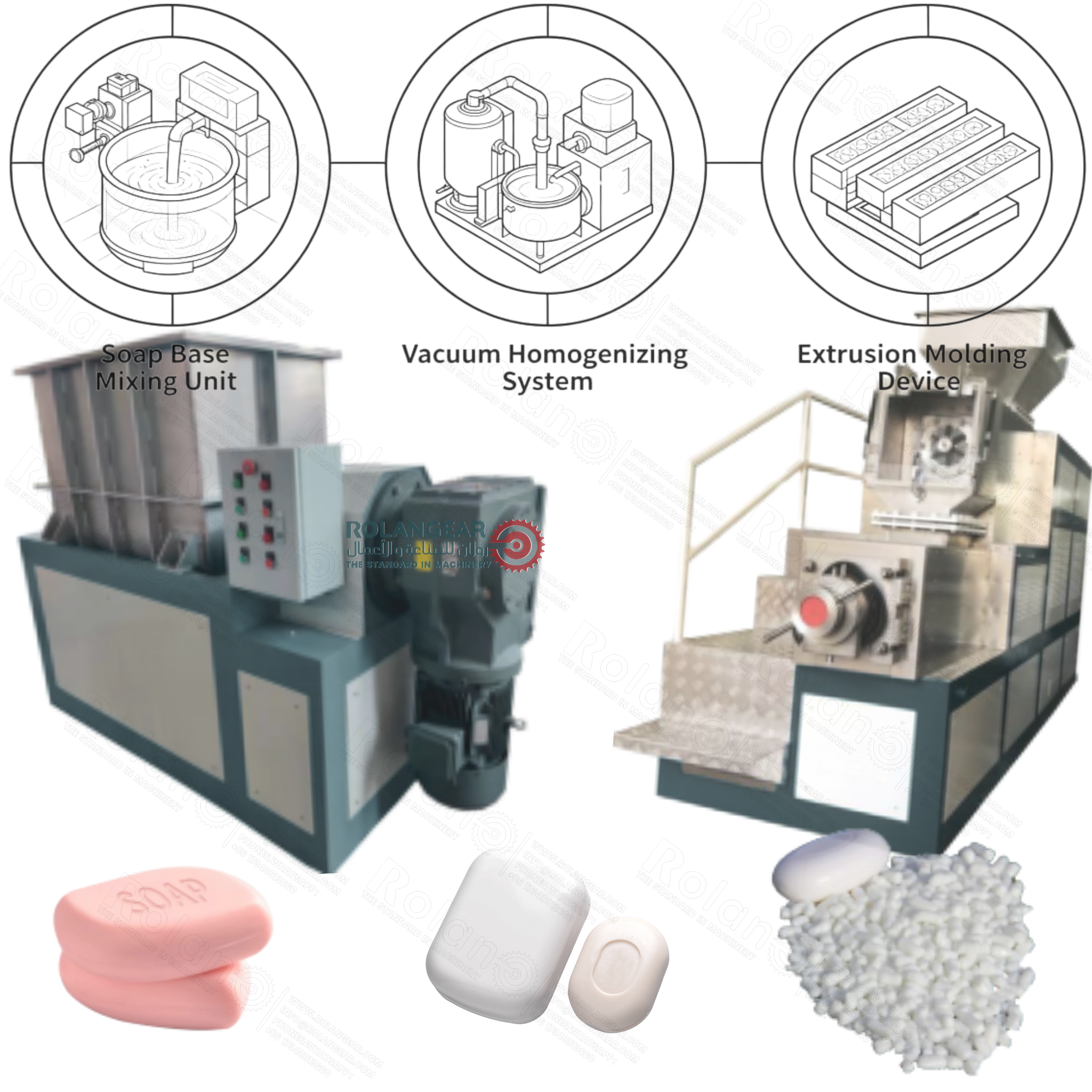
El proceso de producción se puede resumir como: mezclar materiales, molerlos en hojuelas de jabón, extruir la barra de jabón y luego cortar y estampar los jabones terminados.
Un sistema completo debe mantener un flujo de material estable desde el mezclador hasta la sección final de estampado y transporte.

Diagrama de flujo del proceso de jabón de tocador, desde la preparación del material hasta la manipulación final de la barra de jabón.
Ventajas técnicas
La capacidad de 1.000 a 1.500 kg/h soporta la fabricación de jabón de tocador a escala comercial.
Las piezas relevantes del mezclador y la extrusora al vacío que entran en contacto con el material son de acero inoxidable 304.
El sistema de vacío elimina el aire del material del jabón para ayudar a reducir la rotura y favorecer la creación de barras compactas.
El tamaño y el peso del jabón se pueden ajustar a través del control de la máquina según los requisitos del cliente.
La máquina de estampado XDA-1500 utiliza control PLC y sistema servo Yaskawa para una formación de jabón eficiente.
El refrigerador enfría el molde del jabón, mientras que el enfriador soporta el agua circulante para las máquinas clave.
Especificaciones técnicas
| Artículo | Especificación | Notas |
|---|---|---|
| Modelo de línea | RG-SP1000S | Línea completa de producción de jabón de tocador |
| Capacidad | 1.000–1.500 kg/h | Capacidad de producción estándar |
| Materiales principales | Fideos de jabón, pigmento, fragancia | Fórmula a confirmar por el cliente |
| Producto terminado | Barras de jabón de tocador | Dimensiones y patrón personalizables |
| Materia activa / Contenido de ácidos grasos | 60%–80% | Según la información del producto suministrada |
| Referencia del taller | Superior a 125 m²; aproximadamente 25 m × 5 m × 3,5 m | Excluye máquina de envasado |
| Condición de energía | >160 kW, 380 V, 50 Hz | La carga útil final debe confirmarse |
| Operadores | Aproximadamente 6–8 personas | Reconfirmar según la configuración final |
Configuración completa de la línea de producción
Esta sección destaca los módulos de equipo importantes y las funciones orientadas al cliente que se utilizan para construir una línea completa de fabricación de jabón de tocador.

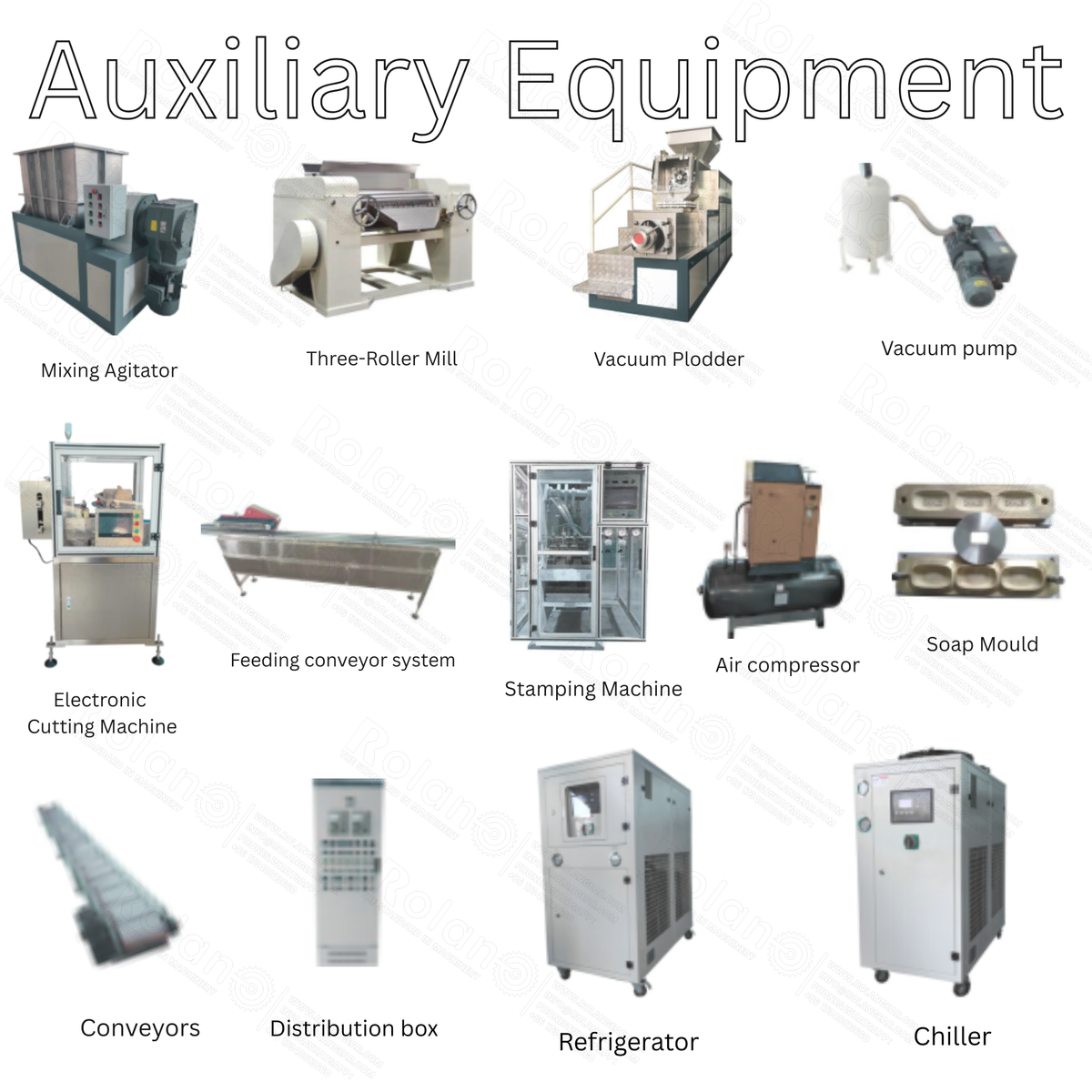
Agitador mezclador RG-200S
- 200 kg/lote
- Tiempo de mezcla de 5 a 10 minutos
- Mezclador de media espiral de 15 kW
- Piezas en contacto con el material de acero inoxidable 304
Molino de tres rodillos SG405
- Diámetro del rodillo de 405 mm
- Longitud del rodillo de 810 mm
- Potencia del motor de 22 kW
- Soporta una estructura de jabón más compacta
Máquina estampadora XDA-1500
- 50–70 veces/min
- 3 cavidades para productos de 70–200 g
- PLC + sistema servo Yaskawa
- Patrón de molde de jabón intercambiable
Sistemas de refrigeración
- Refrigerador para el enfriamiento del molde de jabón
- Enfriador para agua circulante
- Permite una liberación suave y un funcionamiento estable
Diseño de la fábrica y requisitos de servicios
El área de taller recomendada es superior a 125 m², con un tamaño de referencia de aproximadamente 25 m de largo, 5 m de ancho y 3,5 m de alto. Esto incluye el espacio de operación y excluye la máquina de empaque.
Flujo sugerido: área de materia prima → mezcla → refinado en tres rodillos → extrusión al vacío → corte → estampado → enfriamiento → empaque → almacenamiento de producto terminado.
Superior a 160 kW, 380 V, 50 Hz según la condición de producción suministrada.
Reserve espacio adicional para la máquina de embalaje y la manipulación del producto terminado.

Factores de inversión
Una inversión en una fábrica de jabón de tocador incluye más que la maquinaria de producción. Los clientes deben evaluar la capacidad objetivo, las especificaciones del producto, las materias primas, la preparación del taller, los servicios públicos, el sistema de envasado, los moldes, el sistema de refrigeración, las piezas de repuesto y el soporte técnico.
Confirme si 1.000–1.500 kg/h se ajusta a su mercado y plan de producción diario.
Confirme el tamaño, peso, patrón y posicionamiento del jabón antes de la cotización final.
Verifique el tamaño del taller, la energía eléctrica, la ubicación de la refrigeración, el acceso del operador y el flujo de materiales.
El embalaje se planifica por separado según el producto terminado del cliente y el canal de ventas.
¿Por qué invertir en una línea de producción de jabón de tocador?

El jabón de tocador es un producto de cuidado personal de uso diario en los mercados minorista, hotelero, de suministro institucional, OEM y de marca privada. Una línea de producción completa ayuda a los fabricantes a convertir los fideos de jabón en un producto comercial escalable.
Una línea de 1.000–1.500 kg/h proporciona una plataforma de producción sustancial para el suministro al mercado establecido.
El tamaño, peso y patrón de producto ajustables admiten pedidos de marca privada y personalizados.
Los transportadores y los sistemas automáticos conectan las etapas clave de fabricación.
El refinado, la extrusión al vacío, el corte de precisión, el estampado y el enfriamiento garantizan una formación de jabón estable.
Preguntas frecuentes
¿Qué material utiliza la línea de producción de jabón de tocador?
La configuración suministrada utiliza fideos de jabón, junto con pigmento y fragancia.
¿Cuál es la capacidad de la línea RG-SP1000S?
La capacidad declarada es de 1.000–1.500 kg/h.
¿Se pueden cambiar el peso y el patrón del jabón?
Sí. El tamaño, el peso y el patrón del molde del jabón se pueden planificar según los requisitos del cliente.
¿Cuál es la función del molino de tres rodillos?
Mezcla y refina aún más el material del jabón, ayudando a que la estructura del jabón sea más compacta y favoreciendo la densidad y la calidad.
¿Qué hace la extrusora al vacío?
Muele, refina, elimina el aire y prensa el material del jabón en una barra de jabón continua y compacta.
¿El embalaje está incluido?
Las dimensiones del taller suministradas excluyen la máquina de envasado, por lo que el envasado debe planificarse como una sección posterior separada.
Construya su fábrica de jabón de tocador con Rolangear
Envíenos el tamaño de su jabón, el peso del producto, el patrón, la capacidad objetivo, las condiciones de la fábrica y los requisitos de embalaje. Rolangear puede ayudar a evaluar la configuración del equipo y preparar una solución completa de fabricación de jabón de tocador.
Elige opciones
¿Está listo para automatizar su Línea de producción de jabón de tocador ?
Comuníquese con Rolangear Machinery hoy para obtener una cotización, opciones de personalización o una consulta gratuita.
