Estudio de viabilidad para una fábrica de papel de seda
Estudio de viabilidad para una fábrica de papel tisú
Estudio de viabilidad profesional para una fábrica de conversión de papel tisú de pequeña a mediana escala que produce pañuelos faciales, rollos de papel higiénico, servilletas, toallas de cocina y paquetes de tisú de marca blanca. Dado que no se suministró información sobre país, ciudad, precio de la materia prima, tarifa de servicios, estado del edificio o cotización de proveedores, este informe utiliza supuestos de planificación transparentes en USD que deben ser localizados antes de la aprobación de la inversión.
Mapa del estudio
1. Resumen ejecutivo
El proyecto es una fábrica de conversión de papel tisú que compra rollos jumbo de papel tisú y los convierte en cajas de pañuelos faciales, rollos de papel higiénico, servilletas, toallas de cocina y paquetes de tisú de marca blanca. El caso base asume una producción nominal de conversión de 600 kg/hora, una eficiencia operativa del 80%, 10 horas/día, 300 días operativos/año y un rendimiento de planificación vendible del 100% después de la recuperación normal de residuos, lo que da como resultado 1.440 toneladas/año de productos de tisú terminados vendibles.

Utilizando un precio de venta promedio en fábrica de USD 2.500/tonelada, un costo variable de USD 1.650/tonelada y una inversión total de $1.43 millones, los ingresos del año 5 alcanzan los $3.24 millones y la utilidad neta del año 5 asciende a $444.778. El VNA base es de $61.378 con una tasa de descuento del 12%, la TIR estimada es del 13.5% y la utilización de equilibrio es del 39.6%.
2. Alcance y metodología del estudio
Este estudio cubre el alcance completo del informe de inversión: mercado, técnico, operativo, personal, inversión, financiación, ingresos, estados financieros, indicadores, punto de equilibrio, sensibilidad, legal, EHS, riesgo, implementación, fuentes, consulta y recomendación final. Los indicadores del Banco Mundial respaldan el contexto macro y de localización de la demanda [1][2]. El Capítulo 48 del SA respalda las salvedades de clasificación del comercio de papel/tisú [3]. Las normas ISO para papel tisú, el contexto de la EPA para pulpa y papel, la guía de la OSHA para la protección de máquinas de papel y la política de residuos de la UE proporcionan referencias de normas, medio ambiente y seguridad [4][5][6][7].
3. Concepto y naturaleza del proyecto
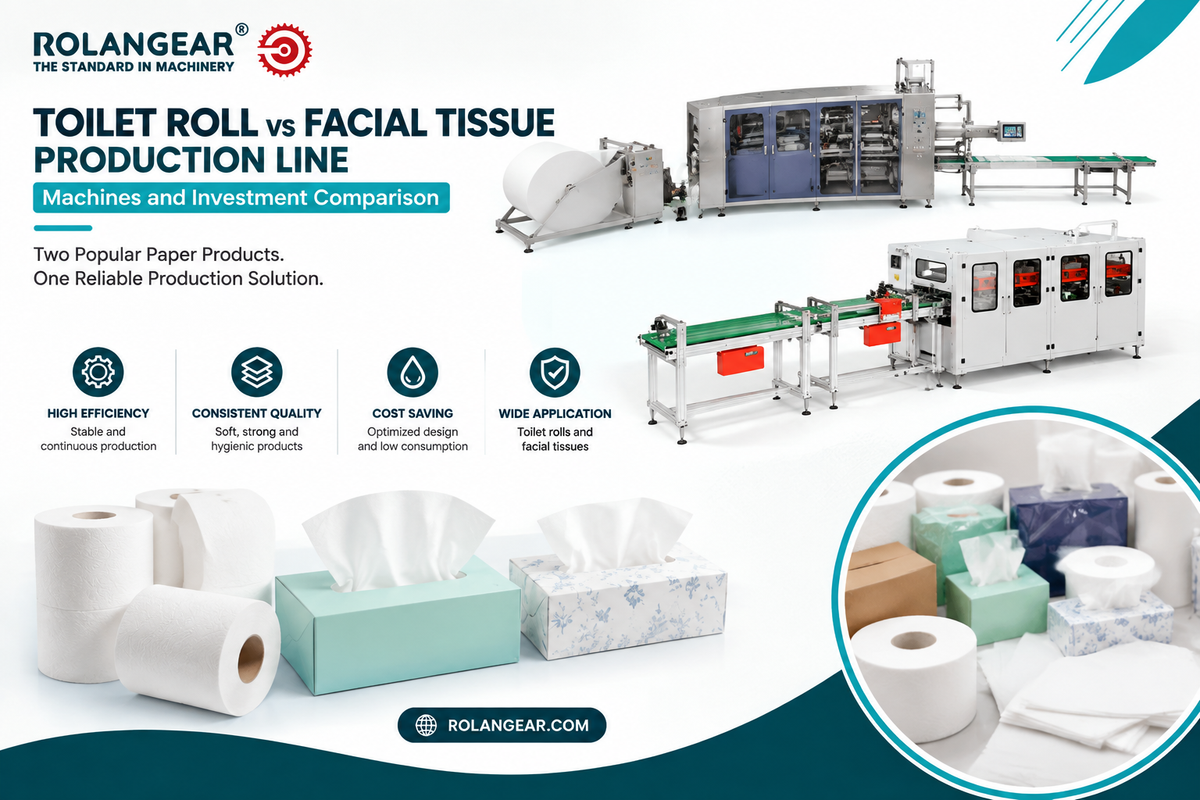
El proyecto es una fábrica de conversión de papel higiénico, no una planta integrada de pulpa y papel. La planta compra rollos madre a fábricas de tisú o importadores, y luego estampa, rebobina, pliega, corta, interfolia, empaca y encartona productos de tisú terminados. El modelo de negocio puede combinar el suministro mayorista local, la marca blanca minorista, el suministro institucional/HORECA y las ventas a distribuidores.
4. Análisis del producto y tabla de especificaciones del producto

Las especificaciones principales del producto incluyen el grado de tisú, el número de capas, el gramaje, el tamaño de la hoja, la longitud del rollo, el patrón de grabado, la suavidad, la absorbencia, el empaque en caja o película y la cantidad por caja. Las afirmaciones de higiene y cumplimiento del producto no deben hacerse hasta que se verifiquen la materia prima, las condiciones de producción y las normas locales.
| Producto | Especificación típica | Canal objetivo | Notas de calidad |
|---|---|---|---|
| Cajas de pañuelos faciales | 2 capas, 100–200 hojas/caja | Minoristas, oficinas, hoteles | Suavidad, control de polvo, resistencia de la caja |
| Rollos de papel higiénico | 1–3 capas, múltiples longitudes de rollo | Minoristas y distribuidores | Resistencia de la hoja, perforación, firmeza de bobinado |
| Servilletas | 1–2 capas, pliegue en cuarto o dispensador | Restaurantes, cafeterías, catering | Precisión del pliegue y cantidad por paquete |
| Toallas de cocina | Rollos absorbentes de 2 capas | Minoristas y hogares | Absorbencia y consistencia del rollo |
| Paquetes de tisú de marca blanca | Paquetes y cajas específicos del comprador | Supermercados y distribuidores | Diseño, código de barras, caja y aprobación de control de calidad |
5. Indicadores económicos y ubicación del proyecto
La demanda de tisú está ligada a la población, el ingreso familiar, el desarrollo minorista, el turismo, los hoteles, los restaurantes, las escuelas, la atención médica y el consumo en el lugar de trabajo. Los indicadores de población y fabricación del Banco Mundial deben utilizarse al localizar el estudio [1][2]. La ubicación debe priorizar una zonificación industrial limpia, acceso a rollos jumbo y proveedores de empaques, rutas de distribución minorista, confiabilidad energética y espacio de almacenamiento higiénico.
| Factor | Peso | Condición preferida | Efecto |
|---|---|---|---|
| Suministro y logística de rollos jumbo | 24% | Cerca de fábricas de papel, importadores o puertos | Controla el costo de la materia prima y el riesgo de existencias |
| Edificio industrial limpio | 18% | Espacio controlado contra el polvo, seco y controlado contra plagas | Protege la higiene y la calidad |
| Densidad de rutas de clientes | 17% | Cerca de minoristas, mayoristas, hoteles e instituciones | Mejora la economía de entrega |
| Electricidad y aire comprimido | 14% | Energía confiable para conversión y empaque | Protege el tiempo de actividad |
| Proveedores de empaques | 11% | Cartones, película, cajas y etiquetas disponibles | Reduce la falta de existencias |
| Disponibilidad de mano de obra | 9% | Operarios, empacadores y personal de mantenimiento | Apoya la calidad de la producción |
| Claridad regulatoria | 7% | Reglas claras de etiquetado, higiene y residuos | Reduce los retrasos en el lanzamiento |
6. Indicadores del mercado objetivo con TAM, SAM y separación del mercado realmente obtenible
| Capa | Definición | Tratamiento de planificación |
|---|---|---|
| TAM | Toda la demanda de pañuelos faciales, rollos de papel higiénico, servilletas, toallas de cocina y tisú institucional | No está totalmente disponible para un solo proyecto |
| SAM | Demanda alcanzable a través de minoristas, distribuidores y clientes HORECA/institucionales planificados | Requiere validación de distribuidores locales |
| Mercado realmente obtenible | Volumen que un nuevo convertidor puede ganar en cinco años | Limitado por la confianza en la marca, el acceso al estante y las condiciones de crédito |
| Previsión de ventas del proyecto | Aumento a 1.296 t/año para el año 5 | Previsión basada en la capacidad, no una afirmación de cuota de mercado |
7. Análisis de la demanda

Dado que no se proporcionó un país, el estudio utiliza una previsión basada en la capacidad en lugar de una previsión de consumo nacional. Fórmula: 600 kg/hora × 80% de eficiencia × 10 horas/día × 300 días/año = 1.440 toneladas/año de producción vendible. Ventas del año 1 = 720 toneladas; ventas del año 5 = 1.296 toneladas. Para la localización, la demanda debe calcularse utilizando la población × el consumo anual de tisú por persona, más el número de clientes institucionales, el consumo aparente y las entrevistas con minoristas/distribuidores.
8. Análisis de la producción local
El análisis de la producción local debe identificar las fábricas integradas de tisú, los importadores de rollos madre, las pequeñas fábricas de conversión, los convertidores de servilletas, los proveedores de marca blanca, las marcas de supermercados y el tisú terminado importado. La producción local exacta no se indica porque no se proporcionó ningún país; debe verificarse a través de registros industriales, datos aduaneros, entrevistas con distribuidores y verificaciones en estantes de tiendas.
9. Análisis de importaciones y exportaciones con advertencias sobre el código SA
Las clasificaciones probables de los productos se encuentran en el Capítulo 48 del SA para artículos de papel y cartón. Los productos terminados relacionados con el tisú pueden clasificarse bajo partidas como la SA 4818 para papel higiénico y artículos de papel similares para uso doméstico o sanitario, mientras que los rollos madre pueden caer bajo diferentes partidas de papel según el formato y el detalle arancelario nacional [3]. Estos códigos SA pueden ser amplios, por lo que los datos comerciales no deben tratarse como una demanda exacta de tisú facial o rollos de papel higiénico sin la validación de la subpartida.
10. Análisis de la competencia
| Tipo de competidor | Ejemplos para investigar localmente | Presión | Respuesta |
|---|---|---|---|
| Fábricas de tisú integradas | Fábricas con conversión y marcas | Alta | Compite a través del servicio, marca blanca y SKU flexibles |
| Pequeños convertidores | Talleres locales de servilletas/pañuelos faciales | Media-alta | Mejora la higiene, la calidad del empaque y la entrega |
| Tisú terminado importado | Marcas regionales e importadores | Media | Usa entrega más rápida y personalización de empaques local |
| Proveedores de marca blanca | Convertidores que abastecen a supermercados | Alta para estantes minoristas | Ofrece especificaciones confiables y aprobación de empaque |
| Sustitutos | Toallas de tela, secadores de manos en instituciones | Baja-media | Se enfoca en la higiene y la conveniencia |
11. Análisis de la brecha de mercado

La brecha de mercado debe calcularse como la demanda total de tisú más el potencial de sustitución de importaciones menos la producción local confiable, ajustada por la lealtad a la marca y el acceso a los estantes. En el modelo base, la fábrica necesita vender 1.296 toneladas para el año 5. Esto debe respaldarse con acuerdos de distribución, discusiones sobre la inclusión en supermercados y entrevistas con clientes HORECA/institucionales antes de la aprobación final.
12. Análisis DAFO
| Fortalezas | Debilidades | Oportunidades | Amenazas |
|---|---|---|---|
| Producto de higiene de uso diario con amplia demanda | La confianza en la marca y el acceso al estante requieren tiempo | Marca blanca, suministro HORECA e institucional | Volatilidad del precio del rollo jumbo |
| Tecnología de conversión moderada en comparación con la fabricación de papel | El diseño del empaque y el control de calidad afectan las ventas repetidas | Múltiples formatos de producto a partir de equipos compartidos | Marcas existentes fuertes y promociones |
| Combinación de SKU escalable | Requiere almacenamiento limpio y control de polvo | Personalización local y plazos de entrega cortos | Exposición a la moneda y al costo de importación |
13. Plan de marketing y promoción
El plan de marketing debe centrarse en la incorporación de distribuidores, muestreo minorista, paquetes de prueba HORECA/institucionales, propuestas de marca blanca, diseño de empaques, recuento consistente de paquetes y entrega confiable. Los KPI incluyen la tasa de pedidos repetidos, los puntos de venta activos, las devoluciones de minoristas, la tasa de quejas, los residuos de producción, el margen por SKU, la tasa de cumplimiento de entrega y los días de cobro.
14. Plan de precios
| Producto | Precio de venta de planificación | Lógica de precios |
|---|---|---|
| Cajas de pañuelos faciales | USD 2.200–2.700/t | La caja, las capas, el número de hojas y la suavidad afectan el precio |
| Rollos de papel higiénico | USD 1.900–2.400/t | La longitud del rollo, las capas y el formato del paquete determinan el precio |
| Servilletas | USD 2.000–2.500/t | El pliegue, el grabado y el tamaño del paquete para servicio de alimentos son importantes |
| Toallas de cocina | USD 2.200–2.800/t | La absorbencia y el tamaño del rollo respaldan los precios premium |
| Precio del modelo combinado | USD 2.500/t | Utilizado para el modelo financiero base |
15. Plan de distribución
La distribución debe combinar distribuidores mayoristas, supermercados, minimercados, hoteles, restaurantes, oficinas, compradores de atención médica/institucionales y clientes selectos de marca blanca. Los productos minoristas necesitan disciplina en el empaque, el código de barras y la exhibición en estantes; los productos institucionales necesitan resistencia del cartón, precios por volumen y confiabilidad en la entrega.
16. Maquinaria, equipo y costos de línea de producción

Los costos de la maquinaria son estimaciones de planificación presupuestaria, no cotizaciones de proveedores. El costo final depende del tipo de interfoliado del pañuelo facial, la velocidad del rebobinador de papel higiénico, la capacidad del plegador de servilletas, el nivel de empaque automático, el gofrado, la impresión, el empaque en cajas, el voltaje, la instalación y el destino.
| Máquina/equipo | Función | Estimación presupuestaria |
|---|---|---|
| Línea de interfoliado de pañuelos faciales | Pliega, cuenta y corta pañuelos faciales | USD 120k–260k |
| Rebobinador de papel higiénico y sierra de troncos | Rebobina rollos madre y corta rollos terminados | USD 130k–280k |
| Máquina plegadora de servilletas | Pliega y gofra servilletas | USD 50k–140k |
| Opción de rebobinado de toallas de cocina | Produce rollos de toallas absorbentes | USD 60k–150k |
| Máquinas automáticas de empaque/embalaje | Empaque en película, caja, fardos y cartón | USD 150k–350k |
| Compresor, vacío, control de polvo y electricidad | Servicios de apoyo de fábrica | USD 70k–160k |
| Herramientas de control de calidad y equipos de manipulación | Control de GSM, peso, conteo y almacén | USD 20k–60k |
17. Costos de edificios, instalaciones y construcción
La instalación debe incluir almacenamiento de rollos madre, sala de conversión, área de empaque, almacén de productos terminados, almacén de material de empaque, recolección de polvo, sala de control de calidad, área de mantenimiento, área de higiene del personal, oficina y bahía de despacho. El modelo base asume un edificio existente arrendado o propio que requiere acondicionamiento higiénico, control de polvo, distribución eléctrica, aire comprimido y estanterías de almacén.
18. Capacidad de producción e idoneidad de la línea

La producción nominal se modela en 600 kg/hora. Producción efectiva = 600 × 80% = 480 kg/hora. Producción diaria = 480 × 10 horas = 4,8 toneladas/día. Producción anual = 4,8 × 300 días = 1.440 toneladas/año. Los cuellos de botella pueden ocurrir en el cambio de rollo madre, la velocidad de plegado, el corte con sierra de troncos, la velocidad de empaque, la disponibilidad de cartones, el control de polvo y el almacenamiento de productos terminados.
19. Cotizaciones de proveedores y ofertas técnicas
No se proporcionó cotización de proveedor. Las ofertas técnicas finales deben confirmar el ancho del rollo madre, el rango de gramaje, la compatibilidad de capas, el patrón de gofrado, el estilo de plegado, la velocidad de salida por SKU, el formato de empaque, la disposición del paquete de cartón, las necesidades de energía y aire comprimido, las piezas de repuesto, la garantía, la instalación, la capacitación y el Incoterm.
20. Costos de materias primas
Los insumos principales son rollos jumbo de papel tissue, núcleos, cartones, película plástica, cajas impresas, etiquetas, pegamento, tintas cuando se usan, cinta adhesiva y paletas. El costo variable base es de USD 1.650/tonelada de papel tissue terminado, incluyendo rollos madre, empaque, mano de obra directa, servicios públicos y desperdicio normal. El costo del rollo madre es el principal factor de costo variable.
21. Requisitos y gastos operativos

Los gastos operativos fijos anuales se estiman en $360.000 en el Año 1 antes de la depreciación, aumentando un 3% anualmente. Esto cubre gerencia, supervisores, control de calidad, mantenimiento, ventas/administración, seguros, seguridad, limpieza, marketing básico, control de plagas y gastos generales no variables.
22. Requisitos de servicios públicos
| Servicio | Requisito a confirmar | Efecto |
|---|---|---|
| Electricidad | Energía trifásica para rebobinadoras, plegadoras, empaquetadoras y transportadores | Controla el tiempo de actividad |
| Aire comprimido | Empaquetado, corte y actuadores de máquinas | Fiabilidad de la conversión |
| Extracción de polvo | Recolección de polvo de tissue y limpieza | Calidad y seguridad |
| Sistema de vacío | Algunas operaciones de plegado y transferencia | Estabilidad de la línea |
| Agua y saneamiento | Limpieza e higiene del personal | Aceptación del comprador de alimentos/higiene |
| Seguridad contra incendios | Alarmas, extintores y separación de almacenamiento de papel | Alto porque el tissue es combustible |
23. Estructura organizacional y de gestión
| Puesto | Número de empleados | Responsabilidad principal |
|---|---|---|
| Gerente general | 1 | Operaciones, ventas y finanzas |
| Supervisor de producción | 2 | Producción por turno, calidad y desperdicio |
| Operadores de máquinas | 8 | Líneas de interfoliado, rebobinado, servilletas y empaque |
| Operadores de empaque | 12 | Embalaje en cajas, paquetes, cartones y paletizado |
| Técnico de control de calidad | 2 | Verificaciones de GSM, conteo, paquete, polvo y liberación |
| Mantenimiento/electricista | 3 | Soporte mecánico, eléctrico y de aire comprimido |
| Almacén/despacho | 4 | Rollos madre, productos terminados y carga |
| Ventas/administración/contabilidad | 4 | Pedidos, facturas, crédito y servicio al cliente |
24. Costos de inversión
| Partida de inversión | Estimado | Base |
|---|---|---|
| Líneas de conversión de pañuelos faciales, papel higiénico y servilletas | $520,000 | Paquete de equipos presupuestarios |
| Empaque automático, empaque en paquetes y soporte de cartón | $190,000 | Subsidio de automatización de empaque |
| Electricidad, aire comprimido, control de polvo y servicios públicos | $150,000 | Subsidio de servicios públicos |
| Acondicionamiento higiénico del edificio, estanterías de almacén y seguridad contra incendios | $110,000 | Subsidio de edificio existente |
| Control de calidad, taller, manipulación y herramientas de TI | $100,000 | Equipos de apoyo |
| Flete, instalación, capacitación y puesta en marcha | $90,000 | Subsidio dependiente del destino |
| Gastos preoperativos, permisos y lanzamiento | $45,000 | Estimación de planificación |
| Reserva de contingencia | $45,000 | Reserva aproximada |
| Capital de trabajo inicial | $180,000 | Rollos madre, empaque y cuentas por cobrar |
| Inversión total del proyecto | $1.43m | Subtotal calculado |
25. Requisitos y condiciones de financiación
La financiación base asume 40% de capital propio y 60% de deuda. El requisito de capital propio es de $572.000 y el requisito de préstamo es de $858.000. Los términos del préstamo se modelan con un interés anual del 9%, amortización igual del capital en cinco años y sin período de gracia. Los términos finales dependen del prestamista, la garantía, el riesgo país y el alcance de la inversión confirmado.
26. Previsiones de ingresos y ventas
| Año | Utilización | Volumen de ventas, toneladas | Ingresos | Beneficio bruto | EBITDA | Beneficio neto | DSCR |
|---|---|---|---|---|---|---|---|
| A1 | 50.0% | 720 | $1.80m | $612,000 | $252,000 | $39,824 | 0.97x |
| A2 | 65.0% | 936 | $2.34m | $795,600 | $424,800 | $190,419 | 1.62x |
| A3 | 75.0% | 1,080 | $2.70m | $918,000 | $536,076 | $291,795 | 2.13x |
| A4 | 85.0% | 1,224 | $3.06m | $1.04m | $647,018 | $392,904 | 2.71x |
| A5 | 90.0% | 1,296 | $3.24m | $1.10m | $696,417 | $444,778 | 3.13x |
| Escenario | Supuestos clave | Ventas del A5 | Ingresos del A5 | Interpretación |
|---|---|---|---|---|
| Conservador | 70% de utilización; precio -6%; rollo madre +5% | 1,008 t/año | $2.18m | Marginal; necesita contratos y control de costos |
| Caso base | 90% de utilización; precio USD 2.500/t | 1,296 t/año | $3.24m | Positivo bajo los supuestos |
| Optimista | 95% de utilización; precio +5%; marca privada fuerte | 1,368 t/año | $3.30m | Fuerte si se asegura el acceso a los estantes |
27. Estados financieros
| Año | Utilización | Volumen de ventas | Ingresos | Beneficio bruto | EBITDA | Beneficio neto | DSCR |
|---|---|---|---|---|---|---|---|
| A1 | 50.0% | 720 | $1.80m | $612,000 | $252,000 | $39,824 | 0.97x |
| A2 | 65.0% | 936 | $2.34m | $795,600 | $424,800 | $190,419 | 1.62x |
| A3 | 75.0% | 1,080 | $2.70m | $918,000 | $536,076 | $291,795 | 2.13x |
| A4 | 85.0% | 1,224 | $3.06m | $1.04m | $647,018 | $392,904 | 2.71x |
| A5 | 90.0% | 1,296 | $3.24m | $1.10m | $696,417 | $444,778 | 3.13x |
| Año | Flujo de efectivo operativo | Amortización del principal de la deuda | Flujo de efectivo apalancado | Flujo de efectivo acumulado de capital propio | Deuda pendiente |
|---|---|---|---|---|---|
| A1 | $164,824 | $171,600 | $-6,776 | $-578,776 | $686,400 |
| A2 | $315,419 | $171,600 | $143,819 | $-434,957 | $514,800 |
| A3 | $416,795 | $171,600 | $245,195 | $-189,762 | $343,200 |
| A4 | $517,904 | $171,600 | $346,304 | $156,543 | $171,600 |
| A5 | $569,778 | $171,600 | $398,178 | $554,721 | $0 |
| Año | Activos fijos netos | Inventario | Cuentas por cobrar | Efectivo | Activos totales | Cuentas por pagar | Saldo del préstamo | Capital propio + utilidades retenidas | Pasivos + capital propio |
|---|---|---|---|---|---|---|---|---|---|
| A1 | $1.12m | $97,644 | $197,260 | $-40,310 | $1.38m | $81,370 | $686,400 | $611,824 | $1.38m |
| A2 | $1.00m | $126,937 | $256,438 | $39,449 | $1.42m | $105,781 | $514,800 | $802,243 | $1.42m |
| A3 | $875,000 | $146,466 | $295,890 | $241,937 | $1.56m | $122,055 | $343,200 | $1.09m | $1.56m |
| A4 | $750,000 | $165,995 | $335,342 | $545,534 | $1.80m | $138,329 | $171,600 | $1.49m | $1.80m |
| A5 | $625,000 | $175,759 | $355,068 | $922,359 | $2.08m | $146,466 | $0 | $1.93m | $2.08m |
28. Indicadores y análisis financieros
| Indicador | Fórmula / base | Resultado base | Interpretación |
|---|---|---|---|
| Margen bruto | Ingresos menos el costo de los bienes vendidos dividido por los ingresos | 34.0% | Saludable si se controla el costo del rollo madre |
| Margen de contribución | Precio de venta menos costo variable | USD 850/tonelada | Utilizado para el punto de equilibrio |
| Cantidad de equilibrio | Costo fijo + depreciación dividido por la contribución | 571 toneladas/año | Requiere una utilización del 39.6% |
| ROI | Beneficio neto promedio dividido por la inversión | 19.0% | Positivo después del período de arranque |
| VAN | Flujo de efectivo no apalancado descontado al 12% | $61,378 | Positivo pero sensible al precio de venta y al costo del rollo madre |
| TIR | Tasa de descuento en la que el VAN es igual a cero | 13.5% | Por encima de la tasa de corte del 12% |
| Período de recuperación | Recuperación acumulada de efectivo de capital apalancado | Durante el Año 4 | Depende del capital de trabajo |
| Deuda a capital propio | Deuda dividida por capital propio | 1.50x | Apalancamiento moderado |
| Requisito mínimo de efectivo | Capital de trabajo inicial | $180,000 | Necesario para rollos jumbo y cuentas por cobrar |
29. Análisis del punto de equilibrio
Contribución por tonelada = 2,500 − 1,650 = 850 USD/tonelada. Cantidad de equilibrio = costo fijo más depreciación ($485,000) ÷ contribución = 571 toneladas/año. Ingresos de equilibrio = $1.43 millones y utilización de equilibrio = 39.6% de la capacidad vendible anual.
Fuente: modelo de caso base calculado, 2026. Unidad: porcentaje de la capacidad vendible anual.
30. Análisis de sensibilidad
| Variable analizada | Impacto del VAN | Criticidad |
|---|---|---|
| Precio de venta -10% | $-356,000 | Alta |
| Costo del tissue en rollo jumbo +10% | $-302,000 | Alta |
| Utilización de ventas -10% | $-188,000 | Alta |
| Costo de empaque +10% | $-56,000 | Media |
| Mano de obra +10% | $-62,000 | Media |
| Electricidad +10% | $-33,000 | Media |
| Costo de capital +10% | $-143,000 | Media |
| Interés +2 puntos | $-31,000 | Media |
| Retraso de lanzamiento 6 meses | $-170,000 | Alta |
| Precio de venta +10% | $356,000 | Alta |
Fuente: modelo de sensibilidad calculado, 2026. Unidad: impacto en USD en el VAN.
Clasificación de variables críticas: el precio de venta, el costo del rollo madre, la utilización, el retraso en el lanzamiento y el costo de capital son los principales impulsores de la viabilidad.
31. Requisitos legales y reglamentarios
Los requisitos normalmente incluyen registro de la empresa, licencia industrial, aprobación ambiental, aprobación de seguridad contra incendios, normas de seguridad para los trabajadores, registro fiscal, normas de etiquetado, procedimiento de gestión de residuos y normas de envasado. Los productos de papel tisú pueden necesitar una revisión local de higiene, etiquetado y seguridad del producto. Las normas ISO 12625 proporcionan referencias de pruebas y terminología para el papel tisú, pero no reemplazan la certificación local [4].
32. Análisis ambiental, de salud y seguridad

Los problemas de EHS incluyen polvo de tisú, carga de fuego, puntos de pellizco de la máquina, ejes giratorios, sierras de troncos, cuchillas, aire comprimido, levantamiento de rollos madre, ruido, residuos de empaque y limpieza. La protección de la máquina de papel y el aislamiento seguro son principios de seguridad importantes [6]. Las referencias de la EPA sobre pulpa y papel son más relevantes para las fábricas integradas, pero las fábricas de conversión aún necesitan controles de residuos, polvo y fuego [5].
33. Análisis de riesgos y registro de riesgos
| Riesgo | Probabilidad | Impacto | Mitigación |
|---|---|---|---|
| Aumento del precio del rollo jumbo | Alta | Alto | Contratos con proveedores y términos de ajuste de precios |
| Lenta inclusión en la venta minorista | Media | Alto | Acuerdos de distribución y pruebas de marcas blancas antes del lanzamiento |
| Escasez de empaques | Media | Media-alta | Múltiples proveedores de cartón, film y cajas |
| Alto desperdicio de producción | Media | Medio | Capacitación de operadores y controles de calidad |
| Incidente de polvo o incendio | Baja-media | Alto | Extracción de polvo, seguridad contra incendios y limpieza |
| Fuerte competencia de marcas | Alta | Media-alta | Enfoque en marcas blancas, canales institucionales y entrega confiable |
| Retraso en las cuentas por cobrar | Media | Medio | Límites de crédito, depósitos y controles de cobro |
34. Cronograma de implementación
| Fase | Duración | Tareas clave |
|---|---|---|
| Localización de la viabilidad | 2–4 semanas | Datos del país, precios de rollos jumbo, entrevistas con clientes y plan de SKU |
| Ingeniería, permisos y cotizaciones | 1–2 meses | Diseño, permisos, servicios públicos y ofertas de proveedores |
| Adquisiciones y fabricación | 2–3 meses | Pedido de máquinas, formato de embalaje y envío |
| Obras civiles y servicios públicos | 2–3 meses | Electricidad, aire comprimido, control de polvo e instalación de almacén |
| Instalación y puesta en marcha | 4–6 semanas | Instalación de máquinas, capacitación y producción de prueba |
| Lanzamiento comercial | 1 mes | Muestreo, incorporación de distribuidores y primeros pedidos |
Fuente: supuesto de planificación de implementación, 2026. Unidad: meses.
Gráficos basados en datos
Fuente: modelo de caso base calculado, 2026. Unidad: millones de USD.
Fuente: modelo de caso base calculado, 2026. Unidad: miles de USD.
Fuente: supuesto de aumento, 2026. Unidad: porcentaje.
Fuente: modelo de inversión, 2026. Unidad: USD.
Fuente: supuesto de estructura de costos, 2026. Unidad: porcentaje del costo variable.
Fuente: cronograma de deuda, 2026. Unidad: miles de USD.
35. Fuentes y supuestos
Registro de supuestos
| Supuesto | Valor | Base | Confianza | Efecto |
|---|---|---|---|---|
| Moneda | USD | Supuesto del analista | Media | Todas las salidas |
| Capacidad | 600 kg/h × 80% × 10 h/día × 300 días | Supuesto calculado | Media | Ingresos |
| Producción vendible | 1,440 t/año | Calculado | Media | Pronóstico |
| Precio de venta | 2,500 USD/t | Supuesto de planificación | Baja-media | Ingresos y margen |
| Costo variable | 1,650 USD/t | Rollos madre, empaque, mano de obra, servicios públicos y residuos | Media | Margen bruto |
| Inversión total | $1.43M | Maquinaria presupuestaria y asignación de fábrica | Media | VAN y financiación |
| Financiamiento | 40% capital, 60% deuda, 9%, cinco años | Supuesto del analista | Baja-media | Flujo de caja |
| Impuestos y descuento | 20% impuestos, 12% descuento | Supuesto de planificación | Baja-media | VAN y beneficio neto |
Registro de fuentes
| Ref | Organización | Fuente y URL | Datos utilizados | Fecha de acceso | Confianza |
|---|---|---|---|---|---|
| [1] | Banco Mundial | Indicadores de Desarrollo Mundial: Manufactura, valor agregado, https://api.worldbank.org/v2/indicator/NV.IND.MANF.CD | Fuente del contexto de manufactura | 6 de agosto de 2026 | Alta |
| [2] | Banco Mundial | Indicadores de Desarrollo Mundial: Población total, https://api.worldbank.org/v2/indicator/SP.POP.TOTL | Contexto de localización de la demanda | 6 de agosto de 2026 | Alta |
| [3] | USITC / HTS | Capítulo 48 papel y cartón, https://hts.usitc.gov/reststop/file?release=currentRelease&filename=Chapter%2048 | Advertencia sobre la clasificación del Capítulo 48 del SA | 6 de agosto de 2026 | Alta para referencia SA |
| [4] | ISO | Referencia ISO 12625 papel tisú y productos tisú, https://www.iso.org/standard/72350.html | Contexto de estándares de papel tisú | 6 de agosto de 2026 | Media-alta; puede requerirse la compra del estándar |
| [5] | U.S. EPA | Recursos de contaminación del aire por producción de pulpa y papel, https://www.epa.gov/stationary-sources-air-pollution | Contexto ambiental para la industria papelera | 6 de agosto de 2026 | Media; más relevante para fábricas integradas |
| [6] | OSHA | Herramienta electrónica de protección de máquinas de papel, https://www.osha.gov/etools/machine-guarding | Contexto de protección y seguridad de máquinas | 6 de agosto de 2026 | Alta para principios de seguridad |
| [7] | Comisión Europea | Directiva Marco de Residuos, https://environment.ec.europa.eu/topics/waste-and-recycling/waste-framework-directive_en | Contexto de política de residuos | 6 de agosto de 2026 | Alta para el contexto de la UE |
36. Sección de consulta
¿Necesita un estudio de fábrica de papel tisú localizado?
Para un informe bancable de fábrica de papel tisú, confirme el país, la ciudad, la fuente del rollo jumbo, la mezcla de productos, el número de hojas, el diseño del empaque, la tarifa de servicios públicos, el estado del edificio, los contratos con clientes, la tasa impositiva, los términos de financiación y las cotizaciones de proveedores. Rolangear puede apoyar la configuración de la línea de conversión de tisú, la selección de maquinaria, la planificación de la capacidad y la comparación de cotizaciones.
Contactar con Rolangear37. Conclusión final y recomendación
La fábrica de papel tisú es técnicamente factible y financieramente positiva bajo los supuestos presupuestarios establecidos. La inversión es más atractiva cuando la planta asegura un suministro confiable de rollos jumbo, mantiene condiciones de conversión limpias, desarrolla canales de distribución y de marca privada, controla los costos de empaque y evita una exposición excesiva a las cuentas por cobrar. La recomendación es proceder a una validación localizada antes de la inversión final: confirmar la demanda local, los precios de venta, los costos de los rollos madre, los estándares de los productos, los costos de empaque, la idoneidad del edificio, los requisitos ambientales y de seguridad contra incendios, y las cotizaciones formales de los proveedores.