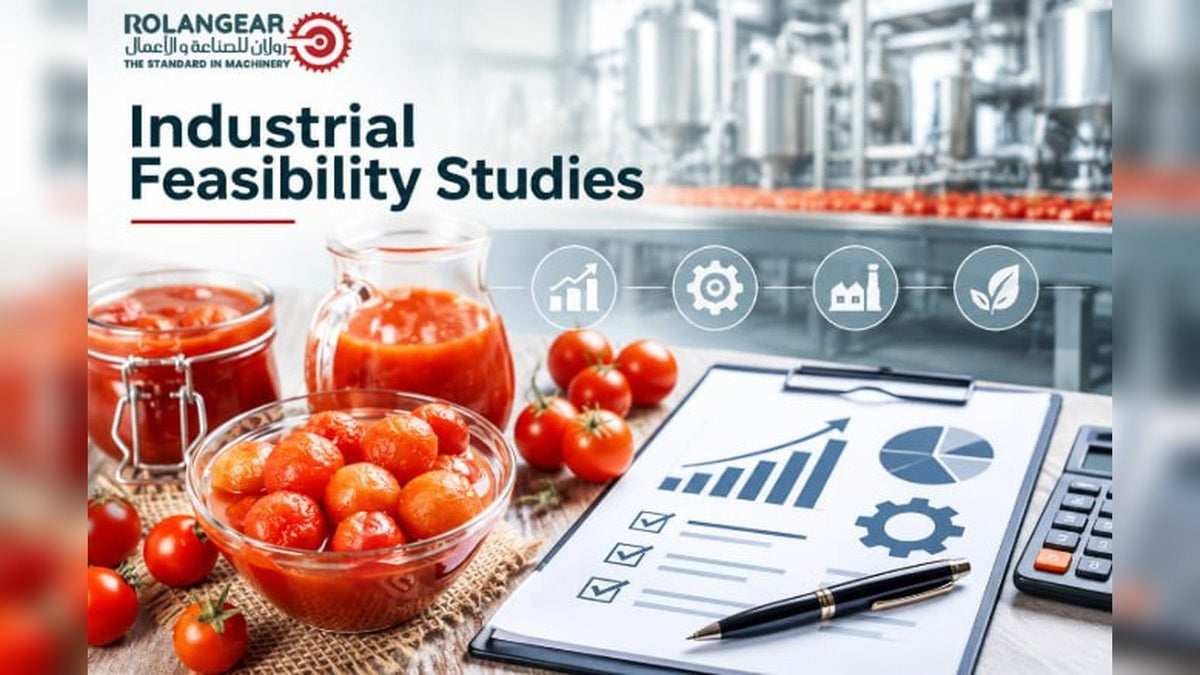
Estudios de Viabilidad Industrial para Fábrica de Pasta de Tomate
Estudio de viabilidad para una fábrica de pasta de tomate
Estudio de viabilidad profesional para una fábrica de procesamiento de pasta de tomate de pequeña a mediana escala que produce pasta de tomate para minoristas, base para salsa y pasta de tomate aséptica industrial. Debido a que no se proporcionó información sobre el país, el precio agrícola, las condiciones del edificio, las cotizaciones de proveedores o la mezcla de empaques, este informe utiliza supuestos de planificación transparentes en USD que deben ser localizados antes de la aprobación de la inversión.
1. Resumen ejecutivo
El proyecto es una fábrica de procesamiento de tomate diseñada para una entrada de 5 toneladas/hora de tomate fresco durante una temporada de 150 días. El caso base asume 8 horas de operación/día, un rendimiento del 18% en pasta equivalente vendible y una producción vendible anual de 1.080 toneladas. El plan de productos incluye pasta de tomate al por menor, base de salsa de tomate y pasta aséptica industrial para procesadores de alimentos.

Utilizando un precio de venta promedio en fábrica de USD 1150/tonelada y un costo variable de USD 500/tonelada, una inversión total de $850.000 y un aumento gradual de la utilización del 50% al 90%, los ingresos del Año 5 alcanzan $1,12 millones y la ganancia neta del Año 5 alcanza $314.096. El modelo base produce un VPN de $152.727 con una tasa de descuento del 12% y una TIR del 18,1%. La utilización de equilibrio es del 32,8%. El proyecto es viable bajo los supuestos establecidos, pero la aprobación final depende de los contratos de tomate fresco, la calidad Brix/color, los precios de los envases, los precios del mercado local, el costo de la energía/vapor, los permisos, el estado del edificio y las cotizaciones confirmadas de la maquinaria.
2. Alcance y metodología del estudio
Este estudio de viabilidad cubre el concepto del proyecto, el análisis del producto, los indicadores económicos y la ubicación del proyecto, los indicadores del mercado objetivo, la demanda, la producción local, las advertencias de importación y exportación, el análisis de la competencia, la brecha de mercado, el DAFO, la comercialización, los precios, la distribución, la maquinaria, la capacidad de producción, las cotizaciones de proveedores, los costos de materias primas, los gastos operativos, los servicios públicos, la dotación de personal, la inversión, la financiación, los estados financieros, los indicadores, el punto de equilibrio, la sensibilidad, los requisitos legales/regulatorios, la salud y seguridad ambiental, el riesgo, el cronograma de implementación, las fuentes, la consulta y la conclusión final.
La metodología combina el contexto agrícola y de estándares respaldado por fuentes, fórmulas de capacidad transparentes, suposiciones prácticas de costos de maquinaria, un modelo financiero a cinco años y pruebas de sensibilidad. Las fuentes de la FAO y Codex proporcionan el contexto de los estándares de tomate y alimentos procesados, mientras que los costos de maquinaria e inversión se tratan como estimaciones de planificación presupuestaria en lugar de cotizaciones finales de proveedores [1][2][3][4][5].
3. Concepto y naturaleza del proyecto
La naturaleza del proyecto es una planta industrial de procesamiento de frutas y verduras. Los tomates frescos se reciben, lavan, clasifican, trituran, precalientan, trituran, refinan, concentran por evaporación, esterilizan, envasan en envases minoristas o a granel, codifican, empaquetan y almacenan. La fábrica puede apoyar a los agricultores locales de tomate, sustituir la pasta de tomate importada y abastecer los canales minoristas, HORECA y de fabricación de alimentos.

4. Análisis del producto y tabla de especificaciones del producto
El producto principal es la pasta de tomate, comúnmente producida a 28–30 Brix para uso minorista e industrial. Las normas del producto, los conservantes, la acidez, el etiquetado y los requisitos de latas/bolsas deben verificarse localmente; Codex proporciona el contexto de los estándares de tomate procesado, pero este estudio no afirma una certificación verificada [2].
| Producto | Envase típico | Canal objetivo | Notas de calidad / almacenamiento |
|---|---|---|---|
| Pasta de tomate 28–30 Brix | Lata de 70 g / 210 g, sobre, bolsa | Minoristas y mayoristas | Control de acidez, color, Brix y peso de llenado |
| Pasta de tomate industrial | Tambor aséptico de 220 kg | Salsas, kétchup y procesadores de alimentos | Llenado aséptico, almacenamiento a granel estable |
| Puré de tomate / base de salsa | Botella, bolsa o lata | Minorista, HORECA | Menor concentración, posible ajuste de sabor |
| Subproductos | Orujo y semillas | Compradores de piensos, compost o extracción | Requiere planificación de higiene y eliminación |
5. Indicadores económicos y ubicación del proyecto
La ubicación debe seleccionarse en función de la zona de cultivo de tomate, la logística de la cosecha, el acceso por carretera, el agua, el vapor, la electricidad, el tratamiento de aguas residuales, el suministro de envases y el acceso al mercado. Una vez seleccionada la ubicación, deben añadirse los datos de inflación, PIB, población y agricultura específicos del país a partir de conjuntos de datos oficiales [1].
| Factor de ubicación | Peso | Condición preferida | Efecto sobre la viabilidad |
|---|---|---|---|
| Área de captación de tomate fresco | 30% | Cerca de fincas de cultivo de tomate con corta distancia de transporte | Mayor efecto en el rendimiento y el costo de la materia prima |
| Logística de la temporada de cosecha | 20% | Buen acceso por carretera, cajas/contenedores a granel, área de pesaje | Controla las pérdidas en la recepción |
| Servicios públicos | 15% | Energía, vapor, agua de proceso, aire comprimido y aguas residuales | Crítico para la evaporación y la limpieza |
| Edificio y terreno | 15% | Edificio apto para alimentos con drenaje y área de expansión | Reduce el costo civil |
| Suministro de envases | 8% | Acceso a suministro de latas, bolsas, cartones, etiquetas y tambores | Reduce el riesgo de stock |
| Mano de obra y control de calidad | 7% | Operarios, personal de laboratorio y mantenimiento disponibles | Apoya la consistencia de la calidad |
| Acceso al mercado | 5% | Cerca de distribuidores o ruta de exportación | Mejora la ejecución de ventas |
6. Indicadores del mercado objetivo
Los indicadores del mercado objetivo incluyen el consumo doméstico, la demanda de restaurantes y catering, el volumen en estanterías minoristas, el uso por parte de procesadores de alimentos, los volúmenes de importación bajo los códigos SA relevantes y la capacidad local de procesamiento de tomate. La previsión del proyecto está impulsada por la capacidad porque no se proporcionaron datos de mercado del país.
| Capa de mercado | Definición | Tratamiento de planificación |
|---|---|---|
| Mercado Total Disponible (TAM) | Toda la demanda de pasta y salsa de tomate en el país objetivo | No está totalmente disponible para el proyecto |
| Mercado Disponible Servible (SAM) | Demanda alcanzable a través de los canales minoristas, mayoristas y de procesadores planificados | Requiere validación del distribuidor |
| Mercado realistamente obtenible | Volumen que una nueva planta puede capturar en cinco años | Limitado por el precio, la confianza en la marca y el acceso al canal |
| Previsión de ventas del proyecto | Aumento gradual del 50% al 90% de utilización | Limitado por la capacidad vendible de 1.080 toneladas/año |
7. Análisis de la demanda
La demanda debe calcularse utilizando el consumo doméstico, las compras de servicios de alimentos, la demanda de los procesadores y el potencial de sustitución de importaciones. En este modelo preliminar, las ventas esperadas siguen la fórmula: entrada de tomate fresco 5 t/hora × 8 h/día × 150 días = 6.000 toneladas/año de tomates crudos. Producción equivalente a pasta = 6.000 × 18% de rendimiento = 1.080 toneladas/año. Ventas del año 1 = 1.080 × 50% = 540 toneladas.
La confianza es media para la fórmula de capacidad y baja a media para la absorción del mercado hasta que se verifique la demanda local minorista, HORECA y de procesadores.
8. Análisis de la producción local
El análisis de la producción local debe identificar las áreas de cultivo de tomate, las ventanas de cosecha estacionales, las plantas de pasta existentes, los pequeños productores de salsa, las fábricas de conservas y los mercados informales de tomate fresco. La producción local exacta no se indica porque no se proporcionó ningún país objetivo; debe investigarse con datos agrícolas oficiales y verificaciones de campo.

9. Análisis de importaciones y exportaciones con advertencias sobre los códigos SA
Los códigos SA probables incluyen el SA 2002 para tomates preparados o conservados de otra forma que no sea con vinagre o ácido acético, incluidas las categorías de pasta de tomate en muchos aranceles. Los códigos SA pueden incluir diferentes preparaciones de tomate, por lo que los datos de importación amplios no deben tratarse como demanda exacta de pasta de tomate sin la validación de la subpartida. Las verificaciones comerciales a nivel de país deben utilizar datos aduaneros, UN Comtrade o ITC Trade Map después de confirmar el alcance del código SA.
10. Análisis de la competencia
| Tipo de competidor | Ejemplos a investigar localmente | Presión competitiva | Respuesta |
|---|---|---|---|
| Grandes marcas de pasta | Productores nacionales de pasta de tomate al por menor | Alta | Competir en calidad, precios, tamaños de envase y distribución |
| Procesadores regionales | Procesadores de tomate estacionales y fábricas de salsas | Media-alta | Asegurar el suministro de los agricultores y mejorar el envasado |
| Pasta importada | Importaciones a granel/minoristas de Turquía, China, Italia o regionales | Media | Posicionar la frescura local, el tiempo de entrega y la sustitución de importaciones |
| Sustitutos | Tomate fresco, tomate enlatado, salsas, kétchup | Media | Utilizar recetas y precios específicos del canal |
| Proveedores de marca blanca | Envasadores por contrato para minoristas | Media | Ofrecer un servicio de marca blanca fiable y pesos de llenado consistentes |
11. Análisis de la brecha de mercado
La brecha de mercado debería ser igual a la demanda local estimada más la sustitución realista de importaciones menos la oferta local confiable. Debido a que faltan datos del país, la brecha no se cuantifica. En la práctica, la planta necesita vender 972 toneladas en el Año 5, por lo que asegurar contratos con distribuidores y procesadores de alimentos es más importante que asumir que la demanda nacional total está disponible.
12. Análisis DAFO
| Fortalezas | Debilidades | Oportunidades | Amenazas |
|---|---|---|---|
| La pasta de tomate es estable y de uso generalizado | El suministro estacional de tomate crudo crea presión sobre el capital de trabajo | Sustitución de importaciones y envases minoristas de marca propia | Volatilidad del precio del tomate crudo y del rendimiento de los cultivos |
| SKU minoristas y a granel flexibles | La evaporación requiere control de vapor y energía | Contratos de suministro con HORECA y procesadores de alimentos | Marcas importadas fuertes y orígenes de bajo costo |
| Posible recuperación de subproductos | La calidad depende de la manipulación y clasificación de la cosecha | Los programas de contratos con agricultores pueden asegurar el suministro | Aumento del costo de los materiales de embalaje |
13. Plan de marketing y promoción

El plan de marketing debe utilizar listados de minoristas, cajas de mayoristas, muestreos HORECA, incentivos para distribuidores, ofertas de marca blanca y declaraciones de calidad basadas en Brix, color, acidez y peso de llenado verificados. Los KPI incluyen puntos de venta activos, toneladas vendidas por canal, tasa de devolución, margen bruto por tamaño de paquete, entregas tardías, tasa de quejas y pedidos repetidos de procesadores.
14. Plan de precios
| Producto | Precio de planificación estándar en fábrica | Lógica de precios |
|---|---|---|
| Pasta de tomate al por menor, paquete pequeño | USD 0,18–0,45/paquete | Depende del tamaño del paquete, el costo de la lata/bolsa y la posición de la marca |
| Base de salsa de tomate | USD 700–950/tonelada equivalente | Menor concentración y recetas específicas del canal |
| Pasta de tomate aséptica 28–30 Brix | USD 950–1.250/tonelada | Comprador a granel y precios de paridad de exportación/importación |
| Precio del modelo mixto | USD 1.150/tonelada equivalente de pasta | Utilizado para el modelo financiero base |
15. Plan de distribución
La distribución debe combinar mayoristas minoristas, distribuidores de supermercados, proveedores de servicios de alimentos, cocinas institucionales y fabricantes de alimentos industriales. La pasta industrial se puede transportar en bidones asépticos, mientras que los envases minoristas requieren manipulación de cajas, etiquetas, posicionamiento en estanterías y apoyo promocional.
16. Maquinaria, equipo y costos de la línea de producción
Los costos de maquinaria se presentan como estimaciones de planificación presupuestaria para un proyecto de procesamiento de pasta de tomate de pequeña a mediana escala. El costo final del equipo debe confirmarse mediante ofertas técnicas formales basadas en la capacidad de entrada de tomate fresco, el Brix objetivo, el sistema de evaporación, el formato de llenado, el nivel de automatización, el alcance de los servicios públicos, la instalación, la puesta en marcha y los requisitos del destino [3][4][5].
| Máquina / equipo | Función | Estimación presupuestaria del costo del equipo |
|---|---|---|
| Sistema de lavado, clasificación y trituración de tomate | Eliminar tierra, inspeccionar y preparar tomates | USD 40k–90k |
| Precalentador, pulper/refinador y eliminación de semillas/piel | Extraer pulpa de tomate y eliminar residuos | USD 60k–130k |
| Evaporador al vacío / sistema de concentración | Concentrar puré en pasta | USD 140k–280k |
| Esterilizador y llenador aséptico para bidones o bag-in-box | Envasado a granel de pasta estable | USD 90k–180k |
| Línea de llenado y sellado de latas/bolsas al por menor | Envases para el consumidor | 70k–160k USD |
| Sistema CIP, bombas, tanques y tuberías | Limpieza y transferencia de procesos | 40k–90k USD |
| Caldera, compresor, refrigeración y tratamiento de agua | Soporte de servicios públicos | 80k–160k USD |
| Equipos de laboratorio, codificación, transportadores y empaquetado secundario | Soporte de calidad y empaque | 30k–70k USD |
17. Costos de edificios, instalaciones y construcción

La instalación debe incluir recepción, lavado y clasificación de tomate crudo, sala de procesamiento, sala de evaporación/servicios, sala de llenado, almacenamiento de empaques, almacén de productos terminados, laboratorio, área CIP/químicos, área de caldera, áreas de higiene del personal, oficina, área de carga y manejo de aguas residuales. Los pisos requieren drenaje y superficies lavables.
18. Capacidad de producción e idoneidad de la línea

La capacidad nominal es de 5 toneladas/hora de entrada de tomate fresco. Entrada anual de materia prima = 5 × 8 × 150 = 6.000 toneladas. Equivalente de pasta vendible = 6.000 × 18% = 1.080 toneladas/año. Pueden producirse cuellos de botella en la recepción, clasificación, evaporación, esterilización/llenado, capacidad de vapor, velocidad de empaque y suministro estacional de tomate fresco.
19. Cotizaciones y ofertas técnicas de proveedores
No se proporcionó ninguna cotización de proveedor. Las ofertas finales de los proveedores deben confirmar la capacidad de entrada de tomate, el Brix objetivo, la tecnología de evaporación, el consumo de vapor, el formato de llenado, la temperatura de esterilización, la automatización CIP, el alcance del empaque, la carga de servicios, las piezas de repuesto, la instalación, la capacitación, la garantía y el Incoterm.
20. Costos de materia prima

Las principales materias primas son tomates frescos, latas/bolsas/tambores, etiquetas, cajas de cartón, sal/especias si se elabora salsa, productos químicos de limpieza y consumibles de laboratorio. El costo variable base es de 500 USD/tonelada equivalente de pasta, incluyendo tomates, empaque, vapor, energía, mano de obra directa y pérdida normal de procesamiento. El precio del tomate fresco y el Brix son los factores más importantes que influyen en el costo.
21. Requisitos y gastos operativos
Los gastos operativos fijos anuales se estiman en $165.000 antes de la depreciación. Esto cubre la gestión, la supervisión estacional, el control de calidad, el mantenimiento, las ventas/administración, los seguros, la seguridad, los costos de oficina y los gastos generales no variables normales.
22. Requisitos de servicios
| Servicio | Requisito típico a confirmar | Efecto de viabilidad |
|---|---|---|
| Electricidad | Energía trifásica y respaldo para sistemas críticos | Controla el tiempo de inactividad |
| Vapor/combustible de caldera | Evaporación, esterilización y calentamiento CIP | Principal impulsor de costos operativos |
| Agua de proceso | Lavado, pulpeado y limpieza | Afecta la higiene y el rendimiento |
| Aire comprimido | Válvulas, máquinas de llenado y empaque | Afecta la estabilidad de la línea |
| Aguas residuales | Sólidos de tomate y carga orgánica | Riesgo de incumplimiento ambiental |
| Almacenamiento en frío/ambiente | Empaques y productos terminados según SKU | Afecta la calidad y la vida útil |
23. Estructura organizativa y de gestión
| Rol | Número de empleados | Responsabilidad principal |
|---|---|---|
| Gerente general | 1 | Operaciones, ventas y finanzas |
| Gerente de producción/tecnólogo de alimentos | 1 | Proceso, recetas, rendimiento y coordinación de control de calidad |
| Supervisores de turno | 2 | Ejecución de producción estacional |
| Operadores y clasificadores | 18 | Recepción, clasificación, procesamiento, llenado y empaque |
| Personal de calidad/laboratorio | 3 | Brix, acidez, color, microbiología y registros de liberación |
| Mantenimiento y servicios | 3 | Caldera, evaporador, bombas y línea de llenado |
| Almacén/logística | 4 | Empaque, productos terminados y despacho |
| Ventas/administración/finanzas | 4 | Pedidos, cuentas y servicio al cliente |
24. Costos de inversión
| Rubro de inversión | Estimación estándar | Base |
|---|---|---|
| Adecuación del edificio, drenaje, recepción y almacenamiento de materia prima | $150.000 | Subsidio civil para alimentos; excluye la compra de terrenos |
| Lavado de tomate, pulpeado, evaporación, esterilización y línea de llenado | $390.000 | Paquete de línea de procesamiento presupuestario |
| Caldera, tratamiento de agua, compresor, bombas e instalación de servicios | $110.000 | Asignación de servicios auxiliares |
| Empaquetado, laboratorio, transportadores, codificación y manejo de materiales | $50.000 | Equipos de apoyo |
| Flete, aranceles, instalación, capacitación y puesta en marcha | $65.000 | Subsidio según destino |
| Gastos preoperativos, permisos y lanzamiento | $25.000 | Estimación de planificación |
| Reserva de contingencia | $45.000 | Reserva aproximada |
| Capital de trabajo inicial | $15.000 | Tomate, empaque y amortiguador de cuentas por cobrar; el stock estacional puede requerir más |
| Inversión total del proyecto | $0,85m | Subtotal calculado |
25. Requisitos y condiciones de financiación
La financiación base asume un 40% de capital propio y un 60% de deuda. El requisito de capital propio es de 340.000 $ y el de préstamo es de 510.000 $. Las condiciones del préstamo se modelan con un interés anual del 9%, un reembolso de capital igual a cinco años y sin período de gracia. Las condiciones finales dependen del prestamista, la garantía y el perfil del patrocinador.
26. Previsiones de ingresos y ventas
| Año | Utilización | Volumen de ventas, toneladas | Ingresos | Beneficio neto | DSCR |
|---|---|---|---|---|---|
| A1 | 50,0% | 540 | $621.000 | $60.080 | 0,85x |
| A2 | 65,0% | 702 | $807.300 | $151.664 | 1,56x |
| A3 | 75,0% | 810 | $931.500 | $215.168 | 2,16x |
| A4 | 85,0% | 918 | $1,06m | $278.672 | 2,86x |
| A5 | 90,0% | 972 | $1,12m | $314.096 | 3,41x |
El escenario optimista asume contratos de distribución anteriores, una utilización del 95% en el año 5 y un mejor precio de la pasta. El escenario conservador asume ventas más lentas, una utilización del 75% en el año 5, un precio de venta más bajo y un mayor costo del tomate fresco.
27. Estados financieros
| USD | A1 | A2 | A3 | A4 | A5 |
|---|---|---|---|---|---|
| Ingresos | $621.000 | $807.300 | $931.500 | $1,06m | $1,12m |
| COGS | $270.000 | $351.000 | $405.000 | $459.000 | $486.000 |
| Beneficio bruto | $351.000 | $456.300 | $526.500 | $596.700 | $631.800 |
| EBITDA | $186.000 | $291.300 | $361.500 | $431.700 | $466.800 |
| Depreciación | $65.000 | $65.000 | $65.000 | $65.000 | $65.000 |
| EBIT | $121.000 | $226.300 | $296.500 | $366.700 | $401.800 |
| Intereses | $45.900 | $36.720 | $27.540 | $18.360 | $9.180 |
| Impuestos | $15.020 | $37.916 | $53.792 | $69.668 | $78.524 |
| Beneficio neto | $60.080 | $151.664 | $215.168 | $278.672 | $314.096 |
| USD | A0 | A1 | A2 | A3 | A4 | A5 |
|---|---|---|---|---|---|---|
| Flujo de caja de capital/proyecto | -$340.000 | $23.080 | $114.664 | $178.168 | $241.672 | $277.096 |
| Flujo de caja acumulado | -$340.000 | -$316.920 | -$202.256 | -$24.088 | $217.584 | $494.680 |
| Amortización del principal de la deuda | - | $102.000 | $102.000 | $102.000 | $102.000 | $102.000 |
| Deuda de cierre | - | $408.000 | $306.000 | $204.000 | $102.000 | $0 |
| USD | A1 | A2 | A3 | A4 | A5 |
|---|---|---|---|---|---|
| Activos fijos netos | $535.000 | $470.000 | $405.000 | $340.000 | $275.000 |
| Capital de trabajo y efectivo | $15.000 | $15.000 | $15.000 | $232.584 | $509.680 |
| Activos totales | $550.000 | $485.000 | $420.000 | $572.584 | $784.680 |
| Deuda | $408.000 | $306.000 | $204.000 | $102.000 | $0 |
| Capital y ganancias retenidas | $142.000 | $179.000 | $216.000 | $470.584 | $784.680 |
| Pasivos más capital | $550.000 | $485.000 | $420.000 | $572.584 | $784.680 |
28. Indicadores financieros y análisis financiero
| Indicador | Fórmula / base | Resultado base | Interpretación |
|---|---|---|---|
| Margen bruto | (Ingresos - COGS) / Ingresos | 56,5% | Bueno si se controla la adquisición de tomate crudo y el rendimiento de evaporación |
| Margen de contribución | Precio - costo variable | 650 USD/tonelada | Utilizado para el punto de equilibrio |
| Cantidad de equilibrio | Costo fijo / contribución | 354 toneladas/año | Requiere una utilización del 32,8% |
| ROI | Beneficio neto promedio / inversión | 24,0% | Positivo después del arranque bajo supuestos de costos estándar |
| VPN | FCFF sin apalancamiento descontado al 12% | $152.727 | Positivo pero sensible al precio de venta y al costo del tomate |
| TIR | Tasa de descuento donde el VPN = 0 | 18,1% | Por encima de la tasa de descuento del 12% en el caso base |
| Período de recuperación | Recuperación acumulada de efectivo apalancado | Durante el año 5 | Requiere una cosecha estable y una ejecución de ventas |
| Deuda/capital | Deuda / capital | 1,50x | Apalancamiento moderado |
| DSCR | Flujo de caja operativo / servicio de la deuda | A1 0,85x; A5 3,41x | Débil al principio, mejora con la utilización |
29. Análisis del punto de equilibrio
Contribución por tonelada = precio de venta (1150) − costo variable (500) = 650 USD. Cantidad de equilibrio = costo fijo más depreciación (230.000 $) ÷ contribución (650) = 354 toneladas/año. Ingresos de equilibrio = 406.923 $. Utilización de equilibrio = 32,8% de la capacidad vendible.
Fuente: modelo calculado de caso base, 2026.
30. Análisis de sensibilidad
| Variable probada | Resultado del VPN | Impacto vs VPN base |
|---|---|---|
| Precio de venta -10% | -$100.573 | -$253.300 |
| Volumen de ventas/utilización -10% | $9.557 | -$143.169 |
| Tomate fresco y envases +10% | $42.596 | -$110.130 |
| Gastos operativos fijos +10% | $105.144 | -$47.583 |
| Costo de capital +10% | $67.727 | -$85,000 |
| Retraso de un año en el lanzamiento | -$297,812 | -$450,539 |
| Precio de venta +10% | $406,026 | $253,300 |
| Costo variable -10% | $262,857 | $110,130 |
Fuente: modelo de sensibilidad calculado, 2026.
Las variables críticas son el precio de venta, el costo/rendimiento del tomate fresco, la utilización, el costo del empaque, el costo de energía/vapor y el tiempo de lanzamiento estacional.
31. Requisitos Legales y Regulatorios

Los requisitos normalmente incluyen registro de empresa, licencia de procesamiento de alimentos, aprobación de etiquetado de productos, plan de seguridad alimentaria, normas de salud para trabajadores, registro de impuestos, aprobación ambiental y permiso de aguas residuales. El Codex proporciona el contexto de las normas para productos de tomate, pero se requiere una revisión de la legislación alimentaria local antes de la producción [2].
32. Análisis Ambiental, de Salud y Seguridad

Los problemas de EHS incluyen residuos de tomate, carga orgánica de aguas residuales, seguridad de calderas, quemaduras por vapor, manipulación de productos químicos para CIP, suelos mojados, cintas transportadoras móviles, seguridad de maquinaria para latas/bolsas y riesgo de retirada de productos por seguridad alimentaria. El proyecto debe implementar controles tipo HACCP, control de plagas, validación de CIP, trazabilidad y un plan de subproductos/aguas residuales.
33. Análisis de Riesgos y Registro de Riesgos
| Riesgo | Probabilidad | Impacto | Mitigación |
|---|---|---|---|
| Escasez de suministro de tomate fresco | Media | Alta | Contratos con agricultores, calendario de cultivos y plan de recepción |
| Brix bajo o color deficiente | Media | Alta | Selección de variedades, clasificación, pruebas de laboratorio e incentivos a proveedores |
| Aumento del costo de vapor/energía | Media | Media-alta | Evaporador eficiente, mantenimiento de calderas y plan de combustible |
| Escasez de envases | Media | Media | Latas, bolsas, tambores y cartones de múltiples proveedores |
| Lenta aceptación por parte del distribuidor | Media | Alta | Acuerdos de venta previos al lanzamiento y muestreo |
| Evento de seguridad alimentaria o contaminación | Baja-media | Alta | Validación de CIP, detección de metales, trazabilidad y controles tipo HACCP |
34. Calendario de Implementación
| Fase | Duración | Tareas clave |
|---|---|---|
| Localización de viabilidad | 2–4 semanas | Datos del país, precio del tomate, validación del mercado |
| Ingeniería y permisos | 1–2 meses | Diseño de disposición, licencia de alimentos, aguas residuales y servicios públicos |
| Cotización y adquisición de proveedores | 2–3 meses | Ofertas técnicas, contrato y fabricación |
| Obras civiles y servicios públicos | 2–4 meses | Drenaje, suelos, caldera, agua y energía |
| Instalación y puesta en marcha | 4–8 semanas | Instalación de máquinas, pruebas de CIP y producción de prueba |
| Lanzamiento de temporada de cosecha | 1 temporada | Plan de recepción de proveedores, incorporación de distribuidores y aumento de ventas |
35. Fuentes y Supuestos
Registro de supuestos
| Supuesto | Valor | Base | Confianza | Efecto |
|---|---|---|---|---|
| Moneda | USD | Supuesto del analista | Media | Todos los resultados financieros |
| Entrada de tomate fresco | 5 toneladas/hora × 8 horas/día × 150 días de temporada = 6,000 toneladas/año | Base estándar para plantas de tomate pequeñas a medianas de temporada | Media | Capacidad |
| Rendimiento de pasta | 18% equivalente de pasta vendible | Estimación del analista; depende del Brix del tomate y del objetivo de evaporación | Baja-media | Ingresos y COGS |
| Producción anual vendible | 1,080 toneladas/año | Calculado a partir de la materia prima y el rendimiento | Media | Pronóstico de ventas |
| Precio de venta | USD 1,150/tonelada equivalente de pasta | Supuesto de planificación de precio promedio ex-fábrica | Baja-media | Ingresos y margen |
| Costo variable | USD 500/tonelada equivalente de pasta | Tomates frescos, envases, vapor, energía, mano de obra y consumibles de control de calidad | Media | Margen bruto |
| Inversión total | 0.85 millones de USD | Base de costos presupuestarios de maquinaria más asignaciones de fábrica | Media | VPN, TIR y necesidad de financiación |
| Condiciones de la deuda | 60%, 9%, 5 años | Supuesto del analista | Baja-media | Flujo de caja y DSCR |
Registro de fuentes
| Referencia | Organización | Fuente y URL | Datos utilizados | Fecha de acceso | Confianza |
|---|---|---|---|---|---|
| [1] | FAO | Plataforma FAOSTAT de cultivos y ganadería, https://www.fao.org/faostat/en/#data/QCL | Plataforma oficial de datos de producción agrícola; los datos de tomate por país deben localizarse | 2026-08-05 | Alta |
| [2] | FAO/OMS Codex Alimentarius | Lista de estándares, https://www.fao.org/fao-who-codexalimentarius/codex-texts/list-standards/en/ | Contexto de estándares para tomate y productos de tomate procesados | 2026-08-05 | Alta |
| [3] | Referencia del mercado de proveedores | Revisión de precios de equipos de procesamiento de pasta de tomate | Análisis comparativo de costos presupuestarios de maquinaria para equipos pequeños y referencias de líneas más amplias | 2026-08-05 | Media |
| [4] | Referencia del mercado de proveedores | Revisión de la categoría de equipos de procesamiento de tomate | Análisis comparativo de categorías de maquinaria presupuestaria para el procesamiento de tomate | 2026-08-05 | Media |
| [5] | Referencia del mercado de proveedores | Revisión de precios de la línea de producción de pasta de tomate | Verificación de referencia presupuestaria del proveedor; no se trata como una cotización final | 2026-08-05 | Baja-media |
| [6] | Cálculo del analista | Modelo transparente en este estudio | Cálculos de capacidad, rendimiento, inversión, ingresos, punto de equilibrio, VPN y TIR | 2026-08-05 | Media |
36. Sección de Consulta
¿Necesita un Estudio Localizado de Fábrica de Pasta de Tomate?
Para un informe bancable de fábrica de pasta de tomate, confirme el país, la zona de cultivo de tomate, el precio del tomate en la finca, el Brix objetivo, el formato del empaque, el estado del edificio, las tarifas de servicios públicos, la tasa impositiva, los términos de financiación y la cotización del proveedor. Rolangear puede apoyar la configuración de la línea de procesamiento de tomate, la selección de maquinaria, la planificación de la capacidad y la comparación de cotizaciones.
Contactar a Rolangear37. Conclusión Final y Recomendación
La fábrica de pasta de tomate es técnicamente viable y financieramente positiva bajo los supuestos de costo estándar establecidos. La inversión es más atractiva cuando la planta está cerca de las granjas de tomate, asegura contratos estacionales de tomate, mantiene una buena calidad de Brix/color y vende una mezcla de pasta a granel y al por menor. La recomendación es proceder a la validación localizada antes de la inversión final: confirmar el suministro de tomate crudo, los precios del mercado objetivo, los costos de empaque, los costos de vapor/energía, la condición del edificio, la solución de aguas residuales y la cotización formal del proveedor.
Gráficos Basados en Datos
Fuente: modelo de caso base calculado, supuestos de planificación 2026. Unidad: millones de USD.
Fuente: modelo de caso base calculado, supuestos de planificación 2026. Unidad: miles de USD.
Fuente: modelo de caso base calculado, supuestos de planificación 2026. Unidad: porcentaje.
Fuente: modelo de caso base calculado, supuestos de planificación 2026. Unidad: toneladas.
Equipo: 45.9%Edificio: 17.6%Servicios públicos: 12.9%Otros: 23.5%
Fuente: modelo de inversión presupuestario del analista, 2026.
Pasta al por menor: 45.0%Pasta a granel aséptica: 40.0%Base de salsa: 15.0%
Fuente: modelo de inversión presupuestario del analista, 2026.