Estudio de viabilidad de una fábrica de puertas WPC
Estudio de viabilidad para una fábrica de puertas de WPC
Estudio de viabilidad profesional para una fábrica de puertas de WPC de tamaño pequeño a mediano que produce puertas interiores, puertas de baño, marcos, arquitrabes y conjuntos de puertas laminadas de compuesto de madera y plástico. Dado que no se proporcionaron datos de país, ciudad, precio de material, tarifa de servicios públicos, condición del edificio o cotizaciones de proveedores, este informe utiliza supuestos de planificación transparentes en USD que deben ser localizados antes de la aprobación de la inversión.
Mapa del estudio
1. Resumen Ejecutivo
El proyecto es una fábrica de puertas de WPC que produce paneles de puertas de compuesto de madera y plástico, marcos, jambas, arquitrabes y puertas acabadas laminadas o pintadas para edificios residenciales, comerciales e institucionales. El caso base asume una capacidad anual vendible de 54,000 conjuntos de puertas acabadas después de los ajustes normales por desperdicio y mezcla de productos.

Utilizando un precio de venta promedio ex-fábrica de USD 95 por conjunto de puerta, un costo variable de USD 58 por conjunto de puerta y una inversión total de $1.77 millones, los ingresos del Año 5 alcanzan los $4.62 millones y la utilidad neta del Año 5 alcanza los $831,056. El VAN base es de $834,863 a una tasa de descuento del 12%, la TIR estimada es del 27.0%, y la utilización de equilibrio es del 33.8%.
2. Alcance y Metodología del Estudio
Este estudio abarca el mercado, aspectos técnicos, operativos, de personal, inversión, financiación, ingresos, estados financieros, indicadores, punto de equilibrio, análisis de sensibilidad, aspectos legales, EHS, riesgos, implementación, fuentes, consulta y recomendación final. Los indicadores del Banco Mundial apoyan el contexto macroeconómico y de localización de la demanda [1][2]. Los Capítulos 39 y 44 del SA respaldan las salvedades de clasificación de plásticos, madera y puertas [3][4]. Las estadísticas forestales de la FAO, las normas de formaldehído de la EPA para madera compuesta, la guía de plásticos de OSHA y las referencias de productos de construcción de la UE apoyan el contexto de materias primas, regulatorio y de seguridad [5][6][7][8].
3. Concepto y Naturaleza del Proyecto
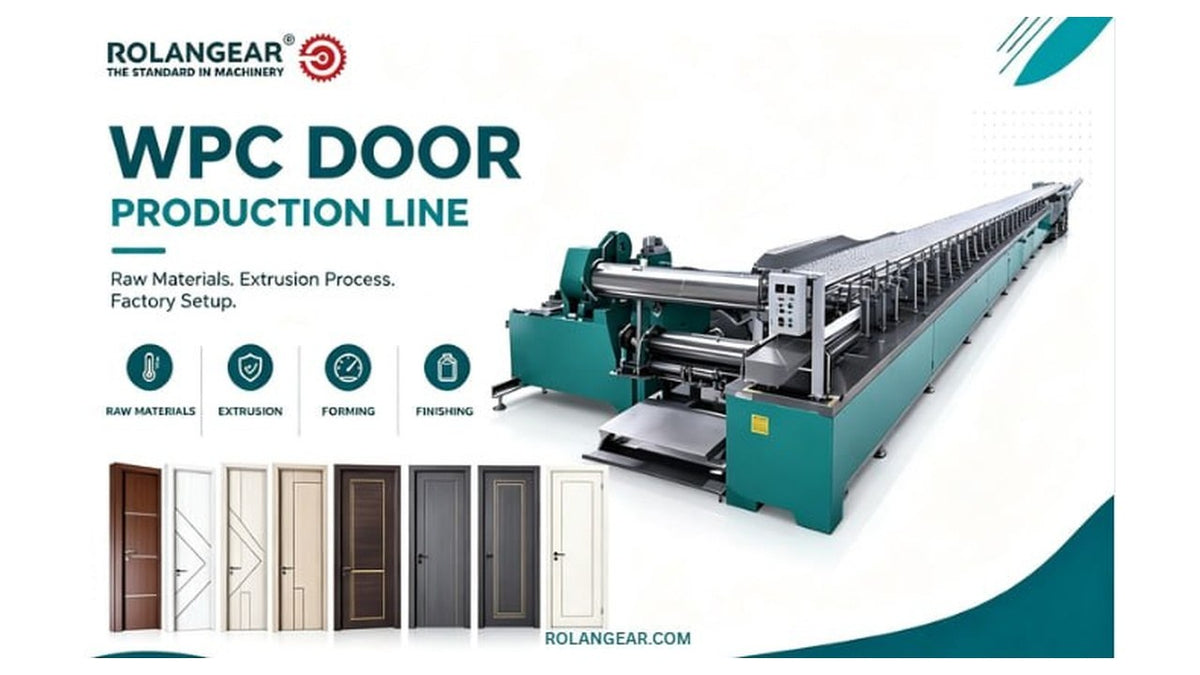
El proyecto es una planta industrial de fabricación de materiales de construcción. Resina de PVC o PE, harina de madera, carbonato de calcio, estabilizadores, lubricantes, agentes espumantes, pigmentos y aditivos se mezclan, se extruyen en perfiles o revestimientos de puertas de WPC, se enfrían, se cortan, se laminan, se fresan, se ensamblan en conjuntos de puertas, se acaban, se inspeccionan y se embalan. El modelo de negocio puede combinar el suministro mayorista de puertas, el suministro para proyectos de construcción, las ventas a distribuidores y la producción de marca privada.
4. Análisis de Producto y Tabla de Especificaciones de Producto
Las especificaciones del producto incluyen tamaño de puerta, grosor, densidad del núcleo, diseño de revestimiento, tipo de marco, acabado superficial, color, laminado, resistencia a la humedad, rendimiento de retención de tornillos, estabilidad dimensional y clasificación contra incendios/acústica cuando sea necesario. Las afirmaciones de rendimiento y certificación no deben hacerse hasta que se verifiquen las pruebas y estándares locales.
| Producto | Especificación típica | Cliente objetivo | Notas de calidad |
|---|---|---|---|
| Conjuntos de puertas interiores de WPC | 700–1000 mm de ancho, 35–45 mm de espesor | Constructores residenciales y minoristas | Planitud, consistencia de color y sujeción de bisagras |
| Puertas de baño/cocina de WPC | Conjuntos de puertas resistentes a la humedad | Apartamentos, hoteles, contratistas | Resistencia al agua y sellado de bordes |
| Marcos y jambas de WPC | Perfiles y arquitrabes a juego | Instaladores de puertas y distribuidores | Rectitud y ajuste de instalación |
| Puertas decorativas laminadas | Superficie revestida con film/laminado | Compradores minoristas y de proyectos | Adhesión, resistencia al rayado y apariencia |
| Programas de puertas de marca privada | Patrones y embalajes específicos del comprador | Distribuidores y proveedores de construcción | Molde, marca y aprobación de calidad |
5. Indicadores Económicos y Ubicación del Proyecto
La demanda de puertas de WPC está ligada a la construcción de viviendas, renovaciones, hoteles, oficinas, edificios públicos, acabados interiores y el reemplazo de puertas resistentes a la humedad. Los indicadores de manufactura y población del Banco Mundial ayudan a evaluar la escala del país una vez que se selecciona un país objetivo [1][2]. La ubicación debe priorizar las rutas de distribución de materiales de construcción, el suministro de resina y rellenos, el almacenamiento en seco, la energía confiable y el acceso a los mercados de construcción.
| Factor | Peso | Condición preferida | Efecto |
|---|---|---|---|
| Acceso al mercado de la construcción | 24% | Cerca de viviendas urbanas y distribuidores de materiales de construcción | Mejora las ventas y la entrega |
| Suministro de materia prima | 20% | Resina de PVC/PE, harina de madera, rellenos y aditivos disponibles | Controla el costo unitario |
| Energía y servicios públicos | 16% | Energía estable para extrusión y acabado | Protege el tiempo de actividad |
| Zonificación industrial y EHS | 14% | Zona aprobada para plásticos/materiales de construcción | Reduce el riesgo de permisos |
| Mano de obra calificada y mantenimiento | 10% | Habilidades de extrusión, acabado y herramientas | Apoya la calidad |
| Almacén y área de secado | 9% | Resina/relleno seco y almacenamiento de puertas acabadas | Protege la calidad del material |
| Espacio de expansión | 7% | Espacio para moldes adicionales, laminación y ensamblaje | Apoya el crecimiento |
6. Indicadores del Mercado Objetivo con Separación TAM, SAM y Mercado Realmente Alcanzable
| Capa | Definición | Tratamiento de planificación |
|---|---|---|
| TAM | Toda la demanda de puertas interiores, puertas de baño, marcos y renovación en el país objetivo | No disponible completamente para una sola fábrica |
| SAM | Demanda alcanzable a través de distribuidores, contratistas y compradores de proyectos planificados | Requiere validación del canal local |
| Mercado realmente alcanzable | Volumen que un nuevo productor de puertas de WPC puede ganar en cinco años | Limitado por la gama de diseño, precio, calidad y confianza del instalador |
| Pronóstico de ventas del proyecto | Aumento a 48,600 conjuntos de puertas/año para el Año 5 | Pronóstico basado en la capacidad, no una afirmación de cuota de mercado |
7. Análisis de la Demanda
Debido a que no se proporcionó un país, este informe utiliza un pronóstico basado en la capacidad en lugar de un pronóstico nacional de demanda de construcción. La capacidad base es de 54,000 conjuntos de puertas/año. Las ventas del Año 1 = 27,000 conjuntos de puertas y las ventas del Año 5 = 48,600 conjuntos de puertas. La demanda local debe calcularse posteriormente a partir de nuevas unidades de vivienda, tasa de renovación, proyectos hoteleros/de oficinas, puertas promedio por unidad, datos de importación y entrevistas con distribuidores.

8. Análisis de la Producción Local
El análisis de la producción local debe identificar fábricas de puertas de madera, productores de puertas de PVC/WPC, proveedores de puertas de aluminio/uPVC, distribuidores de puertas importadas, productores de puertas de MDF/HDF y contratistas de proyectos. La producción local exacta no se indica porque no se proporcionó ningún país; debe verificarse a través de registros industriales, mercados de materiales de construcción, entrevistas con contratistas y registros de importación.
9. Análisis de Importación y Exportación con Salvedades de Códigos HS
Las clasificaciones probables pueden incluir el Capítulo 39 del SA para artículos de plástico y el Capítulo 44 del SA para artículos y puertas de madera, dependiendo de la composición del producto, el material del marco y la interpretación arancelaria nacional [3][4]. Las puertas de WPC pueden no tener un único código HS internacional estrecho en todos los niveles de clasificación. Por lo tanto, los datos comerciales deben localizarse y no tratarse como una demanda exacta de puertas de WPC sin la validación de la subpartida aduanera.
10. Análisis de la Competencia
| Tipo de competidor | Ejemplos para investigar localmente | Presión | Respuesta |
|---|---|---|---|
| Fábricas de puertas de madera | Productores de puertas de madera maciza, chapa y MDF/HDF | Alta | Competir a través de la resistencia a la humedad y el acabado consistente |
| Puertas de WPC/PVC importadas | Distribuidores regionales y extranjeros | Media-alta | Ofrecer existencias locales, entrega más rápida y servicio de proyectos |
| Proveedores de puertas de aluminio/uPVC | Sustitutos de puertas de baño y servicios | Media | Centrarse en conjuntos de puertas decorativas para interiores |
| Talleres de bajo costo | Pequeños ensambladores de puertas y tiendas de laminados | Media | Mejorar la calidad, el embalaje y la disciplina de la garantía |
| Nuevos participantes | Empresas de extrusión o plásticos que añaden puertas | Media | Asegurar distribuidores y moldes temprano |
11. Análisis de Brecha de Mercado

La brecha de mercado debe ser igual a la demanda de puertas de nueva construcción y renovación menos la producción local confiable y las importaciones, ajustada por segmentos de precios y productos sustitutos. En este modelo preliminar, la fábrica necesita vender 48,600 conjuntos de puertas para el Año 5. Esto requiere acuerdos con distribuidores, muestras de contratistas y aceptación por parte de instaladores antes de la inversión final.
12. Análisis FODA
| Fortalezas | Debilidades | Oportunidades | Amenazas |
|---|---|---|---|
| Alternativa resistente a la humedad a algunas puertas de madera | Requiere una formulación estable y calidad del molde | Baños, cocinas, hoteles y apartamentos | Volatilidad del precio de la resina |
| Puede producir marcos y perfiles a juego | La variedad de diseños requiere inversión en moldes | Programas de distribuidores de marca privada | Fuerte competencia de puertas de madera tradicionales |
| Proceso escalable basado en extrusión | El acabado superficial determina la aceptación del comprador | Canales de suministro para renovación y proyectos | Requisitos de clasificación contra incendios o códigos de construcción |
13. Plan de Marketing y Promoción
El plan de marketing debe centrarse en distribuidores de materiales de construcción, desarrolladores, instaladores de puertas, contratistas de hoteles/oficinas y minoristas de renovación. Las acciones de lanzamiento incluyen muestras de puertas, demostraciones de resistencia a la humedad, capacitación de instaladores, catálogo de SKU, plan de margen para distribuidores, plantillas de cotización de proyectos y reglas de calidad/garantía.
14. Plan de Precios
| Producto | Precio de venta de planificación | Lógica de precios |
|---|---|---|
| Puerta interior de WPC estándar | USD 75–105/conjunto | El tamaño, el grosor, el diseño y la inclusión del marco afectan el precio |
| Puerta de baño/cocina de WPC | USD 85–120/conjunto | El posicionamiento resistente a la humedad justifica un precio superior |
| Puerta decorativa laminada | USD 95–150/conjunto | La película laminada, el patrón y el acabado impulsan el precio |
| Conjunto de marco de puerta y arquitrabe | USD 18–40/conjunto | Generalmente se vende con la puerta o como paquete de instalador |
| Precio promedio del modelo | USD 95/conjunto de puerta | Utilizado para el modelo financiero base |
15. Plan de Distribución
La distribución debe combinar mayoristas de materiales de construcción, showrooms de puertas, contratistas de proyectos, desarrolladores y redes de instaladores. Las puertas terminadas son voluminosas, por lo que la disposición del almacén, la prevención de daños, el embalaje protector y la entrega confiable son importantes. El crédito a los distribuidores debe controlarse con límites, depósitos para diseños personalizados e hitos de pago de proyectos.
16. Maquinaria, Equipo y Costos de la Línea de Producción

Los costos de maquinaria son estimaciones presupuestarias de planificación, no cotizaciones de proveedores. Los costos finales dependen del ancho de extrusión, el diseño del perfil de la puerta, el número de moldes, el sistema de espuma, el método de laminación/impresión, el fresado CNC, la automatización del ensamblaje, el acabado de la superficie y el destino.
| Máquina/equipo | Función | Estimación presupuestaria |
|---|---|---|
| Mezclador de alta velocidad y mezclador de enfriamiento | Mezcla resina, harina de madera, relleno y aditivos | USD 70k–150k |
| Línea de extrusión de puertas/perfiles de WPC | Extruye paneles de puertas, marcos o perfiles | USD 280k–650k |
| Moldes de extrusión y herramientas de calibración | Define la forma y las dimensiones de la puerta/perfil | USD 80k–220k |
| Línea de laminado/envoltura de película o acabado superficial | Acabado decorativo y protección | USD 120k–300k |
| Equipo CNC/router/corte y taladrado | Bisagras, cerraduras y operaciones de dimensionamiento | USD 70k–180k |
| Rectificado/reciclaje y recogida de polvo | Recuperación de chatarra y control de calidad del aire | USD 45k–120k |
| Control de calidad, embalaje, manipulación y herramientas de taller | Pruebas, embalaje y soporte de mantenimiento | USD 40k–120k |
17. Costos de Edificación, Instalaciones y Construcción
La instalación debe incluir almacenamiento de materia prima, área de mezcla, sala de extrusión, almacenamiento de moldes y herramientas, área de laminación/acabado, área de CNC y ensamblaje, almacén de puertas terminadas, área de control de calidad, taller de mantenimiento, extracción de polvo, instalaciones para el personal y área de carga. El almacenamiento en seco para la harina de madera y las puertas terminadas es importante.
18. Capacidad de Producción e Idoneidad de la Línea

La capacidad vendible se estima en 54.000 juegos de puertas terminadas al año después de la mezcla de productos y los residuos. La capacidad depende de la velocidad de extrusión, el espesor de la puerta, la complejidad del perfil, la longitud de enfriamiento, la velocidad de laminación, el ruteado CNC, el ensamblaje del marco, la mano de obra de embalaje y el tiempo de cambio de molde. Los cuellos de botella suelen producirse en la estabilidad de la extrusión, el laminado de superficies, el CNC/procesamiento de orificios para cerraduras y el almacenamiento de productos terminados.
19. Cotizaciones y Ofertas Técnicas de Proveedores
No se proporcionó ninguna cotización de proveedor. Las ofertas técnicas finales deben confirmar el rango de formulación, la producción por hora por tipo de puerta, la lista de moldes, la carga de energía, el agua de refrigeración, la extracción de polvo, el tipo de laminación, la especificación del CNC, el alcance de la instalación, las piezas de repuesto, la capacitación del operador, la garantía y el Incoterm.
20. Costos de Materia Prima
Los principales insumos son resina de PVC o PE, harina de madera, carbonato de calcio, estabilizadores, lubricantes, agentes espumantes, agentes de acoplamiento, pigmentos, película/laminado decorativo, adhesivos, asignación de herrajes, cartones, protección de bordes y paletas. El costo variable base es de USD 58/juego de puerta, incluyendo materiales, mano de obra directa, servicios públicos, chatarra normal y embalaje.
21. Requisitos y Gastos Operativos

Los gastos operativos fijos anuales se estiman en $520.000 en el año 1 antes de la depreciación, aumentando un 3% anualmente. Esto cubre la gestión, supervisores, control de calidad, mantenimiento, ventas/administración, seguridad, seguros, limpieza, marketing básico, cuidado de moldes y gastos generales no variables.
22. Requisitos de Servicios Públicos
| Servicio público | Requisito a confirmar | Efecto |
|---|---|---|
| Electricidad | Energía trifásica para mezcladoras, extrusoras, laminado y CNC | Factor importante en el tiempo de actividad y el costo |
| Agua de refrigeración/enfriador | Calibración y enfriamiento por extrusión | Controla la estabilidad del perfil |
| Aire comprimido | Corte, laminado y equipo de embalaje | Soporta la automatización |
| Extracción de polvo | Control de polvo de harina de madera y molienda | EHS y limpieza del producto |
| Ventilación | Control de calor y polvo alrededor de la extrusión | Comodidad y seguridad laboral |
| Seguridad contra incendios | Almacenamiento, control de polvo e incendios de plásticos | Fundamental para seguros y permisos |
23. Estructura Organizacional y de Gestión
| Puesto | Número de empleados | Responsabilidad principal |
|---|---|---|
| Gerente general | 1 | Operaciones, ventas y finanzas |
| Supervisores de producción | 2 | Producción por turno, formulación y calidad |
| Operadores de mezcla/extrusión | 8 | Mezcla de materiales, extrusión y monitoreo de moldes |
| Operadores de acabado/CNC | 8 | Laminado, corte, ruteado y ensamblaje |
| Operadores de embalaje | 8 | Inspección, embalaje protector y paletizado |
| Técnicos de control de calidad | 2 | Verificación de dimensiones, densidad, acabado y resistencia |
| Personal de mantenimiento/herramientas | 4 | Mantenimiento mecánico, eléctrico, de moldes y CNC |
| Almacén/envío | 4 | Materias primas, puertas terminadas y carga |
| Ventas/administración/contabilidad | 4 | Pedidos, cotizaciones de proyectos y cobros |
24. Costos de Inversión
| Artículo de inversión | Estimación | Base |
|---|---|---|
| Líneas de mezcla y extrusión WPC | $620.000 | Paquete de equipo presupuestario |
| Moldes, laminado, acabado y herramientas CNC | $360.000 | Rango de producto y asignación de acabado |
| Recogida de polvo, refrigeración, compresor y servicios públicos | $160.000 | Asignación de servicios públicos |
| Equipamiento de edificios, almacén y seguridad contra incendios | $100.000 | Asignación de edificios existentes |
| Control de calidad, taller, manipulación y herramientas informáticas | $190.000 | Equipo de apoyo |
| Flete, instalación, capacitación y puesta en marcha | $80.000 | Asignación dependiente del destino |
| Gastos preoperativos, permisos y lanzamiento | $40.000 | Estimación de planificación |
| Reserva de contingencia | $120.000 | Reserva aproximada |
| Capital de trabajo inicial | $220.000 | Materias primas, existencias terminadas y cuentas por cobrar |
| Inversión total del proyecto | $1,77 millones | Subtotal calculado |
25. Requisitos y Condiciones de Financiamiento
La financiación base supone un 40% de capital propio y un 60% de deuda. El requisito de capital propio es de $708.000 y el requisito de préstamo es de $1,06 millones. Los términos del préstamo se modelan con un interés anual del 9%, un reembolso de capital igual a cinco años y sin período de gracia. Los términos finales dependen del prestamista, la garantía, el riesgo país y el alcance de la inversión confirmada.
26. Pronósticos de Ingresos y Ventas
| Año | Utilización | Volumen de ventas, juegos de puertas | Ingresos | Beneficio bruto | EBITDA | Beneficio neto | DSCR |
|---|---|---|---|---|---|---|---|
| A1 | 50,0% | 27.000 | $2,56 millones | $999.000 | $479.000 | $182.736 | 1,41x |
| A2 | 65,0% | 35.100 | $3,33 millones | $1,30 millones | $763.100 | $425.309 | 2,27x |
| A3 | 75,0% | 40.500 | $3,85 millones | $1,50 millones | $946.832 | $587.587 | 2,97x |
| A4 | 85,0% | 45.900 | $4,36 millones | $1,70 millones | $1,13 millones | $749.480 | 3,76x |
| A5 | 90,0% | 48.600 | $4,62 millones | $1,80 millones | $1,21 millones | $831.056 | 4,34x |
| Escenario | Supuestos clave | Ventas del A5 | Ingresos del A5 | Interpretación |
|---|---|---|---|---|
| Conservador | 70% de utilización; precio -6%; costo de material +5% | 37.800 juegos | $3,38 millones | Positivo pero requiere disciplina de costos |
| Caso base | 90% de utilización; precio de USD 95/juego | 48.600 juegos | $4,62 millones | Positivo bajo los supuestos |
| Optimista | 95% de utilización; mezcla de laminado premium y materiales estables | 51.300 juegos | $5,12 millones | Fuerte si se aseguran distribuidores |
27. Estados Financieros
| Año | Utilización | Volumen de ventas | Ingresos | Beneficio bruto | EBITDA | Beneficio neto | DSCR |
|---|---|---|---|---|---|---|---|
| A1 | 50,0% | 27.000 | $2,56 millones | $999.000 | $479.000 | $182.736 | 1,41x |
| A2 | 65,0% | 35.100 | $3,33 millones | $1,30 millones | $763.100 | $425.309 | 2,27x |
| A3 | 75,0% | 40.500 | $3,85 millones | $1,50 millones | $946.832 | $587.587 | 2,97x |
| A4 | 85,0% | 45.900 | $4,36 millones | $1,70 millones | $1,13 millones | $749.480 | 3,76x |
| A5 | 90,0% | 48.600 | $4,62 millones | $1,80 millones | $1,21 millones | $831.056 | 4,34x |
| Año | Flujo de caja operativo | Amortización del principal de la deuda | Flujo de caja apalancado | Flujo de caja acumulado de capital | Deuda de cierre |
|---|---|---|---|---|---|
| A1 | $337.736 | $212.400 | $125.336 | $-582.664 | $849.600 |
| A2 | $580.309 | $212.400 | $367.909 | $-214.755 | $637.200 |
| A3 | $742.587 | $212.400 | $530.187 | $315.432 | $424.800 |
| A4 | $904.480 | $212.400 | $692.080 | $1,01 millones | $212.400 |
| A5 | $986.056 | $212.400 | $773.656 | $1,78 millones | $0 |
| Año | Activos fijos netos | Inventario | Cuentas por cobrar | Efectivo | Activos totales | Cuentas por pagar | Saldo del préstamo | Capital + ganancias retenidas | Pasivos + capital |
|---|---|---|---|---|---|---|---|---|---|
| A1 | $1,40 millones | $150.164 | $316.233 | $-13.801 | $1,85 millones | $107.260 | $849.600 | $890.736 | $1,85 millones |
| A2 | $1,24 millones | $195.214 | $411.103 | $246.367 | $2,09 millones | $139.438 | $637.200 | $1,32 millones | $2,09 millones |
| A3 | $1,08 millones | $225.247 | $474.349 | $704.727 | $2,49 millones | $160.890 | $424.800 | $1,90 millones | $2,49 millones |
| A4 | $930.000 | $255.279 | $537.596 | $1,32 millones | $3,05 millones | $182.342 | $212.400 | $2,65 millones | $3,05 millones |
| A5 | $775.000 | $270.296 | $569.219 | $2,06 millones | $3,68 millones | $193.068 | $0 | $3,48 millones | $3,68 millones |
28. Indicadores y Análisis Financieros
| Indicador | Fórmula / base | Resultado base | Interpretación |
|---|---|---|---|
| Margen bruto | Ingresos menos COGS dividido por ingresos | 38,9% | Positivo si se controlan la formulación y los residuos de acabado |
| Margen de contribución | Precio de venta menos costo variable | USD 37/juego de puerta | Utilizado para el punto de equilibrio |
| Cantidad de equilibrio | Costo fijo + depreciación dividido por contribución | 18.243 juegos de puertas/año | Requiere un 33,8% de utilización |
| ROI | Beneficio neto promedio dividido por la inversión | 31,4% | Positivo después del arranque |
| NPV | Flujo de caja no apalancado descontado al 12% | $834.863 | Positivo pero sensible al precio y los materiales |
| IRR | Tasa de descuento en la que el VAN es cero | 27,0% | Por encima de la tasa de referencia del 12% |
| Recuperación | Recuperación de efectivo de capital apalancado acumulado | Durante el año 3 | Depende del crecimiento del distribuidor |
| Deuda a capital | Deuda dividida por capital | 1,50x | Apalancamiento moderado |
| Requisito de efectivo mínimo | Capital de trabajo inicial | 220.000 $ | Necesario para materias primas y cuentas por cobrar |
29. Análisis de punto de equilibrio
Contribución por juego de puertas = 95 − 58 = 37 USD/juego. Cantidad de equilibrio = costos fijos más depreciación (675.000 $) ÷ contribución = 18.243 juegos de puertas/año. Ingresos de equilibrio = 1,73 millones de dólares y utilización de equilibrio = 33,8 % de la capacidad de venta anual.
Fuente: modelo de caso base calculado, 2026. Unidad: porcentaje de la capacidad de venta anual.
30. Análisis de sensibilidad
| Variable analizada | Impacto del VPN | Criticidad |
|---|---|---|
| Precio de venta -10% | -540.000 $ | Alta |
| Costo de PVC/resina +10% | -260.000 $ | Alta |
| Harina de madera/aditivos +10% | -120.000 $ | Media |
| Utilización de ventas -10% | -290.000 $ | Alta |
| Mano de obra +10% | -72.000 $ | Media |
| Electricidad +10% | -48.000 $ | Media |
| Costo de capital +10% | -177.000 $ | Media |
| Retraso de lanzamiento de 6 meses | -210.000 $ | Alta |
| Precio de venta +10% | 540.000 $ | Alta |
Fuente: modelo de sensibilidad calculado, 2026. Unidad: impacto en USD en el VPN.
Clasificación de variables críticas: el precio de venta, la utilización de las ventas, el costo de PVC/resina, el retraso en el lanzamiento y el costo de capital son los principales impulsores de la viabilidad.
31. Requisitos legales y reglamentarios
Los requisitos normalmente incluyen registro de la empresa, licencia industrial, aprobación ambiental, aprobación de seguridad contra incendios, normas de seguridad para trabajadores, registro de impuestos, etiquetado de productos de construcción, procedimientos de gestión de residuos y cumplimiento de productos de construcción cuando sea necesario. Las normas de la EPA sobre formaldehído son relevantes cuando se utilizan productos de madera compuesta en algunos mercados; la formulación de WPC puede reducir algunas preocupaciones sobre los paneles de madera, pero la regulación local aún debe verificarse [6].
32. Análisis de medio ambiente, salud y seguridad

Los problemas de EHS incluyen extrusoras calientes, mezcladoras giratorias, polvo de harina de madera, manejo de PVC/aditivos, herramientas de corte, fresadoras CNC, adhesivos de laminación, ruido, elevación, carga de fuego y gestión de desechos. Las directrices de OSHA para la industria del plástico destacan la protección de máquinas, el bloqueo, la ventilación y la ergonomía [7]. La extracción de polvo, la limpieza y el diseño de seguridad contra incendios son esenciales.
33. Análisis de riesgos y registro de riesgos
| Riesgo | Probabilidad | Impacto | Mitigación |
|---|---|---|---|
| Aumento del precio de la resina de PVC/PE | Alta | Alto | Contratos con proveedores y cláusulas de ajuste de precios |
| Variación de la humedad o calidad de la harina de madera | Media | Alto | Control de proveedores, secado y control de calidad de entrada |
| Acabado superficial deficiente o defectos de laminación | Media | Alto | Pruebas de proceso, control de adhesivos y capacitación de operadores |
| Lenta adopción por parte del distribuidor | Media | Alto | Muestras, capacitación de instaladores y programa de márgenes |
| Incidente de polvo/incendio | Bajo-medio | Alto | Recolección de polvo, limpieza y controles contra incendios |
| Competencia de puertas tradicionales | Alta | Media-alta | Posicionamiento resistente a la humedad y servicio de proyectos |
| Retraso en el cobro | Media | Medio | Límites de crédito, depósitos e hitos del proyecto |
34. Calendario de implementación
| Fase | Duración | Tareas clave |
|---|---|---|
| Localización de la viabilidad | 2-4 semanas | Demanda de construcción, precios de materiales, entrevistas con distribuidores y mezcla de productos |
| Ingeniería, permisos y cotizaciones | 1-2 meses | Diseño, servicios públicos, moldes, permisos EHS y ofertas de proveedores |
| Adquisición y fabricación | 2-3 meses | Extrusoras, moldes, herramientas de acabado y envío |
| Obras civiles y servicios públicos | 2-3 meses | Energía, refrigeración, extracción de polvo, almacén y seguridad contra incendios |
| Instalación y puesta en marcha | 4-6 semanas | Instalación de línea, pruebas de formulación y aprobación de muestras |
| Lanzamiento comercial | 1 mes | Incorporación de distribuidores, muestras para instaladores y primeros pedidos |
Fuente: supuesto de planificación de la implementación, 2026. Unidad: meses.
Gráficos basados en datos
Fuente: modelo de caso base calculado, 2026. Unidad: millones de USD.
Fuente: modelo de caso base calculado, 2026. Unidad: miles de USD.
Fuente: supuesto de rampa, 2026. Unidad: porcentaje.
Fuente: modelo de inversión, 2026. Unidad: USD.
Fuente: supuesto de estructura de costos, 2026. Unidad: participación del costo variable.
Fuente: calendario de deuda, 2026. Unidad: miles de USD.
35. Fuentes y supuestos
Registro de supuestos
| Supuesto | Valor | Base | Confianza | Efecto |
|---|---|---|---|---|
| Moneda | USD | Supuesto del analista | Media | Todos los resultados |
| Capacidad | 54.000 juegos de puertas terminados/año | Supuesto de planificación calculado | Media | Ingresos |
| Precio de venta | 95 USD/juego de puertas | Supuesto de planificación mezclado ex-fábrica | Baja-media | Ingresos y margen |
| Costo variable | 58 USD/juego de puertas | Resina, harina de madera, aditivos, acabado, mano de obra, servicios públicos y embalaje | Media | Margen bruto |
| Inversión total | 1,77 millones de dólares | Asignación presupuestaria de maquinaria y fábrica | Media | VPN y financiación |
| Financiación | 40 % de capital, 60 % de deuda, 9 %, cinco años | Supuesto del analista | Baja-media | Flujo de caja |
| Impuestos y descuentos | 20 % de impuestos, 12 % de descuento | Supuesto de planificación | Baja-media | VPN y beneficio neto |
Registro de fuentes
| Ref | Organización | Fuente y URL | Datos utilizados | Fecha de acceso | Confianza |
|---|---|---|---|---|---|
| [1] | Banco Mundial | Indicadores de desarrollo mundial: Manufactura, valor agregado, https://api.worldbank.org/v2/indicator/NV.IND.MANF.CD | Fuente de contexto manufacturero | 6 de agosto de 2026 | Alta |
| [2] | Banco Mundial | Indicadores de desarrollo mundial: Población total, https://api.worldbank.org/v2/indicator/SP.POP.TOTL | Contexto de localización de la demanda | 6 de agosto de 2026 | Alta |
| [3] | USITC / HTS | Capítulo 39 plásticos y artículos, https://hts.usitc.gov/reststop/file?release=currentRelease&filename=Chapter%2039 | Advertencia de clasificación de artículos de plástico | 6 de agosto de 2026 | Alta para referencia SA |
| [4] | USITC / HTS | Capítulo 44 madera y artículos de madera, https://hts.usitc.gov/reststop/file?release=currentRelease&filename=Chapter%2044 | Advertencia de clasificación de madera/puerta | 6 de agosto de 2026 | Alta para referencia SA |
| [5] | FAO | Estadísticas de productos forestales, https://www.fao.org/forestry/statistics/en/ | Fuente de datos forestales y de productos de madera para la localización | 6 de agosto de 2026 | Alta para el contexto forestal oficial |
| [6] | EPA de EE. UU. | Normas de formaldehído para productos de madera compuesta, https://www.epa.gov/formaldehyde/formaldehyde-emission-standards-composite-wood-products | Contexto regulatorio de la madera compuesta | 6 de agosto de 2026 | Alta para el contexto de EE. UU. |
| [7] | OSHA | Industria del plástico - Peligros y soluciones, https://www.osha.gov/plastic-industry/hazards-solutions | Contexto de peligros de seguridad del plástico | 6 de agosto de 2026 | Alta |
| [8] | Comisión Europea | Reglamento de Productos de Construcción, https://single-market-economy.ec.europa.eu/sectors/construction/construction-products-regulation-cpr_en | Contexto regulatorio de productos de construcción | 6 de agosto de 2026 | Alta para el contexto de la UE |
36. Sección de consulta
¿Necesita un estudio localizado de una fábrica de puertas de WPC?
Para un informe bancable de fábrica de puertas de WPC, confirme el país, la ciudad, los tamaños de las puertas, los diseños objetivo, los precios de la resina y la harina de madera, la tarifa de los servicios públicos, el estado del edificio, los contratos con los distribuidores, la lista de moldes, el método de acabado, la tasa impositiva, los términos de financiación y las cotizaciones de los proveedores. Rolangear puede ayudar con la configuración de la línea de puertas de WPC, la selección de maquinaria, la planificación de la capacidad y la comparación de presupuestos.
Contactar con Rolangear37. Conclusión final y recomendación
La fábrica de puertas de WPC es técnicamente factible y financieramente positiva bajo los supuestos presupuestarios establecidos. La inversión es más atractiva cuando la planta asegura un suministro estable de resina y harina de madera, utiliza moldes confiables, controla la formulación y el acabado superficial, desarrolla canales de distribución y gestiona las cuentas por cobrar. La recomendación es proceder a una validación localizada antes de la inversión final: confirmar la demanda de construcción, los precios de venta, los costos de materiales, los diseños de puertas, la idoneidad del edificio, los requisitos reglamentarios y las cotizaciones formales de los proveedores.