Carbonated beverages remain one of the most active categories in the global beverage market. Traditional soft drinks, flavored sparkling water, low-sugar soda, functional beverages and energy drinks all require stable processing, accurate carbonation and reliable packaging. For a beverage investor, a carbonated drink production line is not only a filling machine. It is a complete manufacturing system that connects water treatment, syrup preparation, mixing, CO₂ carbonation, filling, capping, labeling, packaging and quality control into one coordinated workflow.

A well-designed line helps a factory produce consistent flavor, stable gas volume, clean packaging appearance and efficient output. It also gives the manufacturer flexibility to produce different flavors, bottle sizes and market styles without rebuilding the entire factory. This guide explains how a carbonated drink production line works, what equipment is normally included, which configuration factors affect investment cost, and how to choose a practical solution for long-term beverage production.
Why Invest in a Carbonated Drink Production Line?
Carbonated beverages have strong commercial appeal because they are widely recognized, convenient to distribute and suitable for many sales channels. Retail stores, supermarkets, restaurants, vending channels, convenience stores and export distributors all create opportunities for beverage brands. A single factory can serve classic soda products while also developing sparkling water, fruit-flavored carbonated drinks, energy drinks and private-label products.
The market is also becoming more diversified. Some consumers still prefer traditional cola and lemon-lime drinks, while others look for lighter sparkling beverages, reduced-sugar recipes or functional drinks with added ingredients. This creates demand for flexible equipment that can support multiple recipes, bottle sizes and packaging styles. For investors, the right production line can support both current product plans and future product expansion.

Automation is another important reason to invest in a professional system. Manual or poorly connected production methods are difficult to scale, especially when filling accuracy, carbonation stability, hygiene and packaging speed must remain consistent. A modern automated line reduces labor dependency, improves production control, lowers handling errors and makes long production runs easier to manage.
Key benefits of automation include:
- Stable filling level and product appearance
- More consistent beverage taste and carbonation
- Improved hygiene and reduced manual handling
- Better output efficiency for commercial orders
- Lower material waste and fewer packaging defects
- Easier production planning for multiple products
What Is a Carbonated Drink Production Line?
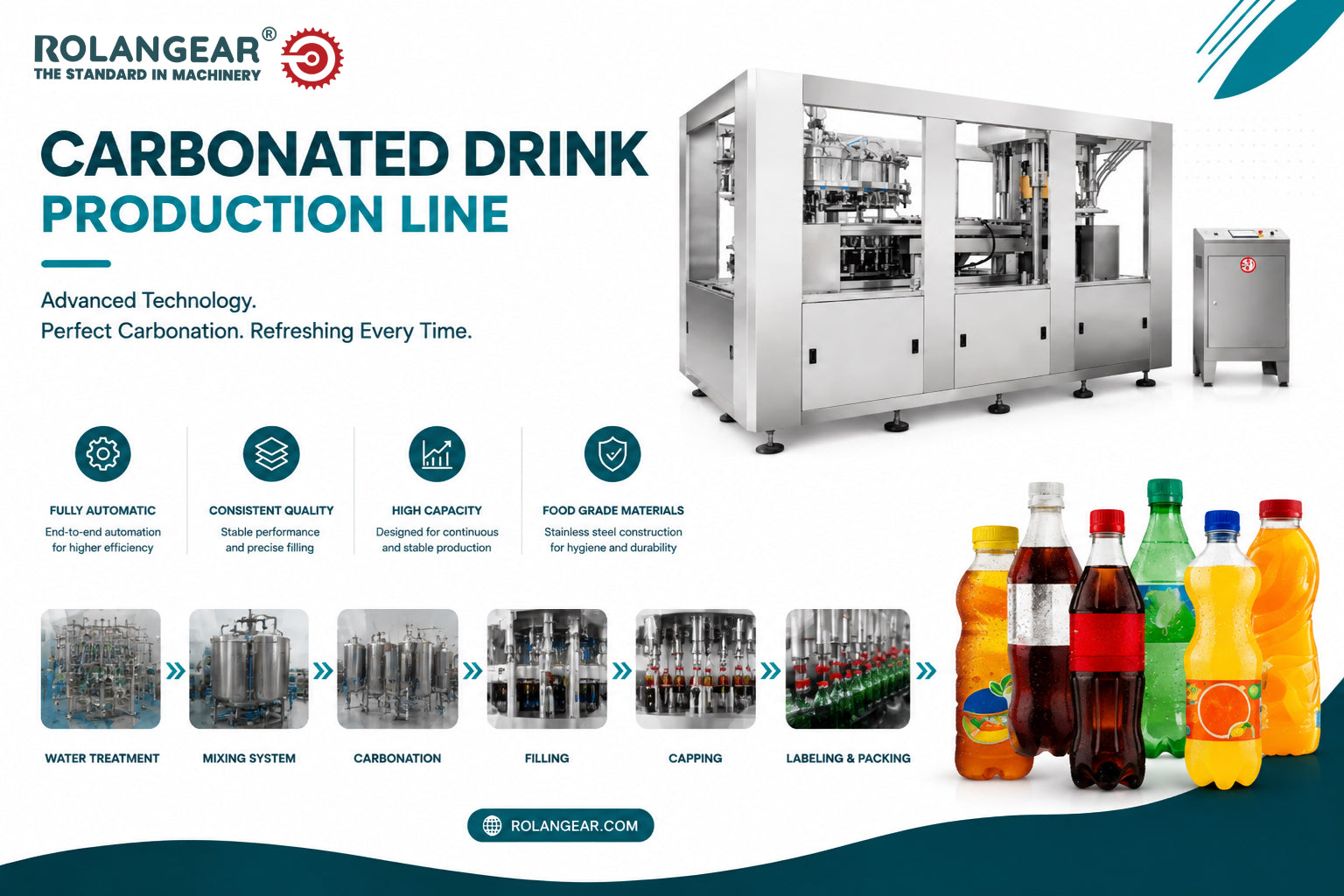
A carbonated drink production line is a complete beverage manufacturing solution that turns water, sweeteners, flavors and carbon dioxide into finished packaged drinks. The line normally begins with water treatment and ingredient preparation, then moves through syrup mixing, beverage blending, carbonation, filling, sealing, labeling and secondary packaging.

The exact configuration depends on the beverage formula, container type, target output and automation level. A small startup brand may need a compact and flexible line, while a large beverage plant may need high-speed filling, automatic packaging, palletizing and more advanced process control. In all cases, each section must be balanced so that upstream preparation and downstream packaging operate smoothly together.
Many new investors focus first on the filling machine because it is the most visible equipment. However, beverage quality depends on the full system. Poor water treatment can affect taste, unstable syrup preparation can change flavor, weak carbonation control can reduce consumer experience, and slow packaging can create bottlenecks. A complete project should be planned as one integrated factory solution, not as separate machines selected without coordination.
Types of Carbonated Drinks and Packaging Formats
A flexible carbonated beverage line can support different product categories when the process system and filling equipment are selected correctly. Product type affects ingredient preparation, carbonation level, hygiene requirements, packaging design and filling technology.

Carbonated Soft Drinks
Carbonated soft drinks include cola, lemon soda, orange soda and other fruit-flavored sparkling beverages. These products usually focus on refreshing taste, strong shelf appeal and large-volume retail distribution. For manufacturers entering the beverage market, soft drinks can be attractive because the production process is mature and consumer acceptance is high.
Sparkling Water
Sparkling water has grown as consumers look for lighter alternatives to traditional sugary beverages. Products may include plain sparkling water, flavored sparkling water and premium mineral-style beverages. Sparkling water production requires stable carbonation, clean water quality and packaging that supports a fresh, premium brand image.
Energy and Functional Drinks
Energy drinks and functional carbonated beverages often contain caffeine, vitamins, minerals, plant extracts or other active ingredients. These products usually have higher brand value and stronger packaging competition. A line used for this category should support accurate formula preparation, attractive containers and reliable product consistency.
PET Bottles, Glass Bottles and Cans
Packaging format is a major project decision. PET bottles are lightweight, cost-effective and suitable for mass-market distribution. Glass bottles create a premium appearance and may be used for restaurants, hotels or reusable bottle markets. Aluminum cans are popular for energy drinks, export products and modern beverage brands. Each container type requires different filling, sealing, labeling and packaging equipment.
Complete Carbonated Drink Production Process
1. Water Treatment
Water is the main ingredient in most carbonated beverages, so water quality has a direct influence on product taste, appearance and stability. A water treatment system removes particles, unwanted taste, odor, organic matter and microorganisms according to the raw water condition and production requirement. Typical systems may include sand filtration, activated carbon filtration, reverse osmosis, UV sterilization and ozone treatment.
Stable water quality is especially important for beverage brands because customers expect the same flavor in every bottle or can. If water characteristics change during production, the final product may taste different even when the syrup formula is unchanged. For this reason, water treatment should be designed according to local water analysis and confirmed production standards.
2. Syrup Preparation
The syrup preparation system produces the concentrated beverage base before it is mixed with treated water. This section may include sugar dissolving, flavor preparation, additive blending, filtration and storage. Good syrup preparation ensures that ingredients are fully dissolved and evenly mixed, which helps every batch keep a consistent taste profile.
Temperature, mixing time, filtration and recipe management all affect the final beverage. For brands producing multiple flavors, the syrup system should also support efficient cleaning and controlled recipe changeover. This allows the factory to respond to market demand without causing unnecessary downtime.
3. Beverage Mixing
After water treatment and syrup preparation, the mixing system combines treated water, syrup and other ingredients according to the required ratio. Accurate proportioning is essential because small dosing errors can affect sweetness, flavor strength, color and overall consumer experience.
For modern beverage factories, recipe flexibility is important. The mixing system should help operators manage different product formulas while maintaining stable output. This is especially useful for OEM manufacturers or brands with seasonal products, regional flavors or several package sizes.
4. Carbonation
Carbonation is the core step that gives carbonated drinks their sparkling effect. The system introduces CO₂ into the beverage under controlled conditions. Temperature, pressure, product flow and contact time influence CO₂ absorption and final gas volume. Different products may require different carbonation levels, so the system should be selected according to the target beverage category.
Good carbonation control improves mouthfeel, product freshness and brand consistency. If carbonation is unstable, the drink may taste flat or over-carbonated. Stable operation is also important for filling because carbonated beverages are sensitive to foaming, pressure variation and temperature changes.
5. Filling, Capping and Sealing
The filling section transfers the prepared carbonated beverage into bottles or cans. Because carbonated products contain dissolved gas, filling must be designed to reduce foam, control pressure and maintain accurate filling level. The filling method depends on whether the product is packed in PET bottles, glass bottles or cans.
After filling, containers must be sealed quickly and reliably. PET and glass bottles normally use caps, while cans require seaming. A strong seal protects carbonation, prevents leakage and supports shelf life. Filling and sealing performance directly affects customer experience and distribution reliability.
6. Labeling and Secondary Packaging
After sealing, products normally move through labeling, date coding and secondary packaging. Labeling creates brand presentation and helps products stand out on retail shelves. Common options include sleeve labeling, adhesive labeling and wrap-around labeling. The correct choice depends on bottle shape, label design, production speed and brand positioning.
Secondary packaging protects finished products during transport and storage. It may include shrink wrapping, carton packing, tray packing, case packing and palletizing. For larger factories, automatic end-of-line packaging can reduce labor and improve warehouse efficiency.
Main Machines in a Carbonated Drink Production Line
A complete line is built from several systems that must work together. The final equipment list should be confirmed according to product type, packaging format, capacity and factory conditions.

Water treatment system: prepares stable production water and supports product taste consistency.
- Sugar dissolving and syrup preparation system: mixes concentrate, flavors and additives.
- Mixing tank or beverage blending system: combines treated water and syrup in the correct ratio.
- Carbonator: dissolves CO₂ into the beverage under controlled pressure and temperature.
- Carbonated beverage filling machine: fills PET bottles, glass bottles or cans with controlled foaming.
- Capping or can seaming system: seals containers to protect carbonation and shelf life.
- Labeling machine: applies sleeve, adhesive or wrap-around labels for brand presentation.
- Conveyor system: connects production sections and supports smooth material movement.
- Packaging machine: prepares finished products for transport, storage and distribution.
- Inspection equipment: supports filling level, sealing, coding, weight or metal detection checks where required.
Capacity, Automation and Cost Factors
The cost of a carbonated drink production line depends on many project-specific factors. There is no single standard price because a small semi-automatic PET bottle line and a high-speed fully automatic canning line require very different equipment configurations. Investors should evaluate cost based on the complete factory goal rather than only comparing machine prices.
Important investment items may include processing tanks, carbonation equipment, filling and sealing machines, conveyors, labeling machines, packaging equipment, installation requirements, utilities, spare parts and operator training. A complete evaluation should also consider raw material losses, labor arrangement, cleaning time, maintenance access and future upgrade plans.

Production Capacity
Capacity is one of the most important investment factors. Small factories may focus on product testing, local distribution and controlled investment. Medium-capacity plants usually serve regional distributors, supermarkets and growing beverage brands. Large beverage plants may require high-speed automation for national distribution, export markets or OEM production. The selected capacity should match market demand while allowing reasonable future growth.
Packaging Format
PET bottle, glass bottle and can lines have different equipment requirements. PET bottles may need bottle rinsing, filling, capping, sleeve labeling and shrink wrapping. Glass bottle projects may require stronger handling and different washing or filling considerations. Can lines need reliable filling and seaming equipment. Packaging selection should match brand positioning, transportation method and target customer expectations.
Automation Level
Semi-automatic systems can be practical for startups with smaller production volumes or limited investment budgets. Fully automatic lines reduce labor dependency, improve production stability and are more suitable for long-term large-volume manufacturing. The best choice depends on labor cost, available space, technical team capability, sales forecast and expansion plan.
Factory Layout and Utility Planning
A good factory layout improves workflow, hygiene, maintenance and future expansion. The production flow should move logically from raw material storage to water treatment, syrup preparation, mixing, carbonation, filling, packaging and finished goods storage. Poor layout can increase manual handling, create bottlenecks and make equipment maintenance more difficult.
Beverage production also requires proper utility planning. Depending on the line configuration, the factory may need stable electrical supply, compressed air, treated water, CO₂ supply, drainage, ventilation and suitable room zoning. Hygienic design is important because beverage production must protect product safety and avoid contamination during preparation and filling.
Maintenance access should be considered before equipment installation. Operators and technicians need enough space for inspection, cleaning, replacement of wearing parts and troubleshooting. If the factory plans future expansion, the layout should reserve space for additional filling heads, packaging equipment, storage tanks or higher-speed end-of-line automation.

Quality Control, Cleaning and Maintenance
Quality control should cover the complete production process, not only the final packaged drink. Important control points include water quality, syrup concentration, mixing ratio, carbonation level, filling volume, cap or seam quality, label position, date coding and packaging condition. Monitoring these points helps reduce product defects and protect brand reputation.
Cleaning is also critical because beverage systems handle sugar, flavors and other ingredients that can leave residue inside tanks and pipelines. A hygienic design makes cleaning easier and reduces the risk of contamination between production batches. Cleaning method, tank design, pipeline layout and valve selection should be discussed during equipment planning.
Preventive maintenance helps keep the production line stable. Filling valves, pumps, seals, conveyors, sensors, labelers and packaging components should be inspected regularly. Spare parts planning is especially important for factories with continuous orders because small component failures can stop the whole line. A professional supplier should support operators with training, maintenance guidance and technical service.
How to Choose the Right Carbonated Drink Production Line Supplier
Choosing a supplier is a major decision because a beverage line is a complete engineering project. A good supplier should understand beverage process design, packaging equipment, automation, factory layout and installation requirements. The supplier should not only provide machines but also help customers confirm the correct configuration for their products and market goals.

- Confirm whether the supplier can design a complete line, not only provide one machine.
- Check whether the configuration matches your container type, beverage formula and capacity.
- Ask how the line controls carbonation stability and filling accuracy.
- Discuss cleaning, maintenance, spare parts and operator training.
- Review factory layout support and installation guidance.
- Confirm whether future capacity upgrades or packaging changes are possible.
The lowest equipment price is not always the best investment. A line that is poorly matched to the product may create production losses, excessive downtime or poor packaging quality. A practical solution should balance investment, automation, hygiene, reliability, flexibility and after-sales support.
Why Choose Rolangear?
Rolangear provides customized carbonated drink production line solutions for beverage manufacturers planning new factories or upgrading existing production systems. Instead of offering only single machines, Rolangear helps customers consider product type, production capacity, packaging method, factory space, utility conditions and long-term business goals.
A Rolangear project can include production line design, equipment configuration, factory layout planning, installation support, commissioning assistance and operator guidance. Whether the customer wants to produce soda, sparkling water, energy drinks or private-label carbonated beverages, the solution can be planned according to real production needs.
Frequently Asked Questions
What equipment is needed to make carbonated drinks?
A typical line includes water treatment equipment, syrup preparation tanks, beverage mixing equipment, a carbonator, filling and capping equipment, labeling equipment, conveyors, packaging machines and quality-control equipment.
Can one production line make different flavors?
Yes. With suitable tanks, recipe management and cleaning procedures, one line can support multiple flavors. The final flexibility depends on the equipment configuration and the manufacturer’s production plan.
What packaging formats can be used?
Carbonated drinks can be packed in PET bottles, glass bottles or aluminum cans. Each format requires different filling, sealing, labeling and packaging equipment, so the packaging plan should be confirmed early.
How much does a carbonated drink production line cost?
The cost depends on capacity, container type, automation level, filling technology, packaging system, factory requirements and customization needs. A project-specific quotation is required for accurate pricing.
What capacity should a new beverage factory choose?
The capacity should match market demand, sales channels, budget and future growth expectations. Startups often choose flexible systems, while established brands may need higher automation and output.
Can Rolangear design a complete beverage factory?
Yes. Rolangear can help plan a complete carbonated beverage production solution, including equipment selection, line configuration, layout planning, installation support and technical guidance.
Conclusion
A carbonated drink production line is a complete manufacturing system that connects water treatment, syrup preparation, mixing, carbonation, filling, labeling, packaging and quality control. Every section influences the final beverage’s taste, appearance, carbonation stability, shelf performance and production efficiency.
For beverage investors, the best line should be selected according to product category, container type, capacity target, automation level, factory space and long-term development plan. By choosing a coordinated production system instead of separate machines, manufacturers can reduce bottlenecks, improve quality consistency and prepare for future product expansion.
Plan Your Carbonated Drink Production Line with Rolangear
Rolangear can help you design a practical carbonated drink production line based on your product formula, packaging format, capacity requirement and factory layout. Contact Rolangear to discuss your beverage project and request a customized turnkey quotation.
Contact Rolangear