Automation machines have become a practical solution for factories that want higher output, more stable quality, better safety, and stronger production control. In many industries, customers are no longer looking for a single machine only. They need a complete production solution that can connect raw material handling, processing, conveying, inspection, packaging, maintenance, and after-sales service into one reliable system.

A well-designed automation solution does not simply replace manual labor. It helps the factory build a repeatable process. The machine performs the same action at a controlled speed, sensors monitor important conditions, operators supervise the line, and maintenance teams use data to identify problems before they become serious failures. When these parts work together, the factory can reduce waste, improve delivery stability, and manage production with more confidence.
This article explains the main advantages of automation machines and why professional maintenance tools are also important for long-term machine reliability.
What Is an Automation Machine?

An automation machine is equipment designed to complete one or more production tasks with limited manual operation. Depending on the industry, it may be used for feeding, mixing, forming, pressing, cutting, filling, sealing, labeling, sorting, inspection, packaging, stacking, or conveying. A complete automated production line may include several machines connected by conveyors, control systems, sensors, pneumatic devices, motors, heating systems, and safety protection units.
The automation level can be different from project to project. Some factories only need a semi-automatic machine to reduce labor at one key step. Other factories need a fully automatic line with automatic feeding, online inspection, robotic handling, and automatic packaging. The correct choice depends on product design, production capacity, factory layout, labor cost, maintenance ability, and budget.
For a machinery solution provider, automation should be designed around the customer’s real production needs. Before recommending a configuration, the supplier should understand the product size, raw material type, required output, packaging style, available factory space, power supply, compressed air condition, and operator skill level. This engineering communication is important because a machine that looks advanced on paper may not be suitable if it does not match the factory process.
Higher Production Efficiency

One of the most direct advantages of automation machines is higher production efficiency. Manual operation can be flexible, but it is usually limited by worker speed, fatigue, coordination, and shift management. Automated machines can repeat feeding, cutting, forming, conveying, or packaging actions at a stable rhythm. This reduces waiting time between steps and helps the whole production line run more smoothly.
For continuous production, stable machine speed makes production planning easier. Factory managers can estimate daily output, arrange raw material supply, prepare packaging materials, and schedule delivery according to a more predictable production rhythm. When each section of the line is synchronized, upstream machines do not overload downstream machines, and downstream machines do not wait for material too often.
Automation can also reduce hidden time losses. In manual production, time may be lost during material transfer, positioning, checking, counting, or repeated adjustment. A suitable automated solution can reduce these small interruptions. For example, automatic feeding can keep material supply consistent, automatic positioning can improve processing speed, and automatic packaging can reduce the time between finished product inspection and final packing.
However, higher efficiency does not mean simply choosing the fastest machine. The line must be balanced. If one machine has a much higher capacity than the next process, the factory may face material accumulation, unstable product flow, or unnecessary investment. A professional solution should consider the full process, not only the speed of one unit.
More Stable Product Quality

Quality consistency is another important reason factories invest in automation. Manual operation depends heavily on individual skill, attention, and physical condition. Even experienced operators can produce variation after long working hours. Automation machines help reduce this variation by controlling key parameters such as temperature, pressure, speed, time, position, weight, thickness, sealing strength, cutting accuracy, and product spacing.
When these parameters are controlled, the product becomes more consistent. This is especially important for factories that supply retail brands, export markets, or B2B customers with strict quality expectations. Stable dimensions, clean cutting, uniform filling, accurate sealing, consistent surface treatment, and neat packaging all help improve the customer’s confidence in the product.
Automation also supports standard operating procedures. Once a stable production recipe or parameter setting is confirmed, operators can follow the same setting each time. This reduces random adjustment and helps new workers learn the process faster. In some lines, the control system can store multiple parameter groups for different product sizes or production modes, making product changeover more organized.
Still, automation does not remove the need for quality control. Machines must be adjusted correctly, raw materials must meet requirements, and operators must monitor the process. The best result comes from combining automated operation with clear inspection standards.
Lower Labor Intensity and Better Safety
Many production tasks are repetitive, heavy, hot, dusty, noisy, or potentially risky. Automation can reduce the need for workers to handle these tasks directly. Instead of lifting materials, holding parts in position, or repeating the same movement all day, operators can focus on machine monitoring, material preparation, parameter adjustment, quality inspection, and maintenance support.
This shift can reduce labor intensity and improve the working environment. It is especially useful when factories face rising labor costs, difficulty hiring skilled workers, or high employee turnover. A well-designed automated line allows fewer workers to manage a larger production volume, while also improving the consistency of daily operation.
Safety is also a key advantage, but it must be designed properly. Automation equipment should include guarding, emergency stop buttons, safety sensors, warning labels, and clear operating procedures. For machines with heating, cutting, pressing, electrical control, or high-speed movement, proper safety protection is not optional. Operators should receive training before running the equipment, and maintenance staff should understand lockout, power isolation, and inspection requirements before repair work.
A safe automation solution protects both workers and production stability. When safety design is weak, accidents can damage equipment, delay orders, and create serious risk for the factory.
Better Use of Data and Process Control
Modern automation is not only mechanical movement. It also helps factories collect and use production information. Even a basic automated line can show speed, temperature, counting, alarm messages, motor status, or running time. More advanced systems may connect production data, quality records, maintenance reminders, and fault history.
This information makes factory management more transparent. Managers can identify where production slows down, which alarms happen repeatedly, when maintenance should be arranged, and whether operators are using the machine correctly. Data also improves communication with equipment suppliers. Instead of only saying “the machine has a problem,” the factory can provide alarm codes, running parameters, photos, videos, temperature readings, current values, or inspection records. This helps technical support respond more accurately.
For factories planning long-term growth, data-based control can also support future upgrades. A line can be designed with reserved space for automatic feeding, additional inspection devices, automatic stacking, robot handling, or packaging modules. The more clearly the process is measured, the easier it becomes to improve.
Maintenance Instruments for Automated Equipment

The uploaded draft correctly highlights an important point: automation machines need the right instruments for maintenance and troubleshooting. Good equipment still requires inspection. A factory that only relies on hearing, touching, or visual checking may miss early warning signs. Professional instruments help maintenance teams turn experience into measurable data.
Electrical testing tools are essential. A multimeter can check voltage, current, resistance, and circuit continuity. A clamp meter can measure motor current without cutting the circuit, which is useful for checking whether a load is overloaded or whether three-phase current is balanced. Before electrical maintenance, technicians should always confirm that the equipment is safe and de-energized according to factory safety rules.
Temperature monitoring tools are also useful. An infrared thermometer can quickly check motor bearings, electrical terminals, heater surfaces, pipelines, pump housings, or other points during operation. A thermal imaging camera can scan a larger area and identify hot spots inside electrical cabinets, motors, and mechanical systems. This helps find loose connections, overload problems, poor lubrication, or abnormal friction.
Acoustic and vibration tools can support mechanical inspection. Listening rods, vibration meters, and ultrasonic leak detectors can help identify bearing problems, gear meshing issues, compressed air leakage, valve leakage, and abnormal machine movement. Industrial endoscopes allow technicians to inspect hidden areas such as pipelines, gearboxes, cylinders, or internal machine cavities. Oil quality analyzers can help judge contamination or lubrication condition.
Mechanical measuring tools are also important for automation accuracy. Vernier calipers, micrometers, dial indicators, feeler gauges, and ultrasonic thickness gauges can check component dimensions, clearance, alignment, wear, corrosion, and wall thickness. These tools are helpful when replacing parts, setting cutting mechanisms, aligning conveyors, or confirming whether a component is still within acceptable condition.
Preventive Maintenance and Troubleshooting
A strong automation system should be supported by preventive maintenance. If a factory only repairs machines after breakdowns, downtime becomes unpredictable and spare parts cost may increase. Preventive maintenance means checking key parts regularly, recording important values, and replacing wearing parts before failure affects production.
Useful inspection records may include motor current, bearing temperature, vibration level, air pressure, oil condition, leakage points, chain tension, belt tracking, sensor response, cutting quality, sealing condition, electrical cabinet temperature, and mechanical clearance. When these values are recorded over time, abnormal trends become easier to see. For example, a bearing that slowly becomes hotter every week may need lubrication or replacement before it fails.
Troubleshooting also becomes faster when data is available. If a machine stops, the maintenance team can compare current readings, temperature readings, alarm messages, and mechanical inspection results. This reduces guesswork and helps technicians locate the problem more efficiently. For new employees, instruments and inspection records also provide a learning path. They can compare normal data with abnormal data and gradually build diagnostic ability.
From a supplier’s perspective, good maintenance planning should be part of the complete solution. Customers should receive training on key inspection points, wearing parts, lubrication requirements, safe electrical checking, and basic fault analysis. This helps the equipment continue working reliably after installation.
How to Choose the Right Automation Solution

The right automation solution should match the factory’s real production conditions. Buyers should not choose equipment only by appearance, price, or a single capacity number. Before confirming a project, it is better to prepare product samples, target capacity, raw material information, packaging method, factory layout, power supply, compressed air condition, labor arrangement, and quality standards.
A professional machinery supplier should help evaluate several points. First, what level of automation is necessary? A semi-automatic machine may be enough for small-batch flexible production, while a fully automatic line may be better for large-volume stable orders. Second, which process is the bottleneck? Improving one slow step may create a bigger benefit than automating every section at once. Third, how easy is the machine to maintain? A machine that is difficult to clean, inspect, or repair may create long-term cost even if the first investment is lower.
Buyers should also consider spare parts, operator training, machine layout, and future expansion. If the factory may increase capacity later, the line should leave space for additional modules. If the factory has limited maintenance staff, the machine design should be simple enough for daily inspection and basic repair.
Common Mistakes When Planning Automation
One common mistake is focusing only on labor reduction. Automation should improve the whole production system, not only reduce headcount. If raw material supply, quality inspection, packaging, or maintenance is not planned well, the factory may still face delays.
Another mistake is ignoring product variation. If the factory produces many sizes, shapes, or materials, the machine must support quick adjustment or modular changeover. Otherwise, frequent product changes may reduce the expected efficiency.
A third mistake is forgetting maintenance tools and training. Automated lines include electrical, mechanical, pneumatic, and control systems. Without proper instruments and inspection habits, small problems may develop into serious failures. Training operators and maintenance staff is just as important as installing the machine.
Main Parts of an Automation Solution
A complete automation project usually includes more than the main production machine. It may include feeding equipment, conveyors, processing units, inspection devices, control cabinets, safety systems, packaging equipment, and auxiliary tools. Each part should be selected according to the product and production target.
The feeding section affects line stability. If material supply is not consistent, even a high-speed machine cannot maintain stable output. The processing section must control the key production parameters, such as pressure, heating time, cutting position, filling volume, or forming accuracy. The conveying section should match the speed of upstream and downstream machines so that products do not accumulate, collide, or wait too long. The inspection section helps remove defective products or identify process problems early. The packaging section protects the finished product and prepares it for storage or shipment.
For many factories, the control system is the center of the automation solution. A good control system should be easy to operate, easy to understand, and practical for daily production. Operators should be able to adjust important parameters, read alarm information, and restart the line safely after a normal stop. For customers with more advanced management needs, optional data recording, remote support, or production monitoring can be discussed during project planning.
Example Selection Table for Buyers
| Requirement | What to Confirm | Why It Matters |
|---|---|---|
| Product type | Size, shape, material, tolerance, packaging style | Determines machine structure and process design |
| Target capacity | Hourly or daily output expectation | Helps balance each machine section |
| Automation level | Semi-automatic, automatic, or fully automatic | Affects labor, budget, layout, and maintenance |
| Factory layout | Available space, material flow, operator access | Prevents installation and operation problems |
| Utilities | Power, air, water, steam, ventilation, drainage | Ensures the line can run safely and continuously |
| Maintenance ability | Technician skill, spare parts plan, inspection tools | Supports long-term reliable operation |
This table should be used as a planning guide, not as a fixed specification sheet. Exact machine dimensions, power, capacity, and configuration should be confirmed according to the customer’s product and factory conditions.
Industries That Benefit from Automation Machines

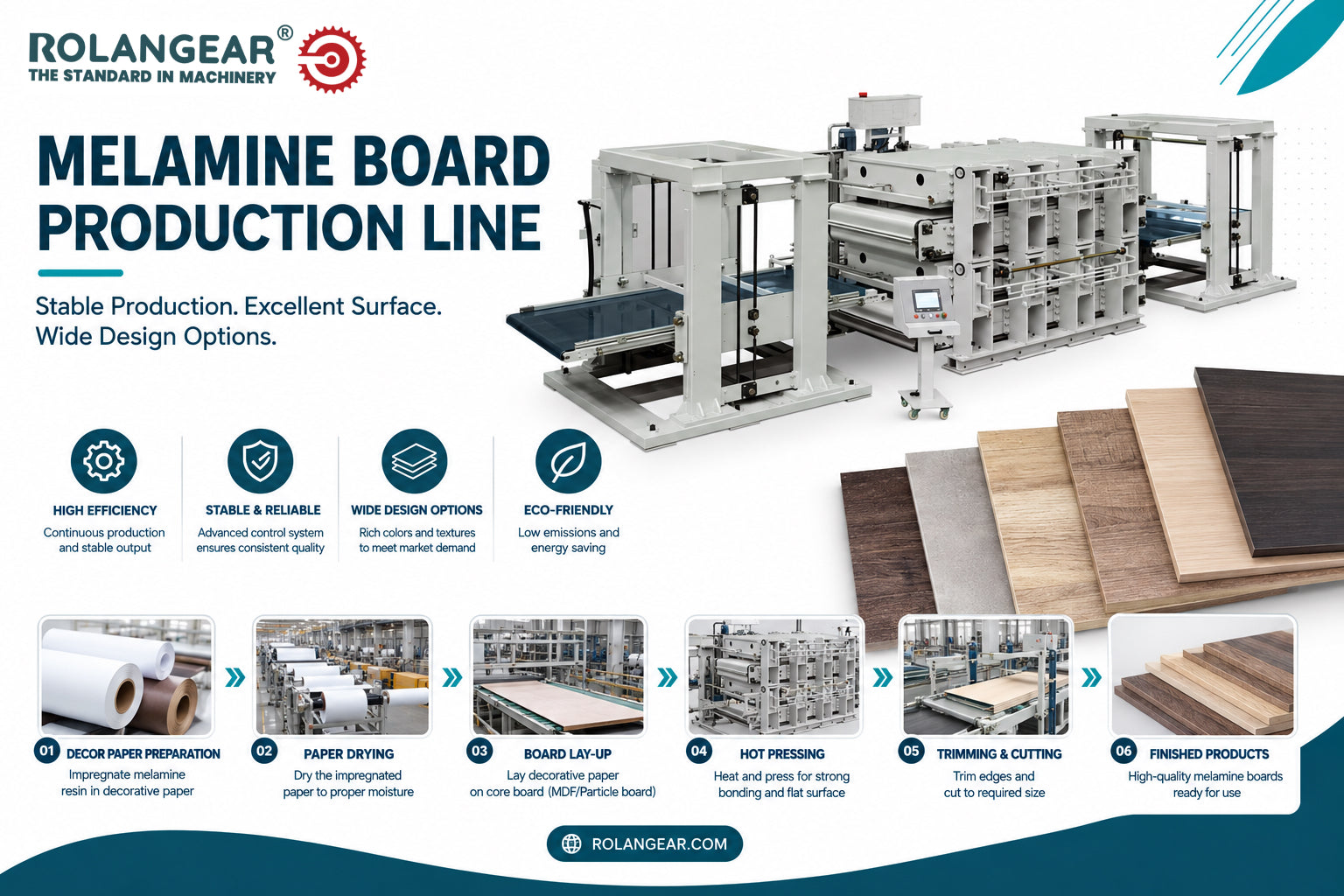
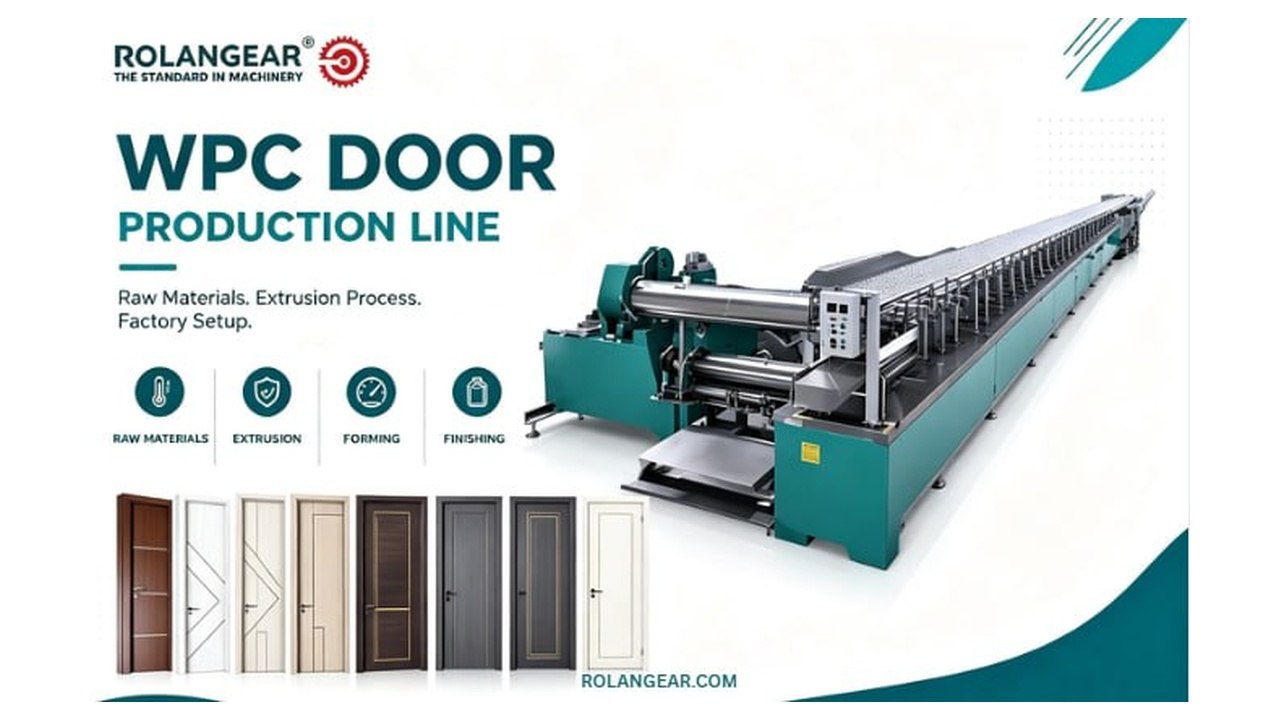
Automation is useful in many industries because most factories need stable output and repeatable quality. In food and beverage production, automation can help control filling, forming, heating, cooling, labeling, and packaging. In packaging production, it can improve cutting, sealing, stacking, printing alignment, and counting. In board and panel processing, automated equipment can support feeding, pressing, trimming, sanding, inspection, and stacking. In plastic product manufacturing, automation can improve material feeding, forming, cooling, cutting, and packing.
Although the industries are different, the basic purpose is similar: reduce unstable manual work, improve process repeatability, and make production easier to manage. This is why a solution provider should not only understand machines, but also understand how the customer’s product is made. The same automation concept may need different mechanical structures, safety systems, and inspection points in different industries.
Investment Value of Automation
When buyers evaluate automation, they often ask whether the investment is worthwhile. The answer depends on the factory’s production volume, labor cost, quality requirement, product value, and long-term growth plan. Automation may require higher initial investment, but it can create value by reducing labor pressure, lowering waste, improving consistency, reducing downtime, and supporting larger orders.

The investment should be viewed over the full life of the equipment. A cheaper machine may create higher cost later if it is difficult to maintain, frequently stops, wastes material, or cannot meet product quality requirements. A professional automation solution should balance purchase cost, operating cost, maintenance cost, spare parts availability, and future upgrade needs.
Before making a decision, buyers should compare not only machine price, but also supplier experience, technical communication, machine structure, control system design, training support, spare parts plan, and after-sales response. For industrial equipment, reliable operation after installation is often more important than the lowest first quotation.
Implementation Steps for a New Automation Project
A successful automation project should follow a clear process. First, the buyer and supplier should confirm the product requirements, including material, size, shape, capacity, packaging method, and quality expectations. Second, the supplier should recommend a process flow and machine configuration. Third, both sides should review the factory layout, utilities, operator positions, maintenance space, and material flow. Fourth, the machine design, technical details, and optional modules should be confirmed before production.
After delivery, installation and commissioning are important. The equipment should be tested with real materials when possible, and operators should be trained on startup, normal operation, parameter adjustment, cleaning, safety, and basic troubleshooting. Maintenance staff should understand wearing parts, lubrication points, electrical checking, sensor adjustment, and inspection tools.
Good implementation reduces the gap between “machine delivery” and “stable production.” This is why communication before the order and support after installation are both important parts of a professional automation solution.
Frequently Asked Questions
What is the main advantage of automation machines?
The main advantage is stable and efficient production. Automation helps factories reduce manual variation, improve speed, control key parameters, and make output more predictable.
Does automation always mean fully automatic production?
No. Automation can be semi-automatic, automatic, or fully integrated. The best level depends on product type, capacity target, factory budget, and labor situation.
Can automation improve product quality?
Yes, if the machine is correctly selected and adjusted. Automation controls important parameters such as speed, pressure, temperature, timing, and position, which helps improve product consistency.
What should buyers prepare before asking for an automation solution?
Buyers should prepare product samples, target capacity, product size range, raw material information, packaging requirements, factory layout, available utilities, and quality standards.
Why are maintenance instruments important for automated machines?
Maintenance instruments help technicians check electrical condition, temperature, vibration, leakage, oil quality, alignment, and wear. This supports preventive maintenance and faster troubleshooting.
How can a supplier support long-term machine operation?
A professional supplier can provide process analysis, machine configuration advice, installation guidance, operator training, spare parts recommendations, and technical support after delivery.
Conclusion
Automation machines can improve factory efficiency, product quality, safety, maintenance planning, and management control. But successful automation depends on more than the machine itself. The factory needs a suitable configuration, balanced process flow, trained operators, proper inspection tools, and a preventive maintenance plan.
For buyers planning a new production line or upgrading an existing factory, the best approach is to work with a solution provider that understands both machine design and real production operation. Rolangear can help review your product requirements, capacity target, factory layout, and automation goals, then recommend a practical production solution for long-term stable operation.
Plan a Reliable Automation Solution with Rolangear
Tell Rolangear your product type, target capacity, factory layout, and automation requirements. Our team can help you evaluate machine configuration, process flow, maintenance planning, and long-term production support.
Contact Rolangear